Al-Rabeeah Says Saudi Arabia Ready to Help Rebuild Gazahttps://english.aawsat.com/interviews/5191549-al-rabeeah-says-saudi-arabia-ready-help-rebuild-gaza
Al-Rabeeah Says Saudi Arabia Ready to Help Rebuild Gaza
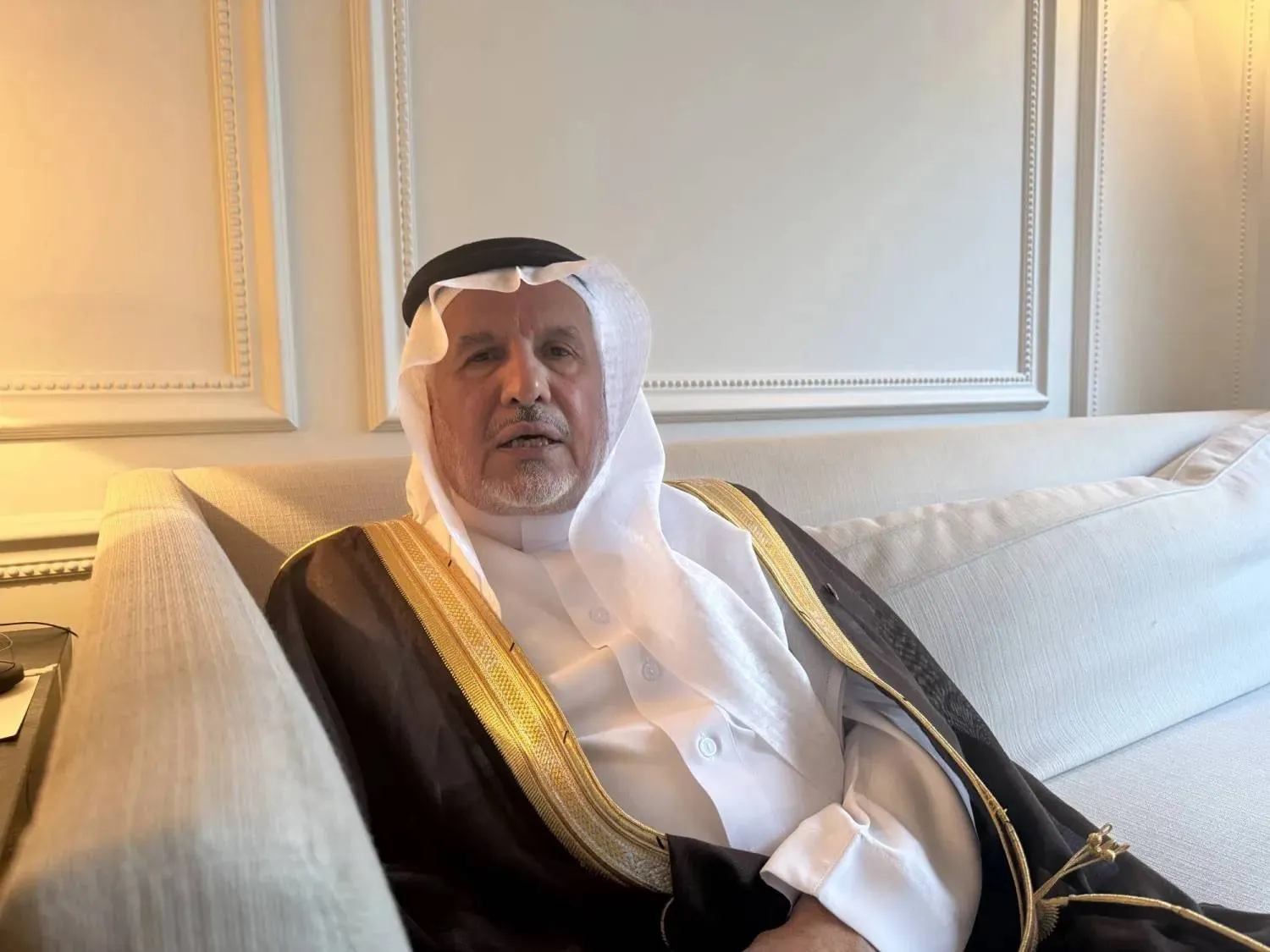
Dr. Abdullah bin Abdulaziz Al-Rabeeah, Adviser at the Royal Court and Supervisor General of the King Salman Humanitarian Aid and Relief Center (KSrelief) (Ali Barada)
Al-Rabeeah Says Saudi Arabia Ready to Help Rebuild Gaza
Dr. Abdullah bin Abdulaziz Al-Rabeeah, Adviser at the Royal Court and Supervisor General of the King Salman Humanitarian Aid and Relief Center (KSrelief) (Ali Barada)
Dr. Abdullah bin Abdulaziz Al-Rabeeah, Adviser at the Royal Court and Supervisor General of the King Salman Humanitarian Aid and Relief Center (KSrelief), said Saudi Arabia was willing to take a leading role in rebuilding Gaza once the war ends
In an exclusive interview with Asharq Al-Awsat on the sidelines of the 80th session of the United Nations General Assembly in New York, Al-Rabeeah outlined Saudi Arabia’s dual role - political and humanitarian - in alleviating Palestinian suffering and pushing for a lasting settlement.
“The Kingdom will be among the first countries to participate in reconstruction and stabilization in Gaza,” he said, adding that Riyadh’s ultimate goal remains the establishment of “an independent state called Palestine.”
Beyond Palestine, he spoke at length about Saudi Arabia’s humanitarian diplomacy in Syria, Yemen, and Sudan, stressing a consistent approach: neutrality in aid distribution, rejection of punitive policies, and a strategic commitment to regional stability.
“There is a high political will in the Kingdom to restore stability,” he said, pointing to both Syria’s post-war recovery and Saudi Arabia’s broader vision for peace in the Middle East.
The Next Day and Palestine
The devastation of Gaza has topped the agenda of global leaders gathered in New York, overshadowing other issues. At the center of discussions is a Saudi-French initiative, recently endorsed by an overwhelming majority at the UN General Assembly, which calls for a ceasefire, a peaceful settlement of the Palestinian question, and the implementation of the two-state solution.
Al-Rabeeah stressed that Saudi Arabia’s support for the Palestinian people “has never been limited to humanitarian relief.” Under the leadership of King Salman and Crown Prince Mohammed bin Salman, he said, Riyadh has pursued a clear course: to defend Palestinians’ basic right to statehood.
From the first days of the war in Gaza, KSrelief was instructed to mobilize. “We launched air, sea, and land relief bridges despite challenges, particularly Israeli obstruction and the instrumentalization of humanitarian aid as political leverage,” Al-Rabeeah said.
He insisted that Saudi Arabia has categorically rejected attempts to use starvation as a tool to displace Palestinians. “These obstacles did not deter the Kingdom’s resolve to find solutions,” he underlined.
He further described Riyadh’s approach as a two-pronged strategy. “The first is the political track, led by Saudi Arabia’s foreign ministry, which culminated in a major international conference co-hosted by the Kingdom and France. The second is the humanitarian track, aimed at mitigating suffering and overcoming barriers to aid delivery.”
Together, he argued, they reflect “the depth of Saudi Arabia’s commitment to securing Palestinians’ fundamental rights in the face of what we call a war of extermination in Gaza.”
Looking ahead to the “day after,” Al-Rabeeah recalled Saudi Arabia’s long history of solidarity with the Palestinians. “Whenever Gaza has been devastated, Saudi Arabia has not stood idle,” he said. Reconstruction, development, and relief have followed each crisis.
“We will be at the forefront of rebuilding and restoring stability in Gaza,” he pledged, saying the main concern is to achieve a sustainable solution that guarantees Palestinians “a bright future in an independent state called Palestine.”
A Courageous Stand with Syria
Al-Rabeeah also outlined Riyadh’s evolving role in Syria, where Saudi support for civilians and refugees has spanned more than a decade. “From the start of the crisis, we established dedicated programs for Syrians, especially refugees in neighboring countries,” he said, noting that hundreds of thousands found refuge inside Saudi Arabia itself.
Following the fall of the Assad regime and the rise of a new government led by President Ahmad al-Sharaa, Riyadh moved decisively. “Crown Prince Mohammed bin Salman took a courageous stand,” Al-Rabeeah said, using Saudi ties with Washington to lift restrictions that had blocked essential supplies, equipment, and medical devices from entering Syria.
He stressed that the breakthrough was not only humanitarian but also economic: “We succeeded in reintegrating Syrian banks into the international system, a major achievement for Syria’s economy.”
KSrelief’s field presence has been extensive, with offices in Lebanon, Jordan, and Türkiye, supporting refugees while simultaneously re-engaging inside Syria. Aid teams have provided housing for earthquake victims, renovated damaged homes, and coordinated with Syrian authorities to ensure safe returns.
“We have already dispatched Saudi investment teams, accompanied by the Minister of Investment, to open new economic horizons,” Al-Rabeeah noted.
He highlighted one example among many: The delivery of 450 dialysis machines - covering more than 95 percent of Syria’s national need - along with intensive-care equipment and advanced diagnostic tools.
“These efforts send a clear message,” he said. “There is political will to restore stability, economic will to rebuild Syria’s economy, and humanitarian will to return refugees to their homeland.”
No Discrimination in Yemen
Turning to Yemen, Al-Rabeeah stressed Saudi Arabia’s longstanding support for its neighbor. “For decades, even before the current conflict, the Kingdom has stood with Yemen,” he said.
Since the 2015 Houthi coup, KSrelief has provided aid across all regions, regardless of political control.
“Over 60 percent of our assistance has gone to northern Yemen,” he said. “If the Kingdom wanted to punish the Yemeni people, we could have withheld aid from those areas. But we do not use humanitarian work as a political, military, or punitive tool.”
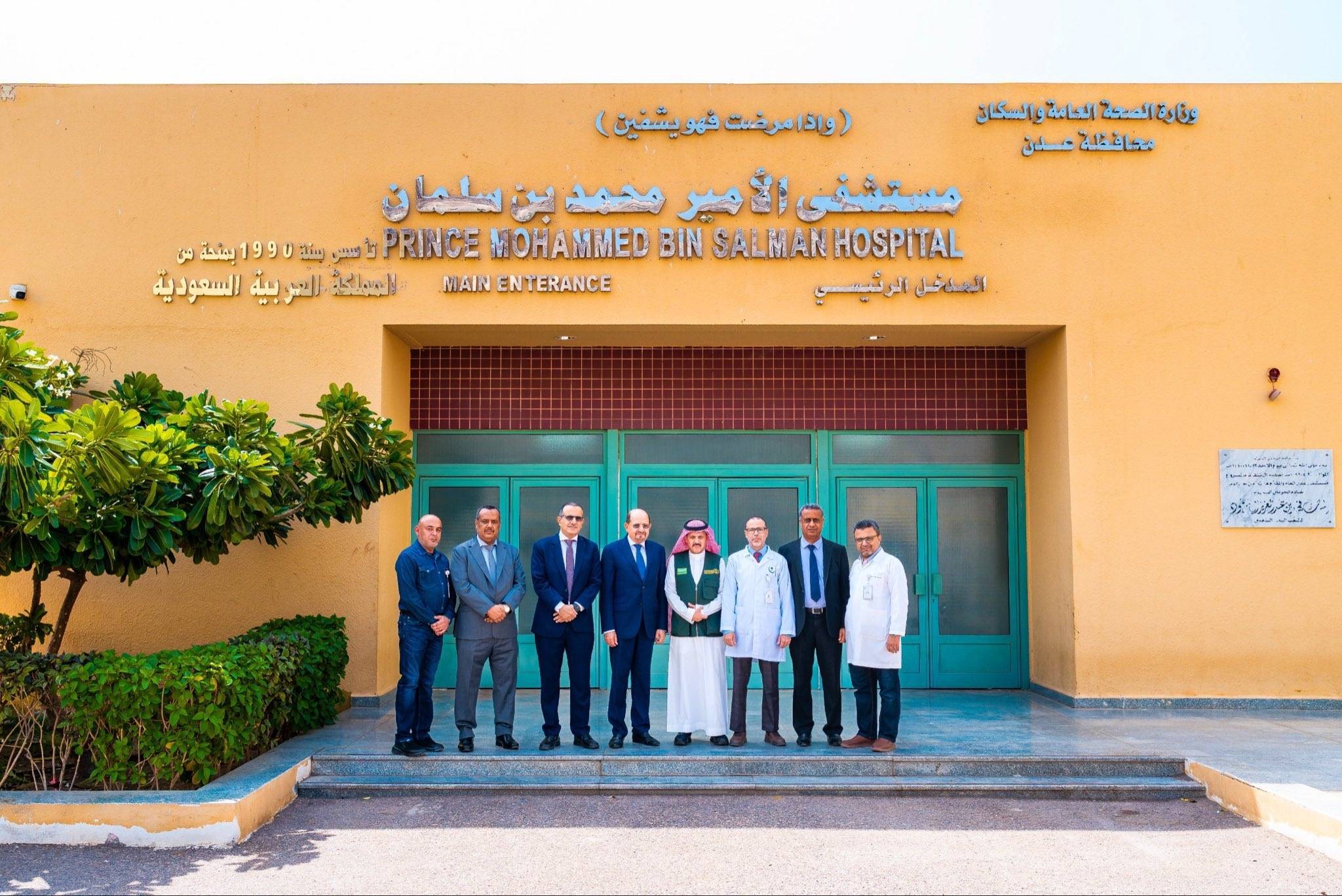
Even as some UN agencies suspended operations in Houthi-controlled regions due to attacks on their staff, Saudi programs continued. KSrelief funds the largest hospitals in Saada and Hajjah, both strongholds of the Houthis, which remain operational with Saudi financing. “This is proof that our aid is impartial,” he remarked.
Politically, Riyadh maintains a clear vision: to achieve a sustainable settlement that guarantees Yemen’s security and stability, and to see the country return to growth and prosperity. “We hope to witness Yemen’s revival and we will contribute to it, just as we did in the past and will do again in the future,” Al-Rabeeah said.
Neutrality in Sudan
Al-Rabeeah also addressed the war in Sudan, which he described as “tragic for every friend of Sudan, not least Saudi Arabia.”
Since the outbreak of fighting, Riyadh has worked on parallel tracks: Promoting political de-escalation, including through two Jeddah conferences, and delivering aid through KSrelief.
“Our approach is neutral,” he emphasized. “We do not punish the Sudanese people because of the disputes of warring factions. That is why we have earned the trust of all sides.”
Food, medicine, and medical teams have been dispatched despite insecurity, performing surgeries and treating patients without regard to affiliation or origin. “We do not ask which side they are from,” he said. “Our goal is to see peace and stability.”
Al-Zindani to Asharq Al-Awsat: Yemen Will Not Remain an Open Arena for a Cross-border Projecthttps://english.aawsat.com/interviews/5310974-al-zindani-asharq-al-awsat-yemen-will-not-remain-open-arena-cross-border-project
Al-Zindani to Asharq Al-Awsat: Yemen Will Not Remain an Open Arena for a Cross-border Project
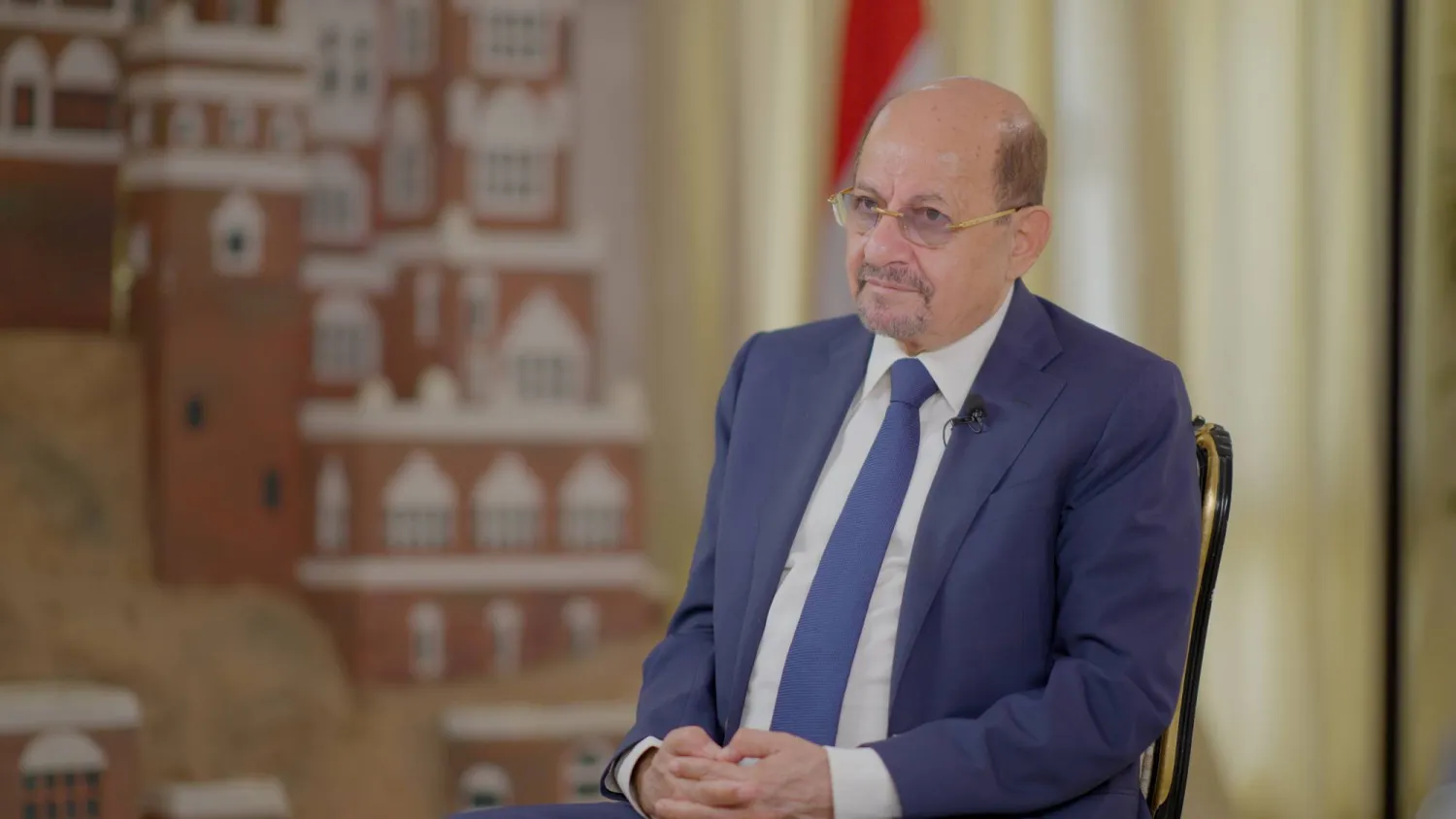
The Prime Minister affirmed that Yemen would not remain an open arena for a cross-border project (Photography by Turky Alagili)
Yemeni Prime Minister Dr. Shaya al-Zindani warned that his country would not remain an open arena for a cross-border project, stressing that the state would continue to build its capabilities to protect its people, institutions and interests, and that true peace cannot be a substitute for the state, but rather the fruit of its restoration.
In an interview with Asharq Al-Awsat, Al-Zindani said that the recent Houthi escalation clearly reveals the group’s targeting of the foundations of life and the national economy, and its attempt to transform Yemeni lands, ports and sea lanes into tools that serve a regional project that transcends the country’s borders.
The Prime Minister stressed that the Yemeni-Saudi coordination goes beyond confronting an emergency military escalation, and is based on a firm strategic partnership between two countries that share neighborliness, security, destiny and common interests.
Houthi escalation targets the national economy
Al-Zindani said the recent escalation clearly reveals that the Houthi terrorist militias are not only targeting a military front or a specific facility, but are also targeting civilians, the foundations of life and the national economy, and are trying to turn Yemeni lands, ports and sea lanes into tools in a regional project that goes beyond the borders of Yemen.
He added that targeting the port of Mocha specifically represents a very dangerous development because it affects a civilian and economic facility and sends a threatening message to trade and navigation in one of the most important maritime corridors in the world, noting that the government dealt with this escalation as a simultaneous threat to national security, the Yemeni economy, and regional and international security.
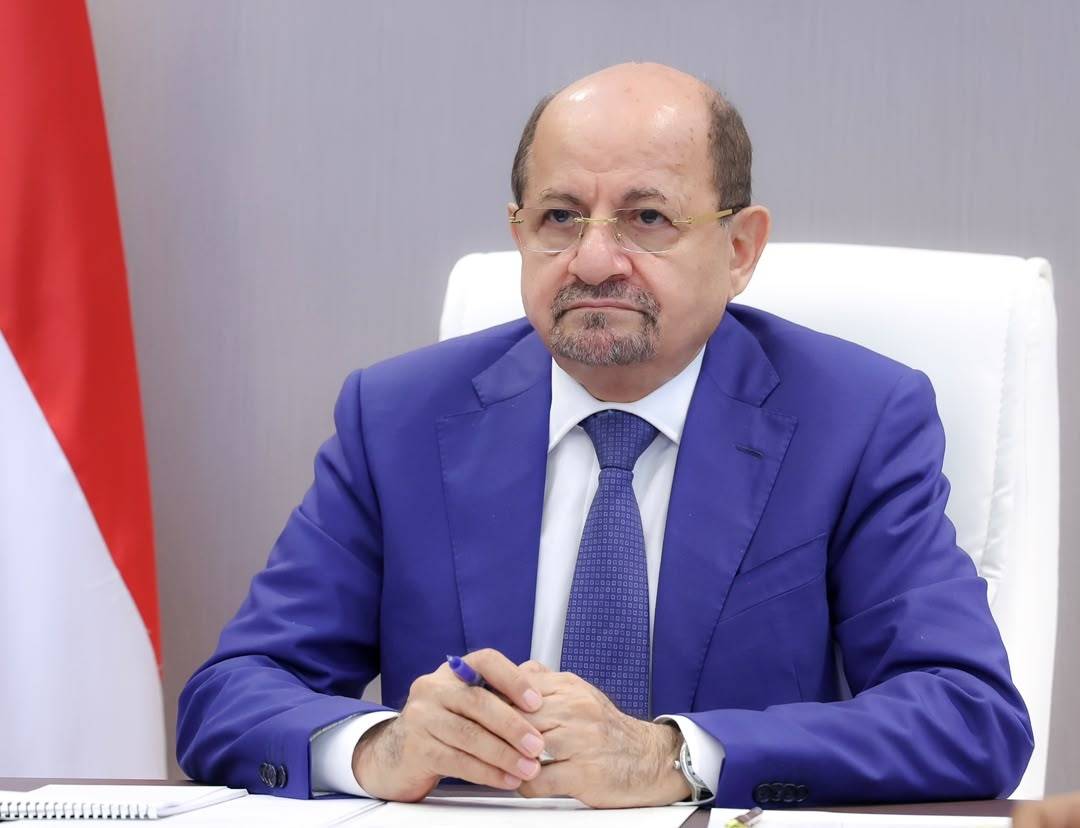
Al-Zindani affirmed that the government is working to strengthen the emergency response system and secure supply chains (Prime Minister's Office)
The shift from containment to deterrence
Regarding the shift from containment to deterrence, the Prime Minister explained that the government is facing a militia that has proven, over the past years, that it exploits any truce to rebuild its capabilities, and then returns to escalation whenever the opportunity arises.
He said that the government’s mission today is to enable state institutions, the armed forces and security services to protect citizens, facilities and national interests, and to work with the military and security leadership to raise readiness, enhance deterrence capabilities and restore state authority.
He stressed that deterrence, from the government’s point of view, is not just a military action, but an integrated system that includes military and security readiness, protecting facilities, securing ports and border crossings, pursuing financing and smuggling networks, in addition to political and diplomatic action and mobilizing international support.
Al-Zindani pointed out that the National Defense Council had already directed that readiness be maintained at its highest levels, that the protection of vital facilities be strengthened, and that deterrence tools be expanded in the face of sources of threat.
He added: “We are not looking for a war for the sake of war, nor do we want to expand the circle of Yemeni suffering, but at the same time the state and government will not accept that facilities, ports, cities and civilian objects become open targets without having the ability and will to protect them.”
“We say to everyone, inside and outside, that sustainable peace cannot be built in Yemen unless the state has the power to make decisions, possess sovereignty, and control weapons.”
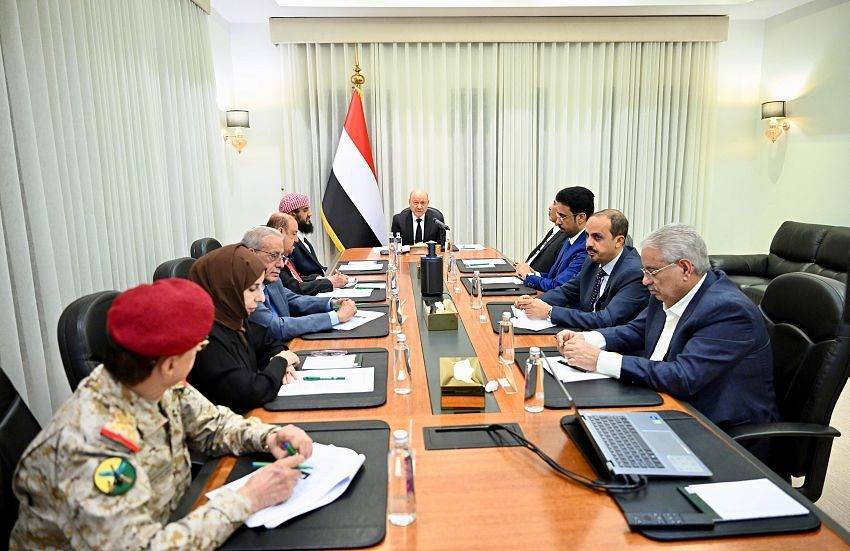
Al-Zindani pointed out that the National Defense Council had already directed that readiness be maintained at its highest levels (Saba)
Measures to protect infrastructure
Al-Zindani explained that his government views the protection of facilities as a matter of national security, not merely a precautionary measure. He indicated that, in light of the recent escalation, it has raised the level of preparedness in vital institutions and facilities, particularly ports, border crossings, and the transportation, energy, communications, and basic services sectors, and has developed contingency plans to address various potential scenarios.
He added that, during the past few days, he directed that the level of preparedness be raised in transport facilities, ports and border crossings, and that their ability to continue performing their functions in emergency circumstances be ensured.
The Prime Minister indicated that the government is working through two parallel tracks; the first relates to the direct protection of facilities and raising the level of coordination between military and security agencies and civilian authorities, while the other focuses on ensuring the continuity of services and economic activity in the event that any facility is subjected to an attack.
He explained that the importance of this is due to the fact that the Houthis’ goal is not limited to causing material damage, but also includes creating a state of fear, disrupting economic activity, and confusing the movement of citizens and trade, stressing that the best response to this type of terrorism is to maintain the work of state institutions.
He pointed out that the government is also working to strengthen the emergency response system, secure supply chains and stocks of basic goods, and coordinate with local authorities and relevant bodies to ensure a swift response to any potential damage.
Regarding the port of Mocha, Al-Zindani said that the government does not treat it as merely a local facility, but rather as part of a broader economic and maritime system, noting that targeting it would have repercussions that extend beyond national borders.
He added that protecting ports and economic facilities is a national responsibility, and at the same time it is part of the international community’s responsibility towards the security of navigation and international trade.
He stressed that the message the government wants to convey is that it will not allow the Houthi militias and their supporters in the Iranian regime to turn civilian and economic facilities into hostages to blackmail the state or the international community.
Stability in liberated areas
The Prime Minister described maintaining stability in the liberated areas as "the government's main battle," explaining that the Houthi militias are not only relying on missiles and drones, but also on exhausting the citizen, disrupting the economy, disabling services, and weakening confidence in the state.
He stressed that protecting economic and social stability is no less important than protecting the front lines, noting that the government program is based on interconnected paths that include developing revenues, controlling spending, strengthening oversight of public funds, combating corruption and smuggling, improving resource management, supporting the banking sector, maintaining currency stability, and continuing to improve electricity and basic services.
He added that the government is working to build greater resilience in the face of shocks, by securing basic needs, improving inventory management, diversifying supply routes, and raising the readiness of service institutions.
Al-Zindani said that the government has taken steps in the path of institutional and financial reform, but it does not claim that the results have yet reached the level that the citizen aspires to.
“We are working in extremely difficult circumstances, but the difficulty of the circumstances does not absolve the government of its responsibilities,” he added.
He stressed that the best way to thwart the Houthis’ bet on exhausting the liberated areas is to make state institutions more efficient, the economy more resilient, services more regular, and citizens more confident in their state.
The Yemeni Prime Minister affirmed that Saudi Arabia has been and continues to be a key partner for Yemen (Prime Minister's Office)
Yemeni-Saudi coordination
Al-Zindani stressed that Yemeni-Saudi coordination is based on a deeper foundation than just a situational response to military escalation, explaining that the two countries are united by a strategic partnership based on neighborliness, security, destiny and common interests.
He stressed that Saudi Arabia has been and remains a key partner for Yemen, and has not dealt with it as merely a political or security issue, but rather has proceeded from a vision that considers the stability of Yemen as part of the security of the Kingdom and the region, and sees that enabling the Yemeni state to restore its institutions, revive its economy and improve the conditions of its citizens is an investment in the security and stability of the entire region.
He explained that this coordination is constantly evolving and moving through political, diplomatic, security, military, economic and humanitarian tracks, noting that there is a high level of consultation between the leaderships of the two countries and their governments in dealing with emerging developments and risks.
“We highly appreciate the positions of the Custodian of the Two Holy Mosques, King Salman bin Abdulaziz, and Crown Prince and Prime Minister Mohammed bin Salman, towards Yemen, its leadership and people, and the continuous political, economic, humanitarian, military and security support they provide, as well as the role played by Prince Khalid bin Salman, Minister of Defense, in strengthening cooperation and coordination between the two countries,” he added.
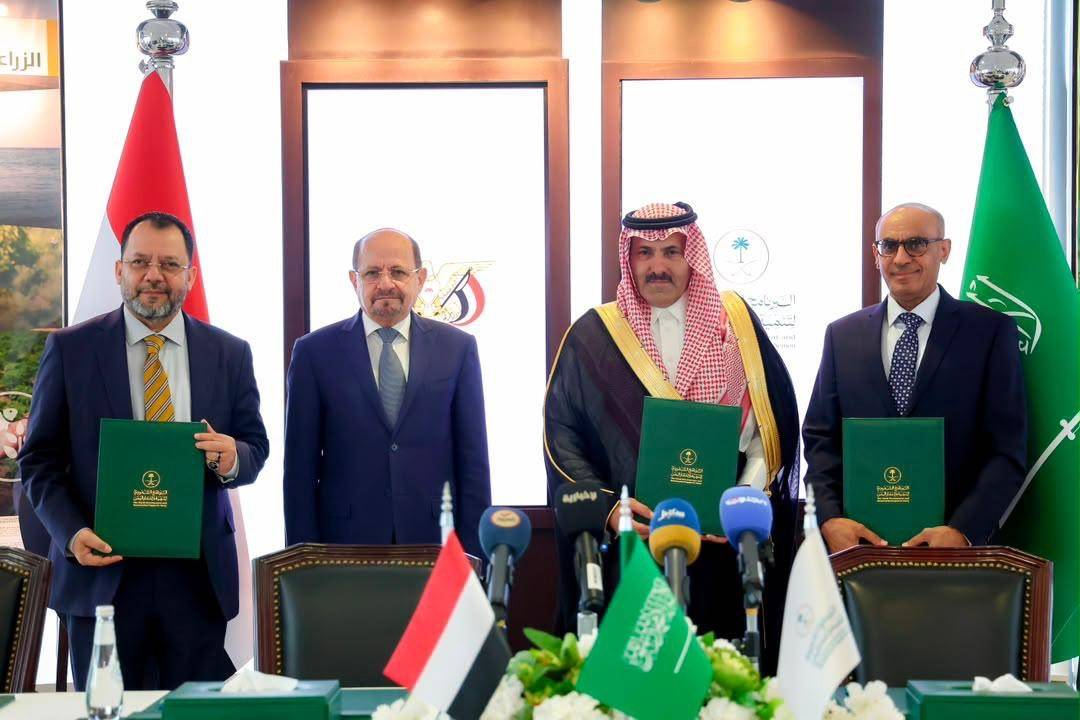
The Yemeni Prime Minister cited as an example the support that goes beyond political, security and military aspects, noting that the Saudi Development and Reconstruction Program for Yemen has become a key partner in the path of recovery and development, through its projects in the electricity, energy, water, health, education, transportation and infrastructure sectors.
He explained that these projects not only aim to address immediate needs, but also help to rebuild the capabilities of state institutions and improve the economic and living conditions of citizens.
Al-Zindani also pointed to the humanitarian role played by the King Salman Humanitarian Aid and Relief Center, as another example of Saudi commitment to the Yemeni people, through its relief and humanitarian programs and projects in various governorates.
Al-Zindani pointed to the humanitarian role played by the King Salman Center for Relief and Humanitarian Aid, as another example of Saudi commitment to the Yemeni people (Prime Minister's Office)
Regarding confronting the Houthi escalation, the Prime Minister stressed that there is a shared understanding of the nature of the threat, explaining that this escalation is no longer just an internal Yemeni issue; when the militias target ports, civilian facilities, and commercial ships and threaten international navigation, they are transferring the threat to the regional and international levels.
He called for a more resolute international stance, stressing that the security of the Red Sea and Bab al-Mandab is not just a Yemeni or regional issue, but an international interest linked to trade, energy, and global supply chains.
Government needs
Regarding his government’s needs, Al-Zindani said they consist, firstly, of continued political and diplomatic support for the Yemeni position; secondly, of supporting the capabilities of the state and its military, security and economic institutions; thirdly, of supporting the government’s efforts to protect vital facilities and restore its ability to produce and export its resources; and fourthly, of adopting a clear international position that links any path to peace to ending the causes of the war, and not to managing the division.
He stressed that Yemen does not want the international community to fight the war on behalf of the Yemenis, but rather to help them end it and build a state capable of protecting itself, and to deal seriously with the sources of funding and arming of the militias and the smuggling networks that fuel their ability to continue the war.
He explained that the equation the government is working on is not limited to confronting and deterring escalation, but is based on “a state confronting a terrorist coup militia”; a state that possesses institutions, a sovereign decision, armed forces, security services, and a recoverable economy, in contrast to a project that wants to keep Yemen in a state of war and constant attrition, and it must be defeated.
Al-Zindani expressed his confidence that Saudi support, along with the support of the international community, will enhance the ability of the Yemeni government to protect the liberated areas and continue reforms, leading to the complete restoration of state authority over the entire national territory, and achieving peace that ends the coup and restores stability to Yemen and its natural role in its Arab and regional environment.
A message to the Houthis
The Prime Minister concluded with a message in which he said: “The Houthi militias and those who support them should realize that Yemen will not remain an open arena for a cross-border project, that the Yemeni state will continue to build its capabilities to protect its people, institutions and interests, and that true peace cannot be a substitute for the state, but rather a result of its return.”
Spanish Ambassador to Asharq Al-Awsat: Saudi Arabia and Spain Enter New Era of Strategic Partnershiphttps://english.aawsat.com/interviews/5293710-spanish-ambassador-asharq-al-awsat-saudi-arabia-and-spain-enter-new-era
Spanish Ambassador to Asharq Al-Awsat: Saudi Arabia and Spain Enter New Era of Strategic Partnership
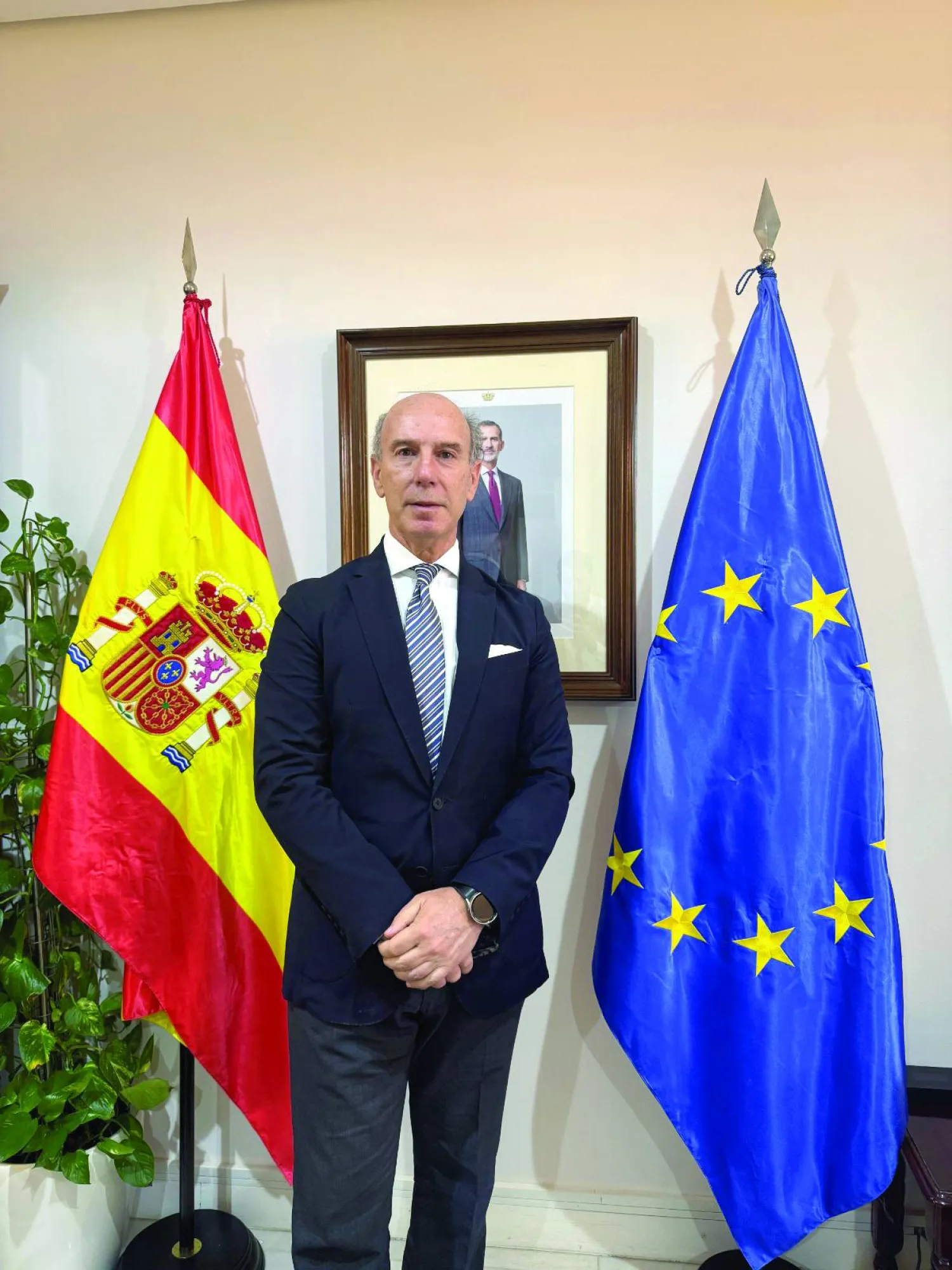
Spain's Ambassador to Saudi Arabia, Javier M. Carbajosa (Embassy of Spain in Riyadh)
Saudi-Spanish relations have entered a new phase of institutional cooperation following the signing of the Strategic Partnership Agreement in Madrid last May. The agreement established a permanent framework to expand economic, investment and technological cooperation while creating a high-level mechanism to oversee joint projects.
In an interview with Asharq Al-Awsat, Spain's Ambassador to Saudi Arabia, Javier Carbajosa, revealed that two new Memorandums of Understanding in the fields of economy and transport have been finalized, alongside additional cooperation frameworks that remain under negotiation. He stressed that bilateral relations are moving toward a comprehensive strategic partnership aligned with the objectives of Saudi Vision 2030.
Saudi Arabia and Spain signed the Strategic Partnership Agreement on May 13 in Madrid and agreed to establish a Strategic Partnership Council to elevate bilateral relations and expand cooperation, particularly in promising economic and investment sectors. They also signed an agreement on mutual visa exemption for holders of diplomatic and special passports.
On Tuesday, the Saudi Cabinet approved a Memorandum of Understanding on cooperation in the future of modern transport methods between the Kingdom's Ministry of Transport and Logistics Services and Spain's Ministry of Transport and Sustainable Mobility.
A New Framework for Bilateral Relations
Carbajosa said the agreement signed in Madrid marks a turning point in bilateral relations, establishing a new institutional framework for managing cooperation between the two countries.
"I am very pleased to share with you what I consider a milestone in our bilateral relations, and that is the signature last May in Madrid of the Strategic Partnership Agreement between our two countries, raising our diplomatic relations to its highest level.
From now onwards, both Prime Ministers will personally lead our bilateral relations."
He explained that under the new framework, Saudi Crown Prince Mohammed bin Salman and Spanish Prime Minister Pedro Sánchez will personally lead bilateral relations, helping accelerate the implementation of joint projects and strengthen political and economic coordination.
"Traditionally, cooperation between Saudi Arabia and Spain was driven by a Joint Commission, co-led by the Ministries of Economy from both countries and supported by various government sectors. This framework aimed to deepen bilateral ties through regular technical consultations and biennial high-level summits. Now, the new framework supersedes everything else and the Strategic Partnership will encompass all our activities in different sectors."
He added that Memorandums of Understanding in the fields of economy and transport have already been finalized, while negotiations continue on additional cooperation frameworks that will all fall under the umbrella of the new Strategic Partnership.
Growing Trade, Services Driving the Partnership
Carbajosa said bilateral trade between the two countries stands at approximately $6 billion annually, while Spanish exports to Saudi Arabia range between $2.4 billion and $2.6 billion, making Spain the fifth-largest European Union exporter to the Kingdom.
Spanish exports include industrial machinery, mechanical valves, ceramics, pharmaceuticals and agri-food products. Meanwhile, Spain imports roughly $3.5 billion annually from Saudi Arabia, mainly crude petroleum, refined oil and ethylene polymers.
He said Spanish imports from Saudi Arabia rose by 18 percent during the first quarter of this year, driven by higher crude oil prices linked to regional geopolitical tensions, while Spanish exports contracted during the same period.
"While long-term indicators point toward growth, the overall trade trajectory in 2026 remains dependent on the normalization of energy supply routes in the Gulf region."
Carbajosa noted that cooperation extends beyond trade in goods.
"While the trade in goods favors Riyadh, the exchange of services tells a different story. Driven by Saudi Arabia's Vision 2030 economic diversification, Spanish engineering, infrastructure, and transport firms have secured multi-billion-dollar contracts in the Kingdom.
From the flagship Haramein High-Speed Railway to massive urban transit and renewable energy grids, Spain heavily exports 'know-how' and technical services that do not always register in traditional customs ledger balances."
From Water and Energy to Smart Transport
The ambassador said cooperation also covers desalination and water resource management, drawing on Spain's world-class expertise in the design, construction and operation of large-scale reverse osmosis desalination plants, wastewater treatment facilities and circular water networks. Spanish companies have historically led major water and desalination projects across the Kingdom.
He added that cooperation also extends to urban development, infrastructure project management and the preparation of master plans for smart and sustainable cities, alongside upgrading power grids, substations and industrial complexes to strengthen energy security and support the integration of utility-scale renewable energy.
In the transport sector, Carbajosa said Spanish companies possess globally recognized expertise in designing, managing and operating complex transport networks. He cited the landmark Haramein High-Speed Railway, led by Spanish public-private consortia, alongside major infrastructure contributions to the Riyadh Metro project.
He also highlighted Spain's role in smart mobility, noting that Spanish companies will manage the intercity transportation network for the Qiddiya City giga-project through intelligent transport systems and traffic management solutions.
The Region's First Virtual Air Traffic Control Tower
Carbajosa said Saudi Arabia and Spain signed two Memorandums of Understanding in February 2026 covering civil aviation and future transportation modes, in the presence of Saudi Minister of Transport and Logistics Services Saleh Al-Jasser and his Spanish counterpart, Óscar Puente.
"The agreements align with the Kingdom's Aviation Program goals: expanding connectivity to 250 international destinations, positioning Saudi Arabia as a global logistics hub, and reaching 330 million annual passengers by 2030. Cooperation spans seven areas, including safety standards, route expansion, regulatory alignment, sustainable aviation, and joint R&D into autonomous aircraft and smart airport design."
He added that cooperation also extends to modernizing air navigation systems and airport infrastructure. A Spanish engineering firm has been selected to update the master plans for five Saudi airports, while another Spanish company has partnered with Saudi Air Navigation Services to deploy the region's first virtual air traffic control tower.
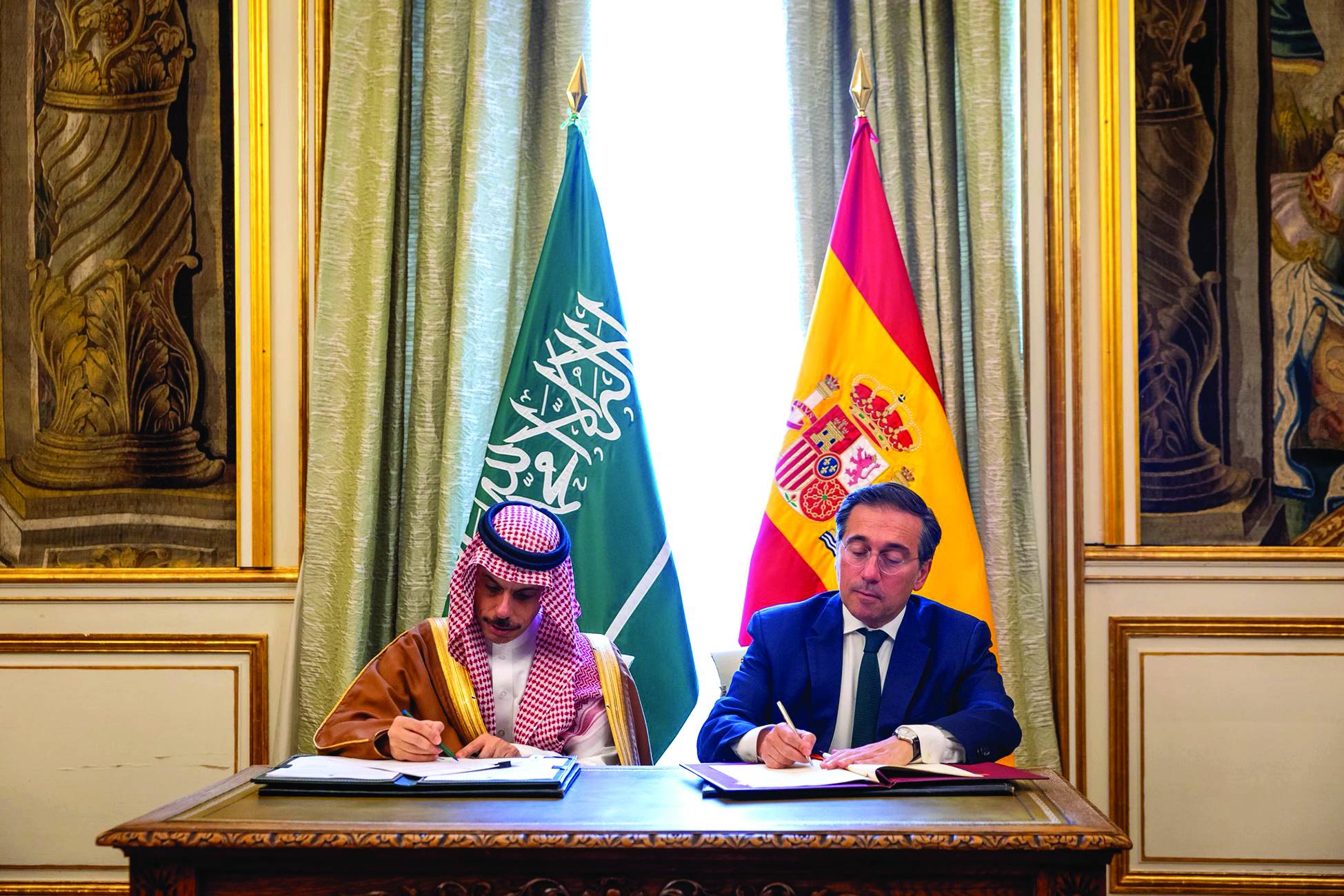
Saudi Foreign Minister Prince Faisal bin Farhan and Spanish Minister of Foreign Affairs José Manuel Albares Bueno during the signing of a Memorandum of Understanding establishing the Strategic Partnership Council (X)
From Arms Procurement to Technology Transfer
Carbajosa said defense cooperation between the two countries has evolved beyond traditional arms procurement toward industrial partnerships built on technology transfer and the localization of defense industries.
He explained that the joint venture between Saudi Arabian Military Industries (SAMI) and Spain's Navantia to outfit five Avante 2200 corvettes has helped transfer technological know-how to the Kingdom and resulted in the development of the HAZEM naval combat management system through technology transfer from Navantia. He added that a follow-on agreement includes the transfer of intellectual property rights to the General Authority for Military Industries (GAMI), paving the way for future naval vessels to be built in Saudi Arabia.
He added that other Spanish companies, including Indra and Grupo Oesía, offer advanced capabilities in radar systems, electronic warfare and counter-drone technologies. Spain currently accounts for approximately 10 percent of Saudi arms imports, ranking second only to the United States.
According to Carbajosa, Spain's expertise in cybersecurity, command-and-control systems and dual-use technologies aligns with the objectives of Saudi Vision 2030, which seeks to localize more than 50 percent of military spending by 2030 through technology transfer, research and development, and workforce training.
Space Opens New Horizons for Partnership
Carbajosa said Saudi Arabia's space economy reached $8.7 billion in 2024 and is projected to grow to $31.6 billion by 2035.
He noted that Spain has an advanced industrial base in the space sector through companies such as Airbus Defence and Space Spain, Indra, GMV, Hisdesat and Sener, which provide solutions in secure satellite communications, Earth observation and geospatial analytics.
He said these companies are natural partners for the Kingdom's sovereign space infrastructure priorities, including secure satellite communications, Earth observation and geospatial analytics.
He concluded by emphasizing that Saudi-Spanish relations have evolved from implementing projects to building long-term strategic partnerships based on co-production and technology transfer, opening new horizons for cooperation in defense, aviation and space.
Iraq PM to Asharq Al-Awsat: Corruption Crackdown Is Irreversible, Arms Must Be Under State Controlhttps://english.aawsat.com/interviews/5289965-iraq-pm-asharq-al-awsat-corruption-crackdown-irreversible-arms-must-be-under
Iraq PM to Asharq Al-Awsat: Corruption Crackdown Is Irreversible, Arms Must Be Under State Control
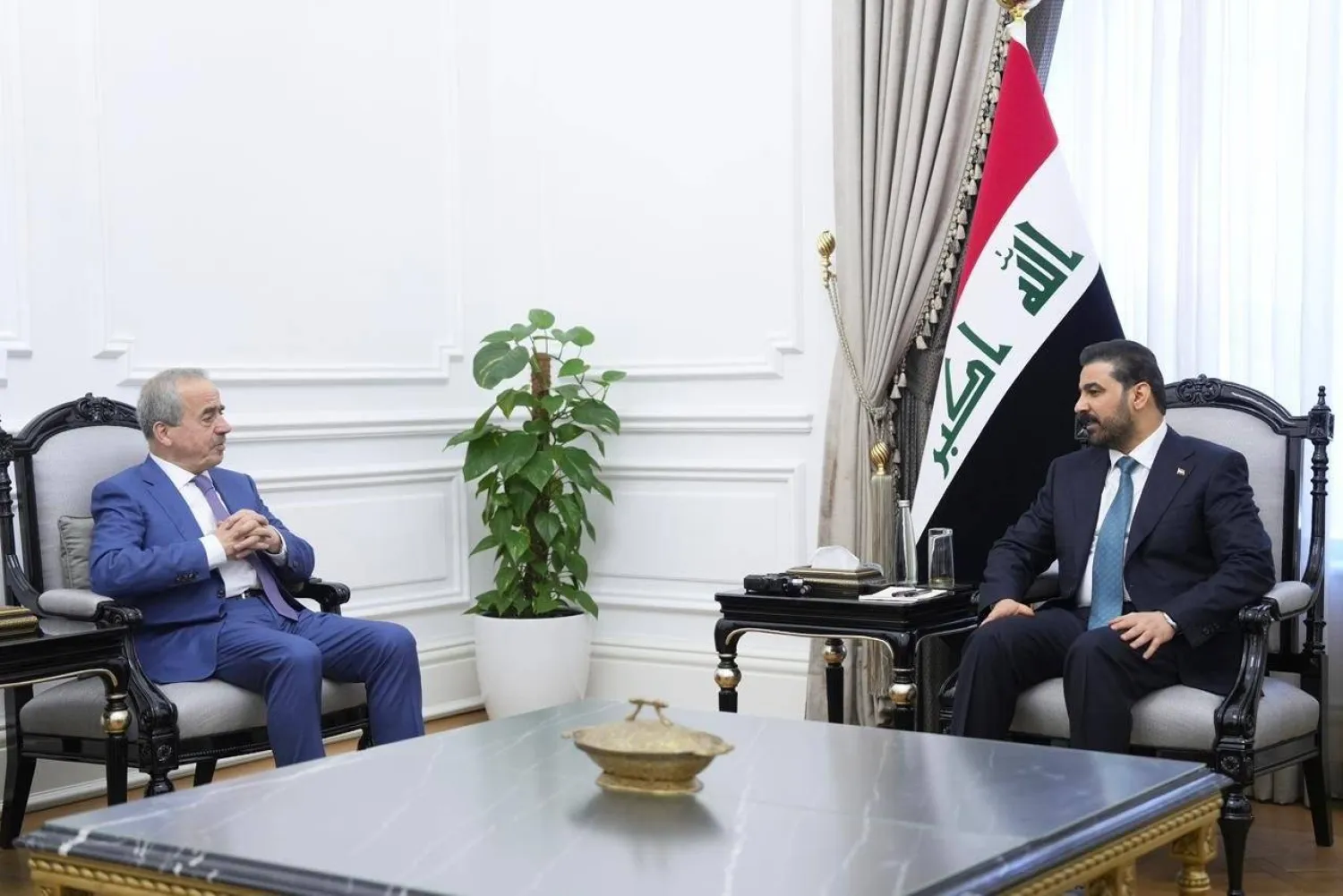
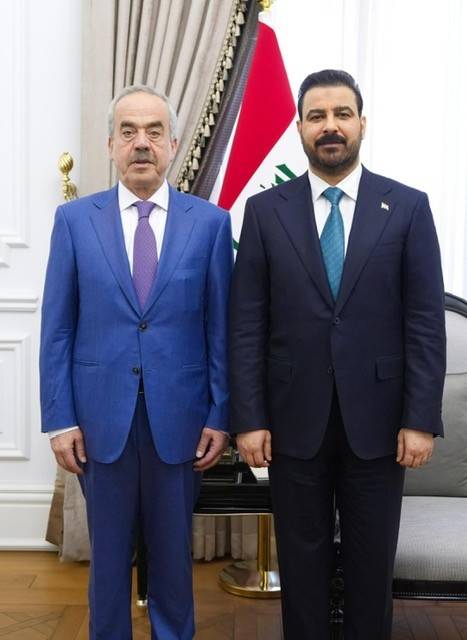
Iraqi Prime Minister Ali al-Zaidi during his interview with Asharq Al-Awsat Editor-in-Chief in Baghdad on Sunday
Journalists live for the unexpected, especially in Iraq, where events can overtake a carefully planned interview before it even begins.
I had requested a meeting with Iraq’s new prime minister, Ali al-Zaidi, who emerged after a prolonged political contest involving two of his predecessors, Nouri al-Maliki and Mohammed Shia al-Sudani. The interview was scheduled for June 28th, so I arrived in Baghdad the day before. As it turned out, the timing could not have been better.
When al-Zaidi took office, I wondered whether he had made the biggest mistake of his life. He had built a successful career in finance and business and amassed considerable personal wealth. Why abandon that world for the unforgiving arena of Iraqi politics, and for a job in which success has often proved elusive?
From his first day in office, he appeared to be confronting two of Iraq’s most dangerous challenges: entrenched corruption, which has drained the country’s wealth, and armed groups operating beyond state control, which have exacted a heavy price on Iraq’s economy, reputation and regional and international relations.
I woke early in the Green Zone to messages saying that armored vehicles had sealed off the area overnight and restricted access. At first, I assumed it was a routine security incident. It soon became clear that something far more significant was under way.
Acting on judicial warrants, security forces raided the homes of figures who had long believed themselves beyond reach. Within hours, influential politicians, lawmakers and provincial officials had been detained for questioning over allegedly stolen public funds. The operation extended beyond Baghdad to other provinces and remained ongoing.
Al-Zaidi launched his tenure by giving up his salary and official allowances, declaring that he would accept no gifts, “not even a necktie.” In Baghdad, there was widespread talk that a man accused of offering him $200 million to draw him into a corruption network was now himself under investigation.
Al-Zaidi speaks in firm, unambiguous terms. He says there will be no protection for the corrupt and “no retreat from the decision to fight corruption or from the decision to bring all weapons under state control. Both will be enforced through the law.”
He also rejects foreign dictates and tutelage, insisting that Iraq will not submit to pressure from any side. When I joked that those with money seek power and those with power seek money, he replied that he was already financially secure. He said he would neither contest the next parliamentary elections nor seek a second term as prime minister.
Iraqi Prime Minister Ali al-Zaidi during an interview with Asharq Al-Awsat Editor-in-Chief in Baghdad on Sunday
The fatigue was visible in his eyes when we met. He said he had not slept for 24 hours, having followed what Baghdad residents were calling “the night the big fish were caught.”
A visit by Iranian Foreign Minister Abbas Araghchi shortened the time available for al-Zaidi’s first interview with an Arab media outlet, leaving some questions unasked.
The following is the full interview:
Is the fight against corruption an irreversible decision?
Yes. It is an irreversible decision, and it is not optional. Corruption now threatens the very existence of the Iraqi state.
Certain elements adopted the notion of entering the body of the Iraqi state for the purpose of theft rather than public service. There is no longer any place for such people.
Between 1980 and 2003, Iraq’s wealth was devoted to sustaining wars, followed by the years of sanctions. Iraqis were therefore unable to enjoy their country’s wealth for 23 years.
From 2003 until the current year, 2026, another 23 years have passed. You are well aware of what happened in Iraq during this latter period.
A deviant system of thought emerged, centered on competing to loot and steal. We are in the process of ending this system, writing a new page for Iraq and closing that chapter.
Does this mean that you have decided to close the chapter on corruption?
Yes. There will be no place for corruption and no place for arms outside the state.
At the end of this year, we will announce a “National Sovereignty Conference” that will enshrine the exclusive possession of force by the state and its institutions.
No party will be permitted to carry weapons outside the framework of the state, and Iraqis will finally enjoy their country’s wealth.
We face two paths. We can either accommodate the interests of certain individuals and lose the approval of God Almighty and of the people, or we can remove those individuals.
Today, we will instruct the minister of finance to open a special account to recover Iraq’s funds from those involved in corruption. They must return the money.
Those who refuse to return it will face a different response from us. We will pursue settlements with those who return corruption proceeds, while safeguarding the rights of the Iraqi people in accordance with the law. The proceedings will remain confidential.
I have made this intention sincerely before God. We carry a debt toward Iraq.
What is that debt?
This country, Iraq, has bestowed its blessings and wealth upon us. How could we have become what we are without Iraq?
It is now our duty to repay that debt.
That is why I announced that I would not receive a salary and would not accept a gift, even if it were a necktie. My hand will not touch public money.
Should I act otherwise, I hope I receive what I deserve. I imposed this pledge upon myself to prevent any possibility of change. The highest limit of my ambition is to earn God’s approval and bring happiness to Iraqis.
Will you continue the anti-corruption campaign, regardless of the cost?
I regard death as a meeting with God Almighty, and it is the least we can offer Iraq.
I have announced that I will not run for another term and will not establish a political party.
I am determined, however, that the whole world should come away with an image of Iraq as a true source of leaders and that Iraqis are capable of governing this ancient country.
I will not permit dictates from beyond Iraq’s borders, whether from the East or the West. Iraq’s decision belongs to its people and is expressed by parliament, and the government must implement that decision.
So your slogan is “Iraq first.” No major powers and no regional powers?
Absolutely. Iraq comes first. Nothing comes before Iraq for us.
The interests of Iraqis are my top priority. It is in our people’s interest to build distinguished relations with the international community, neighboring countries, and the Arab Gulf states. Iraq is a state, not a village.
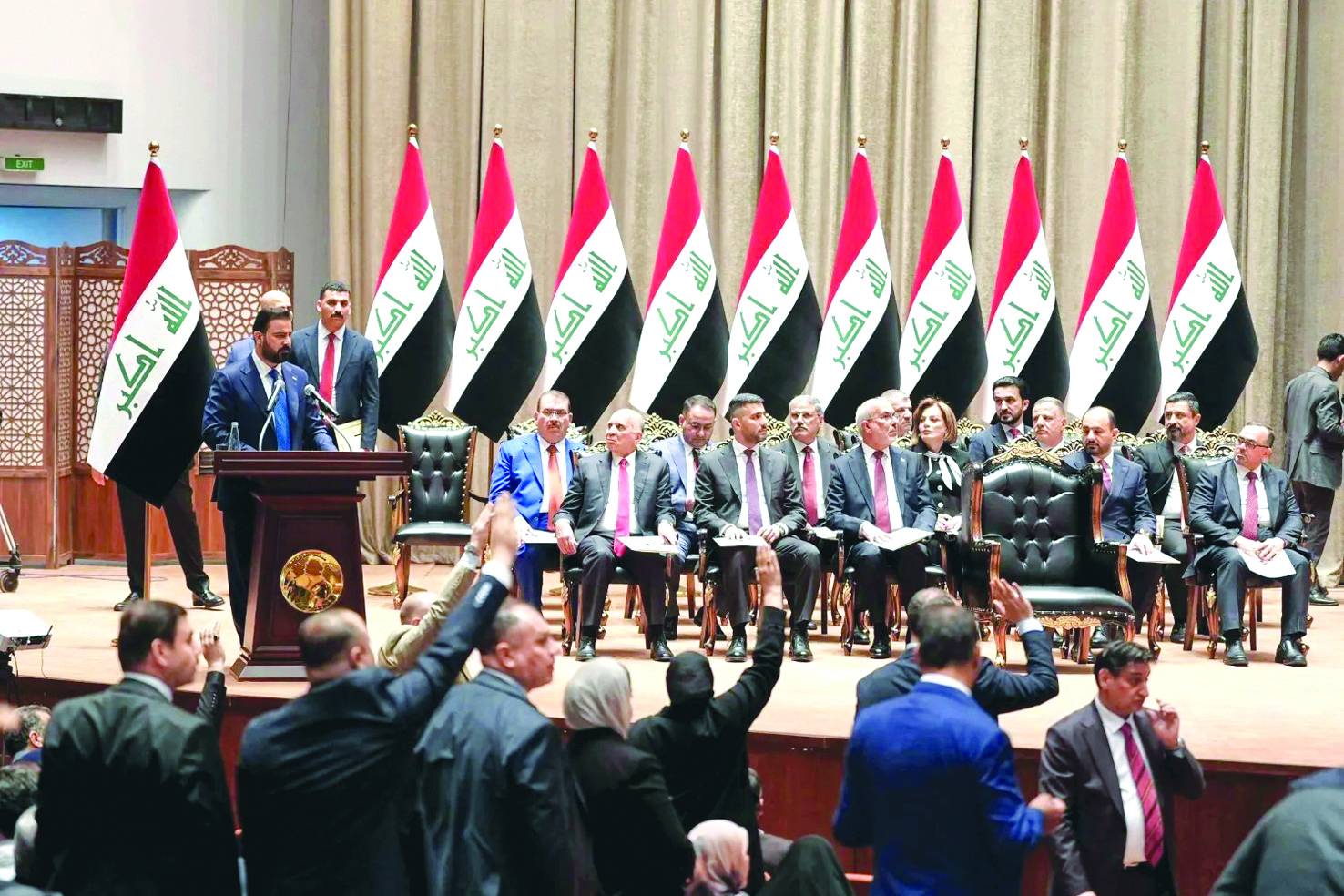
Prime Minister Ali al-Zaidi during the parliamentary vote on his government in the Iraqi Parliament (Government Media)
Prime Minister, during the recent war with Iran, Iraq’s relations with the Gulf Cooperation Council states became strained because some attacks on Gulf targets were launched from Iraqi territory...
Specialized committees were formed to verify this matter. We are also awaiting evidence from the relevant authorities in the Gulf states, and we will act accordingly.
We ordered an investigation and instructed all security commanders to confront any attempt to use Iraqi territory to attack neighboring countries.
I urge, however, that the present not be judged through the lens of the past. We found this situation already in place when we assumed responsibility.
You have plans to visit Washington in the middle of next month. There will certainly be other visits as well...
We have received numerous invitations to visit brotherly and friendly countries, including France, Britain, and Germany.
The visits that will take priority because of the importance of joint work will be to the Republic of Türkiye, the Islamic Republic of Iran, and the Kingdom of Saudi Arabia, following the visit to Washington.
What do you expect from the Washington visit? Are we exaggerating if we say that Iraq is passing through a suffocating financial crisis?
That description is inaccurate. State employees’ salaries are secured and are being paid regularly. We are extremely keen to ensure that.
When our government took office, total debt stood at around 208 trillion Iraqi dinars. The budget depends on oil for 93 percent of its revenues, while non-oil revenues account for 7 percent.
My view of the Iraqi economy is that it is witnessing a struggle between two different spheres: an old economy that refuses to die and a modern economy whose birth is proving difficult.
Our economic philosophy is to move forcefully toward a market economy and free ourselves from the old economic model. That is the theoretical aspect.
In practical terms, however, we face a large body of conflicting legislation. We have old resolutions dating back to the dissolved Revolutionary Command Council that were drafted according to a socialist mentality that is no longer effective.
The Iraqi constitution, by contrast, is founded on economic freedom.
We have launched a major effort to change inherited legislation. The cabinet will complete this work in the coming days and send it to parliament.
We are also moving ahead with the establishment of an Energy and Development Fund, to which the Central Bank of Iraq will contribute. It will be offered for public subscription.
We will invite Saudi Arabia, the United Arab Emirates and Qatar to participate in the fund. We will also invite US and European funds and banks.
The fund will focus on development, industry, agriculture and all the sectors needed by our people.
How did your government manage public finances during the crisis caused by the closure of the Strait of Hormuz? Did you rely on borrowing from the Central Bank and drawing down reserves?
We discounted bills of exchange and borrowed from commercial banks and the Central Bank of Iraq.
Iraq’s position toward OPEC has generated considerable controversy. It is clear that Iraq wants a larger production quota. How do you balance increasing production with preserving oil prices?
I would like to address those concerned at OPEC.
Iraq entered a war in 1980. After eight years, it emerged with debts exceeding $100 billion.
It later became involved in the occupation of Kuwait and emerged with debts exceeding $200 billion.
After 2003, terrorism took root on our territory, and we suffered from instability.
Iraqis then fought the terrorist organization ISIS, not only in defense of Iraq but on behalf of the entire region.
Had ISIS managed to seize Iraq, the national security of neighboring countries and the wider region would have been threatened.
That war caused nearly $400 billion in infrastructure losses. To this day, thousands of Iraqis have not returned to their home areas and destroyed houses. This reality must be taken into consideration.
Iraq’s population has also reached 47 million, while our quota stands at 3.4 million barrels per day.
These facts must be incorporated into the criteria used to determine and distribute OPEC quotas.
We are therefore seeking a fair mechanism of distribution that does not prejudice the rights of Iraq and the Iraqi people.
Some forecasts suggested that Iraq might enter a borrowing program with the International Monetary Fund or the World Bank. Is that possibility still under consideration?
With the resumption of navigation and exports through the Gulf and the reopening of the Strait of Hormuz, those financial options have been abandoned. There is no longer any need for them.
Washington withheld shipments of physical dollars to Iraq for certain reasons. Do you expect this problem to be resolved with the US president?
They were precautionary measures and were not intended as leverage in return for specific demands.
There were concerns regarding physical cash. We explained to the US side the mechanisms and channels through which these funds move.
The issue has been resolved, and the cash shipments have arrived.
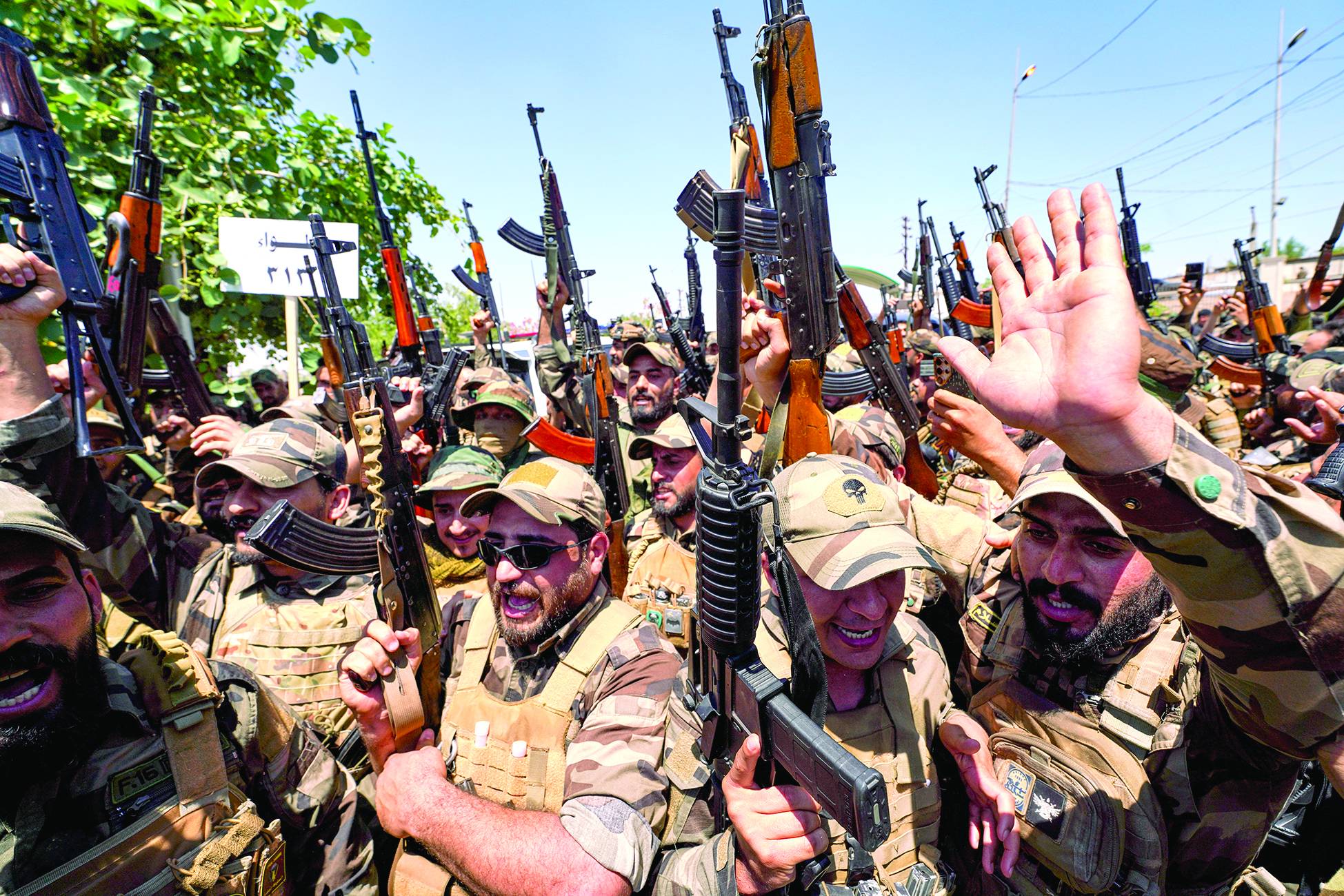
Members of the Saraya al-Salam cheer during a ceremony marking the start of the process of handing over their weapons to Iraqi state forces in Samarra, north of Baghdad, Iraq, Thursday, June 4, 2026. (AP Photo/Anmar Khalil)
Has the government negotiated with factions that reject confining arms to the state? What if their rejection becomes final after the withdrawal? Would the government be forced to confront them?
Let us state this clearly: there is no force other than the force of the state, and we will use the force of law to impose it.
There will be no weapons other than the weapons of the state.
Some view the plan to confine arms to the state as little more than a symbolic measure adopted to accommodate political forces.
If we listen to the skeptics, we will never reach a result.
As for the factions, they are ideologically driven groups. We believe that their publicly declared acceptance of giving up their weapons is an important and significant beginning.
In reality, we have received various types of weapons from Saraya al-Salam, Asaib Ahl al-Haq and Kataib Imam Ali.
More important than the handover of weapons, however, is severing the relationship between a faction and the fighters under its command.
The weapons of these factions are now effectively in the custody of the state. Only a small quantity remains.
A mechanism will soon begin for handing over the remaining weapons to the armed forces.
This file will be addressed in its entirety. Nothing is stronger than the state.
We believe that resistance is a necessity, not a profession, and the need for it has ended.
We will not accept the existence of a state within the state.
Iraqi Prime Minister Ali al-Zaidi during his meeting with US envoy Tom Barrack in Baghdad on June 16, 2026 (Government Media)
What did US envoy Tom Barrack ask of you?
He made no demands.
We discussed the suspension of operations by some US companies because of bureaucratic obstacles, and we facilitated the procedures needed by those companies.
Do you believe that the United States is genuinely prepared to support your government’s plans?
I have spoken by telephone with President Donald Trump once.
Yes, we sensed a willingness to provide support. Naturally, we place Iraq’s interests first in every step we take.
Some have accepted concessions because they had financial objectives. That is not the case with us.
Prime Minister, have the political forces pledged to facilitate your mission?
Yes, certainly.
I had previously been offered the premiership twice and turned it down on both occasions.
Is there a person who had a particular influence on you?
Yes. I was deeply influenced by my late father, who always took me with him.
He detested injustice and warned me against angering the Lord, who does not accept injustice against His servants.
How would you describe your relations with Syria and President al-Sharaa?
They are moving toward becoming good relations.
The foreign minister will visit them soon, and President al-Sharaa called to congratulate me.
We are moving toward greater economic openness and cooperation for the benefit of our two brotherly peoples.
لم تشترك بعد
انشئ حساباً خاصاً بك لتحصل على أخبار مخصصة لك ولتتمتع بخاصية حفظ المقالات وتتلقى نشراتنا البريدية المتنوعة