


General Security Chief: Lebanon Prepares Itself for Possible Lone Wolf Attacks

Major General Abbas Ibrahim, head of Lebanon's Directorate of General Security, attends an urgent security meeting in Beirut. Photo: Reuters
TT

General Security Chief: Lebanon Prepares Itself for Possible Lone Wolf Attacks

Major General Abbas Ibrahim, head of Lebanon's Directorate of General Security, attends an urgent security meeting in Beirut. Photo: Reuters

General Security chief Major General Abbas Ibrahim said on Sunday that Lebanon continued to face terror threats despite the victory achieved at the eastern border with Syria.

He predicted the next phase to witness “a new kind of confrontation” against terrorism, which he said the Lebanese security forces would be watching closely.

In an interview with Asharq Al-Awsat, Abbas said that terrorism in its geographical meaning has already been moved away from Lebanon after the latest ISIS and al-Nusra Front defeats.

However, he said that such an achievement does not mean the two groups were no longer a threat to the country.

“One of the most advanced kinds of terrorist operations is currently embodied by the lone wolves that use vehicles to kill people in streets around the world,” the General Security chief said.

He also warned from the threat of suicide bombers and those who infiltrate the society.
 
Ibrahim was the government’s chief negotiator in trying to win the return of Lebanon’s captured soldiers who were abducted by the terrorists in 2014 after later revealing that the remains of the majority of them have been recovered.

Commenting on the timing of the latest clashes that erupted at the Ain el-Hilweh Palestinian refugee camp in the southern city of Sidon, and which came amid a battle launched by the Lebanese army in Jurud Asral, Abbas said there was no coincidence.

“When the Lebanese army launched its battle, terrorists tried to limit the pressure on their comrades. However, some wise Palestinian forces at the camp were alerted by the situation and complied with the messages we sent them about the rejection to turn the camp, now or later, to a hotbed of threat that would hurt the Palestinians and the Lebanese,” the General Security chief said.



EU Condemns Israel's West Bank Control Measures

The Israeli settlement of Har Homa, seen from the West Bank city of Bethlehem, Tuesday, Dec. 17, 2024. (AP)
TT

EU Condemns Israel's West Bank Control Measures

The Israeli settlement of Har Homa, seen from the West Bank city of Bethlehem, Tuesday, Dec. 17, 2024. (AP)

The European Union on Monday condemned new Israeli measures to tighten control of the West Bank and pave the way for more settlements in the occupied Palestinian territory, AFP reported.

"The European Union condemns recent decisions by Israel's security cabinet to expand Israeli control in the West Bank. This move is another step in the wrong direction," EU spokesman Anouar El Anouni told journalists.


Atrocities in Sudan's El-Fasher Were 'Preventable Human Rights Catastrophe'

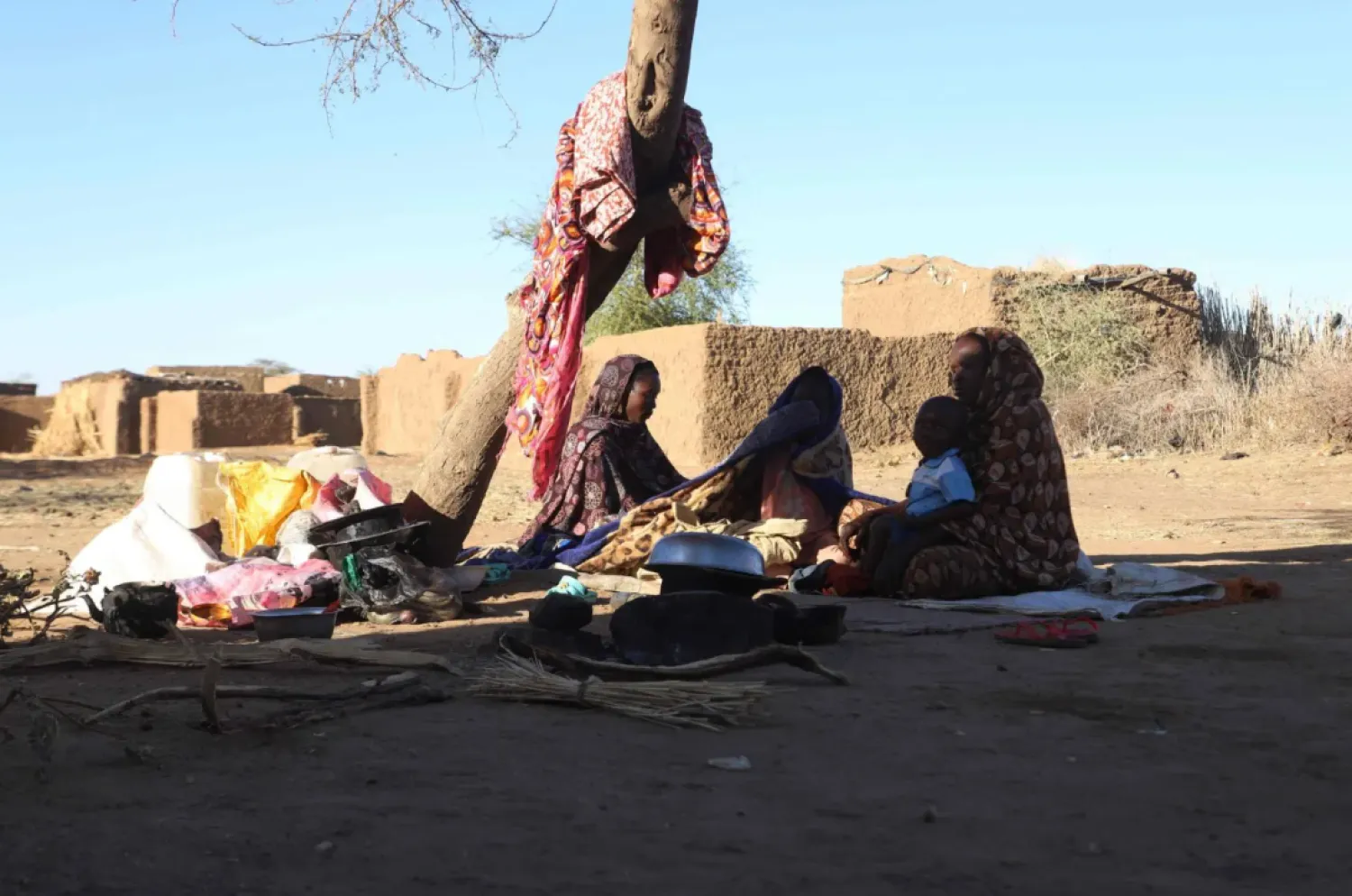
Sudanese displaced people who left El Fasher after its fall, sit in the shade in Tawila at the Rwanda camp reception point on December 17, 2025. (Photo by AFP)
TT

Atrocities in Sudan's El-Fasher Were 'Preventable Human Rights Catastrophe'

Sudanese displaced people who left El Fasher after its fall, sit in the shade in Tawila at the Rwanda camp reception point on December 17, 2025. (Photo by AFP)

The atrocities unleashed on El-Fasher in Sudan's Darfur region last October were a "preventable human rights catastrophe", the United Nations said Monday, warning they now risked being repeated in the neighbouring Kordofan region.


"My office sounded the alarm about the risk of mass atrocities in the besieged city of El-Fasher for more than a year ... but our warnings were ignored," UN rights chief Volker Turk told the Human Rights Council in Geneva.


He added that he was now "extremely concerned that these violations and abuses may be repeated in the Kordofan region".


Arab League Condemns Israel's Decisions to Alter Legal, Administrative Status of West Bank

A general view shows the opening session of the meeting of Arab foreign ministers at the Arab League Headquarters (Reuters)
TT

Arab League Condemns Israel's Decisions to Alter Legal, Administrative Status of West Bank

A general view shows the opening session of the meeting of Arab foreign ministers at the Arab League Headquarters (Reuters)

The General Secretariat of the Arab League strongly condemned decisions by Israeli occupation authorities to impose fundamental changes on the legal and administrative status of the occupied Palestinian territories, particularly in the West Bank, describing them as a dangerous escalation and a flagrant violation of international law, international legitimacy resolutions, and signed agreements, SPA reported.

In a statement, the Arab League said the measures include facilitating the confiscation of private Palestinian property and transferring planning and licensing authorities in the city of Hebron and the area surrounding the Ibrahimi Mosque to occupation authorities.

It warned of the serious repercussions of these actions on the rights of the Palestinian people and on Islamic and Christian holy sites.

The statement reaffirmed the Arab League’s firm support for the legitimate rights of the Palestinian people, foremost among them the establishment of their independent state on the June 4, 1967 borders, with East Jerusalem as its capital.