


‘False Peace’ for Markets? A Trader Is Betting Millions on It

Bitcoin and other digital currencies are gaining popularity, but the exchanges where they trade have many weaknesses. Credit Dado Ruvic/Reuters
TT

‘False Peace’ for Markets? A Trader Is Betting Millions on It

Bitcoin and other digital currencies are gaining popularity, but the exchanges where they trade have many weaknesses. Credit Dado Ruvic/Reuters

Last Wednesday was another good day to make money on Wall Street: Stocks pushed up, interest rates were at rock bottom and the VIX gauge of investor unease was again trending downward.

But as investors celebrated yet another bounce-back from a market slip, Christopher Cole, a trader who runs a hedge fund here that makes bets on various forms of financial apocalypse, spotted something amid the sprawl of data and code that decorated the wall of screens before him.

“Optically, volatility is still very low, but fear is increasing,” Mr. Cole said, pulling up a chart on one of his six trading windows. It showed that in the months beyond the 30-day period measured by the Chicago Board Options Exchange’s VIX index, investors were expecting some violent moves to come in the stock market.

Betting against a flare-up of such turmoil has been one of the longest-running and most profitable trades in recent financial history.

Mr. Cole, who opened Artemis Capital to outside investors in 2012, is taking the opposite side, arguing with the passionate intensity of the true believer that this market calm cannot last.

In doing so, he draws parallels to the stock market crash of 1987, when investors were similarly lulled into believing that volatility would not erupt.

So far, those betting against chaos have carried the day.

From day traders perched in front of their living room laptops to sophisticated institutional investors the world over, many have made piles of money betting that the VIX will keep moving lower.

After peaking at close to 90 at the time of the financial crisis, the VIX recently sank to a multidecade low of just below 9, the occasional sharp spike upward notwithstanding. (As of Wednesday afternoon, it was 10.5.)

Several factors have helped along the way, analysts say. They include aggressive money printing and bond purchasing by global central banks and the profusion of exchange traded investments, which make it cheap and easy for professionals and amateurs alike to bet on a falling VIX.

Now, just a month ahead of the 30th anniversary of Black Monday, when the Standard & Poor’s 500 stock index plunged 20 percent, Mr. Cole is wagering on a similar calamity, underpinned by a vicious spike in the VIX and a steep sell-off in stocks.

“The fact that everyone has been incentivized to be short volatility has set up this reflexive stability — a false peace,” he said. “But if we have some sort of shock to the system, all these self-reflexive elements reverse in the other direction and become destabilizing as opposed to stabilizing.”

Calling an end to the second-longest bull market in modern financial history has, understandably, become quite fashionable. Not just on the perma bear fringes, either. Wall Street houses talk regularly about overvalued stock markets, and establishment voices like Lloyd C. Blankfein, the chief executive of Goldman Sachs, have mused openly that “things have been going up for too long.”

A little-known British investment firm, Ruffer Capital, has caused a stir by predicting a shattering denouement, and many hedge funds are buying up cheap VIX options, which will pay off handsomely if the index shoots up.

Artemis Capital is of a slightly different stripe. It is, as Mr. Cole likes to say, a hedge fund with a capital H. That means, in times of bull market fever, the fund will bet on a reversal, offering downside protection for cautious investors by finding creative ways to purchase exposure to financial chaos. These trades entail purchasing a variety of derivative instruments that pay off if there is a dramatic upward spike in the VIX, which can cause stocks to fall precipitously.

Of late, money managers seeking such a hedge have grown markedly. Mr. Cole, who started with $1 million in 2012, is now sitting on $200 million, and demand has been so strong recently that he expects to hit $300 million soon, at which point he will restrict further access.

Mr. Cole, 38, has the bouncy enthusiasm of a young child, and he spends each waking day reading, coding and free associating about what it will be that marks the bull market’s end.

Like many dyed-in-the-wool market skeptics, he has his quirks. To remind himself to make full use of each day, he wears a watch that counts off the time he has left to live — 50 years and 4 months.

At the moment, Mr. Cole calculates that as much as $1.5 trillion in investor money is betting the markets will remain as they more or less have been since 2009: volatility free.

This sum, he says, includes about $60 billion in funds that are explicitly short volatility in its many forms. The bulk of this amount is in funds that deploy strategies where volatility is a critical input for allocating exposure to the stock market. So the lower volatility is, the more these funds load up on stocks.

Piling on to the low volatility trade have been corporations, which this year may buy back close to $1 trillion worth of stock, analysts estimate.

In 1987, portfolio insurance transformed a market decline into a historic rout when computer driven programs sold stock market futures into a panicked marketplace absent of willing buyers. Mr. Cole says this $1.5 trillion in short volatility money can play a similar role today if the fear gauge index spikes sharply.

All of a sudden VIX sellers will become VIX buyers, which will send the index soaring and stocks plummeting.

As he sees it, the formulaic strategies that sold stock market futures into a falling market in 1987 and the short volatility money of today are akin to barrels of petroleum that can turn a mere fire into a seismic conflagration.

“In 1987, we were in a bull market, and the Fed was behind the curve with regard to inflation and interest rates,” Mr. Cole said. “What could cause a crisis now is if rates suddenly spike higher, share buybacks seize up and then the volatility sellers turn into volatility buyers all at once.”

It is, in many ways, a moral argument for him.

Volatility sellers reap cheap and fleeting gains, which he compares to speeding, obesity and marrying for money. Those willing to suffer the immediate pain of being long volatility — before the reward of calamity comes — Mr. Cole sees as being more virtuous.

To say that Mr. Cole is obsessed with volatility — as both a financial and a philosophical construct — would be an understatement. In his investor letters and papers, he cites the poems of Goethe, the movies of William Friedkin and George Lucas, and Joseph Campbell’s works on mythology as teaching tools for interpreting the whims of sudden change.

Ultimately, though, he believes that those who have held volatility in abeyance for so long — from risk parity funds to global central banks — will face a reckoning.

“Volatility is an instrument of truth, and the more you deny the truth, the more the truth will find you through volatility,” Mr. Cole said. “If central banks want to keep saving the day, that is fine. But volatility will then be transmuted through other forms like populism and identity politics and threaten the fabric of democracy. And that is something that my hedge fund will never be able to protect against.”

The New York Times


Greece Headed for ‘Record Year’ for Tourism, Says Minister

Tourists descent Propylaia, the ancient gate of the Acropolis archaeological site in Athens on June 21, 2023. (AFP)
TT

Greece Headed for ‘Record Year’ for Tourism, Says Minister

Tourists descent Propylaia, the ancient gate of the Acropolis archaeological site in Athens on June 21, 2023. (AFP)

Greece is on track for "another record year" for tourism in 2025, despite ongoing labor shortages in a key sector of its economy, Tourism Minister Olga Kefalogianni said on Sunday.

Between January and the end of September, the Mediterranean nation -- long beloved by tourists for its sunny islands and rich archaeological sites -- welcomed 31.6 million visitors, a four-percent increase compared with the same period in 2024, according to Bank of Greece data published in late November.

"Overall, we expect 2025 to be another record year for tourism in our country," Kefalogianni said in an interview with the Greek news agency ANA.

The conservative minister also expressed hope for another bumper year in 2026.

"The indicators for 2026 are already particularly encouraging and allow us to be optimistic," she said.

Since the Covid-19 pandemic, Greece has been breaking annual records in tourism revenues and the number of foreign visitors.

Across 2024, 40.7 million people visited Greece, up 12.8 percent from 2023.

But the uptick has sparked concern over the unchecked construction in several hotspots, while Athens locals have complained that the proliferation of short-term holiday lets has caused rents to skyrocket.

Climate change-fueled heatwaves and increasingly devastating wildfires also pose a threat to the sector, which Prime Minister Kyriakos Mitsotakis has trumpeted since taking office in 2019 in a bid to revive the economy after the financial crisis.

According to the Institute of the Greek Tourism Confederation (INSETE), tourism directly contributed around 13 percent of GDP in 2024 and indirectly to more than 30 percent of GDP.


Iraq Says International Firms in Kurdistan Obliged to Transfer Crude Under Deal

A handout picture released by Iraq's Prime Minister's Media Office on January 2, 2025, shows a partial view of the oil refinery of Baiji north of Baghdad, during the inauguration ceremony of the fourth and fifth units. (Iraqi Prime Minister's Media Office / AFP)
TT

Iraq Says International Firms in Kurdistan Obliged to Transfer Crude Under Deal

A handout picture released by Iraq's Prime Minister's Media Office on January 2, 2025, shows a partial view of the oil refinery of Baiji north of Baghdad, during the inauguration ceremony of the fourth and fifth units. (Iraqi Prime Minister's Media Office / AFP)

Iraq’s state oil marketer SOMO said on Sunday international producers in Kurdistan were still obliged to send it their crude under a September export agreement, after Norway's DNO said it would not take part in the agreement. 

SOMO said its statement was in response to a Reuters report in ‌September which ‌quoted DNO as ‌saying ⁠it would ‌sell directly to the Kurdish region and had no immediate plans to ship through the Iraq-Türkiye pipeline. 

The September deal between Iraq's oil ministry, Kurdistan's ministry of natural resources and producing companies stipulated that SOMO ⁠will export crude from Kurdish oil fields through ‌the Türkiye pipeline. 

At the ‍time, DNO - the ‍largest international oil producer active in ‍Kurdistan - welcomed the deal but did not sign it, saying it wanted more clarity on how outstanding debts would be paid. 

It said it would continue to sell directly to the semi-autonomous region of ⁠Kurdistan. 

SOMO said on Sunday the Kurdistan ministry of natural resources had reaffirmed its commitment to the deal "under which all international companies engaged in extraction and production in the region's fields are required to deliver the quantities of crude oil they produce in the region to SOMO, except for the quantities allocated ‌for local consumption in the region." 


How 2025 Decisions Redrew the Future of Riyadh’s Real Estate Market

Construction is seen at a real estate project in Riyadh. (SPA)
TT

How 2025 Decisions Redrew the Future of Riyadh’s Real Estate Market

Construction is seen at a real estate project in Riyadh. (SPA)

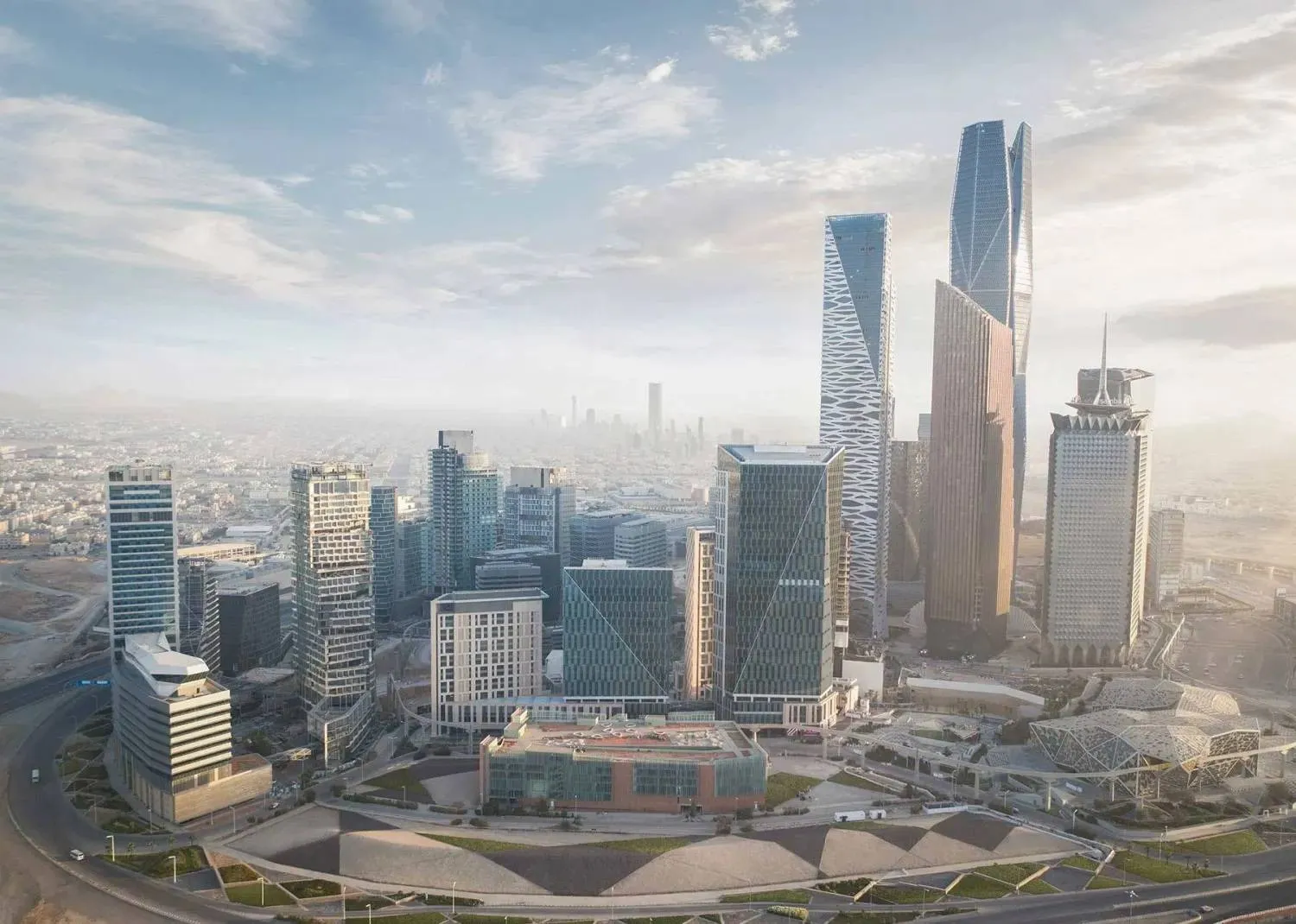
The Saudi capital underwent an unprecedented structural shift in its real estate market in 2025, driven by a forward-looking agenda led by Prince Mohammed bin Salman, Crown Prince and Prime Minister. Far from incremental regulation, the year’s measures amounted to a deep corrective overhaul aimed at dismantling long-standing distortions, breaking land hoarding, expanding affordable housing supply, and firmly rebalancing landlord-tenant relations.

Together, the decisions ended years of speculation fueled by artificial scarcity and pushed the market toward maturity, one grounded in real demand, fair pricing, and transparency.

Observers dubbed 2025 a “white revolution” for Saudi real estate. The reforms severed the link between property and short-term speculation, restoring housing as a sustainable residential and investment product. Below is a detailed outline of the most significant of these historic decisions:

1- Unlocking land, boosting supply

In March, authorities lifted restrictions on sale, subdivision, development permits, and planning approvals for 81 million square meters north of Riyadh. A similar decision in October freed another 33.24 million square meters to the west.

The Royal Commission for Riyadh City was also mandated to deliver 10,000 - 40,000 fully serviced plots annually at subsidized prices capped at SAR 1,500 per square meter, curbing price manipulation and offering real alternatives for citizens.

2- Rent controls and contractual fairness

To stabilize households and businesses, the government froze annual rent increases for residential and commercial leases in Riyadh for five years starting in September. Enforced through the upgraded “Ejar” platform, the move halted arbitrary hikes while aligning growth with residents’ quality of life.

3- Tougher fees

An improved White Land Tax took effect in August, extending beyond vacant plots to include unoccupied built properties. Annual fees rose to as much as 10% of land value for parcels of 5,000 square meters or more within urban limits, raising the cost of land hoarding and incentivizing prompt development.

4- Investment openness and digital governance

A revised foreign ownership regime allowed non-Saudis - individuals and companies - to own property in designated zones under strict criteria, injecting international liquidity. Transparency was reinforced by the launch of the “Real Estate Balance” platform, providing real-time price indicators based on actual transactions and curbing phantom pricing.

5- Quality and urban standards

Policy shifted from quantity to quality with mandatory application of the Saudi Building Code and sustainability standards for all new developments, ensuring long-term operational value and preventing low-quality sprawl.

Structural shift

Sector specialists told Asharq Al-Awsat the measures represent a qualitative leap in market management, moving Riyadh from a scarcity and speculation-led cycle to a balanced market governed by genuine demand, efficient land use, disciplined contracts, and transparent indicators.

Khaled Al-Mobid, CEO of Menassat Realty Co., said the reforms were timely and corrective after years of rapid price escalation. He noted early positives: slowing price growth, a return to realistic negotiations, increased supply in some districts, and better-quality offerings focused on intrinsic value rather than quick appreciation.

Abdullah Al-Moussa, a real estate expert and broker, described the steps as addressing root causes, not symptoms.

He observed a behavioral shift, especially in northern Riyadh, from “hold and wait” to reassessment, alongside calmer price momentum, renewed interest in actual development, and clearer rental dynamics.

Saqr Al-Zahrani, another market expert, told Asharq Al-Awsat that the reforms tackled structural imbalances by breaking artificial scarcity created by undeveloped land banks.

Opening vast tracts north and west and introducing market-wide indicators restored “organized abundance,” aligning prices with real demand and purchasing power without heavy-handed intervention, he remarked.

He added that recent months have seen weaker demand for raw land and stalled auctions, contrasted with rising interest in off-plan sales and partnerships with developers.

Banks, too, have reprioritized toward projects with operational viability, lifting overall supply quality despite a temporary slowdown in some transactions.

Consumers, meanwhile, are showing greater patience and interest in self-build options, signaling a maturing market awareness.

Outlook

Experts expect the effects to continue through 2027, delivering broad price stability with limited corrections in overheated locations rather than sharp declines.

Homeownership, especially among young buyers, is projected to rise as capital shifts from land speculation to long-term development.

The 2025 decisions were not short-term fixes but the launch of a new social and economic trajectory for Riyadh’s property market, redefining real estate as a housing service and value-adding investment, not a speculative vessel.

As Riyadh advances toward becoming one of the world’s ten largest city economies, its real estate reset offers a model for aligning regulation with quality of life, transparency, and sustainable growth.
