


‘Beit Beirut’ Hosts ‘Healing Lebanon’ Exhibition by Zeina al-Khalil

A photograph of a room inside Beit Beirut (house of Beirut) taken in April 2017. (AFP)
TT

‘Beit Beirut’ Hosts ‘Healing Lebanon’ Exhibition by Zeina al-Khalil

A photograph of a room inside Beit Beirut (house of Beirut) taken in April 2017. (AFP)

“Why did the Lebanese people fight each other and commit all this cruelty against their country?” This is a question that visual artist Zeina al-Khalil has always asked herself. She did not want to surrender to this sad reality and decided to organize an exhibition called, “Sacred Disaster: Healing Lebanon,” at Beit Beirut, a building that was a major witness to the Lebanese civil war.

It is true that Lebanon survived the war and rapidly shifted to peace, but according to Khalil, the country must live the long healing process like any other patient before he resumes his daily life.

The exhibition that runs from September 18 to October 26. It occupies the three-storey Barakat building (Beit Beirut) in the Sodeco area in the Ashrafieh district. The building’s owner wanted to turn it into an artistic quarantine-like space where “patients” would be isolated for 40 days before returning to the real world. She wanted to treat the people with the main medicine of love.

Khalil hung 20 charcoal drawings on the first floor of the exhibit to address guests with their black ink.

“These drawings bring hope even though they represent scenes that I bore witness to in Lebanese regions that suffered war and total destruction. Ruined buildings remained as real witnesses to what happened in Lebanon,” Khalil, who holds a Masters in Fine Arts from New York University, told Asharq Al-Awsat

The Lebanese artist drew inspiration for her work from the Shaker palace in the town of Souk el Gharb, the Khiam detention camp in southern Lebanon, and the Grand Hotel in Sawfar, as well as her hometown, Hasbaya where her family's home was occupied by the Israeli army for more than 20 years, and was turned into a detention camp later.

"It is not true that we have to destroy the past and build a new history to get rid of our effects on us. However, we have to review our cruel past to learn the necessary lesson to be cured from diseases that live with us, such as religious fanaticism and surrendering to party leaders and politicians."

Khalil reflected her optimistic view in her ceramics and stone sculptures. Her golden rules “love, mercy, tolerance” were written in Arabic on a white background. She spread them on the floor of "Beit Beirut" through 324 pieces complimenting the remains of mosaic tiles covering the floor of the building, which dates back to the early 1920s.

"It is like a language of communication between the past and the present. Some pillows have been placed around the paintings so that the visitor can sit, contemplate and live the healing process through a combination of sculptures, paintings and music."

Poetry is also been present in the exhibition her works where she spread verses embracing love and Beirut.


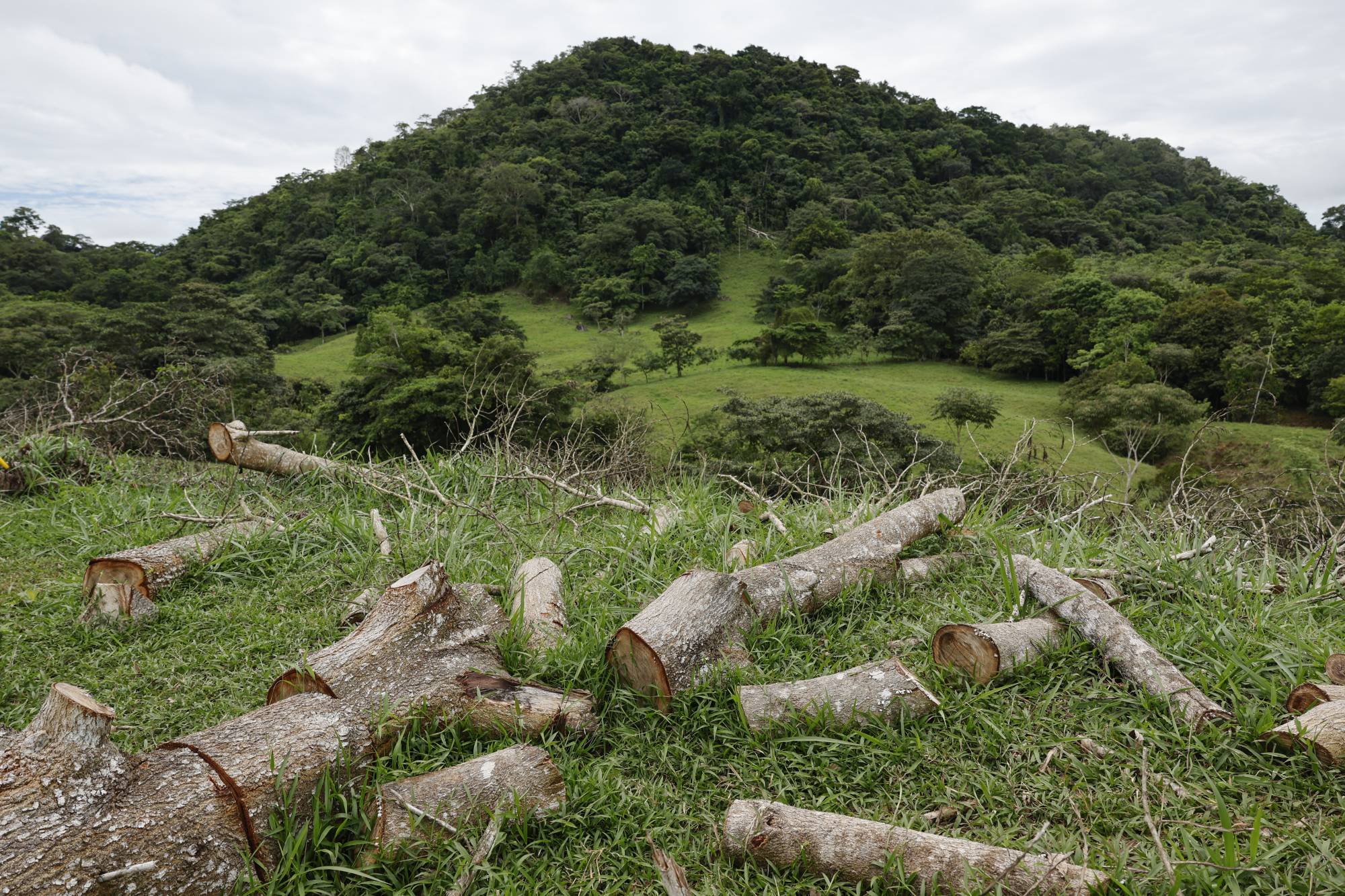
Saudi Arabia Advances Global Environmental Leadership with IUCN Green List Milestone

Several of the Kingdom's reserves have earned certification on the International Union for Conservation of Nature (IUCN) Green list - SPA
TT

Saudi Arabia Advances Global Environmental Leadership with IUCN Green List Milestone

Several of the Kingdom's reserves have earned certification on the International Union for Conservation of Nature (IUCN) Green list - SPA

Saudi Arabia Advances Global Environmental Leadership with IUCN Green List MilestoneThe Kingdom of Saudi Arabia continues to strengthen its international standing in environmental protection and sustainability, underpinned by the wise leadership’s prioritization of environmental affairs within national development priorities, in line with Saudi Vision 2030, SPA reported.

These efforts are reinforced by the Saudi Green Initiative, which targets the protection of 30% of the Kingdom's terrestrial and marine areas by 2030.

In a milestone reflecting effective natural resource management, several of the Kingdom's reserves have earned certification on the International Union for Conservation of Nature (IUCN) Green List following a rigorous evaluation process, demonstrating the Kingdom's sound governance, effective management, and measurable conservation outcomes.

Saudi Arabia's environmental achievements represent a comprehensive institutional framework that has transformed natural reserves from restricted geographical zones into an integrated national system balancing environmental stewardship with development imperatives, serving as a model for future generations.


KFSH Performs World First Single-Port Robotic Living Donor Liver Resection

‏The achievement further reinforces KFSH’s position as a global leader in robotic surgery - SPA
TT

KFSH Performs World First Single-Port Robotic Living Donor Liver Resection

‏The achievement further reinforces KFSH’s position as a global leader in robotic surgery - SPA

King Faisal Specialist Hospital and Research Center (KFSH) has performed the world’s first series of single-port robotic liver resections from living donors, marking a major advancement in organ transplantation.

The procedures were conducted through a single incision not exceeding 3.5 cm, replacing the multiple incisions required in conventional robotic surgery, reducing surgical pain and accelerating recovery while maintaining high safety standards, SPA reported.

‏The milestone, said a KFSH press release issued today, is particularly significant for donor safety, as living donors are healthy individuals undergoing surgery for the benefit of others. Procedures performed on six donors resulted in minimal blood loss without complications, with low pain levels and discharge within two to three days.

‏The approach also makes liver donation safer for pediatric recipients, as it typically involves the left lateral segment, which represents around 20% of total liver volume, making it well suited for single-port access while minimizing surgical burden on the donor.

Executive Director of the Organ Transplant Center of Excellence ‏Prof. Dieter Broering said the development reflects a structured expansion of robotic liver surgery built on extensive experience.


He noted that KFSH has performed more than 1,600 robotic living donor liver resections, the highest volume globally, supported by a progressive model integrating training, simulation, and phased clinical implementation.

‏The achievement, added the release, further reinforces KFSH’s position as a global leader in robotic surgery and organ transplantation, advancing care models that balance innovation with patient and donor safety, in line with the Health Sector Transformation Program and the hospital’s vision to deliver world-class specialized care.

‏King Faisal Specialist Hospital and Research Center ranks first in the Middle East and North Africa and 12th globally among the world’s top 250 Academic Medical Centers in 2026, and is the most valuable healthcare brand in Saudi Arabia and the Middle East according to Brand Finance 2025.


It is also listed by Newsweek among the World’s Best Hospitals 2026, World’s Best Smart Hospitals 2026, and World’s Best Specialized Hospitals 2026.


Saudi Arabia Launches ‘Shams,’ 1st Arab Satellite to Monitor Space Weather from Distant Orbit

The satellite represents a milestone in Saudi innovation (Saudi Space Agency)
TT

Saudi Arabia Launches ‘Shams,’ 1st Arab Satellite to Monitor Space Weather from Distant Orbit

The satellite represents a milestone in Saudi innovation (Saudi Space Agency)

The Saudi Space Agency announced the successful launch of its new satellite, Shams, and established contact with it as part of the Artemis II mission, marking the Kingdom’s emergence as both the leading Arab partner in the program and the first to deploy a dedicated national mission to study space weather.

The satellite represents a milestone in Saudi innovation. Developed domestically by Saudi engineers, Shams has evolved from a national ambition into a scientific platform designed to monitor solar activity and radiation and their effects on Earth, with implications for safeguarding global communications and navigation systems.

The Artemis program, led by NASA in partnership with dozens of countries, aims to return humans to lunar orbit for the first time in more than 50 years, paving the way for future missions to Mars. Saudi Arabia joined the Artemis Accords in 2022 alongside more than 60 nations to help establish a framework for space exploration and strengthen its role in the sector.

The Artemis II mission will carry four astronauts on the first crewed flight to orbit the Moon aboard the Orion spacecraft, launched by the Space Launch System (SLS), the most powerful rocket ever operated. Shams is included as one of the mission’s scientific payloads.

The satellite will operate in a highly elliptical orbit (HEO), ranging from approximately 500 km to 70,000 km above Earth. This trajectory enables broad monitoring of solar and radiation activity, advancing space weather research and supporting critical applications.

Space laboratory to tackle radiation and solar activity challenges

Shams is designed to study space weather through four scientific areas: space radiation, solar X-rays, Earth’s magnetic field and high-energy solar particles. It will also collect data to support the development of protection technologies for future human spaceflight and improve understanding of solar particle behavior and magnetic fields.

The mission is expected to enhance the reliability and sustainability of key sectors such as communications, aviation and navigation by providing data that improves operational readiness and strengthens the security of critical infrastructure.

The Saudi Space Agency said the project aims to boost scientific research, develop future solutions and support a knowledge-based economy through the localization of advanced technologies, in line with Saudi Vision 2030. It also seeks to reinforce Saudi Arabia’s global standing in the space sector and empower national talent in space science and technology.

Data from Shams is expected to improve early warning systems for solar storms that can disrupt internet services, telecommunications and navigation signals. The findings could also help protect power grids and energy infrastructure from severe solar activity that can cause outages or damage.

By improving monitoring of radiation and solar winds, the mission may contribute to safer air travel and future crewed missions to the Moon and Mars, while opening new avenues in medicine, energy and science.
