Saudi Arabia Supports Yemeni Parties Returning to Peace Negotiations

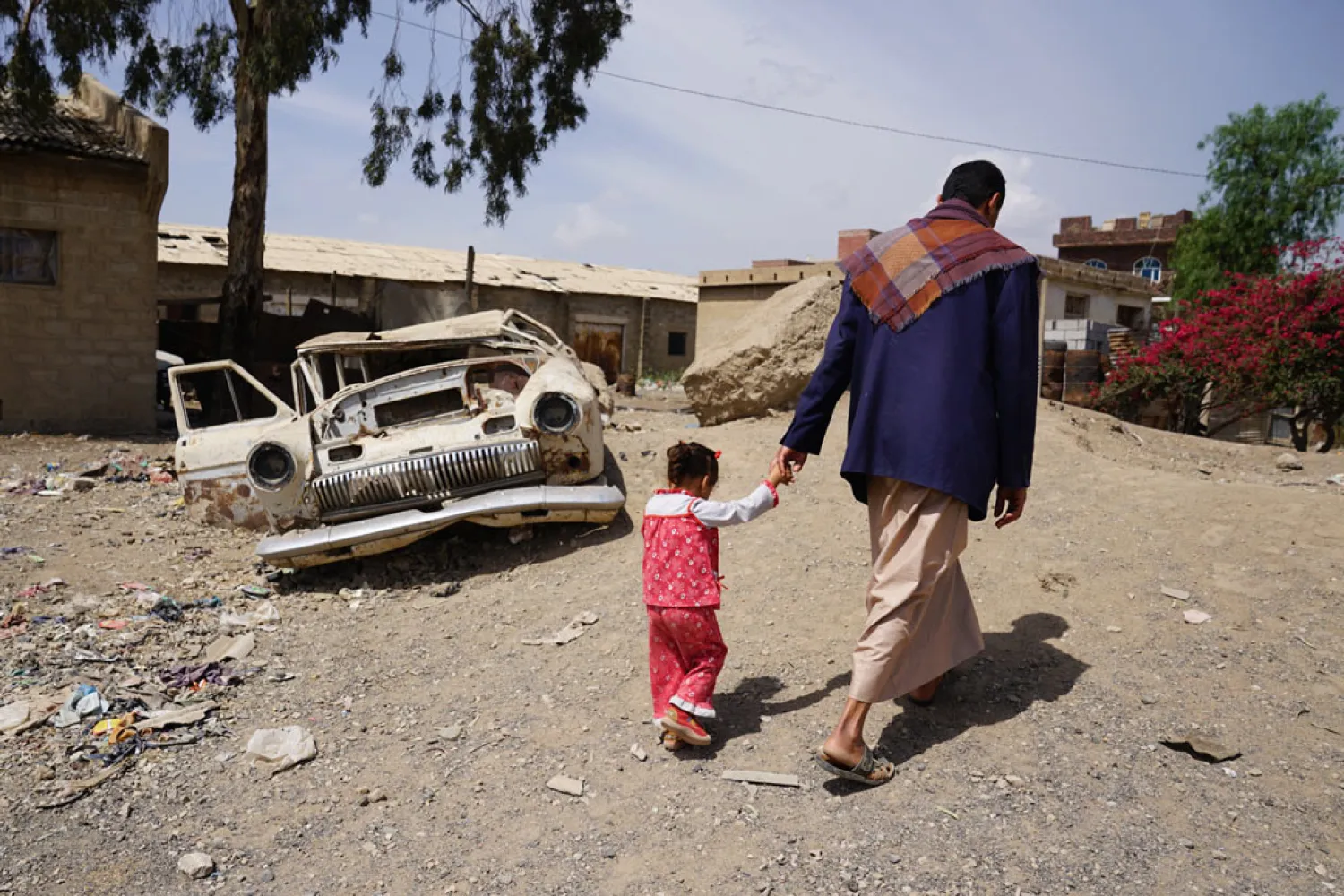
In the Harat Al-Masna’a slum in Sana’a, Yemen, a man walks with his three-year-old daughter which sits next to a former textile factory and hosts 231 families of former factory workers. Photo: Giles Clarke for UNOCHA
TT

Saudi Arabia Supports Yemeni Parties Returning to Peace Negotiations

In the Harat Al-Masna’a slum in Sana’a, Yemen, a man walks with his three-year-old daughter which sits next to a former textile factory and hosts 231 families of former factory workers. Photo: Giles Clarke for UNOCHA

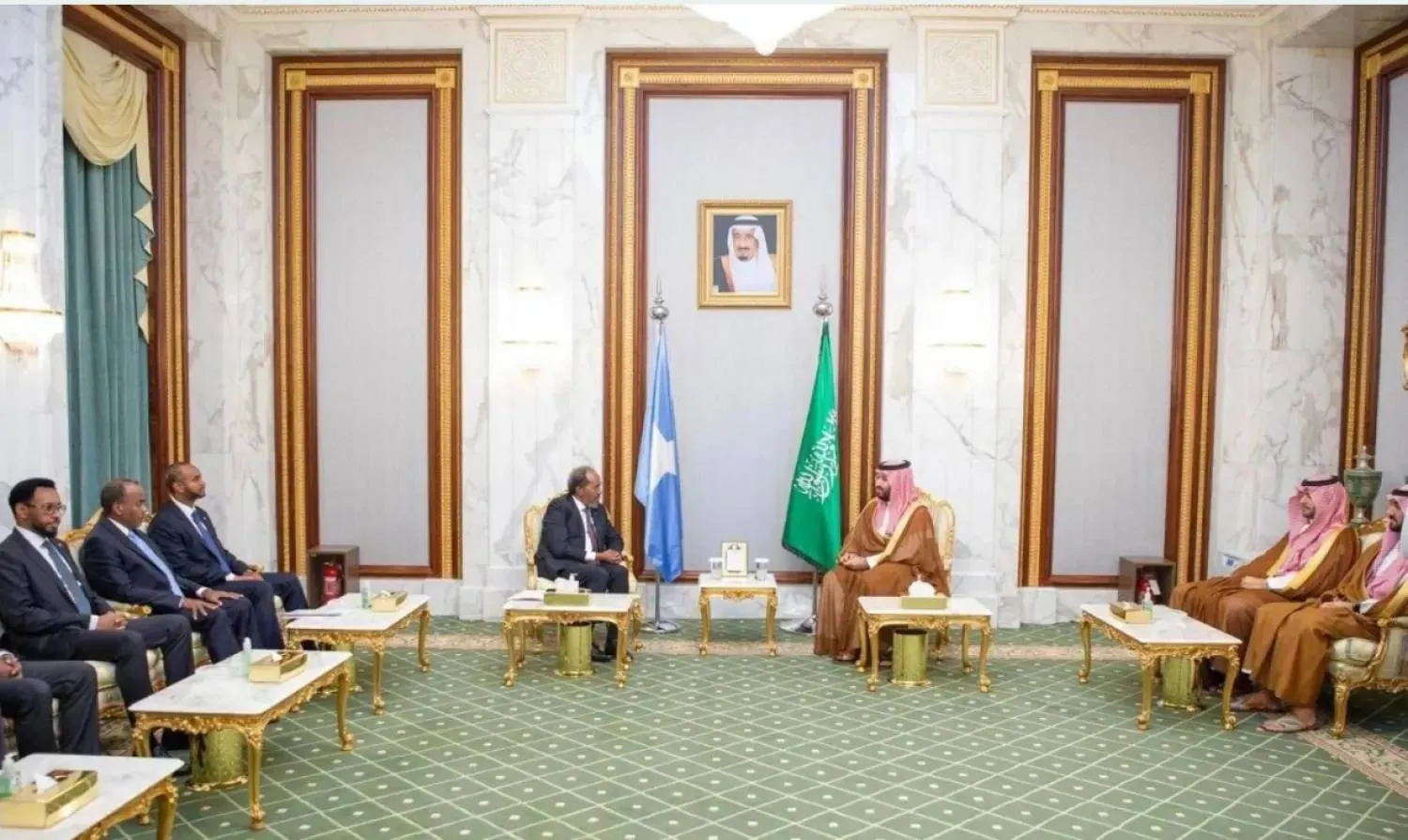
Saudi Arabia's ambassador to Yemen Mohammed Al-Jaber reaffirmed that the Kingdom supports all political efforts exerted by the United Nations to bring Yemeni parties back to negotiations and reach a political solution.

However, the ambassador pointed out to the existence of foreign interferences by the Iranian regime that threaten security and stability in the region and Yemen.

UN envoy Ismail Ould Cheikh Ahmed announced on Wednesday his intention to revive negotiations between the parties to the Yemeni conflict through the introduction of a comprehensive initiative for the solution, including humanitarian initiatives to rebuild confidence and the return of the parties to the negotiating table.

"The Iranian regime is threatening security and stability in the region," the Saudi ambassador to Yemen said at a workshop in Brussels organized by the Gulf Research Center, citing a Houthi-Iranian agreement signed by militias in February 2015 to conduct 28 weekly Sanaa-Tehran flights to import ballistic missiles, guided boats and drones, and the specific weapons that the Houthis were supplied with.

"The Saudi position is clear; the solution in Yemen is political and depends on three basic reference points: the Gulf initiative, the outcomes of the Yemeni national dialogue, and the UN Security Council resolution (2216)," he said in a speech to workshop attendees.

The workshop was attended by representatives of the Yemeni government, the European Union, and civil society organizations.

On the other hand, Jaber stressed the need for Houthis to hand over the weapons and participate in the political process as a political party and not as a militia.

"Iranian interference in Yemen must stop and ensure the security and stability of Yemen and the region," he said.

For his part, Mohamed Taha Mustafa, the Yemeni ambassador to Belgium and the European Union, stressed the keenness of the legitimate government led by President Abdrabbuh Mansur Hadi on peace based on the principles of partnership in power and fair distribution of wealth within the framework of a federal Yemen that can serve Yemenis.


Syria Reveals New Post-Assad Banknotes

Syria's President Ahmed al-Sharaa (L) and Syria's Central bank chief Abdul Qadir al-Hasriya (R) hold one of the country's new revamped currency notes at the Conference Palace in the Syrian capital Damascus on December 29, 2025. (AFP)
TT

Syria Reveals New Post-Assad Banknotes

Syria's President Ahmed al-Sharaa (L) and Syria's Central bank chief Abdul Qadir al-Hasriya (R) hold one of the country's new revamped currency notes at the Conference Palace in the Syrian capital Damascus on December 29, 2025. (AFP)

Syrian leader Ahmed al-Sharaa unveiled on Monday new banknotes replacing those showing ousted ruler Bashar al-Assad and his family, hoping the Syrian pound can regain some of the value lost to over a decade of war.

Improving the standing of the Syrian pound is among the greatest challenges for Syria's new authorities, who will remove two zeros, in a process known as redenomination.

The new bills, which range from 10 to 500 Syrian pounds, will enter circulation on January 1. They show images of roses, wheat, olives, oranges and other agricultural symbols for which Syria is famous.

After unveiling the banknotes, Sharaa said the new currency marks "the end of a previous, unlamented phase and the beginning of a new phase that the Syrian people... aspire to".

"The new currency design is an expression of the new national identity and a move away from the veneration of individuals."

Since the start of Syria's civil war in 2011, the pound has plunged from 50 to around 11,000 against the greenback, and Syrians are forced to carry huge wads of banknotes even for basic needs like grocery shopping.

The removal of the zeros, which does not impact the currency's value, was done to make transactions easier and restore trust in the Syrian pound.

"If someone wants to buy something simple, they need to carry bags in order to trade, so people go for dollars," Sharaa said, adding that the currency revamp will boost "the national currency within the country and strengthen trust".

"Syria deserves a strong economy and a stable currency."

Syria's old banknotes were printed in Russia, Assad's former backer.

When asked by journalists, Syrian central bank chief Abdul Qadir al-Hasriya did not specify where the new currency will be printed.


Trump Says He and Netanyahu Have an Understanding Regarding Syria

US President Donald Trump holds a press conference with Israeli Prime Minister Benjamin Netanyahu at his Mar-a-Lago club on December 29, 2025 in Palm Beach, Florida. (Getty Images/AFP)
TT

Trump Says He and Netanyahu Have an Understanding Regarding Syria

US President Donald Trump holds a press conference with Israeli Prime Minister Benjamin Netanyahu at his Mar-a-Lago club on December 29, 2025 in Palm Beach, Florida. (Getty Images/AFP)

Prime Minister Benjamin Netanyahu said ​on Monday that Israel was keen to ensure a peaceful border with Syria, and US President ‌Donald Trump said ‌he ‌was ⁠sure ​Israeli ‌and Syrian leaders would get along.

"Our interest is to have a peaceful border with ⁠Syria," Netanyahu said at a ‌press conference ‍after ‍meeting Trump at ‍his Florida beach resort.

Trump said he and Netanyahu had what Trump ​called an understanding regarding Syria.

"I'm sure that ⁠Israel and him (Syrian President Ahmed al-Sharaa) will get along. I will try and make it so that they do get along."


Trump Warns Hamas, Iran After Netanyahu Talks

US President Donald Trump points his finger towards Israeli Prime Minister Benjamin Netanyahu as they shake hands during a press conference after meeting at Trump’s Mar-a-Lago club in Palm Beach, Florida, US, December 29, 2025. (Reuters)
TT

Trump Warns Hamas, Iran After Netanyahu Talks

US President Donald Trump points his finger towards Israeli Prime Minister Benjamin Netanyahu as they shake hands during a press conference after meeting at Trump’s Mar-a-Lago club in Palm Beach, Florida, US, December 29, 2025. (Reuters)

US President Donald Trump warned Iran of fresh strikes and said Hamas would have "hell to pay" if it fails to disarm in Gaza, as he presented a united front with Israeli Prime Minister Benjamin Netanyahu on Monday.

Speaking at a news conference with Netanyahu in Florida, Trump threatened to "eradicate" any attempt by Tehran to rebuild its nuclear program or ballistic missile arsenal following US and Israeli strikes earlier this year.

Trump also downplayed reports of tensions with Netanyahu over the second stage of the fragile Gaza ceasefire, saying that Israel had "lived up" to its commitments and that the onus was on the Palestinian group Hamas.

"If they don't disarm as they agreed to do, then there will be hell to pay for them," Trump told reporters at his lavish Mar-a-Lago resort. "They have to disarm in a fairly short period of time."

Hamas's armed wing reiterated earlier on Monday that it would not surrender its weapons.
A top political adviser to Iran's supreme leader on Monday said any aggression against his country would be met with an "immediate harsh response."

"Iran's #Missile_Capability and defense are not containable or permission-based. Any aggression will face an immediate #Harsh_Response beyond its planners' imagination," Ali Shamkhani wrote on X.

- 'Productive' meeting -

Netanyahu said his meeting with Trump had been "very productive" and announced that Israel was awarding the US leader its highest civilian honor -- the first time it has gone to a non-Israeli citizen.

Trump, the self-proclaimed "president of peace," has been keen to move onto the next phase of the Gaza truce, which would see a Palestinian technocratic government installed and the deployment of an international stabilization force.

While some White House officials fear Netanyahu is slow-walking the process, Trump said he had "very little difference" with the Israeli premier and was "not concerned about anything that Israel's doing."

During their fifth meeting in the United States since Trump's return to power this year, Netanyahu also appeared to have steered the US leader toward focusing on Israel's concerns about Iran.

Israeli officials and media have expressed concern in recent months that Iran is rebuilding its ballistic missile arsenal after it came under attack during the 12-day war with Israel in June.

Trump said Iran "may be behaving badly" and was looking at new nuclear sites to replace those targeted by US strikes during the same conflict, as well as restoring its missiles.

"I hope they're not trying to build up again because if they are, we're going have no choice but very quickly to eradicate that buildup," Trump said, adding that the US response "may be more powerful than the last time."

But Trump said he believed Iran was still interested in a deal with Washington on its nuclear and missile programs. Tehran denies that it is seeking nuclear weapons.

- Focus on Gaza -

Trump and Netanyahu's talks also focused on other regional tension points, including Syria and the Hezbollah movement in Lebanon.

Trump said he hoped Netanyahu could "get along" with Syria's new president, a former fighter who toppled long-term ruler Bashar-al-Assad a year ago, despite a series of Israeli strikes along their border.

Netanyahu's visit caps a frantic few days of international diplomacy in Palm Beach, where Trump hosted Ukrainian counterpart Volodymyr Zelensky on Sunday for talks on ending Russia's invasion.

The Gaza ceasefire in October is one of the major achievements of Trump's first year back in power, and Washington and regional mediators have hoped to keep their foot on the gas.
The Axios news site said Trump seeks to make announcements as soon as January on an interim government and an international force.

But Trump gave few details beyond saying that he hoped "reconstruction" could begin soon in the Palestinian territory, devastated by Israeli attacks in response to Hamas's October 7, 2023 attacks.

The disarmament of Hamas however continued to be a sticking point, with its armed wing again saying that it would not surrender its arms.

"Our people are defending themselves and will not give up their weapons as long as the occupation remains," the Ezzedine al-Qassam Brigades said in a video message.