


Qatari Emir Admits to Doha Backing Arab Revolts

Qatar’s Emir Tamim bin Hamad Al Thani. (Reuters)
TT

Qatari Emir Admits to Doha Backing Arab Revolts

Qatar’s Emir Tamim bin Hamad Al Thani. (Reuters)

In his second public appearance since the start of the Arab quartet boycott against Doha, Qatar’s Emir Sheikh Tamim bin Hamad Al Thani said that his country has backed uprisings across Arab countries.

He said Doha supported the revolts on the premise of the demonstrators “demanding freedom and dignity.” As for Qatar hosting the Taliban office in Doha, the Emir explained that the office was opened on a request from the US in order to start a dialogue with the Afghan movement in Qatar.

On CBS’ 60 Minutes with host Charlie Rose, Sheikh Tamim was interviewed in a car he himself was driving across shut land borders with Saudi Arabia.

In the interview, the Emir voiced his support for the invitation of United States President Donald Trump to a meeting at Camp David “for holding talks with the brothers” to end the crisis.

The Emir expressed his willingness “to walk 10,000 miles” towards boycotting neighbors, “if they walk one meter toward” him.

He explained that President Trump exclusively told him that he would not have US allies going into war with each other.

Sheikh Tamim said that Trump told him so on the sidelines of the United Nations meetings in September—Trump also offered to host talks between Qatar and the boycotting countries.

On the relationship with Iran, he considered Tehran the only way for his country to "provide food and medicine, and all that is necessary for the Qataris during the crisis."

“Iran is our neighbor. And we have more differences in our foreign policies with Iran, than the siege countries do-- but the only way for us to provide food and medicine for our people was through Iran,” he told Rose.

The prince said that he was “shocked” by the decision of Saudi Arabia, Bahrain, the UAE and Egypt to impose a siege on Qatar.

He pointed to his fear of the region sinking into chaos if any military action took place under the crisis, refusing to interfere with the sovereignty of his country, stressing that his government will not close down the controversial television station "Al-Jazeera."

On a visit to his former English speaking school, Sheikh Tamim told Rose he never expected to become prince since he was not in the line of succession.

As a teenager, his ambition was to become the Arabic Boris Becker. Then, he said, one night his older brother Jassim, the heir apparent to their father, asked to see him to tell him he was better suited to be emir.


Saudi Foreign Minister, Slovak Deputy Prime Minister Sign General Cooperation Agreement

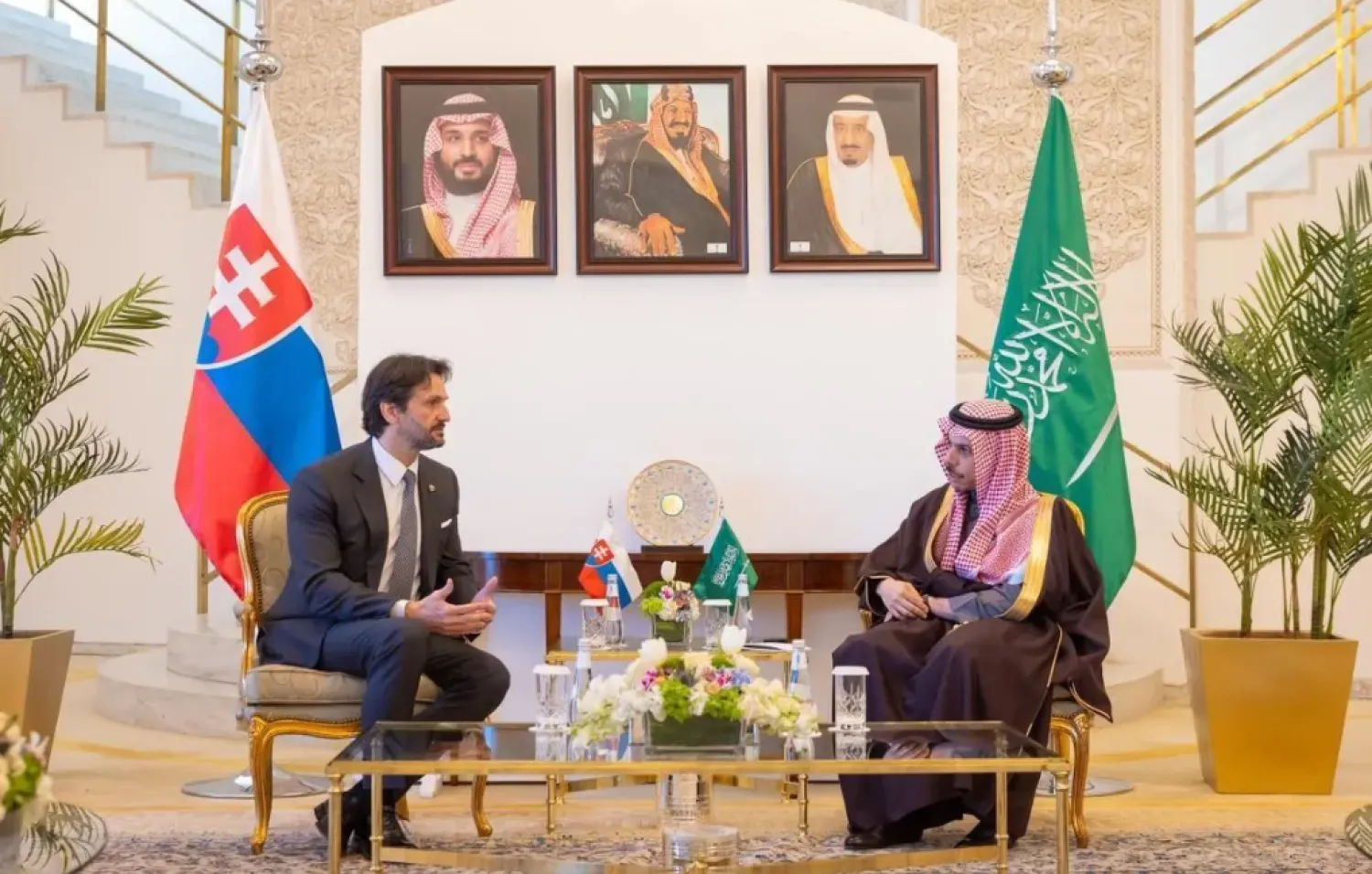
The two sides signed a general cooperation agreement aimed at enhancing cooperation and mutual understanding across various fields - SPA
TT

Saudi Foreign Minister, Slovak Deputy Prime Minister Sign General Cooperation Agreement

The two sides signed a general cooperation agreement aimed at enhancing cooperation and mutual understanding across various fields - SPA

Saudi Minister of Foreign Affairs Prince Faisal bin Farhan bin Abdullah met in Riyadh Monday Deputy Prime Minister and Minister of Defense of the Slovak Republic Robert Kaliňák.

They reviewed ways to strengthen cooperation between the two countries in a manner that serves their mutual interests and discussed regional and international developments, SPA reported.

The two sides signed a general cooperation agreement between the Government of the Kingdom of Saudi Arabia and the Government of the Slovak Republic, aimed at enhancing cooperation and mutual understanding across various fields.


Khalid bin Salman Visits Saudi Interior Ministry Pavilion at World Defense Show

Prince Khalid was briefed on the ministry’s operational capabilities to enhance decision-making. SPA
TT

Khalid bin Salman Visits Saudi Interior Ministry Pavilion at World Defense Show

Prince Khalid was briefed on the ministry’s operational capabilities to enhance decision-making. SPA

Saudi Minister of Defense Prince Khalid bin Salman bin Abdulaziz visited the Ministry of Interior's pavilion at the World Defense Show, held in Riyadh.

Prince Khalid was briefed on the ministry’s operational capabilities to enhance decision-making, command and control, and predictive intelligence, all aimed at protecting residents across the Kingdom.

During his tour, he explored how the ministry is advancing proactive security and efficient emergency management through innovative technical solutions.

The tour also underscored the role of the unified security operations centers (911) in the national response system and the ministry's commitment to international partnerships in security and smart systems.


OIC Condemns Israeli Cabinet's Legalization of Settlements

 Israeli soldier points his weapon towards the camera, during a weekly settlers' tour in Hebron, in the Israeli-occupied West Bank, February 7, 2026. (Reuters)
Israeli soldier points his weapon towards the camera, during a weekly settlers' tour in Hebron, in the Israeli-occupied West Bank, February 7, 2026. (Reuters)
TT

OIC Condemns Israeli Cabinet's Legalization of Settlements

 Israeli soldier points his weapon towards the camera, during a weekly settlers' tour in Hebron, in the Israeli-occupied West Bank, February 7, 2026. (Reuters)
Israeli soldier points his weapon towards the camera, during a weekly settlers' tour in Hebron, in the Israeli-occupied West Bank, February 7, 2026. (Reuters)

The General Secretariat of the Organization of Islamic Cooperation (OIC) condemned on Monday the Israeli cabinet’s approval of measures that aim to deepen Israeli control over the occupied West Bank and weaken the already limited powers of the Palestinian Authority.

The OIC said Israel’s “colonial settlement policy constitutes a war crime and a flagrant violation of international law and relevant United Nations resolutions, foremost among which is Security Council Resolution 2334 and the legal opinion issued by the International Court of Justice.”

It renewed its call on the international community, particularly the Security Council, “to shoulder its responsibilities and take immediate action to put an end to all crimes and violations committed by Israel against the Palestinian people, their land, and their holy sites.”

The office of Israeli far-right Finance Minister Bezalel Smotrich in a statement announced the decisions that would make it easier for Jewish settlers to force Palestinians to give up land, adding that “we will continue to bury the idea of a Palestinian state.”

Palestinian President Mahmoud Abbas in a statement called the decision “dangerous” and an “open Israeli attempt to legalize settlement expansion” and land confiscation. He called for the United States and UN Security Council to intervene immediately.

The decision was announced a few days before Israeli Prime Minister Benjamin Netanyahu is expected to meet with US President Donald Trump in Washington about Iran and other matters.

The measures announced Sunday include canceling a prohibition on sales of West Bank land to Israeli Jews, declassifying West Bank land registry records to ease land acquisition, transferring construction planning at religious and other sensitive sites in the volatile city of Hebron to Israeli authorities, and allowing Israeli enforcement of environmental and archaeological matters in Palestinian-administered areas.

The measures also would revive a committee that would allow the state of Israel to make “proactive” land purchases in the territory — “a step intended to guarantee land reserves for settlement for generations to come.”