


Abbottabad Documents Reveal How Bin Laden Was Influenced by Muslim Brotherhood

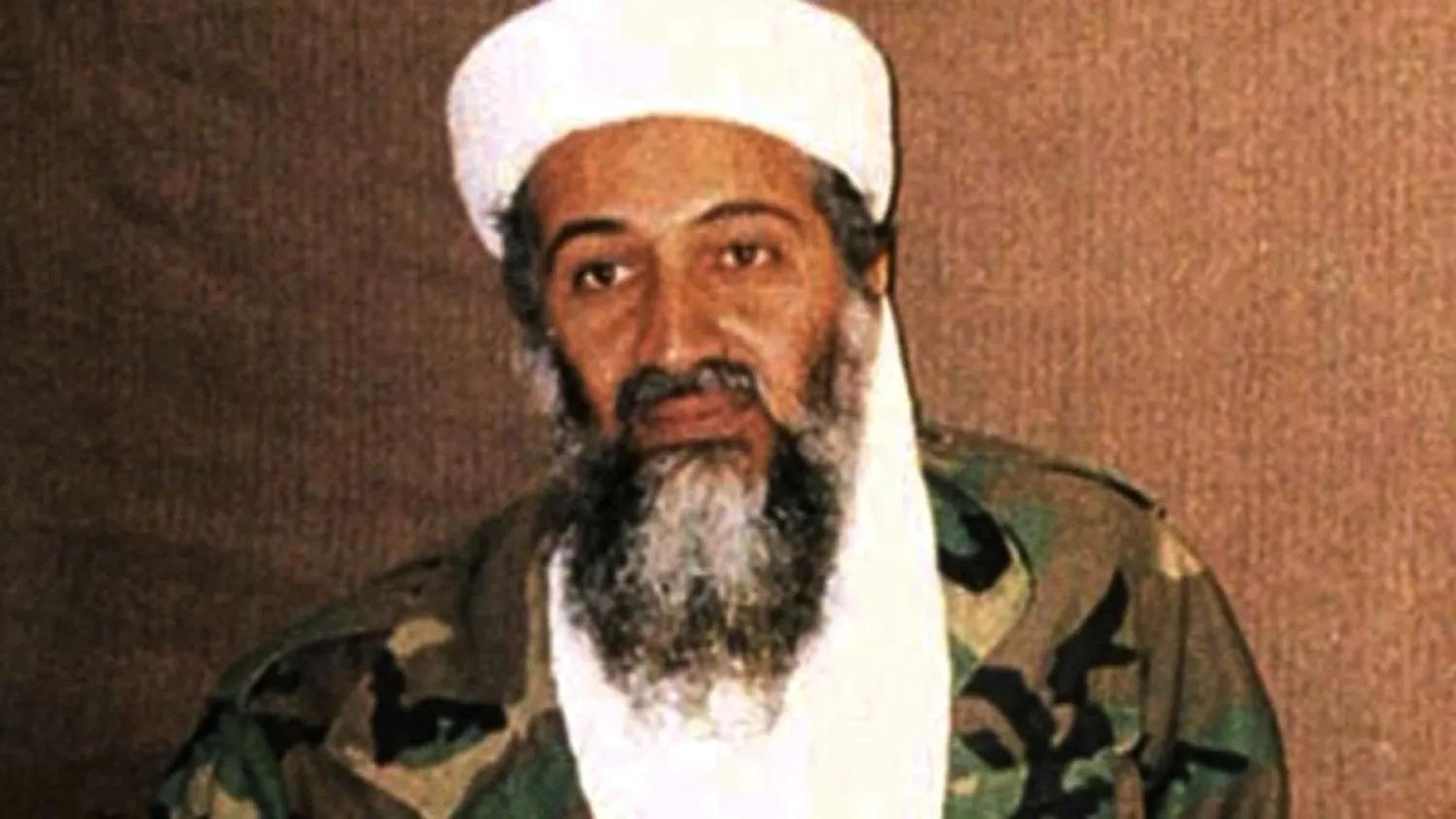
Al-Qaeda founder Osama bin Laden. Reuters
TT

Abbottabad Documents Reveal How Bin Laden Was Influenced by Muslim Brotherhood

Al-Qaeda founder Osama bin Laden. Reuters

A journal made public by the CIA and apparently handwritten by one of Osama bin Laden's daughters offers a glimpse into how the al-Qaeda leader viewed the world around him and reveals his deep interest in the so-called 2011 “Arab Spring” months before he was killed in a US raid on his compound in Abbottabad, Pakistan in May 2011.

He talks about Libya becoming a pathway for terrorists to Europe; of his visit as a youth to William Shakespeare's home in Britain; of how quickly turmoil had gripped the Middle East.

The 228-page journal meanders among discussions, thoughts and reflections bin Laden shared with his family about how to exploit the Arab uprisings, what to make of the rapid changes unfolding in the Arab world and when al-Qaeda should speak out.

"This chaos and the absence of leadership in the (Arab) revolutions is the best environment to spread al-Qaeda's thoughts and ideas," bin Laden is quoted as telling his family in the document.

Bin Laden's wife, referred to as Um Hamza, tells him about a tape he released seven years earlier calling out the rulers of the region as unfit.

The Associated Press examined a copy of the journal uploaded by the Long War Journal to its website. The CIA released it Wednesday as part of a trove of material recovered during the raid that killed bin Laden.

The journal appears to cover conversations between bin Laden and his daughters, Miriam and Somiya, his wife and his sons, Khaled and Hamza — the latter of whom would become a potential successor to lead the group his father founded.

The journal is titled, "Special diaries for Abu Abdullah: Sheikh Abdullah's points of view — A session with the family," which refers to bin Laden by his traditional name. The conversations took place between February and April 2011, with the journal entries dated according to the Islamic calendar.

During that time, uprisings in Tunisia and Egypt had ousted longtime rulers, touching off protests in Libya, Yemen, Bahrain and Syria. The Middle East was on the cusp of unstoppable change, chaos and turmoil.

In Libya, the uprising would end with Muammar Gaddafi's death months after bin Laden was killed. In Yemen, al-Qaeda would gain a greater foothold and remain active amid the chaos of war. In Syria, the government's lethal response to a protest by schoolchildren in early 2011 would spark mass protests and ignite a war and massive refugee crisis that continues today.

The reflections, jotted at times in blue ink and others in red, refer repeatedly to media reports of what was happening across the region.

At one point, they criticize Al-Jazeera TV's broadcast of gruesome images from a deadly protest in Yemen, saying a warning should have been given to shield children from viewing them. However, the Qatari-backed channel is also hailed for "working on toppling regimes" and for "carrying the banner of the revolutions."

“Al Jazeera, thank God, carries the banner of revolutions,” he says.

Bin Laden appears concerned by the speed of some of the region's revolts, believing that a gradual approach would help avoid the backlash of a counter-revolution as regime figures sought to hold onto power at all cost.

"I am upset by the timing of the revolutions. We told them to slow down," bin Laden is quoted as saying, though it's not entirely clear which countries he is referring to.

On Libya, bin Laden says he believes the uprising "has opened the door for jihadists."

"This is why Gaddafi and his son say that the extremists will come from the sea, which will be an area of operation for al-Qaeda. This will be the Somalia of the Mediterranean," he is quoted as saying.

Still, bin Laden appears reluctant to issue a statement in support of extremists in Libya for fear that if Gaddafi is ousted, the US will try to expand its footprint there.

Yemen is a primary focus of the journal entries. Al-Qaeda's branch there is among its most active in the world and the journal suggests al-Qaeda was plotting an assassination attempt against Yemen's embattled ruler at the time, Ali Abdullah Saleh.

There is little indication that the writer had much information about what was happening in the region beyond what was reported in the media. This could indicate that bin Laden had become isolated in his final months hiding out in Abbottabad. Or it could also be that bin Laden was shielding his relatives from intelligence.

In the early pages of the document, bin Laden is asked about his thoughts on “jihad,” and replies that he first considered it "in secondary school."

He says this was a result of his home and school environment.

In another journal, Bin Laden offers answers to a series of questions about the ideas and movements that influenced him. For example, he lists the Muslim Brotherhood as an organization that shaped some of his thinking.

But says “their curriculum was limited.”

From a young age, he appeared to be unfazed by worldly spoils, recounting a story about declining a new watch from his wealthy father.

He recalls a summer spent studying in the UK when he was 14, including a visit to the home of Shakespeare. His time in Britain left him feeling uneasy and he decided not to return the following summer.
"I saw that they were a society different from ours and that they were morally corrupt," he says.



Iranian Traders and Shopkeepers Protest as Currency Hits Record Low

 People shop at Tajrish Bazaar in the Iranian capital Tehran on December 29, 2025. (AFP)
People shop at Tajrish Bazaar in the Iranian capital Tehran on December 29, 2025. (AFP)
TT

Iranian Traders and Shopkeepers Protest as Currency Hits Record Low

 People shop at Tajrish Bazaar in the Iranian capital Tehran on December 29, 2025. (AFP)
People shop at Tajrish Bazaar in the Iranian capital Tehran on December 29, 2025. (AFP)

Iranian traders and shopkeepers staged a second day of protests Monday after the country’s currency plummeted to a new record low against the US dollar.

Videos on social media showed hundreds taking part in rallies in Saadi Street in downtown Tehran, as well as in the Shush neighborhood near Tehran's main Grand Bazaar, which played a crucial role in the 1979 revolution that ousted the monarchy and brought clerics to power.

Witnesses told The Associated Press that traders shut their shops and asked others to do the same. The semiofficial ILNA news agency said many businesses and merchants stopped trading even though some kept their shops open.

There was no reports of police raids though security was tight at the protests, according to witnesses.

On Sunday, protest gatherings were limited to two major mobile market in downtown Tehran, where the demonstrators chanted anti-government slogans.

Iran's rial on Sunday plunged to 1.42 million to the dollar. On Monday, it traded at 1.38 million rials to the dollar.

The rapid depreciation is compounding inflationary pressure, pushing up prices of food and other daily necessities and further straining household budgets, a trend that could worsen by a gasoline price change introduced in recent days.

According to the state statistics center, inflation rate in December rose to 42.2% from the same period last year, and is 1.8% higher than in November. Foodstuff prices rose 72% and health and medical items were up 50% from December last year, according to the statistics center. Many critics see the rate a sign of an approaching hyperinflation.

Reports in official Iranian media said that the government plans to increase taxes in the Iranian new year that begins March 21 have caused more concern.

Iran’s currency was trading at 32,000 rials to the dollar at the time of the 2015 nuclear accord that lifted international sanctions in exchange for tight controls on Iran’s nuclear program. That deal unraveled after US President Donald Trump unilaterally withdrew the United States from it in 2018.

There is also uncertainty over the risk of renewed conflict following June’s 12-day war involving Iran and Israel. Many Iranians also fear the possibility of a broader confrontation that could draw in the United States, adding to market anxiety.

In September, the United Nations reimposed nuclear-related sanctions on Iran through what diplomats described as the “snapback” mechanism. Those measures once again froze Iranian assets abroad, halted arms transactions with Tehran and imposed penalties tied to Iran’s ballistic missile program.


Israel’s Supreme Court Suspends Govt Move to Shut Army Radio

Israeli troops during a military operation in the Palestinian village of Qabatiya, near the West Bank city of Jenin, 27 December 2025. (EPA)
TT

Israel’s Supreme Court Suspends Govt Move to Shut Army Radio

Israeli troops during a military operation in the Palestinian village of Qabatiya, near the West Bank city of Jenin, 27 December 2025. (EPA)

Israel's Supreme Court has issued an interim order suspending a government decision to shut down Galei Tsahal, the country's decades-old and widely listened-to military radio station.

In a ruling issued late Sunday, Supreme Court President Isaac Amit said the suspension was partly because the government "did not provide a clear commitment not to take irreversible steps before the court reaches a final decision".

He added that Attorney General Gali Baharav-Miara supported the suspension.

The cabinet last week approved the closure of Galei Tsahal, with the shutdown scheduled to take effect before March 1, 2026.

Founded in 1950, Galei Tsahal is widely known for its flagship news programs and has long been followed by both domestic and foreign correspondents.

A government audience survey ranks it as Israel's third most listened-to radio station, with a market share of 17.7 percent.

Prime Minister Benjamin Netanyahu had urged ministers to back the closure, saying there had been repeated proposals over the years to remove the station from the military, abolish it or privatize it.

But Baharav-Miara, who also serves as the government's legal adviser and is facing dismissal proceedings initiated by the premier, has warned that closing the station raised "concerns about possible political interference in public broadcasting".

She added that it "poses questions regarding an infringement on freedom of expression and of the press".

Defense Minister Israel Katz said last week that Galei Tsahal broadcasts "political and divisive content" that does not align with military values.

He said soldiers, civilians and bereaved families had complained that the station did not represent them and undermined morale and the war effort.

Katz also argued that a military-run radio station serving the general public is an anomaly in democratic countries.

Opposition leader Yair Lapid had condemned the closure decision, calling it part of the government's effort to suppress freedom of expression ahead of elections.

Israel is due to hold parliamentary elections in 2026, and Netanyahu has said he will seek another term as prime minister.


Thai Army Accuses Cambodia of Violating Truce with over 250 Drones

Displaced residents rest in a bunker in Thailand's Surin province on December 11, 2025, amid clashes along the Thai-Cambodia border. (AFP)
TT

Thai Army Accuses Cambodia of Violating Truce with over 250 Drones

Displaced residents rest in a bunker in Thailand's Surin province on December 11, 2025, amid clashes along the Thai-Cambodia border. (AFP)

Thailand's army on Monday accused Cambodia of violating a newly signed ceasefire agreement, reached after weeks of deadly border clashes, by flying more than 250 drones over its territory.

The Thai army said "more than 250 unmanned aerial vehicles (UAVs) were detected flying from the Cambodian side, intruding into Thailand's sovereign territory" on Sunday night, according to a statement.

"Such actions constitute provocation and a violation of measures aimed at reducing tensions, which are inconsistent with the Joint Statement agreed" during a bilateral border committee meeting on Saturday, it added.

Cambodian Foreign Minister Prak Sokhonn said in remarks aired on state television on Monday that the two sides had discussed the incident and agreed to investigate and "resolve it immediately".

Prak Sokhonn described it as "a small issue related to flying drones seen by both sides along the border line".

Thailand and Cambodia agreed to the "immediate" ceasefire on Saturday, pledging to end renewed border clashes that killed dozens of people and displaced more than a million this month.

The reignited fighting spread to nearly every border province on both sides, shattering an earlier truce for which US President Donald Trump took credit.

Under the agreement signed on Saturday, the Southeast Asian neighbors agreed to cease fire, freeze troop movements and cooperate on demining efforts and combatting cybercrime.