
How to Buy a Great TV

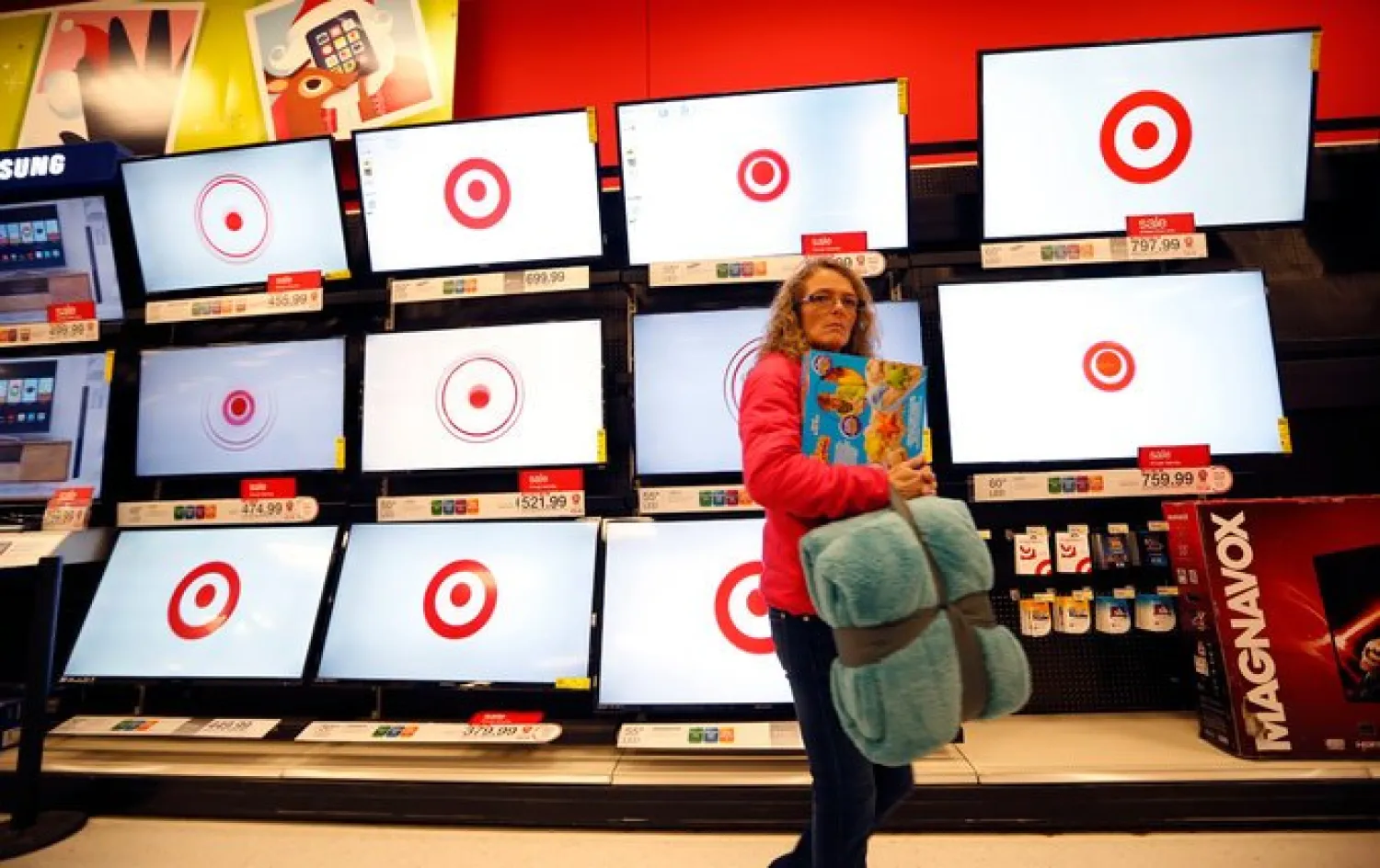
Two important features to look for in a television are local dimming and high dynamic range, a Wirecutter tester said. Credit Robert F. Bukaty/Associated Press
TT

How to Buy a Great TV

Two important features to look for in a television are local dimming and high dynamic range, a Wirecutter tester said. Credit Robert F. Bukaty/Associated Press

You know how it is: Every Black Friday, you are bombarded with lousy shopping deals that do not offer as much of a discount on an item as you think. But there is a bright spot: If you are shopping for a television, it really is the best time to buy one.

To stoke sales, electronics manufacturers typically slash prices of popular TV sets during Black Friday to the lowest all year. This week, you will be able to buy high-quality televisions for $500 to $1,500 after discounts of 15 percent to 30 percent. That’s a deal considering that typically, many TVs in the $500 range are just O.K. and high-end sets cost upward of $2,000.

But as always, there will be duds to watch out for. Many TV brands take this opportunity to sell sets with exaggerated features that have subpar picture quality. And inside stores, TVs often look different from the way they would at home, because you probably don’t have gigantic lights in your ceilings like the showrooms at Best Buy.

“A lot of Black Friday marketing is designed to get the consumer interested in something, sometimes with not a lot of facts but a gut feeling of ‘I need to buy this,’ ” said Raymond Soneira, president of DisplayMate, a consulting firm that studies TV and smartphone screens.

So we did some research ahead of time. To help you scout for great TV deals, I interviewed experts on TV technologies and teamed up with Wirecutter, a New York Times company that reviews products. Here is our guide to picking out a TV you will be happy with this Black Friday, advice that may also come in handy if you are shopping for TVs over the rest of the holiday season.

Viewing Conditions

To narrow down your search, the first rule of thumb is to assess the ambient light in your living room.

If your living room gets lots of sunlight, you will want a very bright TV with vivid colors that can overcome some of that ambient light that washes out your TV, Mr. Soneira said. In this situation, you would probably go for an LCD TV, which can produce very bright and sharp images.

If your living room has lower ambient light or if you have a dark theater room, go for a TV with more lifelike colors. In this case, you could go for televisions with so-called OLED screens, which can be made thinner and lighter with more accurate colors and contrast. In general, OLED TVs look better than LCD sets, but OLED TVs are not as bright, so their colors and shadow details can be washed out by bright sunlight.

And then there is content to consider. If you watch a lot of movies, you would benefit from an OLED television to get a picture that more closely resembles what the director intended you to see. But if you mostly watch sports or broadcast television, a good LCD television would be sufficient to get a clear, bright picture of the ballgame or your local news coverage.

In the end, your budget may drive your decision. Good LCD televisions cost as little as $500. A nice OLED television tends to cost $2,000 and up.

A Few Important Features

After you have decided on a type of TV, there are two important features to look for: local dimming and high dynamic range, said Chris Heinonen, a writer and TV tester for Wirecutter.

Local dimming is a technology that uses a backlight embedded inside the TV to make bright parts of the screen look brighter without washing out shadow detail. It also helps improve contrast and produce a more vibrant image.

High dynamic range, or HDR, is a software feature that enhances the contrast and color profile of a picture. In bright colors, you will see brighter highlights; in dark colors, you will see more details.

Most television sets today come with 4K high-definition resolution, also known as ultrahigh definition. But 4K videos won’t look very good if the TV lacks local dimming. In addition, the expanded color gamut from high dynamic range makes a big difference when watching videos in 4K, Mr. Heinonen said.

Buyer, Beware

Here’s the tricky part: On Black Friday, many companies exaggerate the features on their TV sets to make them look more attractive. Here are some things to look out for.

■ Fake contrast ratio numbers. Contrast ratio is the difference between a TV’s peak brightness and lowest darkness. All you need to know is that a high contrast ratio helps make a picture look good. Manufacturers enjoy pumping up the contrast ratio of their TVs by listing results in unrealistic test settings, Mr. Heinonen said.

■ Unknown TV models. On Black Friday, TV brands also enjoy releasing obscure television sets with model names that are similar to popular sets but with inferior features. “They all do it,” Mr. Heinonen said.

For example, Samsung could hypothetically sell a TV set called MU8020, which sounds similar to the Samsung MU8000, a well-reviewed television. But the unknown TV might lack important features like local dimming.

■ Misleading display technologies. TV makers use confusing terms that may mislead you. LED televisions, for example, sound similar to fancy OLED televisions — but they are just LCD televisions with an LED backlight, Mr. Soneira said. In addition, companies advertise TVs with high dynamic range, but some sets are not even powerful enough to display HDR properly, Mr. Heinonen said.

The New York Times



Saudi National Cybersecurity Authority Launches Service to Verify Suspicious Links

Saudi National Cybersecurity Authority Launches Service to Verify Suspicious Links
TT

Saudi National Cybersecurity Authority Launches Service to Verify Suspicious Links

Saudi National Cybersecurity Authority Launches Service to Verify Suspicious Links

The National Cybersecurity Authority has launched the “Tahqaq” service, aimed at enabling members of the public to proactively and safely deal with circulated links and instantly verify their reliability before visiting them.

This initiative comes within the authority’s strategic programs designed to empower individuals to enhance their cybersecurity, SPA reported.

The authority noted that the “Tahqaq” service allows users to scan circulated links and helps reduce the risks associated with using and visiting suspicious links that may lead to unauthorized access to data. The service also provides cybersecurity guidance to users, mitigating emerging cyber risks and boosting cybersecurity awareness across all segments of society.

The “Tahqaq” service is offered as part of the National Portal for Cybersecurity Services (Haseen) in partnership with the authority’s technical arm, the Saudi Information Technology Company (SITE). The service is available through the unified number on WhatsApp (+966118136644), as well as via the Haseen portal website at tahqaq.haseen.gov.sa.


Saudi Arabia’s Space Sector: A Strategic Pillar of a Knowledge-Based Economy

The Kingdom is developing an integrated sovereign space system encompassing infrastructure and applications, led by national expertise - SPA
TT

Saudi Arabia’s Space Sector: A Strategic Pillar of a Knowledge-Based Economy

The Kingdom is developing an integrated sovereign space system encompassing infrastructure and applications, led by national expertise - SPA

Saudi Arabia is undergoing significant transformations toward an innovation-driven knowledge economy, with the space sector emerging as a crucial pillar of Saudi Vision 2030. This sector has evolved from a scientific domain into a strategic driver for economic development, focusing on investing in talent, developing infrastructure, and strengthening international partnerships.

CEO of the Saudi Space Agency Dr. Mohammed Al-Tamimi emphasized that space is a vital tool for human development. He noted that space exploration has yielded significant benefits in telecommunications, navigation, and Earth observation, with many daily technologies stemming from space research, SPA reported.

Dr. Al-Tamimi highlighted a notable shift with the private sector's entry into the space industry, which is generating new opportunities. He stressed that Saudi Arabia aims not just to participate but to lead in creating an integrated space ecosystem encompassing legislation, investment, and innovation.

He also noted the sector's role in fostering national identity among youth, key drivers of the industry. Investing in them is crucial for the Kingdom's future, focusing on creating a space sector that empowers Saudi citizens.

In alignment with international efforts, the Saudi Space Agency signed an agreement with NASA for the first Saudi satellite dedicated to studying space weather, part of the Artemis II mission under a scientific cooperation framework established in July 2024.

According to SPA, the Kingdom is developing an integrated sovereign space system encompassing infrastructure and applications, led by national expertise. This initiative is supported by strategic investments and advanced technologies within a governance framework that meets international standards. Central to this vision is the Neo Space Group, owned by the Public Investment Fund, which aims to establish Saudi Arabia as a space leader.

Saudi Arabia views space as a strategic frontier for human development. Vision 2030 transforms space into a bridge between dreams and achievements, empowering Saudi youth to shape their futures. Space represents not just data and satellites but a national journey connecting ambition with innovation.


Nvidia, Joining Big Tech Deal Spree, to License Groq Technology, Hire Executives

The Nvidia logo is seen on a graphic card package in this illustration created on August 19, 2025. (Reuters)
TT

Nvidia, Joining Big Tech Deal Spree, to License Groq Technology, Hire Executives

The Nvidia logo is seen on a graphic card package in this illustration created on August 19, 2025. (Reuters)

Nvidia has agreed to license chip technology from startup Groq and hire away its CEO, a veteran of Alphabet's Google, Groq said in a blog post on Wednesday.

The deal follows a familiar pattern in recent years where the world's biggest technology firms pay large sums in deals with promising startups to take their technology and talent but stop short of formally acquiring the target.

Groq specializes in what is known as inference, where artificial intelligence models that have already been trained respond to requests from users. While Nvidia dominates the market for training AI models, it faces much more competition in inference, where traditional rivals such as Advanced Micro Devices have aimed ‌to challenge it ‌as well as startups such as Groq and Cerebras Systems.

Nvidia ‌has ⁠agreed to a "non-exclusive" ‌license to Groq's technology, Groq said. It said its founder Jonathan Ross, who helped Google start its AI chip program, as well as Groq President Sunny Madra and other members of its engineering team, will join Nvidia.

A person close to Nvidia confirmed the licensing agreement.

Groq did not disclose financial details of the deal. CNBC reported that Nvidia had agreed to acquire Groq for $20 billion in cash, but neither Nvidia nor Groq commented on the report. Groq said in its blog post that it will continue to ⁠operate as an independent company with Simon Edwards as CEO and that its cloud business will continue operating.

In similar recent deals, Microsoft's ‌top AI executive came through a $650 million deal with a startup ‍that was billed as a licensing fee, and ‍Meta spent $15 billion to hire Scale AI's CEO without acquiring the entire firm. Amazon hired ‍away founders from Adept AI, and Nvidia did a similar deal this year. The deals have faced scrutiny by regulators, though none has yet been unwound.

"Antitrust would seem to be the primary risk here, though structuring the deal as a non-exclusive license may keep the fiction of competition alive (even as Groq’s leadership and, we would presume, technical talent move over to Nvidia)," Bernstein analyst Stacy Rasgon wrote in a note to clients on Wednesday after Groq's announcement. And Nvidia CEO Jensen Huang's "relationship with ⁠the Trump administration appears among the strongest of the key US tech companies."

Groq more than doubled its valuation to $6.9 billion from $2.8 billion in August last year, following a $750 million funding round in September.

Groq is one of a number of upstarts that do not use external high-bandwidth memory chips, freeing them from the memory crunch affecting the global chip industry. The approach, which uses a form of on-chip memory called SRAM, helps speed up interactions with chatbots and other AI models but also limits the size of the model that can be served.

Groq's primary rival in the approach is Cerebras Systems, which Reuters this month reported plans to go public as soon as next year. Groq and Cerebras have signed large deals in the Middle East.

Nvidia's Huang spent much of his biggest keynote speech of 2025 arguing that ‌Nvidia would be able to maintain its lead as AI markets shift from training to inference.