Aramco to Build Construction Facilities in Haradh, Hawiyah

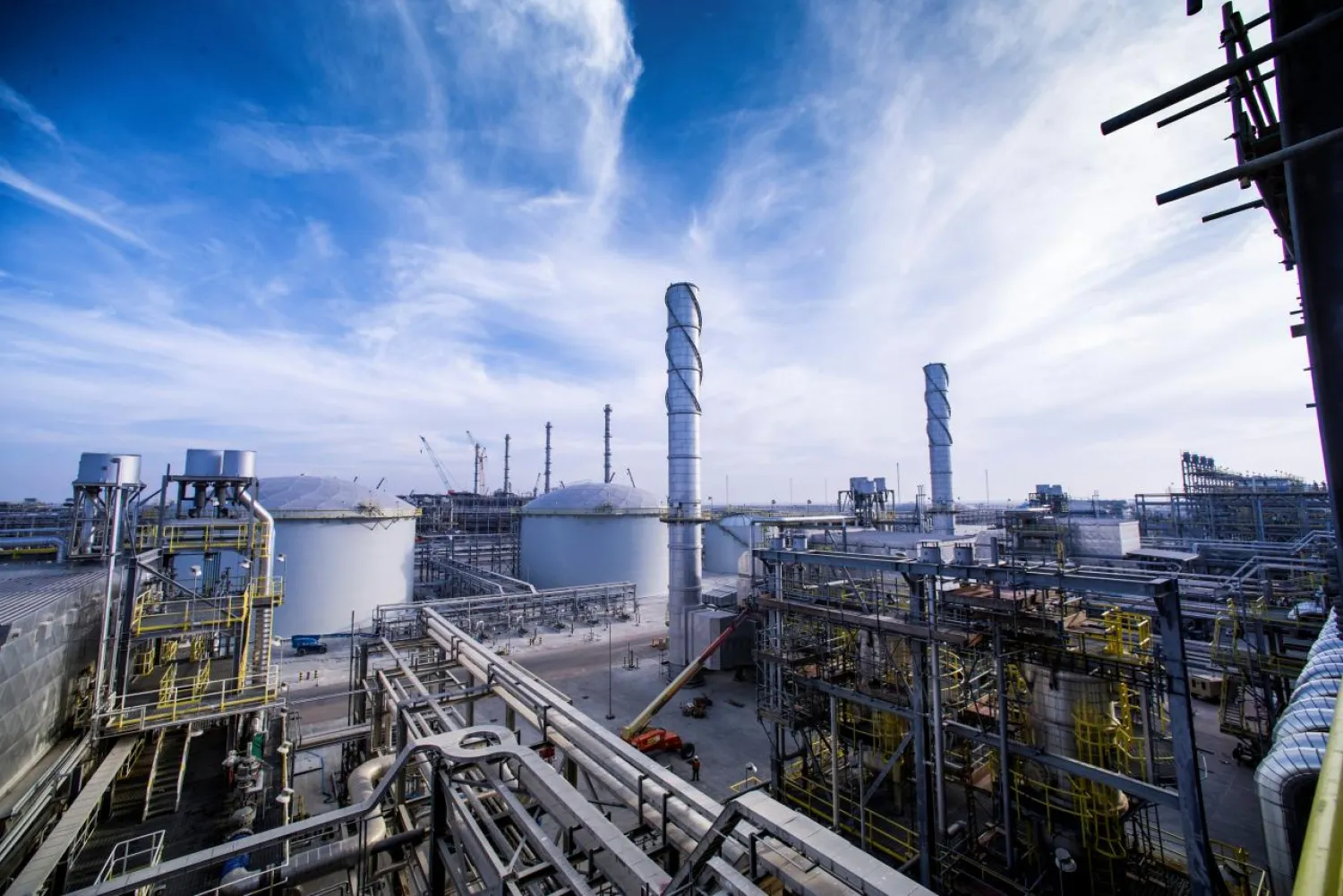
 A view shows Saudi Aramco Wasit Gas Plant, Saudi Arabia December 8, 2014. Saudi Aramco/Handout via REUTERS
A view shows Saudi Aramco Wasit Gas Plant, Saudi Arabia December 8, 2014. Saudi Aramco/Handout via REUTERS
TT

Aramco to Build Construction Facilities in Haradh, Hawiyah

 A view shows Saudi Aramco Wasit Gas Plant, Saudi Arabia December 8, 2014. Saudi Aramco/Handout via REUTERS
A view shows Saudi Aramco Wasit Gas Plant, Saudi Arabia December 8, 2014. Saudi Aramco/Handout via REUTERS

Saudi Aramco has awarded a contract to build three temporary construction facilities (TCFs) to Azmeel Contracting Company as part of the company’s Gas Compression Program in Haradh and Hawiyah.

Fahad al-Helal, Saudi Aramco vice president for Project Management, signed the contract on behalf of the company. The contract involves construction of full functional support building and facilities together with associated infrastructure and communication connectivity in the Haradh and Hawiyah operational areas.

“We constantly work towards achieving Saudi Aramco’s goals and objectives in natural gas production to diversify the Kingdom’s energy mix and to make cleaner energy resources available,” Helal said.

He added, “The TCF project will leverage on the Haradh Increment Program, which is considered a catalyst for growth through increasing total gas production by more than one billion standard cubic feet per day. We are glad that a local company is involved in the execution of this major project, in tandem with Saudi Aramco’s In-Kingdom Total Value Add (IKTVA) initiative.”

Recently, Aramco signed a number of agreements with several oil and gas service contractors for oil and gas megaprojects designed to enhance the company’s energy sustainability, diversify the economy, expand gas production, and localize domestic content. The agreements are valued at nearly $4.5 billion in total.

Aramco seeks to increase gas production from 16 billion cubic feet to 20 billion cubic feet by 2021, in which the company will add in 2019 around 2.5 cubic feet and in 2021 around 1.3 billion cubic feet of gas on a daily basis.

On Nov. 9, Aramco signed five deals on development of gas factories in Haradh and Hawiyah.

On Nov. 30, it signed three contracts to develop locations in Haradh and Hawiyah to increase gas production to one billion cubic feet, daily.


Iran's Central Bank Chief Resigns

A man walks past a sign at a currency exchange bureau as the value of the Iranian rial drops, in Tehran, Iran, December 20, 2025. (Via Reuters)
TT

Iran's Central Bank Chief Resigns

A man walks past a sign at a currency exchange bureau as the value of the Iranian rial drops, in Tehran, Iran, December 20, 2025. (Via Reuters)

Iran's central bank chief, Mohammad Reza Farzin, has resigned, the semi-official ​Nournews agency reported on Monday, citing an official at the president's office, as the country battles a slump in its rial currency and high inflation.

The rial, which has been falling as the Iranian economy has suffered from the impact of Western sanctions, fell to a ‌new record low on ‌Monday at around 1,390,000 ‌to ⁠the ​dollar, according ‌to websites displaying open market rates.

Iranian media outlets reported there had been demonstrations in the capital Tehran, mainly by shop owners, against the economic situation.

Farzin has headed the central bank since December 2022. His resignation will be reviewed by President Masoud ⁠Pezeshkian, the official added, according to Nournews.

Iranian state media reported ‌later on Monday, citing the communications ‍and information deputy ‍at the Iranian president's office, that former Economy ‍Minister Abdolnaser Hemmati will be appointed as the new central bank chief.

Iranian media have said the government's recent economic liberalization policies have put pressure on the ​open-rate currency market.

The open-rate market is where ordinary Iranians buy foreign currency, whereas businesses typically ⁠use state-regulated rates.

The reimposition of US sanctions in 2018 during President Donald Trump's first term has harmed Iran's economy by limiting its oil exports and access to foreign currency.

The Iranian economy is at risk of recession, with the World Bank forecasting GDP will shrink by 1.7% in 2025 and 2.8% in 2026. The risk is compounded by rising inflation, which hit a 40-month high of ‌48.6% in October, according to Iran's Statistical Center.


Lebanon Signs Deal to Purchase Natural Gas from Egypt

A diesel storage tank is seen at the Middle East Oil Refinery Company (MIDOR) in Alexandria, Egypt, November 7, 2018. REUTERS/Amr Abdallah Dalsh
TT

Lebanon Signs Deal to Purchase Natural Gas from Egypt

A diesel storage tank is seen at the Middle East Oil Refinery Company (MIDOR) in Alexandria, Egypt, November 7, 2018. REUTERS/Amr Abdallah Dalsh

Lebanon said Monday it plans to purchase natural gas from Egypt, seeking to reduce its reliance on fuel oil for its ageing power plants in a country hamstrung by regular electricity cuts.

The electricity sector has cost Lebanon more than $40 billion since the end of its 1975-1990 civil war, and successive governments have failed to reduce losses, repair crumbling infrastructure or even guarantee regular power bill collections.

Residents rely on expensive private generators and solar panels to supplement the unreliable state supply.

Prime Minister Nawaf Salam's office said in a statement that the memorandum of understanding between Lebanon and Egypt sought "to meet Lebanon's needs for natural gas allocated for electricity generation".

It was signed by Lebanese Energy Minister Joe Saddi and Egyptian Petroleum Minister Karim Badawi, according to AFP.

"Lebanon's strategy is first to transition to the use of natural gas, and second, to diversify gas sources," Saddi said, adding that "the process will take time because pipelines need rehabilitation".

Lebanon will "contact donor agencies to see how they can help finance the rehabilitation" of the Lebanese section of the gas pipelines, he said, adding that repair work would take several months.

President Joseph Aoun said the memorandum of understanding was "a practical and essential step that will enable Lebanon to increase its electricity production".

A statement from Cairo's petroleum and mineral resources ministry said that "Egypt is fulfilling its role in supplying Lebanon with natural gas, with the aim of supporting energy security for Arab countries".

In 2022, Lebanon signed a deal to import natural gas from Egypt and Jordan via Syria to boost power supply, but the contracts were never implemented due to financing issues and US sanctions on Syria.

Washington recently lifted it Syria measures following the fall of longtime ruler Bashar al-Assad last year.

In April, Lebanon signed a $250 million agreement with the World Bank to modernise its electricity sector.


Chile to Restore Global Leadership in Lithium Production

Aerial view of brine ponds and processing areas of the lithium mine of the Chilean company SQM (Sociedad Quimica Minera) in the Atacama Desert, Calama, Chile, on September 12, 2022. (AFP)
TT

Chile to Restore Global Leadership in Lithium Production

Aerial view of brine ponds and processing areas of the lithium mine of the Chilean company SQM (Sociedad Quimica Minera) in the Atacama Desert, Calama, Chile, on September 12, 2022. (AFP)

Chile's state-owned copper producer, Codelco, together with Chinese-backed private miner, SQM, announced on Saturday the creation of a giant company to exploit lithium, often referred to as "white gold."

The South American country is the world’s second-largest producer of lithium, a key component of EVs and other clean technologies and has about 40% of the world’s lithium reserves.

The partnership between the firms will allow them to jointly ramp up the exploration of lithium in the Atacama region of northern Chile.

The public-private partnership will be named Nova Andino Litio SpA, said Codelco, which described the agreement as one of the most significant deals in Chilean business history.

The Chinese firm Tianqi holds 22% stake in SQM.

In a statement, Codelco said the new partnership will carry out lithium exploration, extraction, production, and commercialization activities in the Atacama salt flat until 2060.

The agreement was approved by more than 20 national and international regulatory authorities, including those in China, Brazil, Saudi Arabia, and the European Union.

Chile was the last of the countries to clear the deal. Last month, China gave the green light to the planned partnership between Codelco and SQM.

The new venture is intended to help Chile regain global leadership in lithium production, a position it lost to Australia nearly a decade ago.

The partnership aims to expand lithium output in the Atacama region, with plans to increase production by around 300,000 tons per year. In 2022, Chile produced 243,100 tons of lithium.

The partnership also aligns with Chile’s National Lithium Strategy, announced in 2023 by the leftist government of President Gabriel Boric, aimed at reclaiming Chile’s global leadership in lithium production.