Cate Blanchett to Head Cannes Film Festival Jury

Cast member Cate Blanchett poses during a photocall for the film "Carol" in competition at the 68th Cannes Film Festival in Cannes, southern France, May 17, 2015. REUTERS/Eric Gaillard/File Photo
TT

Cate Blanchett to Head Cannes Film Festival Jury

Cast member Cate Blanchett poses during a photocall for the film "Carol" in competition at the 68th Cannes Film Festival in Cannes, southern France, May 17, 2015. REUTERS/Eric Gaillard/File Photo

Australian movie star Cate Blanchett will head the jury at this year’s Cannes Film Festival on the French Riviera, its organizers said on Thursday.

Blanchett, 48, received international acclaim for her role as Elizabeth I of England in Shekhar Kapur’s 1998 film ‘Elizabeth’ and has won three Golden Globe awards.

Other jury members for the 71st edition of the festival, which will run from May 8-19, will be announced at a later date.

Blanchett, who recently took part with other Hollywood figures in a campaign to help fight sexual harassment following the Harvey Weinstein sex scandal, will become the 11th woman to chair the event in the festival’s history.

She will take over from Spanish director Pedro Almodovar as jury head at Cannes, which last year awarded its “Palme d‘Or” to the Swedish satirical drama film ‘The Square’.

Blanchett will lead a panel, usually made up of actors and film-makers, who will choose the winner of the Palme d'Or - the influential Cannes award for best film.

They will also select the festival's other main prizes.

Blanchett has won two Oscars - for The Aviator and Blue Jasmine - and been nominated five more times.

Cannes president Pierre Lescure and delegate general Thierry Fremaux said: "Our conversations this autumn convince us she will be a committed president, and a passionate and generous spectator."

She's the third female jury president in the last 10 years - the others being director Jane Campion in 2014 and actress Isabelle Huppert in 2009.

Blanchett said: "I have been to Cannes in many guises over the years - as an actress, producer, in the marketplace, the Gala-sphere and in competition but never solely for the sheer pleasure of watching the cornucopia of films this great festival harbors.

"I am humbled by the privilege and responsibility of presiding over this year's jury.

"This festival plays a pivotal role in bringing the world together to celebrate story: that strange and vital endeavor that all peoples share, understand and crave."


Syria Opens its Energy Sector to Global Oil Majors

A man walks past oil pumps in the oil-rich city of Rmelan in Syria (Reuters)
TT

Syria Opens its Energy Sector to Global Oil Majors

A man walks past oil pumps in the oil-rich city of Rmelan in Syria (Reuters)

Syria is moving swiftly to reclaim its role as a regional energy player, as the head of the Syrian Petroleum Company, Youssef Qiblawi, outlined ambitious plans to open the country’s oil and gas sector to major international firms, including Chevron, ConocoPhillips, TotalEnergies and Eni.

In comments to The Financial Times, Qiblawi said Syria has explored less than a third of its hydrocarbon potential. He noted that trillions of cubic meters of gas remain untapped in largely untouched areas, awaiting international expertise and technology to be brought into production.

Strategic alliances and offshore exploration

Signs of a new energy map are already emerging. Chevron has signed an agreement with Qatar’s Power International Holding to begin exploration in an offshore block, with field operations expected to start within two months.

Plans extend beyond that first project. QatarEnergy and TotalEnergies are considering participation in a second offshore block, while talks are under way with Italy’s Eni over a third.

ConocoPhillips has also strengthened its presence through a previously signed memorandum of understanding, reflecting what Qiblawi described as growing confidence among global energy companies in the commercial potential of Syria’s energy sector.

The production challenge

After years of conflict, the Syrian government has reasserted control by force over oilfields in the northeast that were previously held by Kurdish forces. Qiblawi described the condition of these fields as poor, saying production has fallen from about 500,000 barrels a day to roughly 100,000.

He attributed the decline to sabotage and the use of explosives to boost short-term output at the expense of long-term reservoir health.

Qiblawi said he would offer international companies existing fields to rehabilitate, allowing them to use the revenues to fund exploration elsewhere. “That would be costly, but I will give them some pieces of cake to generate money,” he said.

Closing the technology gap

Syria is seeking to bridge a significant technical gap, particularly in deep-water exploration. While seismic surveys and preliminary mapping of potential fields have been completed, advanced technology is lacking. Talks are planned with BP in London, while the government says it remains open to cooperation with Russian and Chinese firms.

Industry estimates suggest Syria holds proven reserves of around 1.3 billion barrels of oil, alongside vast unexplored areas, especially offshore.

Separately, Reuters reported that a large consortium is preparing to launch extensive exploration and production operations in northeastern Syria.

The group includes Saudi Arabia’s TAQA alongside US energy and oilfield services companies Baker Hughes, Hunt Energy and Argent LNG.

The consortium aims to develop four to five exploration blocks in areas previously under Kurdish control, with executives framing the effort as a step toward unifying the country’s resources and delivering tangible economic gains.

Toward energy stability

With around 2,000 engineers currently assessing damage in the northeast, the Syrian government hopes to publish a full recovery timetable by the end of February.

Officials at the Syrian Petroleum Company say they are optimistic that gas production can be doubled to 14 million cubic meters a day by the end of 2026, supported by renewed regional investment led by Saudi and US firms in energy and infrastructure projects.


Deaths in Iran's Crackdown on Protests Reach at Least 7,000

Policemen stand guard during an annual rally marking 1979 Iranian Revolution as a woman walks at right at the Azadi (Freedom) St. Tehran, Iran, Wednesday, Feb. 11, 2026. (AP Photo/Vahid Salemi)
TT

Deaths in Iran's Crackdown on Protests Reach at Least 7,000

Policemen stand guard during an annual rally marking 1979 Iranian Revolution as a woman walks at right at the Azadi (Freedom) St. Tehran, Iran, Wednesday, Feb. 11, 2026. (AP Photo/Vahid Salemi)

The death toll from a crackdown over Iran’s nationwide protests last month has reached at least 7,002 people killed with many more still feared dead, activists said Thursday.

The slow rise in the number of dead from the demonstrations adds to the overall tensions facing Iran both inside the country and abroad as it tries to negotiate with the United States over its nuclear program. A second round of talks remains up in the air as Israeli Prime Minister Benjamin Netanyahu pressed his case directly with US President Donald Trump to intensify his demands on Tehran in the negotiations.

“There was nothing definitive reached other than I insisted that negotiations with Iran continue to see whether or not a Deal can be consummated. If it can, I let the Prime Minister know that will be a preference,” Trump wrote afterward on his TruthSocial website.

“Last time Iran decided that they were better off not making a Deal, and they were hit. ... That did not work well for them. Hopefully this time they will be more reasonable and responsible.”

Meanwhile, Iran at home faces still-simmering anger over its wide-ranging suppression of all dissent in the Iranian Republic. That rage may intensify in the coming days as families of the dead begin marking the traditional 40-day mourning for the loved ones.

Activists' death toll slowly rises

The US-based Human Rights Activists News Agency, which offered the latest figures, has been accurate in counting deaths during previous rounds of unrest in Iran and relies on a network of activists in Iran to verify deaths. The slow rise in the death toll has come as the agency slowly is able to crosscheck information as communication remains difficult with those inside of Iran.

Iran’s government offered its only death toll on Jan. 21, saying 3,117 people were killed. Iran’s theocracy in the past has undercounted or not reported fatalities from past unrest.

The Associated Press has been unable to independently assess the death toll, given authorities have disrupted internet access and international calls in Iran.

The rise in the death toll comes as Iran tries to negotiate with the United States over its nuclear program.

Diplomacy over Iran continues

Senior Iranian security official Ali Larijani met Wednesday in Qatar with Foreign Minister Sheikh Mohammed bin Abdulrahman Al Thani. Qatar hosts a major US military installation that Iran attacked in June, after the US bombed Iranian nuclear sites during the 12-day Iran-Israel war in June. Larijani also met with officials of the Palestinian Hamas group, and in Oman with Tehran-backed Houthis from Yemen on Tuesday.

Larijani told Qatar’s Al Jazeera satellite news network that Iran did not receive any specific proposal from the US in Oman, but acknowledged that there was an “exchange of messages.”

Qatar has been a key negotiator in the past with Iran, with which it shares a massive offshore natural gas field in the Arabian Gulf. Its state-run Qatar News Agency reported that ruling emir Sheikh Tamim bin Hamad Al Thani spoke with Trump about “the current situation in the region and international efforts aimed at de-escalation and strengthening regional security and peace,” without elaborating.

The US has moved the aircraft carrier USS Abraham Lincoln, ships and warplanes to the Middle East to pressure Iran into an agreement and have the firepower necessary to strike Iran should Trump choose to do so.

Already, US forces have shot down a drone they said got too close to the Lincoln and came to the aid of a US-flagged ship that Iranian forces tried to stop in the Strait of Hormuz, the narrow mouth of the Arabian Gulf.

Trump told the news website Axios that he was considering sending a second carrier to the region. “We have an armada that is heading there and another one might be going,” he said.

Concern over Nobel Peace Prize laureate

Meanwhile, the Norwegian Nobel Committee said it was “deeply appalled by credible reports detailing the brutal arrest, physical abuse and ongoing life‑threatening mistreatment” of 2023 Peace Prize laureate Narges Mohammadi.

The committee that awards the prize said it had information Mohammadi had been beaten during her arrest in December and continued to be mistreated. It called for her immediate and unconditional release.

“She continues to be denied adequate, sustained medical follow‑up while being subjected to heavy interrogation and intimidation,” the committee said. “She has fainted several times, suffers from dangerously high blood pressure and has been prevented from accessing necessary follow‑up for suspected breast tumors.”

Iran just sentenced Mohammadi, 53, to over seven more years in prison. Supporters had warned for months before her arrest that she was at risk of being put back into prison after she received a furlough in December 2024 over medical concerns.



Al-Zindani to Asharq Al-Awsat: Govt to Move to Aden Soon, Foreign Ministry Retained to Complete Reforms

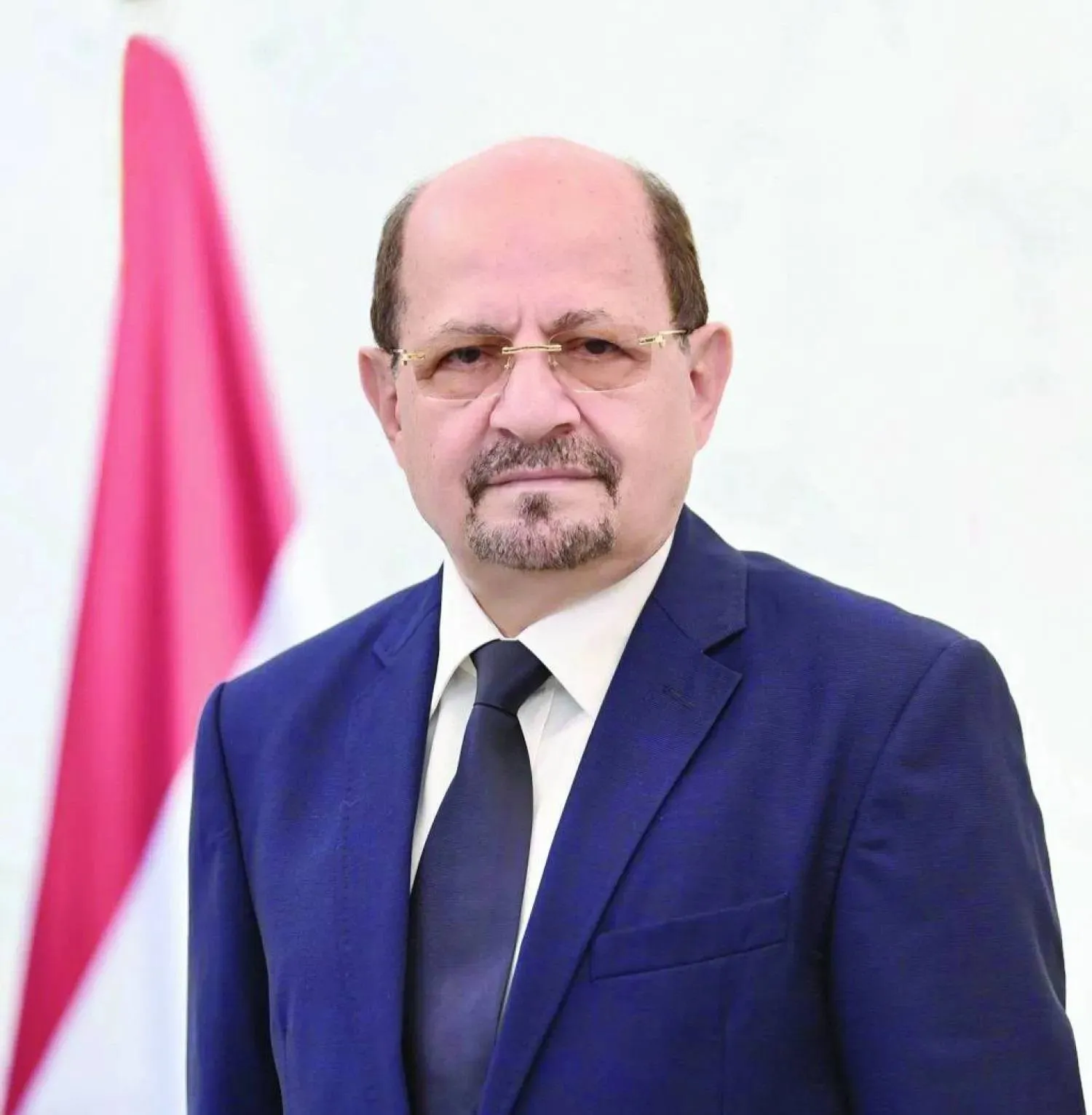
Yemen’s Prime Minister and Foreign Minister, Dr. Shaya Al-Zindani 
TT

Al-Zindani to Asharq Al-Awsat: Govt to Move to Aden Soon, Foreign Ministry Retained to Complete Reforms

Yemen’s Prime Minister and Foreign Minister, Dr. Shaya Al-Zindani 

Yemen’s Prime Minister and Foreign Minister, Dr. Shaya Al-Zindani, has signaled the first concrete move by his newly sworn-in government, announcing that it will relocate to Aden in the near future, just 24 hours after taking the constitutional oath.

In remarks to Asharq Al-Awsat, Al-Zindani said his decision to retain the foreign affairs portfolio was driven by the need “to complete the work already begun,” stressing that a return to Yemen is essential to restoring effective governance.

He noted that the move inside the country is a necessary step to activate performance, adding that a presence in Aden must be linked to a genuine ability to manage state files and restore regular institutional functioning.

The comments came during a special episode of the Asharq Al-Awsat Podcast, recorded at Asharq TV studios at the Saudi Research and Media Group headquarters in Riyadh’s King Abdullah Financial District.

Al-Zindani spoke at a time of acute economic pressure and heightened political expectations. He said the current phase does not allow for expansive rhetoric, but rather requires gradual, practical work to rebuild confidence, noting that stabilizing institutional rhythm must precede any expansion of objectives.

Addressing questions on the composition of his cabinet, Al-Zindani highlighted that ministers were selected on purely professional criteria, based on competence, specialization, and experience, away from partisan dictates. He emphasized that weak institutional foundations had been a central cause of past failures, underscoring the need to rebuild state structures and strengthen oversight.

He pointed to relative improvements in some public services, particularly electricity, with Saudi support, while noting that the real challenge lies in sustaining economic reforms and managing resources effectively. On accountability, he argued that unifying political decision-making has opened the door to enforcing the rule of law. When authority is unified, reward and punishment become possible, he underlined.

On economic policy, Al-Zindani avoided quick promises, instead focusing on resource management and reprioritization. Recovery, he said, cannot be achieved through piecemeal decisions but requires restructuring public finance, enhancing transparency, and activating oversight mechanisms. He stressed that financial stability is the foundation for any tangible improvement in citizens’ lives and for restoring domestic and international confidence.

He continued that working from within Yemen will enable the government to better understand societal priorities and reassert the state’s presence in public life, an influence eroded by years of conflict. He described taking the oath in Riyadh as a constitutional and security necessity dictated by circumstances, arguing that attention should focus on the substance of government action rather than symbolism.

On security, Al-Zindani adopted a cautious, realistic tone, acknowledging that years of accumulated challenges cannot be erased quickly. Still, he said coordination among security agencies and unified political leadership have led to relative improvements. While recognizing protests as part of transitional phases, he stressed the need for adherence to legal frameworks to preserve stability and avoid derailment of recovery efforts.

According to the Yemeni official, reorganizing the armed forces requires unified command and redeploying units outside cities to consolidate state authority and reduce overlap between military and security roles. He noted that multiple loyalties in previous phases weakened institutions and must be overcome to restore stability.

Internationally, he said unified political representation strengthens Yemen’s legal and diplomatic standing. He justified retaining the foreign ministry to complete reforms already underway, including restructuring the ministry and overseas missions, describing diplomatic normalization as integral to rebuilding the state.

He further described relations with Saudi Arabia as having evolved from traditional support into a multi-dimensional partnership impacting vital sectors, with scope to expand cooperation in development and economic stability.

On the Houthis, Al-Zindani said the government showed flexibility in peace efforts but faced repeated noncompliance, adding that recent military and economic developments have weakened the group’s position. Any future negotiations, he stressed, must rest on clear references, with unified anti-Houthi forces giving the government a stronger negotiating hand amid rapid regional and international shifts.