
Al-Zindani to Asharq Al-Awsat: Govt to Move to Aden Soon, Foreign Ministry Retained to Complete Reforms

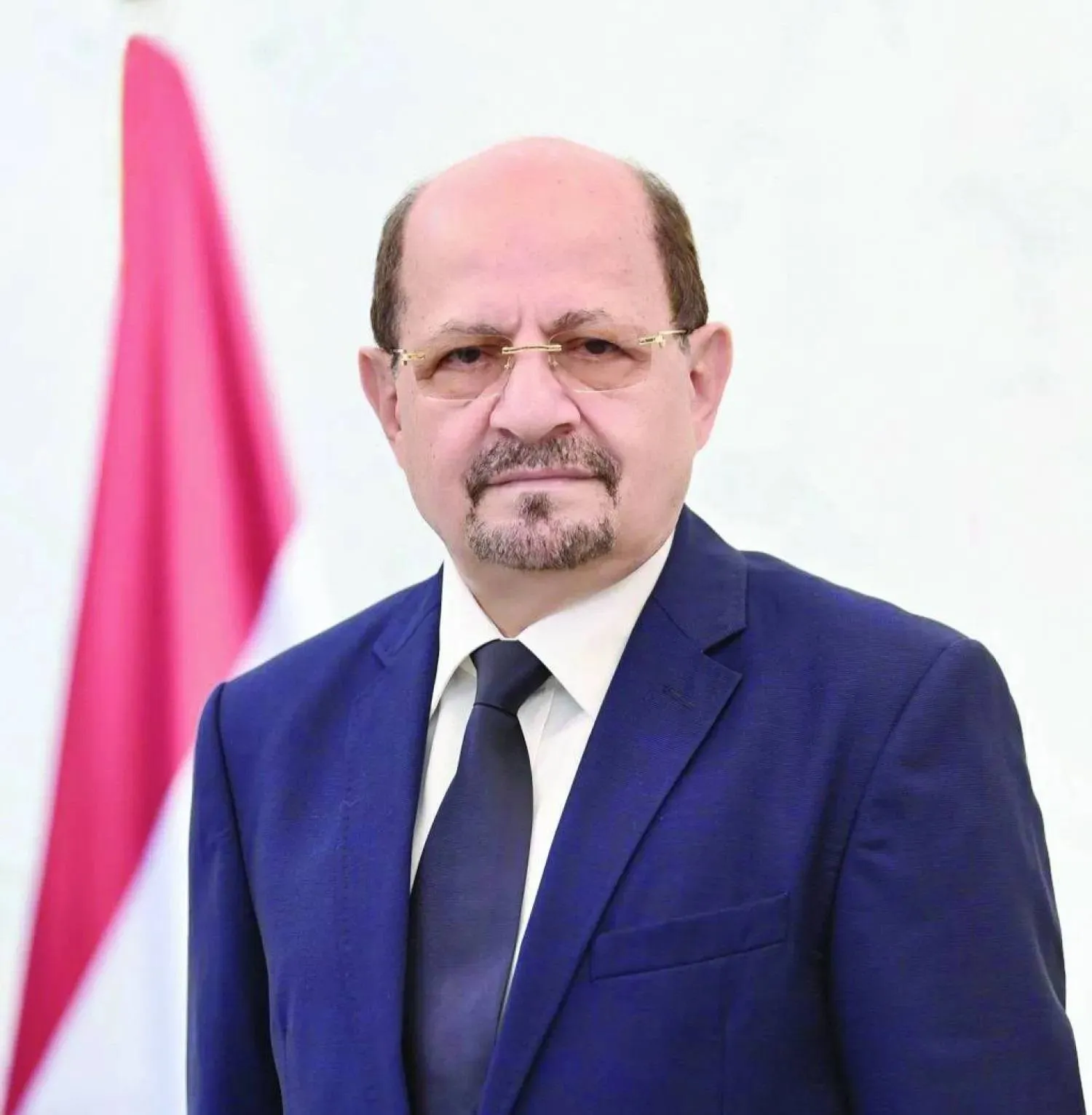
Yemen’s Prime Minister and Foreign Minister, Dr. Shaya Al-Zindani 
TT

Al-Zindani to Asharq Al-Awsat: Govt to Move to Aden Soon, Foreign Ministry Retained to Complete Reforms

Yemen’s Prime Minister and Foreign Minister, Dr. Shaya Al-Zindani 

Yemen’s Prime Minister and Foreign Minister, Dr. Shaya Al-Zindani, has signaled the first concrete move by his newly sworn-in government, announcing that it will relocate to Aden in the near future, just 24 hours after taking the constitutional oath.

In remarks to Asharq Al-Awsat, Al-Zindani said his decision to retain the foreign affairs portfolio was driven by the need “to complete the work already begun,” stressing that a return to Yemen is essential to restoring effective governance.

He noted that the move inside the country is a necessary step to activate performance, adding that a presence in Aden must be linked to a genuine ability to manage state files and restore regular institutional functioning.

The comments came during a special episode of the Asharq Al-Awsat Podcast, recorded at Asharq TV studios at the Saudi Research and Media Group headquarters in Riyadh’s King Abdullah Financial District.

Al-Zindani spoke at a time of acute economic pressure and heightened political expectations. He said the current phase does not allow for expansive rhetoric, but rather requires gradual, practical work to rebuild confidence, noting that stabilizing institutional rhythm must precede any expansion of objectives.

Addressing questions on the composition of his cabinet, Al-Zindani highlighted that ministers were selected on purely professional criteria, based on competence, specialization, and experience, away from partisan dictates. He emphasized that weak institutional foundations had been a central cause of past failures, underscoring the need to rebuild state structures and strengthen oversight.

He pointed to relative improvements in some public services, particularly electricity, with Saudi support, while noting that the real challenge lies in sustaining economic reforms and managing resources effectively. On accountability, he argued that unifying political decision-making has opened the door to enforcing the rule of law. When authority is unified, reward and punishment become possible, he underlined.

On economic policy, Al-Zindani avoided quick promises, instead focusing on resource management and reprioritization. Recovery, he said, cannot be achieved through piecemeal decisions but requires restructuring public finance, enhancing transparency, and activating oversight mechanisms. He stressed that financial stability is the foundation for any tangible improvement in citizens’ lives and for restoring domestic and international confidence.

He continued that working from within Yemen will enable the government to better understand societal priorities and reassert the state’s presence in public life, an influence eroded by years of conflict. He described taking the oath in Riyadh as a constitutional and security necessity dictated by circumstances, arguing that attention should focus on the substance of government action rather than symbolism.

On security, Al-Zindani adopted a cautious, realistic tone, acknowledging that years of accumulated challenges cannot be erased quickly. Still, he said coordination among security agencies and unified political leadership have led to relative improvements. While recognizing protests as part of transitional phases, he stressed the need for adherence to legal frameworks to preserve stability and avoid derailment of recovery efforts.

According to the Yemeni official, reorganizing the armed forces requires unified command and redeploying units outside cities to consolidate state authority and reduce overlap between military and security roles. He noted that multiple loyalties in previous phases weakened institutions and must be overcome to restore stability.

Internationally, he said unified political representation strengthens Yemen’s legal and diplomatic standing. He justified retaining the foreign ministry to complete reforms already underway, including restructuring the ministry and overseas missions, describing diplomatic normalization as integral to rebuilding the state.

He further described relations with Saudi Arabia as having evolved from traditional support into a multi-dimensional partnership impacting vital sectors, with scope to expand cooperation in development and economic stability.

On the Houthis, Al-Zindani said the government showed flexibility in peace efforts but faced repeated noncompliance, adding that recent military and economic developments have weakened the group’s position. Any future negotiations, he stressed, must rest on clear references, with unified anti-Houthi forces giving the government a stronger negotiating hand amid rapid regional and international shifts.


MSF Will Keep Operating in Gaza 'as Long as We Can'

(FILES) A Palestinian man walks on his crutches to the Doctors Without Borders or Medecins Sans Frontieres (MSF) clinic, in the al-Rimal neighborhood of Gaza City on new year's Eve, December 31, 2025. (Photo by Omar AL-QATTAA / AFP)
TT

MSF Will Keep Operating in Gaza 'as Long as We Can'

(FILES) A Palestinian man walks on his crutches to the Doctors Without Borders or Medecins Sans Frontieres (MSF) clinic, in the al-Rimal neighborhood of Gaza City on new year's Eve, December 31, 2025. (Photo by Omar AL-QATTAA / AFP)

The head of Doctors Without Borders in the Palestinian territories told AFP the charity would continue working in Gaza for as long as possible, following an Israeli decision to end its activities there.

In early February, Israel announced it was terminating all the activities in Gaza by the medical charity, known by its French acronym MSF, after it failed to provide a list of its Palestinian staff.

MSF has slammed the move, which takes effect on March 1, as a "pretext" to obstruct aid.

"For the time being, we are still working in Gaza, and we plan to keep running our operations as long as we can," Filipe Ribeiro told AFP in Amman, but said operations were already facing challenges.

"Since the beginning of January, we are not anymore in the capacity to get international staff inside Gaza. The Israeli authorities actually denied any entry to Gaza, but also to the West Bank," he said.

Ribeiro added that MSF's ability to bring medical supplies into Gaza had also been impacted.

"They're not allowed for now, but we have some stocks in our pharmacies that will allow us to keep running operations for the time being," he said.

"We do have teams in Gaza that are still working, both national and international, and we have stocks."

In December, Israel announced it would prevent 37 aid organizations, including MSF, from working in Gaza from March 1 for failing to submit detailed information about their Palestinian employees, drawing widespread condemnation from NGOs and the United Nations.

It had alleged that two MSF employees had links with Palestinian militant groups Hamas and Islamic Jihad, which the medical charity has repeatedly and vehemently denied.

MSF says it did not provide the names of its Palestinian staff because Israeli authorities offered no assurances regarding their safety.

Ribeiro warned of the massive impact the termination of MSF's operations would have for healthcare in war-shattered Gaza.

"MSF is one of the biggest actors when it comes to the health provision in Gaza and the West Bank, and if we are obliged to leave, then we will create a huge void in Gaza," he said.

The charity says it currently provides at least 20 percent of hospital beds in the territory and operates around 20 health centers.

In 2025 alone, it carried out more than 800,000 medical consultations, treated more than 100,000 trauma cases and assisted more than 10,000 infant deliveries.


Egyptian-Turkish Military Talks Focus on Strengthening Partnership

The Commander of the Egyptian Air Force during his meeting with the Turkish Air Force chief in Cairo on Wednesday (Egyptian military spokesperson)
TT

Egyptian-Turkish Military Talks Focus on Strengthening Partnership

The Commander of the Egyptian Air Force during his meeting with the Turkish Air Force chief in Cairo on Wednesday (Egyptian military spokesperson)

Senior Egyptian and Turkish air force commanders met in Cairo on Wednesday for talks focused on strengthening military partnership and expanding bilateral cooperation, in the latest sign of warming defense ties between the two countries.

The meeting brought together the Commander of the Egyptian Air Force, Lt. Gen. Amr Saqr, and his Turkish counterpart, Gen. Ziya Cemal Kadioglu, to review a range of issues of mutual interest amid growing cooperation between the two air forces.

Egypt’s military spokesperson said the talks reflect the Armed Forces’ commitment to deepening military collaboration with friendly and partner nations.

Earlier this month, Egypt and Türkiye signed a military cooperation agreement during talks in Cairo between Egyptian President Abdel Fattah el-Sisi and his Turkish counterpart, President Recep Tayyip Erdogan.

Sisi highlighted similar viewpoints on regional and international issues, while Erdogan noted that enhanced cooperation and forthcoming joint steps would help support regional peace.

Cairo and Ankara also signed an agreement last August on the joint production of vertical take-off and landing (VTOL) drones. Production of unmanned ground vehicles has also begun under a partnership between the Turkish firm HAVELSAN and Egypt’s Kader Factory.

During the talks, Saqr underscored the importance of coordinating efforts to advance shared interests and expressed hope for closer ties that would benefit both air forces.

Kadioglu, for his part, stressed the depth of bilateral partnership and the strong foundations of cooperation between the two countries’ air forces.

According to the military spokesperson, Kadioglu also toured several Egyptian Air Force units to review the latest training and armament systems introduced in recent years.

Military cooperation between Egypt and Türkiye has gained momentum since 2023, following the restoration of full diplomatic relations and reciprocal presidential visits that reflected positively on the defense sector.

In September last year, the joint naval exercise “Sea of Friendship 2025” was held in Turkish territorial waters, aimed at enhancing joint capabilities and exchanging expertise against a range of threats.


UN Says Israeli Actions Raising 'Ethnic Cleansing' Fears in West Bank, Gaza

A member of the Salhab family weeps as he sits on the on the rubble of apartment building after it was demolished by Israeli bulldozers near the Israeli settlement of Hagai, south of the occupied West Bank city of Hebron, on February 18, 2026. (Photo by HAZEM BADER / AFP)
TT

UN Says Israeli Actions Raising 'Ethnic Cleansing' Fears in West Bank, Gaza

A member of the Salhab family weeps as he sits on the on the rubble of apartment building after it was demolished by Israeli bulldozers near the Israeli settlement of Hagai, south of the occupied West Bank city of Hebron, on February 18, 2026. (Photo by HAZEM BADER / AFP)

Israel's increased attacks and forcible transfers of Palestinians "raise concerns over ethnic cleansing" in the Gaza Strip and the West Bank, the United Nations said Thursday.

The UN human rights office said the cumulative impact of Israel's military conduct during the war in Gaza, plus its blockade of the territory, had inflicted living conditions "increasingly incompatible with Palestinians' continued existence as a group in Gaza".

"Intensified attacks, the methodical destruction of entire neighborhoods and the denial of humanitarian assistance appeared to aim at a permanent demographic shift in Gaza", the office said in a report.

"This, together with forcible transfers, which appear to aim at a permanent displacement, raise concerns over ethnic cleansing in Gaza and the West Bank."

The report looked at November 1, 2024 to October 31, 2025.

In the occupied West Bank and annexed East Jerusalem, the report said the "systematic use of unlawful force" by Israeli security forces, "widespread" arbitrary detention and the "extensive unlawful demolition" of Palestinian homes was being carried out to "systematically discriminate, oppress, control and dominate the Palestinian people".

"These violations were "altering the character, status and demographic composition of the occupied West Bank, raising serious concerns of ethnic cleansing", it said.

- 'Inhumane choice' -

In Gaza, the report condemned the continued killing and maiming of "unprecedented numbers of civilians", the spread of famine, and destruction of the "remaining civilian infrastructure".

During the 12 months covered in the report, at least 463 Palestinians, including 157 children, starved to death in Gaza, it said.

"Palestinians faced the inhumane choice of either starving to death or risking being killed while trying to get food," said the report.

"The situation of famine and malnutrition was the direct result of actions taken by the Israeli government," with the deaths and suffering from hunger "foreseeable and repeatedly foretold".

Across the reporting period, Hamas and other Palestinian armed groups continued to hold Israeli and foreign hostages seized on October 7, 2023 -- dead or alive -- as "bargaining tools".

The rights office said the hostages' treatment amounted to war crimes.

"Israeli forces, Hamas, and other Palestinian armed groups committed serious violations of international humanitarian law in Gaza, gross violations and abuses of international human rights law, and atrocity crimes," the report concluded.

- Impunity 'kills' -

Last week, UN rights chief Volker Turk warned that the world was witnessing "rapid steps to change permanently the demography of the occupied Palestinian territory".

On Tuesday, Israel's far-right Finance Minister Bezalel Smotrich vowed to encourage "emigration" from the Palestinian territories.

And on Wednesday, UN Under-Secretary-General Rosemary DiCarlo warned the Security Council that steps by Israel to tighten control of areas of the West Bank administered by the Palestinian Authority amount to "gradual de facto annexation".

Thursday's rights office report concluded that considered together, Israeli practices "indicated a concerted and accelerating effort to consolidate annexation of large parts of the Occupied Palestinian Territory and to deny Palestinians' right to self-determination".

The report said there was a pervasive climate of impunity for serious violations of international law by the Israeli authorities in the Palestinian territories.

"Impunity is not abstract -- it kills. Accountability is indispensable. It is the prerequisite for a just and durable peace in Palestine and Israel," Turk said in a statement.