


Stocks Are at an All-Time High. Is it Too Late to Get in On the Action?

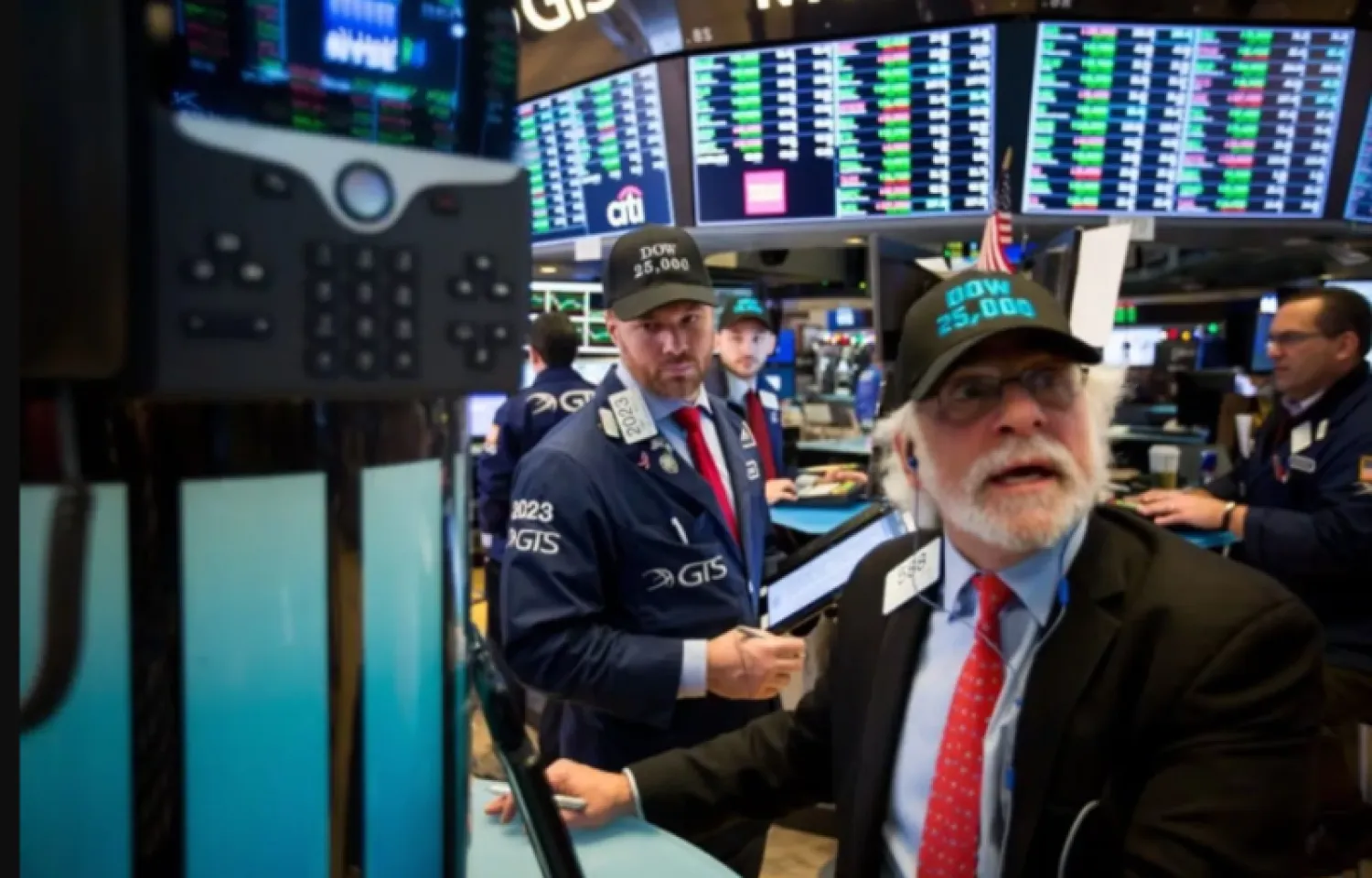
The Dow Jones industrial average sailed past 25,000 for the first time as the bull market rages on. (Michael Nagle/Bloomberg) via The Washington Post
TT

Stocks Are at an All-Time High. Is it Too Late to Get in On the Action?

The Dow Jones industrial average sailed past 25,000 for the first time as the bull market rages on. (Michael Nagle/Bloomberg) via The Washington Post

The Dow Jones industrial average hit the 25,000 mark for the first time Thursday, and I confess it made me giddy. The feeling lasted about 15 minutes until my head cleared and I said to myself, “Sooner or later, this bull market will pass.”

But when will it pass? And is it too late to jump in and grab a ride while it’s still going up?

“I can relate this question to family discussions we just had at Christmastime,” said Suzann Pennington, chief investment officer at Foresters Asset Management. “I have a brother who is almost 60 and looking toward retirement in five to seven years. He asked me if he should dare to put more money into the market.”

“I said, ‘You have to.’ It goes back to the expression, ‘Make hay when the sun shines.’ The sun is shining. We have synchronized global growth for the first time since the Great Recession.”

Yes, equities have had an incredible, nearly nine-year run. The Dow was up about 25 percent last year and the Standard & Poor’s 500-stock index was up about 20 percent.

Pennington is one of a host of Wall Street wags who say worldwide fundamentals — interest rates, unemployment, economic growth — are so good that the stock market could keep climbing for a year or more.

Dive in, says super-bull Ivan Feinseth, chief investment officer at Tigress Financial Partners.

“The market is going a lot higher,” Feinseth said. “You have synchronized global growth, positive earnings growth, the tax cut, wage increases and accommodative monetary policy. Markets around the world are making new highs.”

Guests speaking on CNBC Thursday predicted another year or even two for the bull market.

“This bull market will go on to make all-time highs and also establish a record,” Sam Stovall, chief investment strategist of US Equity Strategy at CFRA, said on CNBC. “Give us only eight months, and we’ll be in a brand new record in terms of the duration of this market since World War II.”

The spoiler is often rising interest rates and a recession, usually defined as two consecutive quarters of negative growth.

“A normal recession, a normal end of the cycle is just nature,” Pennington said. “That’s a good way for it to come to an end. Yes, you will have a decline in the market. And you will have a normal bear market of at least 20 percent. Then we will go back up again.

“I’ve been doing this for 30 years and have seen several of these cycles,” Pennington said. The bear market “certainly doesn’t feel good. It’s not a reason to panic. Keep a long-term view and know why you are invested in stocks. If you are 60 years old, it means you probably are going to live to 85 or 90, and you don’t want to outlive your money.”

My wife and I are in the same boat as Pennington’s brother: 60ish and looking at retiring in the next few years. We have two-thirds of our money spread around in stocks and the rest in bonds. Do we bail out of this market? Okay, so then what? Gold? No thanks. Real estate? That crashes, too. Mortgage? Done. Long-term care? Done. Bitcoin? I don’t gamble. Lottery tickets? I pay enough taxes.

John Lynch, chief investment strategist at LPL Financial, expects the stock market to be more volatile because of mid-term elections, a new Federal Reserve chairman and an unusually placid market in 2017.

“Let volatility be your friend,” Lynch said, adding that he expects several market dips this coming year. “We would view any pullback as an opportunity to put cash to work. We would encourage people investing new money to develop a plan with their financial adviser and dollar-cost average into the market over six months or 12 months.”

That means setting a fixed amount to invest in the market on a regular schedule, which takes advantage of stock market pullbacks.

Others see foreign stocks and emerging markets in particular — Brazil, China, India, Mexico, Eastern Europe — as further opportunities to pick investments before they have ripened.

“To the extent that anything appears cheap right now, it seems the enthusiasm is centered around emerging markets,” said Christine Benz, director of personal finance at Morningstar. “Prior to 2017, they had terribly underperformed the US market as well as developed markets. It took emerging markets longer to recover from the global crisis than the developed world.”

This is a long-running bull market, and anyone putting money in now is not buying cheap. Most of the good news is built into the price of stocks. Trump tweets, North Korean missile launches, terrorism, weather and Middle East instability have failed to derail the world economy.

Pennington cautioned that her only concern is what she can’t see.

“The only caveat is a black swan geopolitical event,” she said.

What would that be? A rare, unpredictable surprise that no one thought possible.

The Washington Post


Lebanese Cabinet Approves Draft Law on Financial Crisis Losses

A photograph released by the Lebanese Government Press Office on December 26, 2025, show Prime Minister Nawaf Salam speaking during a press conference after a cabinet session in Beirut on December 26, 2025. (Photo by Handout / Lebanese Government Press Office / AFP)
TT

Lebanese Cabinet Approves Draft Law on Financial Crisis Losses

A photograph released by the Lebanese Government Press Office on December 26, 2025, show Prime Minister Nawaf Salam speaking during a press conference after a cabinet session in Beirut on December 26, 2025. (Photo by Handout / Lebanese Government Press Office / AFP)

Lebanon's government on Friday approved a draft law to distribute financial losses from the 2019 economic crisis that deprived many Lebanese of their deposits despite strong opposition to the legislation from political parties, depositors and banking officials.

The draft law will be submitted to the country's divided parliament for approval before it can become effective.

The legislation, known as the "financial gap" law, is part of a series of reform measures required by the International Monetary Fund (IMF) in order to access funding from the lender.

The cabinet passed the draft bill with 13 ministers in favor and nine against. It stipulates that each of the state, the central bank, commercial banks and depositors will share the losses accrued as a result of the financial crisis.

Prime Minister Nawaf Salam defended the bill, saying it "is not ideal... and may not meet everyone's aspirations" but is "a realistic and fair step on the path to restoring rights, stopping the collapse... and healing the banking sector.”

According to government estimates, the losses resulting from the financial crisis amounted to about $70 billion, a figure that is expected to have increased over the six years that the crisis was left unaddressed.

Depositors who have less than $100,000 in the banks, and who constitute 85 percent of total accounts, will be able to recover them in full over a period of four years, Salam said.

Larger depositors will be able to obtain $100,000 while the remaining part of their funds will be compensated through tradable bonds, which will be backed by the assets of the central bank.

The central bank's portfolio includes approximately $50 billion, according to Salam.

The premier told journalists that the bill includes "accountability and oversight for the first time.”

"Everyone who transferred their money before the financial collapse in 2019 by exploiting their position or influence... and everyone who benefited from excessive profits or bonuses will be held accountable and required to pay compensation of up to 30 percent of these amounts," he said.

Responding to objections from banking officials, who claim components of the bill place a major burden on the banks, Salam said the law "also aims to revive the banking sector by assessing bank assets and recapitalizing them.”

The IMF, which closely monitored the drafting of the bill, previously insisted on the need to "restore the viability of the banking sector consistent with international standards" and protect small depositors.

Parliament passed a banking secrecy reform law in April, followed by a banking sector restructuring law in June, one of several key pieces of legislation aimed at reforming the financial system.

However, observers believe it is unlikely that parliament will pass the current bill before the next legislative elections in May.

Financial reforms in Lebanon have been repeatedly derailed by political and private interests over the last six years, but Salam and Lebanese President Joseph Aoun have pledged to prioritize them.


Türkiye Says Russia Gave It $9 Billion in New Financing for Akkuyu Nuclear Plant

Türkiye’s Energy Minister Alparslan Bayraktar talks during a meeting in Ankara, Türkiye, September 14, 2023. (Reuters)
TT

Türkiye Says Russia Gave It $9 Billion in New Financing for Akkuyu Nuclear Plant

Türkiye’s Energy Minister Alparslan Bayraktar talks during a meeting in Ankara, Türkiye, September 14, 2023. (Reuters)

Türkiye's energy minister said Russia had provided new financing worth $9 billion for the Akkuyu nuclear power plant being built by ​Moscow's state nuclear energy company Rosatom, adding Ankara expected the power plant to be operational in 2026.

Rosatom is building Türkiye's first nuclear power station at Akkuyu in the Mediterranean province of Mersin per a 2010 accord worth $20 billion. The plant was expected ‌to be operational ‌this year, but has been ‌delayed.

"This (financing) ⁠will ​most ‌likely be used in 2026-2027. There will be at least $4-5 billion from there for 2026 in terms of foreign financing," Alparslan Bayraktar told some local reporters at a briefing in Istanbul, according to a readout from his ministry.

He said ⁠Türkiye was in talks with South Korea, China, Russia, and ‌the United States on ‍nuclear projects in ‍the Sinop province and Thrace region, and added ‍Ankara wanted to receive "the most competitive offer".

Bayraktar said Türkiye wanted to generate nuclear power at home and aimed to provide clear figures on targets.


China Bets on Advanced Technologies to Revive Tepid Industrial Sector

A humanoid robot Tiangong by Beijing Innovation Center of Humanoid Robotics Co, moves an orange as a demonstration at its company, during an organized media tour to Beijing Robotics Industrial Park, in Beijing Economic-Technological Development Area, also known as Beijing E-Town, China May 16, 2025. (Reuters)
TT

China Bets on Advanced Technologies to Revive Tepid Industrial Sector

A humanoid robot Tiangong by Beijing Innovation Center of Humanoid Robotics Co, moves an orange as a demonstration at its company, during an organized media tour to Beijing Robotics Industrial Park, in Beijing Economic-Technological Development Area, also known as Beijing E-Town, China May 16, 2025. (Reuters)

China pledged on Friday to double down on upgrading its manufacturing base and ​promised capital to fund efforts targeting technological breakthroughs, after its industrial sector delivered an underwhelming performance this year.

China's industry ministry expects output of large industrial companies to have increased 5.9% in 2025 compared with 2024, state broadcaster CCTV said on Friday, almost unchanged from the 5.8% pace in 2024.

It would also be less than the ‌6% pace ‌of the first 11 months of ‌2025, ⁠based ​on ‌data released by the National Bureau of Statistics, as a weak Chinese economy suppressed domestic demand.

Industrial output, which covers industrial firms with annual revenue of at least 20 million yuan ($2.85 million), recorded growth of 4.8% in November, the weakest monthly year-on-year rise since August 2024.

Chinese policymakers have been looking ⁠to create new growth drivers in the economy by focusing on advancing ‌its industrial sector.

China has also vowed stronger ‍efforts to achieve technological self-reliance ‍amid intensifying rivalry with the United States over dominance ‍in advanced technology.

At the annual two-day national industrial work conference in Beijing that ended on Friday, officials pledged to deliver major breakthroughs in building a "modern industrial system" anchored by advanced manufacturing.

The ​focus will be on sectors such as integrated circuits, low-altitude economy, aerospace and biomedicine, an industry ministry ⁠statement showed.

The statement comes after China launched on Friday a national venture capital fund aimed at guiding billions of dollars of capital into "key hard technologies" such as quantum technology and brain-computer interfaces.

On artificial intelligence, the industry ministry said it will expand efforts to help small and medium-sized enterprises adopt the technology, while fostering new intelligent agents and AI-native companies in key industries.

Officials also vowed to "firmly curb" deflationary price wars, dubbed "involution", referring to excessive and low-return competition among ‌firms that erodes profits.
