


Sudanese Security Forces Fire Tear Gas, Arrest Dozens in ‘Bread Protests’

Protesters in Khartoum. Photo taken from social media
TT

Sudanese Security Forces Fire Tear Gas, Arrest Dozens in ‘Bread Protests’

Protesters in Khartoum. Photo taken from social media

Sudanese police fired tear gas to disperse a peaceful protest against soaring living costs in central Khartoum on Tuesday.

The Communist Party had called for the demonstration after bread prices more than doubled due to a jump in the cost of flour.

Police arrested dozens of political and media figures and activists, including Communist Party Central Committee member Sadiq Yusuf, and BBC correspondent Mohammed Mohamed Osman, who was released after hours of detention.

Information Minister Ahmed Mohamed Osman denied the use of force against demonstrators, and accused the opposition of causing unrest.

Osman told the German News Agency (dpa) that Tuesday’s protests were organized by members of opposition parties, noting that the government had agreed to solve the problem, but the opposition parties were still mobilizing citizens.

Demonstrations erupted in Khartoum and other cities in the country following the price increase.

A student was killed in el-Geneina, capital of West Darfur state, last week as opposition parties and activists announced their intention to go ahead with the protests against the rising bread prices.

The Sudanese Communist Party informed the security authorities of its intention to conduct a peaceful protest, in order to hand over a memorandum to the head of Khartoum state government against the soaring prices of goods and services.

Sudanese laws stipulate that the police must be informed of peaceful gatherings, to provide the needed protection, but police have used force to disperse the demo that witnessed the participation of over 30 opposition parties. 

The Communist Party issued a statement saying the police used force against the protesters, adding that such a treatment is a reflection of the government’s isolation.

The statement added that this behavior is tantamount to a system that lacks popular support and resorts to force.

Tuesday's protests, which lasted for hours in one of the largest streets in Khartoum, were unprecedented in terms of the number of participants which was estimated to be more than a thousand, according to observers and witnesses.

Demonstrators gathered at the "Martyrs' Garden" near the presidential palace. However, security authorities prevented them from gathering and reaching the protest area.

The protesters, led by Communist Party Secretary Mohammad Mokhtar al-Khatib and a number of other opposition leaders, then staged a demonstration at the "Republic Street", one of the largest avenues in Khartoum, and blocked traffic.

Police used tear gas to disperse the protesters who chanted slogans against the government and increase in princes. Men in civilian clothes, who were likely security services, arrested dozens of activists and politicians.

The country devalued its currency to 18 Sudanese pounds for one US dollar, from a rate of 6.7 pounds in 2017. It also cut wheat subsidies, causing a quick doubling of bread prices.


Explosion at Mosque in Syria’s Homs Kills Three, Says Local Official

A Syrian flag waves in Damascus. (Getty Images/AFP)
TT

Explosion at Mosque in Syria’s Homs Kills Three, Says Local Official

A Syrian flag waves in Damascus. (Getty Images/AFP)

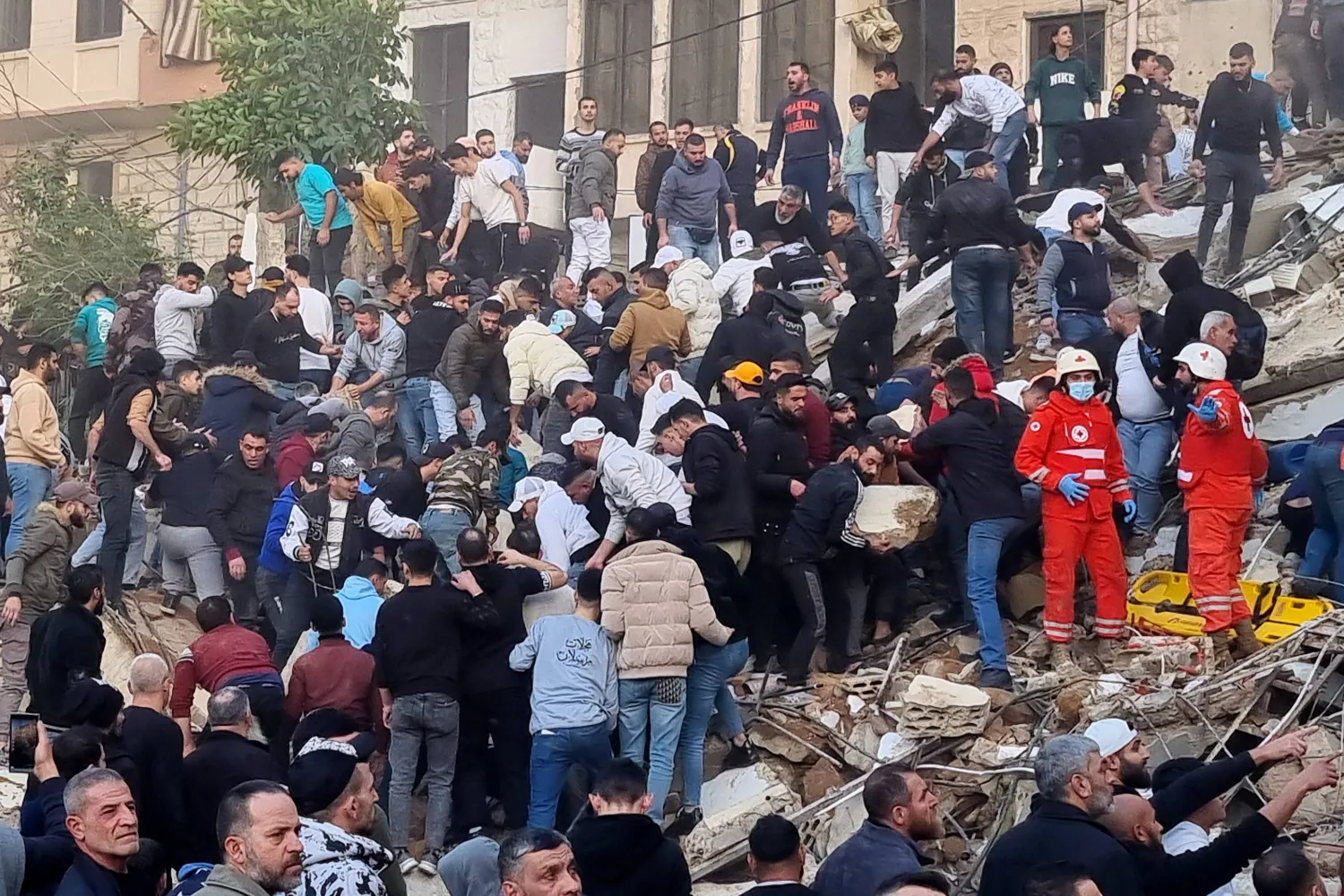
Three people were ​killed and five injured when an explosion struck a mosque ‌the ⁠Syrian ​province ‌of Homs on Friday, a local official said.

Syrian state media said ⁠security forces had ‌imposed a ‍cordon around ‍the area ‍and were investigating.

Local officials told Reuters it ​may have been caused by ⁠a suicide bomber or explosives placed there.


Fuel Shortage Forces Gaza Hospital to Suspend Most Services

The sun sets behind a makeshift tent camp for displaced Palestinians set up in an area of al-Bureij camp, in the central Gaza Strip, Wednesday, Dec. 24, 2025. (AP)
TT

Fuel Shortage Forces Gaza Hospital to Suspend Most Services

The sun sets behind a makeshift tent camp for displaced Palestinians set up in an area of al-Bureij camp, in the central Gaza Strip, Wednesday, Dec. 24, 2025. (AP)

A major Gaza hospital has suspended several services because of a critical fuel shortage in the devastated Palestinian territory, which continues to face a severe humanitarian crisis, it said.

Devastated by more than two years of war, the Al-Awda Hospital in the central Gaza district of Nuseirat cares for around 60 in-patients and receives nearly 1,000 people seeking medical treatment each day.

"Most services have been temporarily stopped due to a shortage of the fuel needed for the generators," said Ahmed Mehanna, a senior official involved in managing the hospital.

"Only essential departments remain operational: the emergency unit, maternity ward and pediatrics."

To keep these services running, the hospital has been forced to rent a small generator, he added.

Under normal conditions, Al-Awda Hospital consumes between 1,000 and 1,200 liters of diesel per day. At present, however, it has only 800 liters available.

"We stress that this shutdown is temporary and linked to the availability of fuel," Mehanna said, warning that a prolonged fuel shortage "would pose a direct threat to the hospital's ability to deliver basic services".

He urged local and international organizations to intervene swiftly to ensure a steady supply of fuel.

Despite a fragile truce observed since October 10, the Gaza Strip remains engulfed in a severe humanitarian crisis.

While the ceasefire agreement stipulated the entry of 600 aid trucks per day into Gaza, only 100 to 300 carrying humanitarian assistance can currently enter, according to the United Nations and non-governmental organizations.

The remaining convoys largely transport commercial goods that remain inaccessible to most of Gaza's 2.2 million people.

- Health hard hit -

On a daily basis, the vast majority of Gaza's residents rely on aid from UN agencies and international NGOs for survival.

Gaza's health sector has been among the hardest hit by the war.

During the fighting, the Israeli miliary repeatedly struck hospitals and medical centers across Gaza, accusing Hamas of operating command centers there, an allegation the group denied.

International medical charity Doctors Without Borders now manages roughly one-third of Gaza's 2,300 hospital beds, while all five stabilization centers for children suffering from severe malnutrition are supported by international NGOs.

The war in Gaza was sparked on October 7, 2023, following an unprecedented Hamas attack on Israel that resulted in the deaths of 1,221 people, most of them civilians, according to an AFP tally based on official Israeli figures.

In Israel's ensuing military campaign in Gaza, at least 70,942 people - also mostly civilians - have been killed, according to the health ministry in the Hamas-run territory.


Israel Army Says Striking Hezbollah Targets in Lebanon

FILED - 27 November 2025, Lebanon, Mahmoudieh: Smoke billows after Israeli air raids on Hezbollah positions in the southern Lebanese village of Mahmoudieh. Photo: Stringer/dpa
TT

Israel Army Says Striking Hezbollah Targets in Lebanon

FILED - 27 November 2025, Lebanon, Mahmoudieh: Smoke billows after Israeli air raids on Hezbollah positions in the southern Lebanese village of Mahmoudieh. Photo: Stringer/dpa

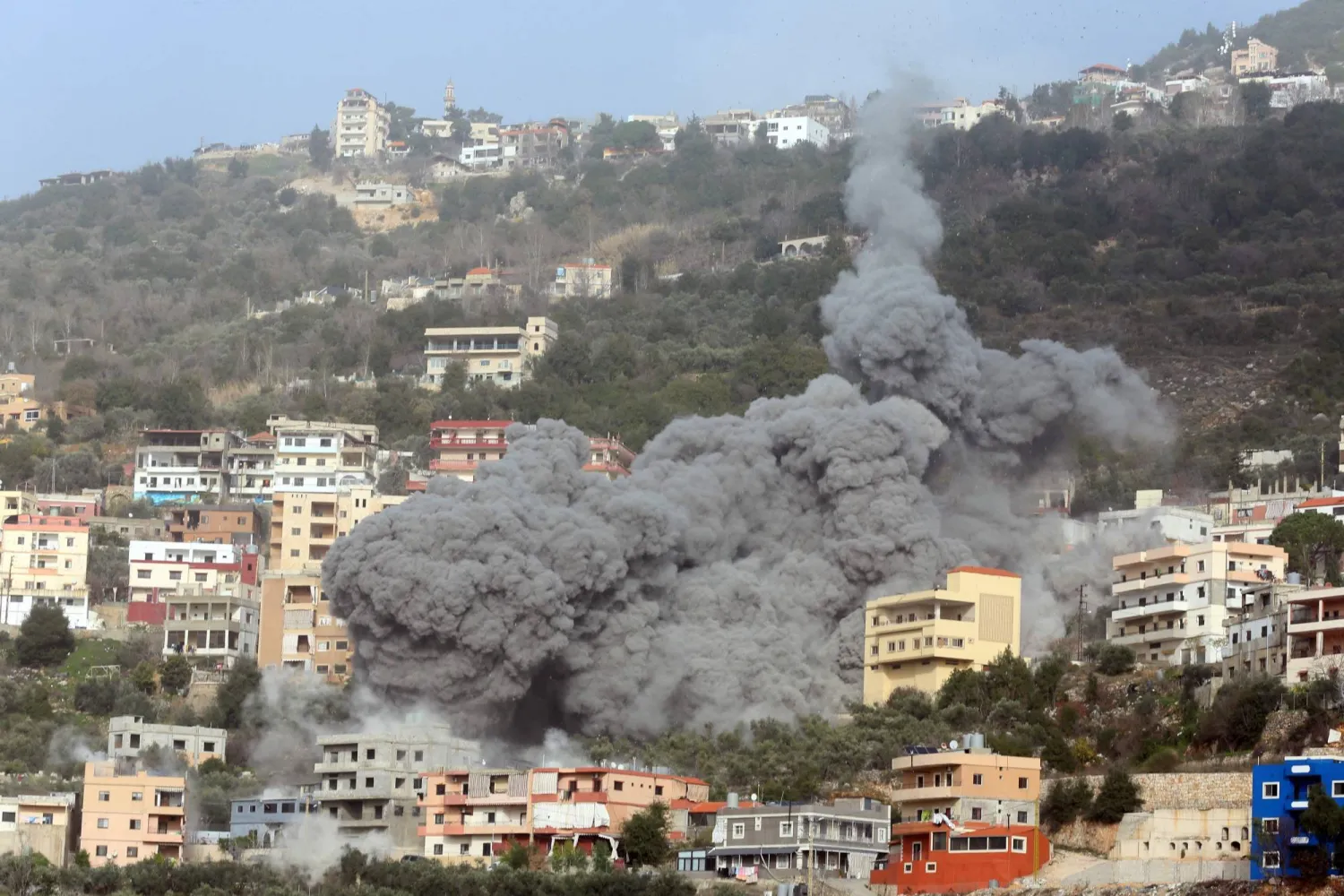
The Israeli military announced a series of strikes on Hezbollah targets in Lebanon on Friday, including weapons depots and a training complex. 

"A number of weapons storage facilities and terrorist infrastructure sites were struck, which were used by Hezbollah to advance terror attacks against the state of Israel," a military statement said. 

Lebanon's National News Agency (NNA) reported a "series of airstrikes" by Israeli aircraft on mountainous areas in Nabatiyeh and Jezzine districts in the south, and the Hermel district in the east of the country. 

Despite a November 2024 ceasefire that was supposed to end more than a year of hostilities between Israel and the Iran-backed Hezbollah group, Israel has continued to strike in Lebanon and has maintained troops in five areas it deems strategic. 

More than 340 people have been killed by Israeli fire in Lebanon since the ceasefire, according to an AFP tally of Lebanese health ministry reports. 

The strikes on Friday come a day after similar Israeli attacks near the Syrian border and in southern Lebanon left three people dead. 

The Israeli military had reported on Thursday it had killed a member of arch-foe Iran's elite Quds Force in a strike in Lebanon. 

On Friday, the military said it had struck several military structures of Hezbollah, warning it would "remove any threat posed to the state of Israel". 

Under heavy US pressure and fears of expanded Israeli strikes, Lebanon has committed to disarming Hezbollah, starting in the south of the country near the frontier. 

Lebanon's army plans to complete the disarmament south of the Litani River -- about 30 kilometers (19 miles) from the border with Israel -- by year's end. 

Israel has questioned the Lebanese military's effectiveness and has accused Hezbollah of rearming, while the group itself has rejected calls to surrender its weapons.