Aubameyang and Mkhitaryan Chemistry Gives Arsenal Hope of Fast Football again

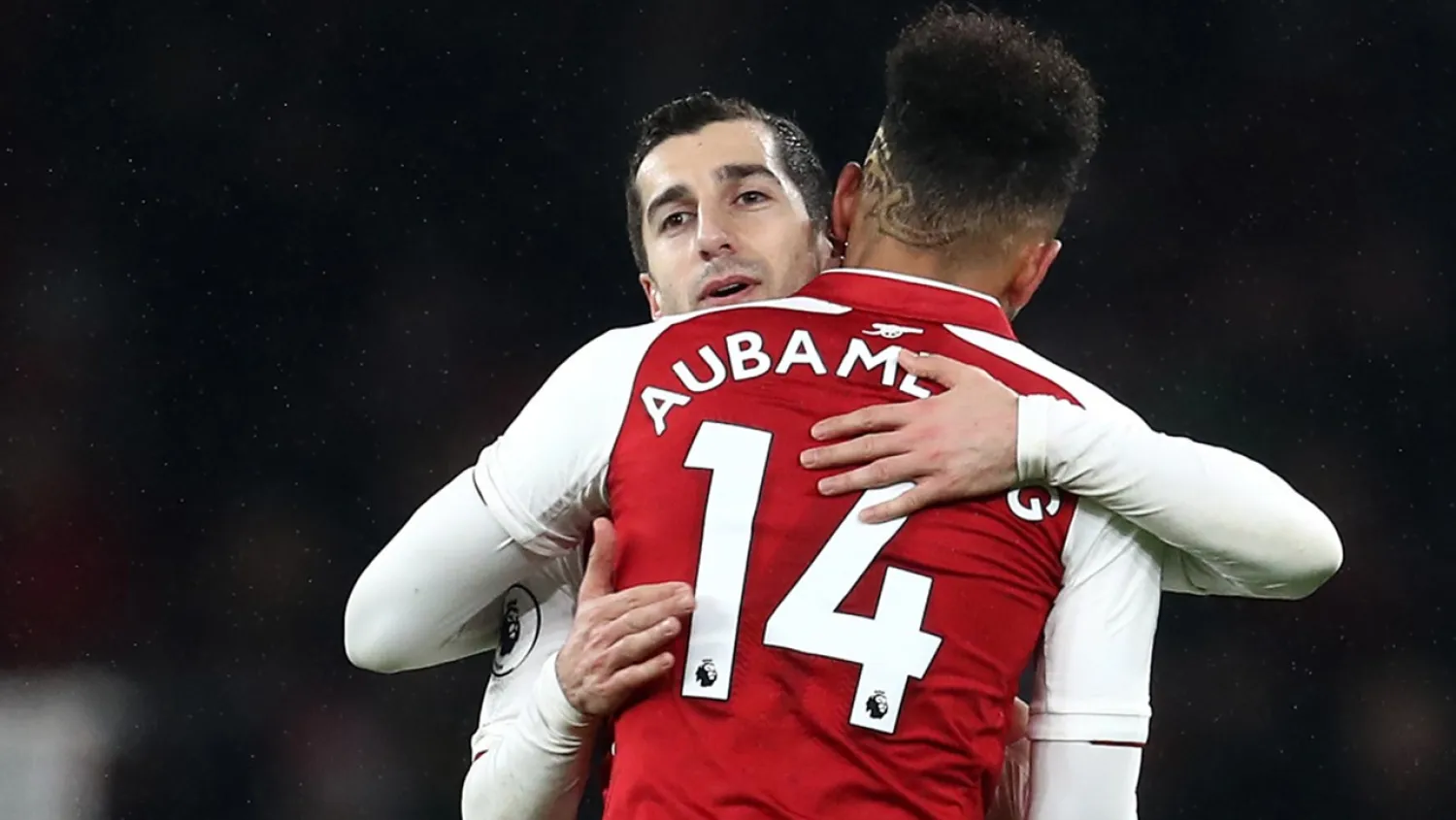
Arsenal's Pierre-Emerick Aubameyang and Henrikh Mkhitaryan. (Getty Images)
TT

Aubameyang and Mkhitaryan Chemistry Gives Arsenal Hope of Fast Football again

Arsenal's Pierre-Emerick Aubameyang and Henrikh Mkhitaryan. (Getty Images)

A few years ago, when Jens Lehmann was in between spells as an Arsenal player and coach, he explained a key to the Invincibles team with a teasing question: “What is the fastest thing on a football pitch?” he asked cryptically, looking smug as he waited for the wrong answer. “It’s not the ball,” he added, before the big reveal: “Nobody is faster on the pitch than a thought. And then the ball comes. And then the players come. I can honestly say between 2003 and 2006 we played such fast football. One touch. It was amazing to see.”

Fast football. That is one of the aspects that has declined at Arsenal in recent years as the speedometer has dropped off. The high-velocity style Arsène Wenger encouraged when he arrived in England, the full-throttle bursts Lehmann watched take off in front of him, have become less prominent. When Arsenal struggle and slip into endless sideways probing, becoming exposed to the kind of errors and breaks that got punished so typically at Swansea, that is when they look a world away from the best Wenger teams of old.

Alexis Sánchez got fast football, with his indefatigable darting runs, sudden passes (even if they could be reckless) and the urgency he visibly demanded of others. But while he offered that individually, it is notable that Arsenal have not played with a high-speed team style for a while. That is partly because it is hard to achieve without an entire XI of extremely gifted and intelligent players. It does not help, though, that they have not reliably been built around a sprinter as their center-forward since Thierry Henry.

In the last couple of seasons Sánchez had the odd stint as a central striker, as did Theo Walcott and occasionally Danny Welbeck. Olivier Giroud’s best asset was never pace. Alexandre Lacazette came in last summer for a record fee but is still finding his way in the team.

Enter Pierre-Emerick Aubameyang and Henrikh Mkhitaryan. By Arsenal’s normal transfer standards this has been a radical January. Bringing in these two players allows them to attempt to regain a sense of fast football.

It is underestimating Aubameyang to pigeonhole him as a speed merchant alone – his timing to peel into spaces and connections with team-mates in creating as well as running on to chances make him more rounded than that. That said, his pace should have a strong impact in how Arsenal attack. The other obvious contribution on the fast football front is the fact he is coming as part of a proven pair. The bond with Mkhitaryan, given the understanding they shared at Borussia Dortmund, brings instant automatisms to Arsenal in the final third. Mesut Özil will presumably click into that pretty easily as well.

In the last campaign that Aubameyang and Mkhitaryan played together at Dortmund, 2015-16, their combined figures were superb: 59 goals and 31 assists between them, with a lot of the goals reflecting the rapport they had with each other; one providing and the other finishing.

In the summer of 2016 Wenger went striker shopping, on the hunt for a quick frontman, but a player of the caliber and expense of Aubameyang seemed miles off the radar. He courted Jamie Vardy to no avail and ended up with a gamble on Lucas Pérez, who returned to Spain on loan after a season in which Wenger was unwilling to offer him many chances to find some rhythm.

Arsenal have tended to give the impression they improvise rather than work to some refined strategic masterplan when it comes to transfers. With this in mind, there is a concern the position of Lacazette may become a side dish as Arsenal tuck into the new and exciting main course of Aubameyang and Mkhitaryan.

It is out of character for Arsenal to spend heavily on a new striker in the summer and then six months later spend even more heavily on another one. The question of how Lacazette and Aubameyang link – whether they play together, compete for the same spot or one is shifted out of their favored position – is an important one. Lacazette will not be thrilled if he feels he is unfairly pushed aside but, if Wenger can keep everyone happy and motivated, he has promising attacking tools at his disposal.

Constructing a new and balanced frontline, as quickly as possible, will go some way to determining how competitive Arsenal can be in the second half of the season as they adjust to life after Sánchez. The nagging issues in terms of defensive concentration will not be fixed by that but more clinical forward play could help ease some of the pressure.

At the start of the season the idea Arsenal would offload Sánchez, Giroud and Walcott in the same January window scored somewhere between fanciful and bonkers on the transfer scale. The trio scored more than two-thirds of the team’s goals last season (Sánchez 30, Giroud 16 and Walcott 19). Arsenal are usually way more conservative in the market. They cannot be accused of that this time.

Critics of Ivan Gazidis’s “catalyst for change” movement can see this January window as evidence of something new. That would have been impossible if Arsenal had flunked in their very public pursuit of Aubameyang.

The release of Sánchez never looked likely to put them in a stronger position but they have tried their utmost to turn a negative into a shiny positive. Parading the signatures of Aubameyang and a freshly contracted Özil on deadline day, in addition to the newly welcomed Mkhitaryan, outlines how Arsenal’s best (perhaps only?) form of defense has to be a fresh attack.

The Guardian Sport


South Africa Chooses Durban as Its Preferred City to Host 2036 or 2040 Olympics

TT

South Africa Chooses Durban as Its Preferred City to Host 2036 or 2040 Olympics

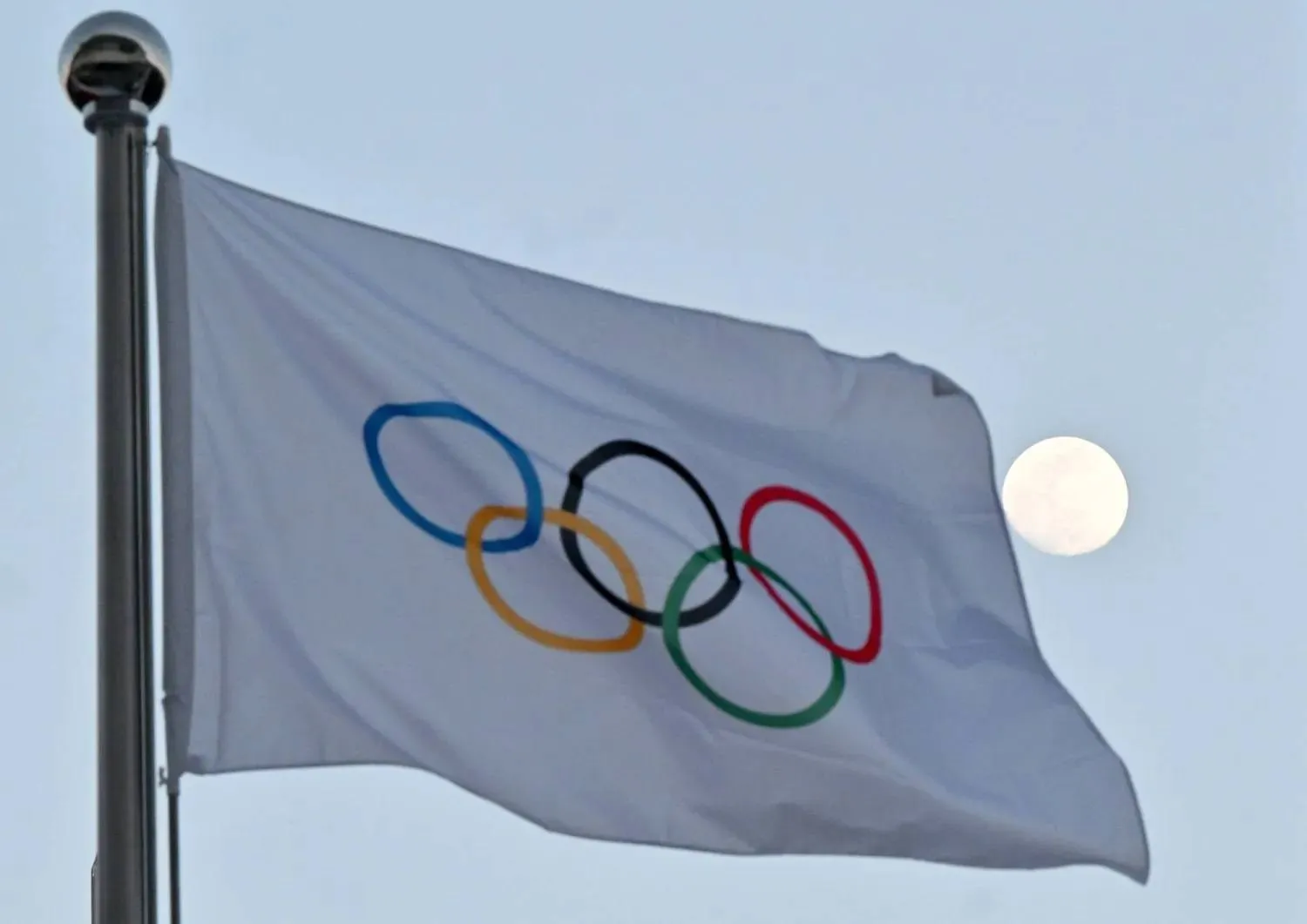
Durban is South Africa 's preferred candidate to host the first Olympics in Africa.

South Africa is bidding to host the 2036 or 2040 Summer Olympics and Paralympics. The International Olympic Committee will choose the host city for 2036 in mid-2029.

The country's choice to put forward Durban, South Africa's third biggest city, was announced by South African Olympic committee acting president Lwandile Simelane on Thursday. She said Durban would be the main candidate city for South Africa's bid, but it would likely be a “multi-city bid” that would propose some events are held in other cities.

South Africa's economic hub of Johannesburg and Cape Town were also considered as the candidate city, The Associated Press said.

Durban, a city of around 4 million on the subtropical Indian Ocean coast, was touted as a possible Olympic host city more than a decade ago following South Africa's staging of the 2010 soccer World Cup, the first in Africa. But an official bid didn't materialize then, largely due to concerns over costs.

The city was stripped of hosting the 2022 Commonwealth Games because it couldn't make financial or other guarantees required for that event.

Officials said on Thursday they were not yet able to provide any estimates regarding how much it might cost South Africa to stage the Olympics if its bid was successful. They said Durban's bid would be centered on the 56,000-seat Moses Mabhida Stadium, which was built for the 2010 World Cup.

South Africa is among seven countries bidding for the 2036 Games. The others are India, Qatar, South Korea, Germany, Hungary and Türkiye.

The IOC gave Oct. 31 as the deadline for national Olympic committees to formally declare their interest in bidding for the 2036 Games.

Candidates have an opportunity to make virtual presentations to the IOC next month to start the official bidding process. A key date is in March, the IOC has said, when its board will approve a shortlist of candidates.

South Africa would be a first African host of the Summer Games since the modern Olympics was created in 1896 if it wins. Africa's biggest economy previously failed with a bid to stage the 2004 Games in Cape Town.

The Youth Olympics open this weekend in Dakar, Senegal, marking the first Olympic sports event to be held in Africa.


MLS Announces Key 2027 'Sprint Season' Matches Ahead of Calendar Shift

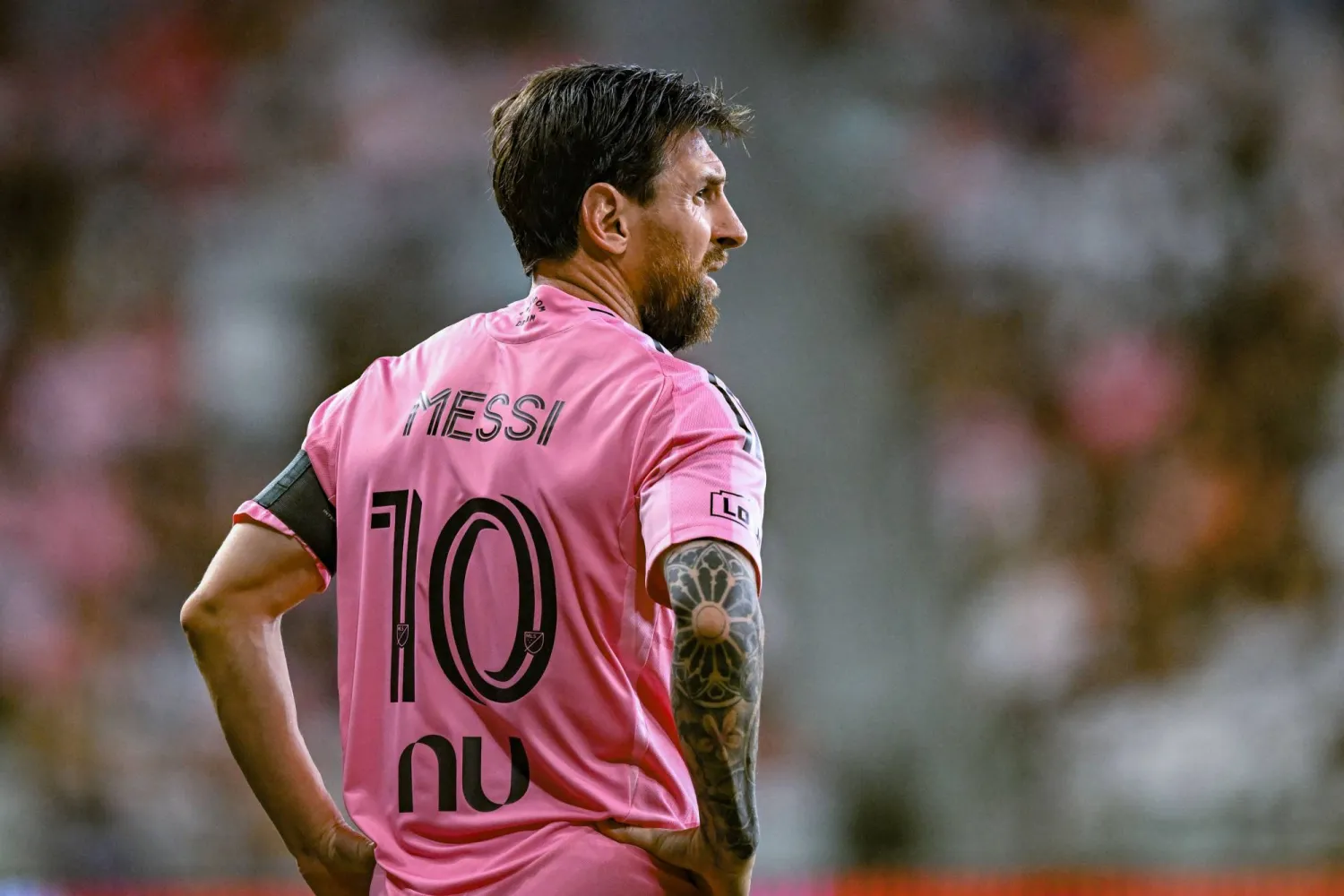
Inter Miami's Argentine forward #10 Lionel Messi looks on during a Major League Soccer (MLS) regular season football match between Inter Miami CF and FC Cincinnati at Nu Stadium in Miami, Florida, on October 28, 2026. (Photo by Giorgio VIERA / AFP)
TT

MLS Announces Key 2027 'Sprint Season' Matches Ahead of Calendar Shift

Inter Miami's Argentine forward #10 Lionel Messi looks on during a Major League Soccer (MLS) regular season football match between Inter Miami CF and FC Cincinnati at Nu Stadium in Miami, Florida, on October 28, 2026. (Photo by Giorgio VIERA / AFP)

Lionel Messi's Inter Miami will kick off Major League Soccer's 2027 "Sprint Season" when they face Cincinnati on February 19, launching the league's transition to a traditional autumn-to-spring calendar.

The standalone match at Nu Stadium in Miami will begin a truncated 14-game regular season and playoff tournament designed to bridge the gap as MLS shifts away from its traditional summer schedule to align with Europe's top leagues.

The schedule, previewed on Apple TV's "MLS Countdown," emphasizes weekly rivalry ⁠matchups. Among the ⁠headline games announced, LA Galaxy will host Los Angeles FC on April 10 in the "El Trafico" derby.

The sprint season will conclude its regular-season slate on May 8 with "Decision Day," anchored by the Hudson River Derby between New York ⁠City FC and the New York Red Bulls, setting the stage for the May playoffs.

The four-month sprint serves as the prelude to the league's full operational shift. The first standard season under the new timetable will run from mid-to-late July 2027 through May 2028, featuring a midwinter break and no matches in January.

MLS Commissioner Don Garber previously called the calendar change "one of the ⁠most ⁠important decisions in our history,” Reuters reported.

The strategic overhaul was approved following a two-year review to synchronize the league's transfer activity with the global summer window, minimize scheduling conflicts with FIFA's international fixtures, and hold the MLS Cup playoffs in May when the North American sports calendar is less crowded.

US men's national team coach Mauricio Pochettino is among those who have endorsed the change, noting that calendar alignment with the global soccer landscape will benefit clubs, coaches, and player development.


Rybakina Clinches Year-end Top Ranking with Tokyo Second-round Win

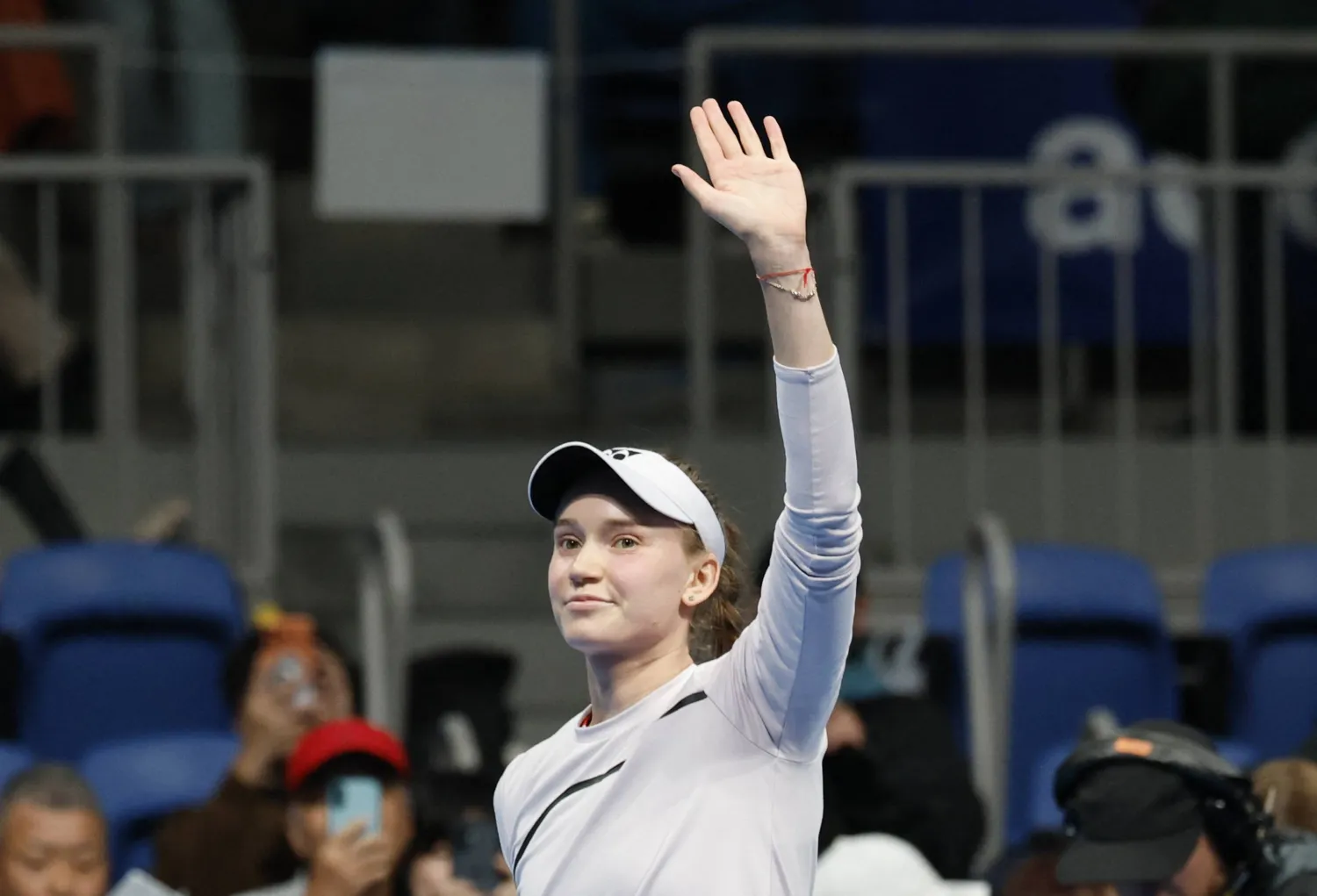
Tennis - WTA 500 - Pan Pacific Open - Ariake Coliseum, Tokyo, Japan - October 29, 2026 Kazakhstan's Elena Rybakina celebrates after winning her round of 16 match against Kazakhstan's Yulia Putintseva REUTERS/Kim Kyung-Hoon
TT

Rybakina Clinches Year-end Top Ranking with Tokyo Second-round Win

Tennis - WTA 500 - Pan Pacific Open - Ariake Coliseum, Tokyo, Japan - October 29, 2026 Kazakhstan's Elena Rybakina celebrates after winning her round of 16 match against Kazakhstan's Yulia Putintseva REUTERS/Kim Kyung-Hoon

Elena Rybakina beat fellow Kazakh Yulia Putintseva 6-2 6-3 in the second round of the Pan Pacific Open in Tokyo on Thursday to secure the year-end world number one ranking for the first time, more than a week before the season-ending WTA Finals.

Rybakina received a bye into the last 16 of the WTA 500 event in Tokyo and arrived at the Ariake Coliseum after capturing her fourth ⁠title of the ⁠season and first as the top-ranked player at last week's Ningbo Open in China.

The 27-year-old, who rose to world number one for the first time en route to winning the US Open last month, ⁠needed only one more victory this year to ensure that world number two Aryna Sabalenka could not overtake her.

Rybakina is enjoying a marquee year with wins at the Australian Open and US Open to take her Grand Slam tally to three, after winning Wimbledon four years ago.

Rybakina next faces Leylah Fernandez in a rematch of their Ningbo final, ⁠after ⁠the Canadian beat Elise Mertens 6-2 7-6(8), Reuters reported.

Rybakina endured a brief dip after her US Open triumph, losing her opening match in Beijing and missing the Wuhan Open due to a leg injury, before defending her title in Ningbo.

She is targeting a 16th career title before heading to Indian Wells, California, for the WTA Finals, where the season's top eight players will compete from November 8-15.