

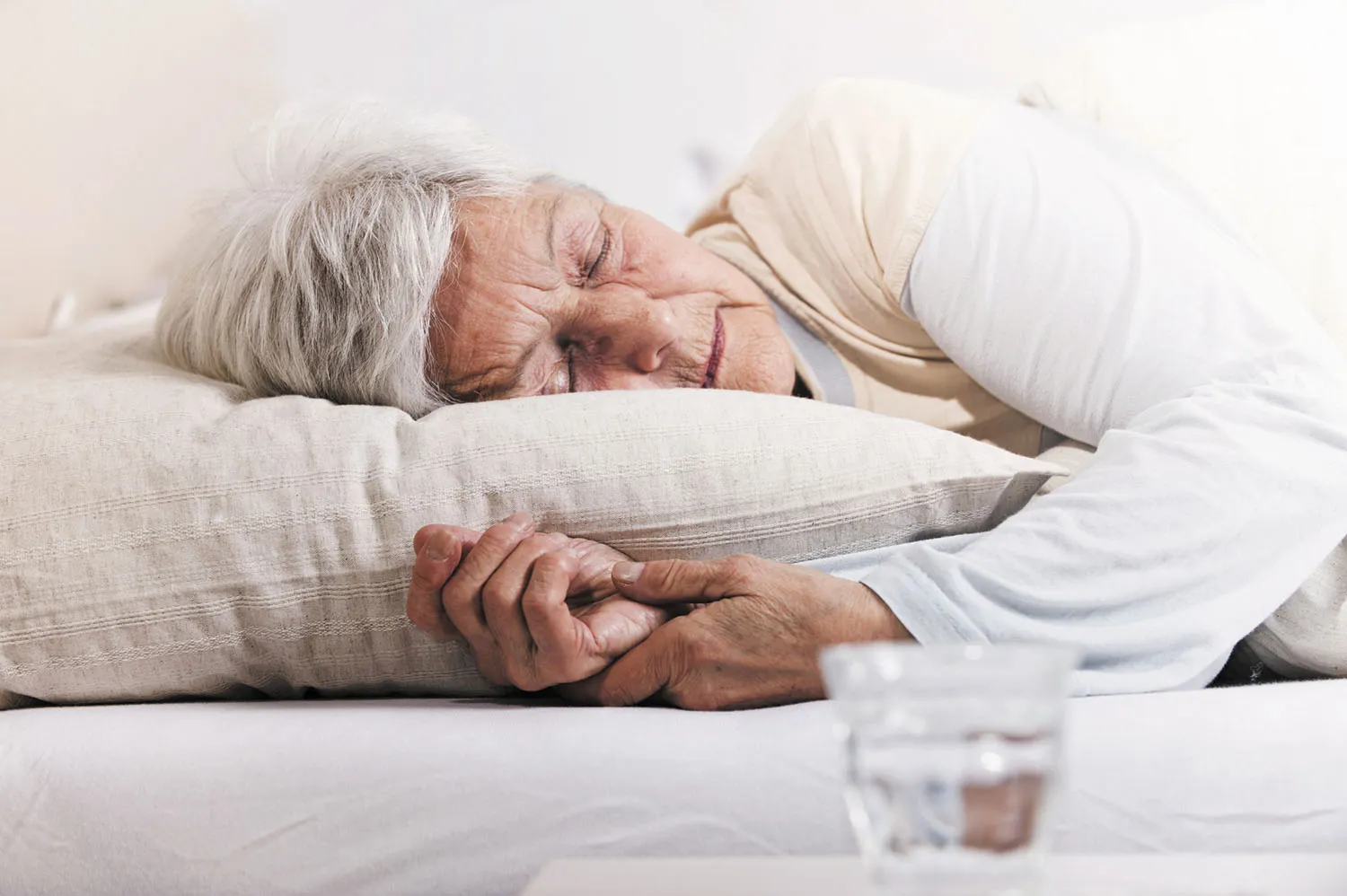

Is Your Pillow Hurting Your Health?

Photo: © vitranc/Getty Images
TT

Is Your Pillow Hurting Your Health?

Photo: © vitranc/Getty Images

You probably know someone who won't leave home without a special pillow, claiming that a particular bag of fluff or feathers is the key to a good night's sleep. And that person may be on to something. "Anything that will make you more comfortable will improve the likelihood of getting a good night's sleep," says Dr. Lawrence Epstein, a sleep expert at Harvard-affiliated Brigham and Women's Hospital.

But the benefits of pillows don't go much further than comfort and positioning. Sometimes pillows even hurt your health.

Pillows and pain
"If your neck is bent in any way for an extended period of time, you'll get uncomfortable," explains Matthew O'Rourke, a physical therapist at Spaulding Rehabilitation Hospital. He says a pillow that's too soft or too firm often leads to neck pain.

For example, if you sleep on your side with a soft pillow that doesn't provide enough support under your neck, your head has to extend sideways to meet the pillow. If you sleep on your stomach—a position that hyperextends the neck backward—then using a firm pillow pushes the head back even farther. "If you're on your stomach with your head to the side, you're sleeping in a full rotation position, and that can become painful," O'Rourke says.

Likewise, sleeping on your back with too much firm support pushes the neck too far forward.

Pillows can derail CPAP
For people who have sleep apnea — a condition in which you stop breathing periodically during sleep — pillows can interfere with continuous positive airway pressure (CPAP) treatment. CPAP keeps your airway open by means of a bedside device that pushes air through a mask you wear while you sleep. "If you're a side sleeper, the pillow can knock the mask off," says Dr. Epstein.

Sleep deprivation
Losing sleep from being uncomfortable at night has consequences. Your body has less time for muscle growth, tissue repair, and other important functions that occur during sleep.

Sleep deprivation can affect mood, thinking skills, and appetite. Chronic sleep deprivation increases your risk for falls, obesity, diabetes, high blood pressure, and heart disease.

On the plus side
Special pillows can help stave off some problems, such as heartburn symptoms. "Among lifestyle changes, elevating the head to 30 degrees can be effective. I've had success with patients using a wedge pillow," says Dr. James Mojica, the sleep lab director at Harvard-affiliated Spaulding Rehabilitation Hospital.

Sleeping with your upper body elevated at an angle can also reduce symptoms of sinus problems and may prevent relapses of benign paroxysmal positional vertigo — a condition in which tiny crystals in the inner ear become dislodged and cause extreme dizziness.

Specially designed pillows can help people keep their CPAP masks on. "They have cutouts that the mask fits into so it won't get knocked off," Dr. Epstein explains.

Pillow I.Q.
Finding the right pillow is a matter of personal preference. You have plenty of options in today's high-tech era: materials that conform to your shape (memory foam), keep you cool, wick away moisture, or repel mold and dust mites (which may help allergy sufferers). Some pillows even track your sleep habits and wake you with music (these can be pricey, in the hundreds of dollars).

Traditional materials are also popular. Pillows made of down and feathers conform to your shape and repel dust mites, but they can be hot and expensive. Pillows made of cotton, wool, or synthetic cotton are less expensive, but they make a more attractive climate for dust mites.

Keep firmness in mind. Side sleepers need a firm pillow for support. Rectangular pillows with panels on the side may help; they're taller than standard pillows. Back and stomach sleepers may want to use thinner, softer pillows. The goal is a comfortable position that will help you sleep. "Try to get the spine in a relatively straight position. But everyone's recipe will be a little different," says Matthew O'Rourke, a physical therapist at Spaulding Rehabilitation Hospital.

Beware pillow promises
While adjusting your sleep position can help stave off symptoms, it won't eliminate health problems such as restless legs syndrome or sleep apnea — even though some pillows are marketed as solutions to snoring and sleep disorders. The only way to address sleep disorders, say both doctors, is to talk to your physician and get a proper diagnosis and treatment.



Somalia Welcomes Its First Bowling Alley as the Middle Class and Diaspora Returnees Grow

 People bowl at the Feynuus Bowling Center in Mogadishu, Somalia, on Jan. 15, 2026. (AP)
People bowl at the Feynuus Bowling Center in Mogadishu, Somalia, on Jan. 15, 2026. (AP)
TT

Somalia Welcomes Its First Bowling Alley as the Middle Class and Diaspora Returnees Grow

 People bowl at the Feynuus Bowling Center in Mogadishu, Somalia, on Jan. 15, 2026. (AP)
People bowl at the Feynuus Bowling Center in Mogadishu, Somalia, on Jan. 15, 2026. (AP)

In a city long defined by conflict, Somalia ’s capital of Mogadishu now echoes with the crash of pins at the country's first modern bowling alley.

It's the latest sign of revival in the once-thriving Indian Ocean port shaped by 35 years of civil war and militant bombings. Millions of people were forced to flee what became one of the world’s most dangerous cities. Those who remained avoided public spaces as the al-Qaeda-linked group al-Shabab waged an insurgency against the Somali state.

In recent years, improved security measures against al-Shabab, an expanded government presence and growing private investment have allowed daily life to re-emerge. Cafes line newly reopened streets, beaches draw evening crowds and traffic congestion, once unimaginable, now clogs key intersections.

The Feynuus Bowling Center opened last year and draws many locals and Somalis returning from the diaspora, who bring investment and business ideas after years of sending billions of dollars in remittances from abroad.

On a recent evening, young Somalis gathered in groups, laughing and filming each other on their phones while music played. Many from the diaspora are visiting Mogadishu for the first time in years, or the first time ever.

“I couldn’t believe Mogadishu has this place,” said Hudoon Abdi, a Somali-Canadian on holiday, as she prepared to take her turn to bowl.

“I’m enjoying it. Mogadishu is actually safe,” she said, urging others to visit.

Mogadishu remains vulnerable to militant attacks, however, with security measures like checkpoints and heavily guarded zones part of daily life. Non-Somalis remain largely confined to a compound at the international airport.

But residents say the ability to gather for recreation signals an important psychological shift. Such venues provide a welcoming environment for a younger generation eager for safe spaces to socialize.

Abukar Hajji returned from the United Kingdom on holiday after many years away and found the difference between what he imagined and what he experienced eye-opening.

“When I was flying from the UK, I believed it was a scary place, like a war-torn country,” he said. “Everyone told me, ‘Good luck,’ but when I came and saw it with my own eyes, I didn’t want to leave.”

Sadaq Abdurahman, the manager of the bowling center, said the idea for the business emerged from a growing demand among young people for recreational facilities.

“It has created employment opportunities for at least 40 youths,” he said.

According to the Somali National Bureau of Statistics, Somalia’s unemployment rate stands at 21.4%.

The bowling alley has private security guards, bag checks and surveillance cameras, reflecting the precautions common at public venues in Mogadishu.

Urban planners and economists say businesses like the bowling alley signal a broader shift in Mogadishu’s recovery, as private sector growth increasingly complements international aid and government-led rebuilding efforts.

Ahmed Khadar Abdi Jama, a lecturer in economics at the University of Somalia, said innovative businesses are responding to the needs of diaspora returnees and the growing middle class, “which in turn adds to the expected increase in Somalia’s GDP.”

Outside the bowling alley, traffic hummed and neon signs flickered, other reminders of Mogadishu’s fragile transformation.


Benefit of Taking Magnesium Does Not Get Enough Attention

Nutrition experts recommended trying to get more of magnesium in our diet from food first (Harvard University)
TT

Benefit of Taking Magnesium Does Not Get Enough Attention

Nutrition experts recommended trying to get more of magnesium in our diet from food first (Harvard University)

Nutrition experts revealed that magnesium is often not given the same attention as other vitamins and minerals, although it plays a pivotal role in supporting the overall health of our body, especially improving blood sugar management and supporting neuro-psychological balance.

According to the US National Institutes of Health (NIH), magnesium is an abundant mineral in our body and it’s naturally present in many foods.

The mineral is required in more than 300 different reactions in our body, including those that regulate muscle and nerve function, blood sugar levels, and blood pressure.

“Magnesium plays a role in how our body handles sugar,” Scott Keatley, RD, co-owner of Keatley Medical Nutrition Therapy told Prevention magazine.

“It helps with the action of insulin, the hormone that controls blood sugar levels.” When you have enough magnesium in your body, insulin can work better and your body can manage blood sugar more effectively, Keatley said.

Also, stress can cause our body to use more magnesium than usual, which can limit our body’s ability to do other tasks with the nutrient, Keatley said.

“In addition, magnesium can help reduce the release of stress hormones like cortisol,” he said. “It’s like a natural chill pill that can help keep our body’s stress response in check.”

Magnesium helps regulate brain function and mood. It plays a role in releasing and using neurotransmitters, which are chemicals in our brain that affect our mood and emotions.

The mineral may help improve bone density and decrease fracture risk.
“Magnesium is stored in bones and is an important part of bone health,” said Deborah Cohen, DCN, an associate professor in the department of clinical and preventive nutrition sciences at Rutgers University School of Health Professions.

At baseline, magnesium can help to relax and widen your blood vessels, Keatley said. “This makes it easier for blood to flow and can help lower blood pressure,” he added. “It’s like making the highways wider so that traffic can move more smoothly.”

A 2025 review in hypertension found that magnesium seems to be beneficial for lowering blood pressure in people with high blood pressure and magnesium deficiency, but larger studies are needed.

There are a lot of foods that are high in magnesium. Nutrition experts recommended trying to get more of the nutrient in our diet from food first.

These are the most magnesium-rich foods, according to the NIH are: Pumpkin seeds, Chia seeds, almonds, spinach, cashews, peanuts, shredded wheat, soymilk, black beans, edamame, peanut butter, potato with skin, brown rice and plain yogurt.


SpaceX Prioritizes Lunar 'Self-growing City' over Mars Project

FILE - A SpaceX logo is displayed on a building, May 26, 2020, at the Kennedy Space Center in Cape Canaveral, Fla. (AP Photo/David J. Phillip, File)
TT

SpaceX Prioritizes Lunar 'Self-growing City' over Mars Project

FILE - A SpaceX logo is displayed on a building, May 26, 2020, at the Kennedy Space Center in Cape Canaveral, Fla. (AP Photo/David J. Phillip, File)

Elon Musk said on Sunday that SpaceX has shifted its focus to building a "self-growing city" on the moon, which could be achieved in less than 10 years.

SpaceX still intends to start on Musk's long-held ambition of a city on Mars within five to seven years, he wrote on his X social media platform, "but the overriding priority is securing the future of civilization and the Moon is faster."

Musk's comments echo a Wall Street Journal report on Friday, stating that SpaceX has told investors it would prioritize going to the moon and attempt a trip to Mars ⁠at a later time, targeting March 2027 for an uncrewed lunar landing.

As recently as last year, Musk said that he aimed to send an uncrewed mission to Mars by the end of 2026.

The US faces intense competition from China in the race to return humans to the moon this decade. Humans have not visited the lunar surface since the Apollo 17 mission in 1972. Less than a week ago, Musk announced that SpaceX ⁠acquired the artificial intelligence company he also leads, xAI, in a deal that values the rocket and satellite company at $1 trillion and the artificial intelligence outfit at $250 billion.

Proponents of the move view it as a way for SpaceX to bolster its plans for space-based data centers, which Musk sees as more energy efficient than terrestrial facilities as the demand for compute power soars with AI development.

SpaceX is hoping a public offering later this year could raise as much as $50 billion, which could make it the largest public offering in history.

On Monday, Musk said in response to a user on X that NASA will constitute less than 5% of SpaceX's revenue this year. SpaceX is ⁠a core contractor in NASA's Artemis moon program with a $4 billion contract to land astronauts on the lunar surface using Starship.

"Vast majority of SpaceX revenue is the commercial Starlink system," Musk added.

Earlier on Sunday, Musk shared the company's first Super Bowl ad, promoting its Starlink Wi-Fi service.

Even as Musk reorients SpaceX, he is also pushing his publicly traded company, Tesla, in a new direction.

After virtually building the global electric vehicles market, Tesla is now planning to spend $20 billion this year as part of an effort to pivot to autonomous driving and robots.

To speed up the shift, Musk said last month Tesla is ending production of two car models at its California factory to make room for manufacturing its Optimus humanoid robots.