Survey: Young Arabs across Middle East Express High Level of Confidence in Saudi Crown Prince

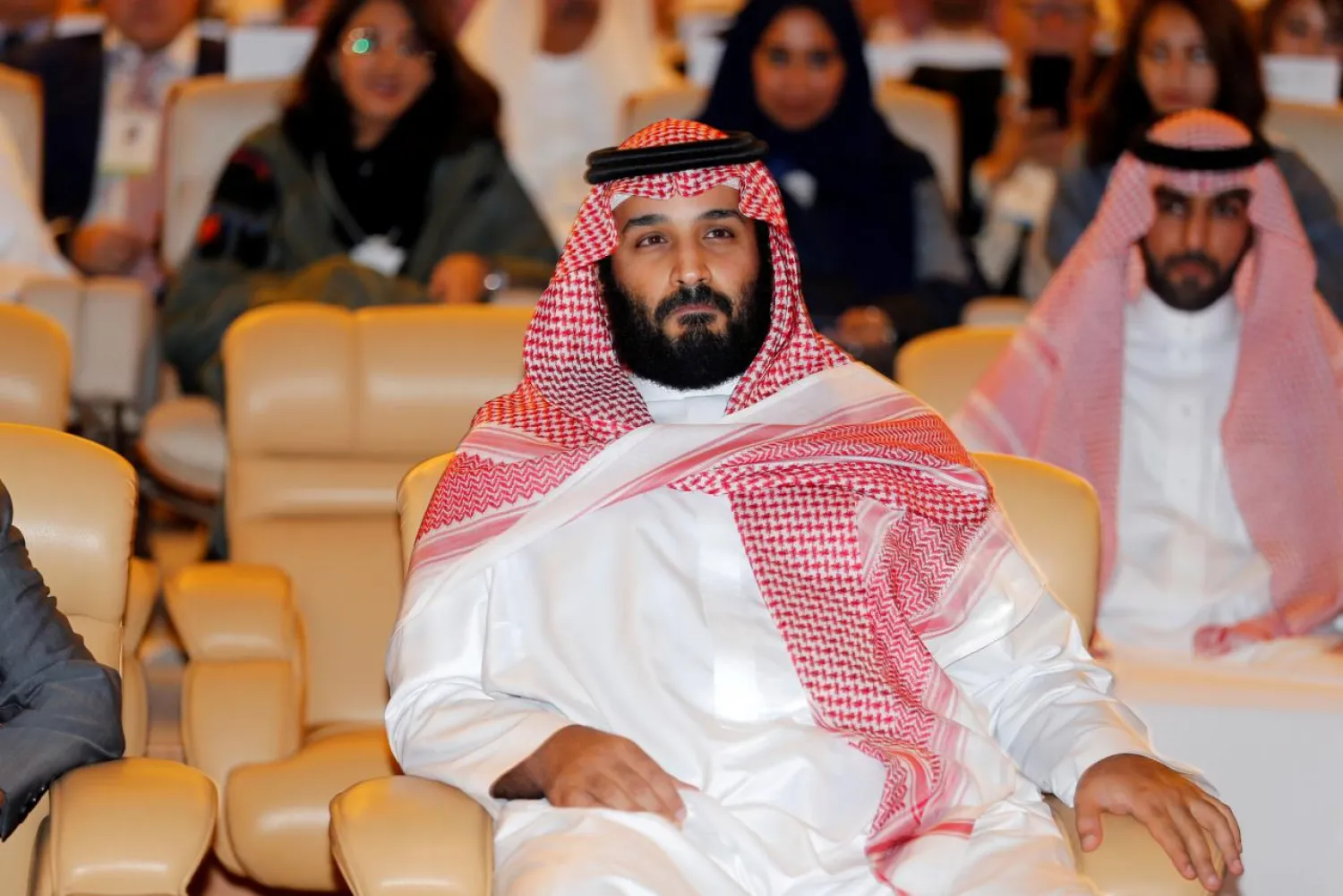
Saudi Crown Prince Mohammed bin Salman, Deputy Prime Minister and Minister of Defense. (Reuters)
TT

Survey: Young Arabs across Middle East Express High Level of Confidence in Saudi Crown Prince

Saudi Crown Prince Mohammed bin Salman, Deputy Prime Minister and Minister of Defense. (Reuters)

A recent poll showed that Arab youth expect Saudi Arabia’s Crown Prince Mohammed bin Salman, Deputy Prime Minister and Minister of Defense, to have a bigger impact on the Middle East in the coming decade than any other leader.

Young people across the Middle East also expressed great confidence in the Crown Prince, in addition to a belief in the inevitable defeat of ISIS and radicalism.

According to the 10th annual ASDA’A Burson-Marsteller Arab Youth Survey 2018, young Arabs throughout the Middle East expressed a high level of confidence in the Crown Prince and his leadership, with 63 percent supporting his appointment, 64 percent viewing him as a strong leader, and 59 percent saying he will lead Saudi Arabia in the right direction.

Support for the Crown Prince among Saudi youth is overwhelming, with 91 percent supporting his appointment, 97 percent considering him a strong leader and 90 percent saying he will move the Kingdom in the right direction.

The Arab world is optimistic about the role of Prince Mohammed, said UAE Minister of State for International Cooperation Director General Reem Al Hashemi.

She pointed out that many of the Arab youth expressed their desire to fight corruption in the Arab world and to live a decent life.

Prince Mohammed plays a major role in the fight against corruption, she added.

ASDA’A Burson-Marsteller conducts a comprehensive survey of youth in the Arab world on an annual basis.

This is the tenth edition of this survey, which takes the views and attitudes of Arab youth in 16 Arab countries. It conducted 3,500 personal interviews between January 21 and February 20, 2018, with young men and women belonging to the 18-24 age group.

According to the survey, which was revealed at a conference in Dubai, Arab youth believe the past decade, which has been dominated by so-called Arab Spring uprisings and ISIS atrocities, steered the Middle East away from its normal course. Action must be taken to bring it back on track.

The poll added that Arab youth believe that the action needed to counter radical ideology lies in addressing unemployment, education and counter-corruption and anti-terrorism fields.

The results of the poll also show that Arab youth are confident that an inevitable defeat awaits ISIS ideology.

As Arab youth increasingly rely on social media for news, they consider CNN the most credible source and al-Jazeera as the most misleading.

Asked about Vision 2030, the Saudi-led road map to diversify its economy, 92 percent of Saudi youth said they were confident the plan would succeed in securing the future of the Kingdom’s economy.


Saudi, Omani FMs Discuss Regional Developments

Saudi Minister of Foreign Affairs Prince Faisal bin Farhan bin Abdullah meets with his Omani counterpart Badr bin Hamad bin Hamood Albusaidi in Riyadh on Wednesday. (SPA)
TT

Saudi, Omani FMs Discuss Regional Developments

Saudi Minister of Foreign Affairs Prince Faisal bin Farhan bin Abdullah meets with his Omani counterpart Badr bin Hamad bin Hamood Albusaidi in Riyadh on Wednesday. (SPA)

Saudi Minister of Foreign Affairs Prince Faisal bin Farhan bin Abdullah received in Riyadh on Wednesday his Omani counterpart Badr bin Hamad bin Hamood Albusaidi.

They reviewed the strong bilateral relations between their countries and ways to boost them across various fields.

They also addressed the latest developments in the region and the importance of continuing efforts to achieve security and stability.


OIC Condemns Israeli Decision to Ban 37 Aid Groups from Operating in Gaza

 The sun sets over a tent camp sheltering Palestinians displaced by the Israeli offensive, on New Year’ Eve in Khan Younis, southern Gaza Strip, December 31, 2025. (Reuters)
The sun sets over a tent camp sheltering Palestinians displaced by the Israeli offensive, on New Year’ Eve in Khan Younis, southern Gaza Strip, December 31, 2025. (Reuters)
TT

OIC Condemns Israeli Decision to Ban 37 Aid Groups from Operating in Gaza

 The sun sets over a tent camp sheltering Palestinians displaced by the Israeli offensive, on New Year’ Eve in Khan Younis, southern Gaza Strip, December 31, 2025. (Reuters)
The sun sets over a tent camp sheltering Palestinians displaced by the Israeli offensive, on New Year’ Eve in Khan Younis, southern Gaza Strip, December 31, 2025. (Reuters)

The General Secretariat of the Organization of Islamic Cooperation (OIC) strongly condemned on Wednesday Israel’s decision to prevent 37 international non-governmental organizations operating in the humanitarian and health sectors from carrying out their activities in Gaza.

The Secretariat stressed that these organizations “play an indispensable role in alleviating humanitarian suffering in Gaza.”

The OIC General Secretariat “warned of the grave consequences of this arbitrary measure, which is likely to dangerously exacerbate the catastrophic humanitarian situation in the Gaza Strip due to Israeli restrictions that hinder the entry of sufficient humanitarian and medical aid.”

It deemed the Israeli decision as “illegal and a “blatant violation of the principles of international humanitarian law and the advisory opinion of the International Court of Justice, which obliges the Israel to facilitate the work of international and humanitarian organizations and to allow the adequate and unhindered delivery of humanitarian assistance to the Gaza Strip.”

The OIC General Secretariat called on the international community “to take the necessary measures and exert effective pressure on Israeli authorities to reverse this decision, ensure the protection of humanitarian workers, and guarantee the freedom of humanitarian organizations to operate without restriction throughout the occupied Palestinian territory.”


Gulf Countries, OIC Say Security of Saudi Arabia and GCC States Integral to Region

A general view of Kuwait City buildings, Kuwait, December 23, 2024. (Reuters)
TT

Gulf Countries, OIC Say Security of Saudi Arabia and GCC States Integral to Region

A general view of Kuwait City buildings, Kuwait, December 23, 2024. (Reuters)

Qatar announced that it is following with great interest the ongoing developments and events in Yemen, reiterating its full support for the legitimate Yemeni government and the importance of preserving Yemen’s unity and territorial integrity, safeguarding the interests of the brotherly Yemeni people, and achieving their aspirations for security, stability, and development.

In a statement, the Qatari Ministry of Foreign Affairs stressed that the security of Saudi Arabia and the Gulf Cooperation Council states is integral to the security of Qatar, stemming from the deep-rooted brotherly ties and shared destiny that unite the GCC countries.

The ministry commended the statements issued by Saudi Arabia and the United Arab Emirates, noting that they reflect a commitment to prioritizing the region’s interests, boosting the principles of good neighborliness, and adhering to the foundations and principles enshrined in the Charter of the Gulf Cooperation Council.

Qatar will remain at the forefront of countries supporting efforts to promote dialogue and diplomacy as the optimal path to achieving prosperity, security, and stability for the region and its peoples, stressed the ministry.

Kuwait's foreign ministry issued a similar statement, saying the security of Saudi Arabia and GCC states is a fundamental pillar of Gulf collective security, rooted in the bonds of brotherhood and shared destiny among them.

It expressed continued support for regional and international efforts aimed at promoting dialogue and peace, emphasizing diplomacy as the most effective path to achieving security, stability, and lasting peace in the region.

Bahrain, chair of the current session of the GCC, praised the “pivotal role played by Saudi Arabia and the United Arab Emirates in supporting the security and stability of Yemen, stemming from their brotherly responsibilities and shared commitment to the security and stability of the Gulf region within the GCC framework.” 

The Bahraini Ministry of Foreign Affairs stressed its “confidence in the wisdom of the leaderships of Saudi Arabia and the UAE, and in their ability to contain any differences within the framework of the GCC, in line with the principles of the GCC based on solidarity, mutual understanding, and unity, serving the shared aspirations to instill security, stability, peace, and prosperity for the benefit of the region and its peoples.” 

The ministry reiterated Bahrain’s “firm and supportive stance toward all regional and international initiatives and efforts aimed at reaching a comprehensive and lasting political solution in Yemen, in accordance with the GCC initiative and its executive mechanism, the outcomes of the Comprehensive National Dialogue Conference, and relevant UN Security Council resolutions.” 

Jordan also praised Saudi Arabia and the UAE's roles in supporting Yemen.

OIC

Secretary-General of the Organization of Islamic Cooperation (OIC) Hissein Brahim Taha underlined the organization’s firm stance in support of Yemen, its sovereignty, unity, and territorial integrity.  

He reiterated the OIC’s categorical rejection of any actions or attempts that would undermine Yemen’s unity or compromise its constitutional legitimacy and national institutions, in light of recent developments in the country. 

He renewed the OIC’s full support for the legitimate Yemeni government, represented by the President of the Presidential Leadership Council. He stressed the importance of preserving and strengthening state institutions in order to realize the Yemeni people’s aspirations for security, stability, and development. 

Taha condemned any actions or practices by the Southern Transitional Council that pose a direct threat to Yemen’s unity, undermine peace efforts, and prolong the conflict.  

“Any disruption to Yemen’s security and stability also threatens peace and security across the region,” he warned. 

He welcomed the announcement of the UAE’s withdrawal of forces from Yemen, describing it as a “constructive step that supports de-escalation efforts and spares the blood of the Yemeni people.” 

He further stressed that the security, sovereignty and territorial integrity of Saudi Arabia “constitute inviolable red lines.” 

“Any threat to the Kingdom’s security is a direct threat to the security of the entire region and the Islamic world,” Taha added, underscoring the OIC’s “full solidarity with Saudi Arabia in all measures taken to safeguard its national security.” 

He stressed “the need to continue supporting political and diplomatic efforts aimed at reaching a comprehensive and lasting solution to the Yemeni crisis.” 

He called on all Yemeni parties “to uphold legitimacy, renounce violence, and prioritize dialogue and the higher interests of Yemen and its people, in order to achieve security, stability, and development while preserving the country’s unity, sovereignty, and territorial integrity.”