
How Manchester City Became Gigantic in 10 Years?

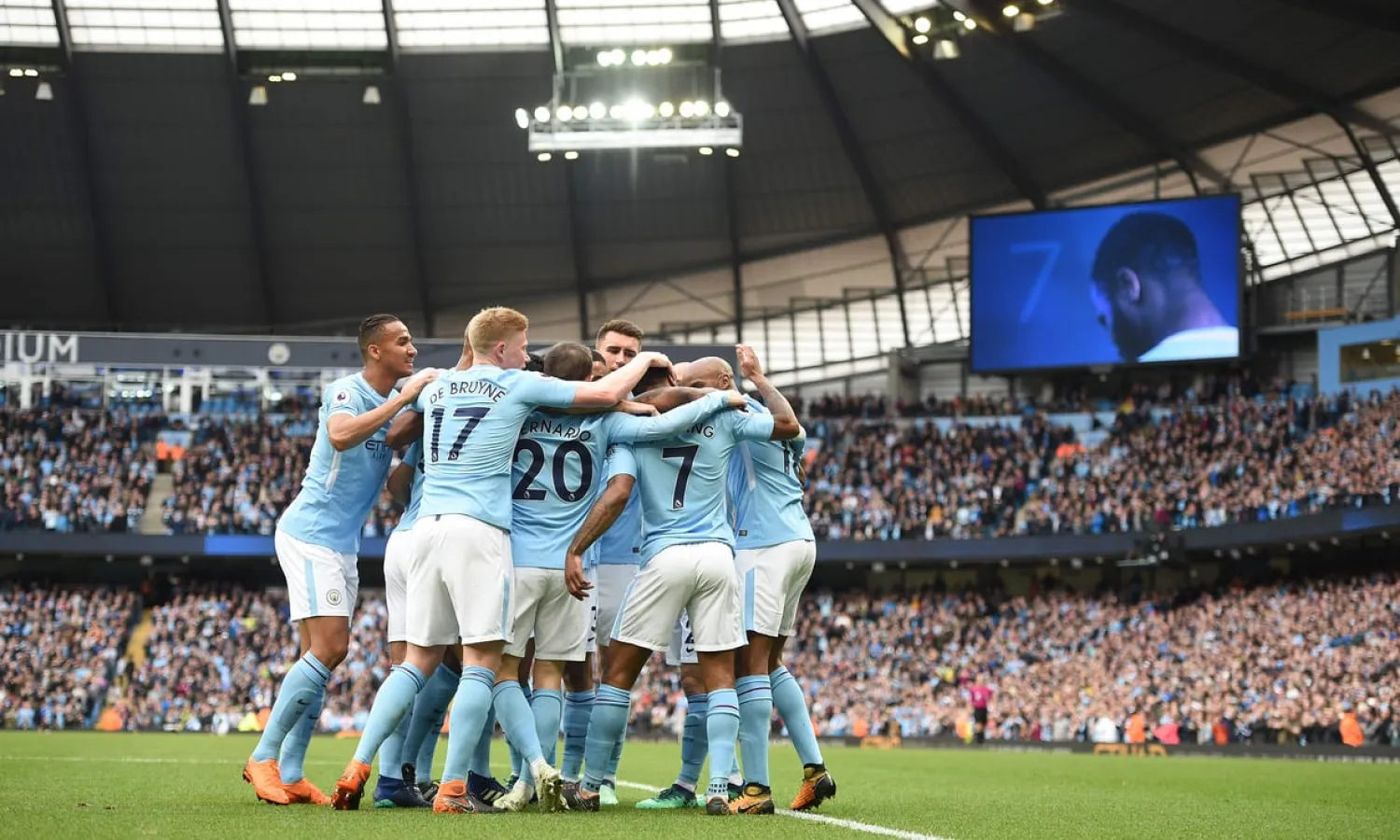
Raheem Sterling is mobbed by his team-mates after scoring Manchester City’s second goal in the 5-0 thrashing of Swansea at the Etihad Stadium in April. Photograph: Oli Scarff/AFP/Getty Images
TT

How Manchester City Became Gigantic in 10 Years?

Raheem Sterling is mobbed by his team-mates after scoring Manchester City’s second goal in the 5-0 thrashing of Swansea at the Etihad Stadium in April. Photograph: Oli Scarff/AFP/Getty Images

When Liverpool went to the Etihad Stadium for their smash-and-grab victory over Manchester City in the Champions League quarter-final second leg it was odd to hear their fans sing the straight version of We Shall Not Be Moved – “just like a team that’s going to win the European Cup”.

City fans’ version of that anthem was lyrically adjusted 19 years ago, when supporters who grew up on a team of internationals in the early 1970s found themselves trailing around League One while Manchester United were on their way to the treble. Watching in disbelief defeats that 1998-99 season by Lincoln City, York City and Wycombe Wanderers, standing in Blackpool’s Bloomfield Road, which had two sides condemned, some City wags reworked the words to: “We’re not really here.”

It is still sung every game, the same statement of disbelief, but now at the spectacle of a world-class team in sky blue, the most expensively assembled squad in football, and the sport’s most coveted coach actually managing Manchester City. Sheikh Mansour bin Zayed al-Nahyan, a senior son in Abu Dhabi’s ruling dynasty, bought the club 10 seasons ago, nine years after City squeaked up from League One on penalties following Paul Dickov’s 94th-minute equalizer in the Wembley play-off final against Gillingham.

On Sunday, in the stadium built with public money for the 2002 Commonwealth Games, then handed to City the year after and now sponsored by the Abu Dhabi state airline, Pep Guardiola’s team will be handed their third Premier League trophy since Mansour landed. In 116 years before that – the club was formed in 1880 as a form of social work by Anna Connell, the vicar’s daughter at St Mark’s Church – City won the league title twice. They won the League Cup twice after it began in 1960, first in 1970 during the 1968-70 era that was previously the club’s best ever, then in 1976, Dennis Tueart’s dashing overhead kick winner having to sustain a generation for 35 years of loyalty and, mostly, cock-ups.

The new incarnation of Manchester City have won the League Cup three times in the past five seasons, a triumph now barely registered. This season’s third was picked up on the way to winning the Premier League but Guardiola’s specified target of succeeding in Europe was challenged by losing to Liverpool.

So this decade of Abu Dhabi mega-investment has not been a reclamation of past supremacy – as Liverpool’s resurgence now feels – but rather a whole new ball game.

When the takeover was announced in August 2008, there was understandable wariness about whether it was real and there were guffaws at first about the idea that Manchester City were going to buy the world’s best players and be rebuilt along the lines of Barcelona. The seriousness of that intention has been inexorably accepted over the decade, with £1.2bn invested from Abu Dhabi, the players recruited, trophies attained, stadium expanded to 55,000 capacity, the power-projecting academy and “Etihad campus” built next to it – and Barcelona’s former chief executive, director of football and coach working for City on Ashton New Road.

When Mark Hughes was sacked as manager in December 2009, news of Roberto Mancini’s pending appointment having leaked before Hughes’s final game in the sleet against Sunderland, there was widespread ridicule of City’s official explanation that Hughes had failed to reach his “targets”. There were fewer sneers by 2013 when City said the same about targets as they sacked Mancini, who the previous season had delivered their first Premier League title with Sergio Agüero’s 94th-minute winner against Hughes’s QPR.

he club’s hierarchy plays down the apparent conclusion that this is an Abu Dhabi state project, expanded now to City-owned clubs in New York and Melbourne, and ownership too of Girona, Yokohama Marinos and the Uruguayan club Atlético Torque, as well as partnerships to polish young players from the Netherlands to Venezuela.

City, the hierarchy maintains, is a private investment by Mansour – they present the holding company City Football Group as the owner, not Abu Dhabi itself. They point to the emirate not being overtly promoted in this most globally broadcast of its ventures, although its tourist authority, Visit Abu Dhabi, is a sponsor on the City billboards and the Etihad name is hardly hidden under a bushel.

Students of football history have always learned that a key achievement of Herbert Chapman’s visionary building of Arsenal in the 1930s was having the Gillespie Road tube station renamed after the club. Now the Etihad campus has its own Metrolink station taking supporters to the ground, so in modern football Manchester City have secured a transport stop named after the club’s sponsor.

The very start of the takeover was different. It did look like a private purchase then, even something of a whim by Mansour, who already owned a football club in Abu Dhabi. The City deal was fronted by Sulaiman al-Fahim, a Dubai property developer, who boasted about the stars City were going to sign and the “very deep pockets” of the club’s new owner.

This vulgarity did not play at all well in Abu Dhabi, whose ruling family has sought to marry the windfall of oil billions to a dignified national style. Fahim was moved aside in days and a senior figure in the country’s business and government institutions, Khaldoon al-Mubarak, assigned to chair the City investment and its reputation-shaping implications.

It is a testament to how carefully Mubarak and his executives have approached it that, while there have been persistent objections, particularly in Europe, to their claiming football success by vast spending of a country’s resources, they have also won friends at home.

They understood that, for all its new money, English football is still rooted in supporters’ loyalty and expected to be a community activity and that the stadium and Commonwealth Games were intended as catalysts for economic revival in post-industrial east Manchester. The Abu Dhabi investors donated 5.5 acres of the 80 cleaned up for the campus, valued at £18m, and contributed a further £3m towards an excellent new public leisure centre and swimming pool next to it. A new sixth-form college named after Anna Connell also sits on the land, next to the new Manchester Institute of Health and Performance, which is used by the club and community and in the rehabilitation of some victims of the Arena terror atrocity last year.

At the end of 10 seasons that began with the then barmy-seeming aspiration to be “Barcelona plus” Guardiola, given £200m to spend on players last summer and £57m for Aymeric Laporte in January, is expected to be further furnished this summer with a central midfield player, centre-back and forward. The aim over the next 10 years is to become “Barcelona plus plus” and nobody doubts anymore the seriousness of that, however improbable it still feels at Manchester City, for all of this to be really here.

(The Guardian)


Tottenham Winger Odobert Sidelined with ACL Tear

10 February 2026, United Kingdom, London: Tottenham Hotspur's Wilson Odobert receives medical treatment during the English Premier League soccer match between Tottenham Hotspur and Newcastle United at the Tottenham Hotspur Stadium. Photo: John Walton/PA Wire/dpa
TT

Tottenham Winger Odobert Sidelined with ACL Tear

10 February 2026, United Kingdom, London: Tottenham Hotspur's Wilson Odobert receives medical treatment during the English Premier League soccer match between Tottenham Hotspur and Newcastle United at the Tottenham Hotspur Stadium. Photo: John Walton/PA Wire/dpa

Tottenham Hotspur's French winger Wilson Odobert has suffered an anterior cruciate ligament tear, the Premier League club said on Thursday, after the 21-year-old was forced off during Tuesday's 2-1 loss at home to Newcastle United.

Spurs, who sacked manager Thomas Frank on Wednesday amid an ⁠eight-game run without ⁠a league win, said Odobert will have surgery. British media reported that he could miss the rest of the season.

"We can confirm that ⁠Wilson Odobert has sustained a ruptured anterior cruciate ligament in his left knee," Reuters quoted Tottenham as saying in a statement.

Spurs, who are only five points above the relegation zone, have faced several injury setbacks this season.

Their long list of absentees include forward ⁠Richarlison, ⁠three defenders and several midfielders including James Maddison, Rodrigo Bentancur and Lucas Bergvall.

Captain Cristian Romero criticized the club's thin squad in an Instagram post earlier this month.

Spurs, who are languishing in 16th place, next host league leaders Arsenal on February 22.


Thomas Tuchel Extends Contract as England Coach Until Euro 2028

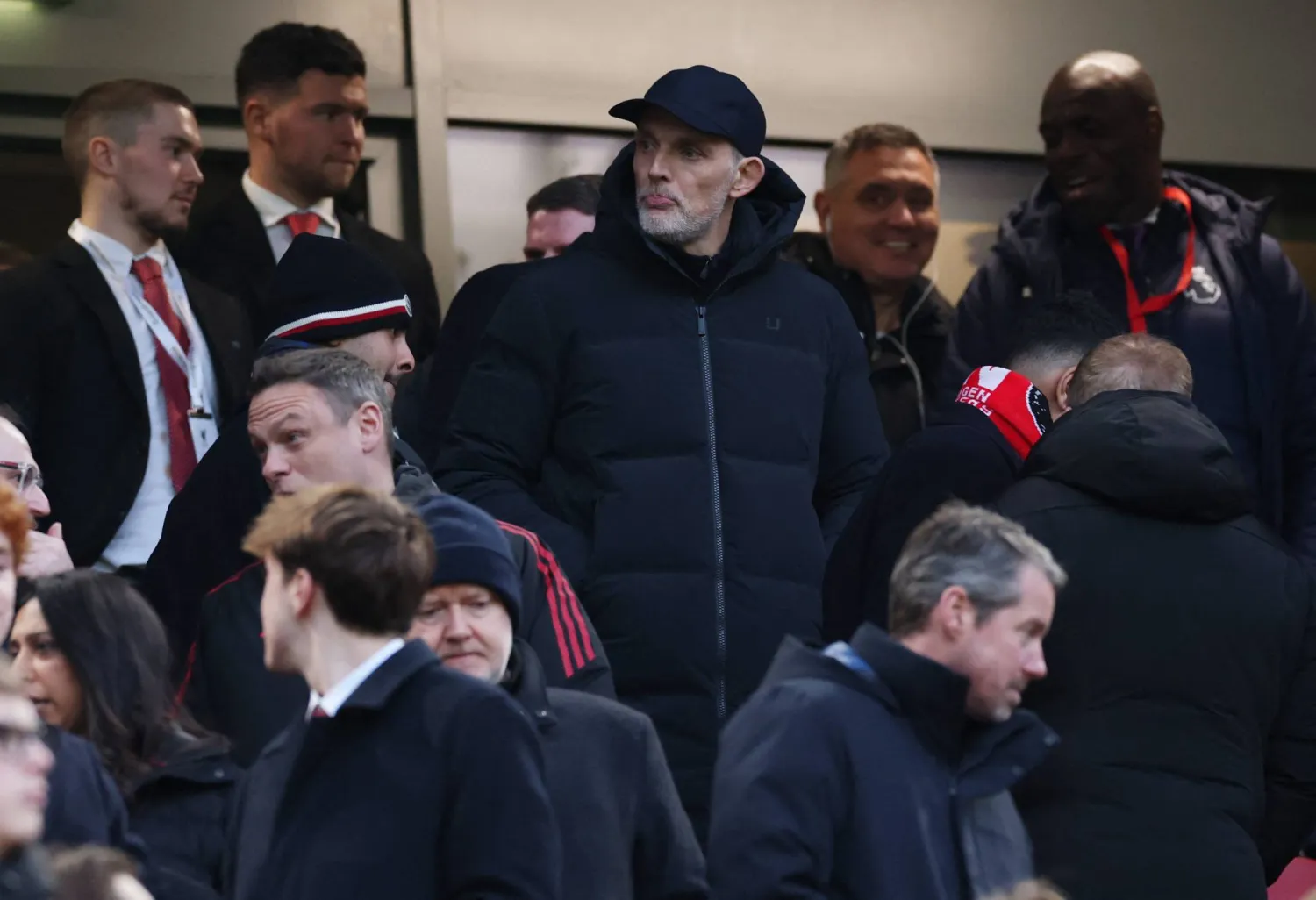
Soccer Football - Premier League - Liverpool v Manchester City - Anfield, Liverpool, Britain - February 8, 2026 England manager Thomas Tuchel in the stands REUTERS/Phil Noble
TT

Thomas Tuchel Extends Contract as England Coach Until Euro 2028

Soccer Football - Premier League - Liverpool v Manchester City - Anfield, Liverpool, Britain - February 8, 2026 England manager Thomas Tuchel in the stands REUTERS/Phil Noble

Thomas Tuchel has signed a new contract that will see him remain head coach of the England national football team through to the end of Euro 2028 in the UK and Ireland, the Football Association announced on Thursday.

Tuchel was confirmed as the successor to Gareth Southgate in October 2024 and has overseen an unbeaten qualification run to this year's World Cup in North America, with England winning all eight group games under their German boss.

"I am very happy and proud to extend my time with England," said the 52-year-old former Chelsea boss, whose previous deal with the national side ran only until the end of the 2026 World Cup.

"It is no secret to anyone that I have loved every minute so far of working with my players and coaches, and I cannot wait to lead them to the World Cup.

"It is an incredible opportunity and we are going to do our very best to make the country proud."

According to AFP, the FA said the new agreement with Tuchel would provide "clarity and full focus" on the World Cup.

Tuchel had been previously touted as a possible permanent successor to sacked former Manchester United manager Ruben Amorim, even though the English giants have experienced an upturn in form under caretaker boss Michael Carrick.

But in signing a new England contract, Tuchel appears to have ruled himself out of a post-World Cup move to Old Trafford.


Ukraine Skeleton Racer Disqualified from Olympics over Memorial Helmet

(FILES) Ukraine's Vladyslav Heraskevych wears a helmet which depicts Ukrainian sportsmen and women, victims of his country's war with Russia, as he takes part in the skeleton men's training session at Cortina Sliding Center during the Milano Cortina 2026 Winter Olympic Games in Cortina d'Ampezzo on February 9, 2026. (Photo by FRANCK FIFE / AFP)
TT

Ukraine Skeleton Racer Disqualified from Olympics over Memorial Helmet

(FILES) Ukraine's Vladyslav Heraskevych wears a helmet which depicts Ukrainian sportsmen and women, victims of his country's war with Russia, as he takes part in the skeleton men's training session at Cortina Sliding Center during the Milano Cortina 2026 Winter Olympic Games in Cortina d'Ampezzo on February 9, 2026. (Photo by FRANCK FIFE / AFP)

Ukrainian skeleton racer Vladyslav Heraskevych was disqualified from the Winter Olympics on Thursday after refusing to back down over his banned helmet, which depicts victims of his country's war with Russia.

The International Olympic Committee said he had been kicked out of the Milan-Cortina Games "after refusing to adhere to the IOC athlete expression guidelines".

Heraskevych, 27, had insisted he would continue to wear the helmet, which carries pictures of Ukrainian sportsmen and women killed since Russian forces invaded Ukraine in 2022, during the men's skeleton heats on Thursday.

After the decision, a defiant Heraskevych posted on X "this is price of our dignity", alongside a picture of his headwear, AFP reported.

Ukraine President Volodymyr Zelensky had defended the athlete's right to wear the helmet but he knew he was taking a risk as gestures of a political nature during competition are forbidden under the Olympic charter.

The IOC said in statement on Thursday that the skeleton racer's accreditation for the Games had been withdrawn.

"Having been given one final opportunity, skeleton pilot Vladylsav Heraskevych from Ukraine will not be able to start his race at the Milano Cortina 2026 Olympic Winter Games this morning," the IOC statement said.

"The decision followed his refusal to comply with the IOC's Guidelines on Athlete Expression. It was taken by the jury of the International Bobsleigh and Skeleton Federation (IBSF) based on the fact that the helmet he intended to wear was not compliant with the rules."

Athletes are permitted to express their views in press conferences and on social media, and on Tuesday the IOC said it would "make an exception" for Heraskevych, allowing him to wear a plain black armband during competition.

"Mr. Heraskevych was able to display his helmet in all training runs," the IOC said.

"The IOC also offered him the option of displaying it immediately after the competition when going through the mixed zone."

Olympic chiefs said that IOC president Kirsty Coventry had spoken with Heraskevych on Thursday morning in a vain bid to make him change his mind.