


UNRWA’s Lazzarini Warns Ignoring Gaza Risks New Generation of Anger

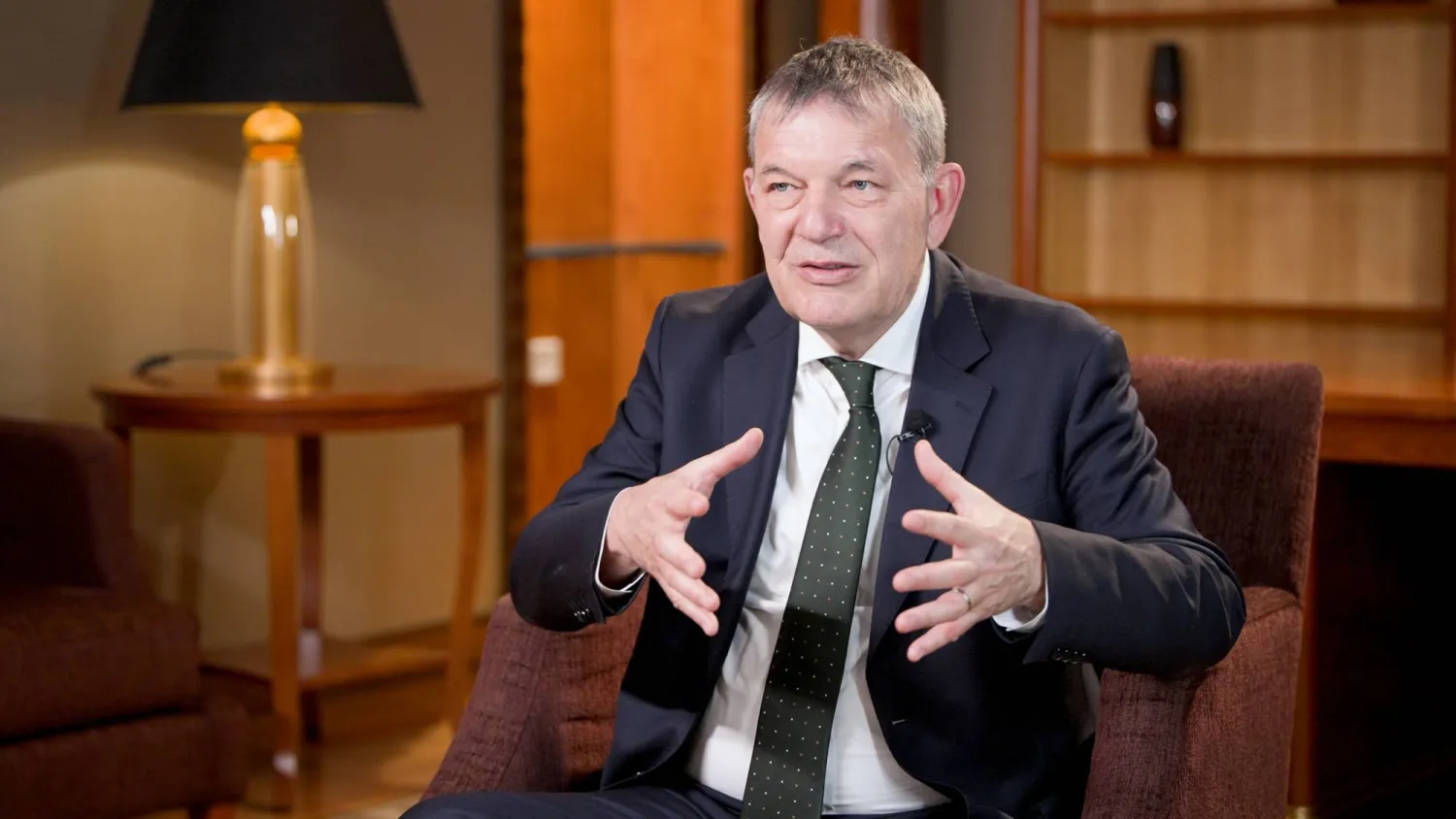
Philippe Lazzarini, the Commissioner-General of the United Nations Relief and Works Agency for Palestine Refugees in the Near East. Photo: Turky Alagili
TT

UNRWA’s Lazzarini Warns Ignoring Gaza Risks New Generation of Anger

Philippe Lazzarini, the Commissioner-General of the United Nations Relief and Works Agency for Palestine Refugees in the Near East. Photo: Turky Alagili

Philippe Lazzarini, the Commissioner-General of the United Nations Relief and Works Agency for Palestine Refugees in the Near East, says UNRWA’s future cannot remain “hostage indefinitely” to the absence of a political solution, as he prepares to leave his post next month.

In a wide-ranging interview with Asharq Al-Awsat, Lazzarini called for a gradual shift in how services are delivered, allowing Palestinian institutions to eventually build the capacity to take over.

At the same time, he warned that abandoning nearly 2 million people in Gaza, half of them children, to trauma and hopelessness risks sowing the seeds of new generations of anger.

Strong backing from Saudi Arabia

Lazzarini said UNRWA’s cooperation with Saudi Arabia is “strong,” both financially and politically.

Riyadh, he said, is deeply engaged in the political process and works with the EU under the umbrella of the “Global Alliance for the Implementation of the Two-State Solution,” where UNRWA has been invited to be part of the broader discussions.

For Lazzarini, sustainable access to essential services must rest on a clear political framework. Saudi Arabia and other partners in the alliance have helped provide that framework and voiced firm political support for the agency during what he described as a challenging period.

He said the Kingdom’s level of political engagement and the initiatives advanced within the alliance left a strong impression. Inviting a humanitarian-development agency such as UNRWA into discussions about the future of Palestinian institutions, he said, reflects the seriousness of that partnership.

A funding squeeze and a “silent war”

UNRWA is also battling a chronic funding crisis. After a year of austerity, Lazzarini said he was forced weeks ago to cut services by around 20%, including health care and education, affecting beneficiaries directly.

Beyond Gaza, he warned of what he called a “silent war” in the occupied West Bank, overshadowed by events in the enclave.

Over the past two years, developments there have come “close to de facto annexation of the occupied West Bank,” he said. Settlement expansion has accelerated. Settler violence has risen “with little accountability.” Large-scale security operations, especially in Jenin and Tulkarm, have emptied camps and displaced large numbers of residents.
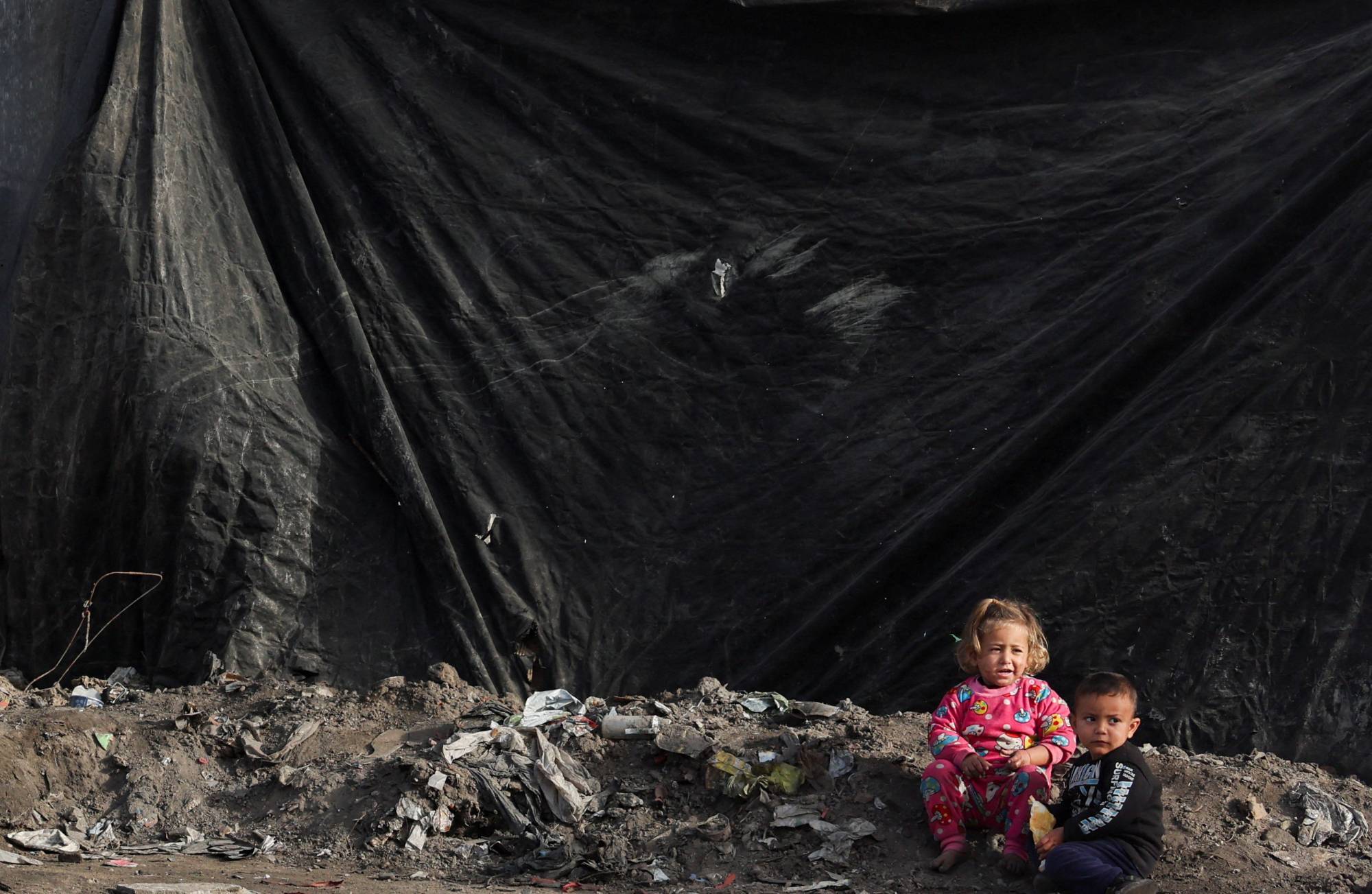
Palestinian refugee children are seen at a camp in Gaza city. Reuters

Gaza pushed beyond the brink

What has happened in Gaza, Lazzarini said, “defies description.” The suffering, he added, is “unbearable.”

Once described as an open-air prison, Gaza has, after more than two years of unrelenting war, become a landscape of daily atrocities carried out almost around the clock, before the eyes of the world.

Between 80% and 90% of the territory has been destroyed, he said, leaving behind a “post-catastrophic” environment. The population is in constant flight. More than 70,000 people have been killed, according to estimates, not counting those still buried beneath the rubble.

He described systematic starvation driven by political decisions and efforts to make life in the enclave untenable, pushing residents toward departure.

More than 380 UNRWA staff members have been killed, he said. Others were detained and tortured. Agency facilities were struck. The violations of international law, he added, have gone largely unpunished, deepening what he called a climate of impunity.

Political targeting and pressure

Lazzarini said he himself faced “political and diplomatic targeting” during his tenure, tied not to his person but to his office and what UNRWA represents.

After his first visit to Gaza, he was declared persona non grata and barred from returning, with instructions issued not to engage with him.

The targeting was not directed personally as much as at the function and the symbolism of UNRWA, he said. Some Israeli officials, he noted, have openly stated that their objective is to end the agency’s role, seeing it as perpetuating the refugee issue.

UNRWA’s 75-year existence, he argued, does not explain the problem. Instead, it reflects the international community’s failure to reach a just and lasting political solution.

The two-state solution

Lazzarini reaffirmed that the two-state path remains “a fundamental option,” but warned that developments in Gaza and the West Bank are pushing any serious political horizon further out of reach.

The events after Oct. 7, he said, should have been “a wake-up call.” This conflict, he stressed, cannot be left unresolved.

Nearly 2 million people in Gaza, half of them children, are living in profound trauma with no clear future. Ignoring that reality, he warned, means planting anger in a new generation, with consequences for the region’s stability.

He also voiced concern that solidarity and compassion are no longer driving international responses as they once did. In both Gaza and Sudan, he said, he sensed “a great deal of indifference” toward vast humanitarian crises.

Yet he insisted the core lesson is to hold fast to humanitarian values, however bleak the circumstances. The alternative, he warned, is a world stripped of standards and restraint, ruled by the law of the jungle rather than international law.
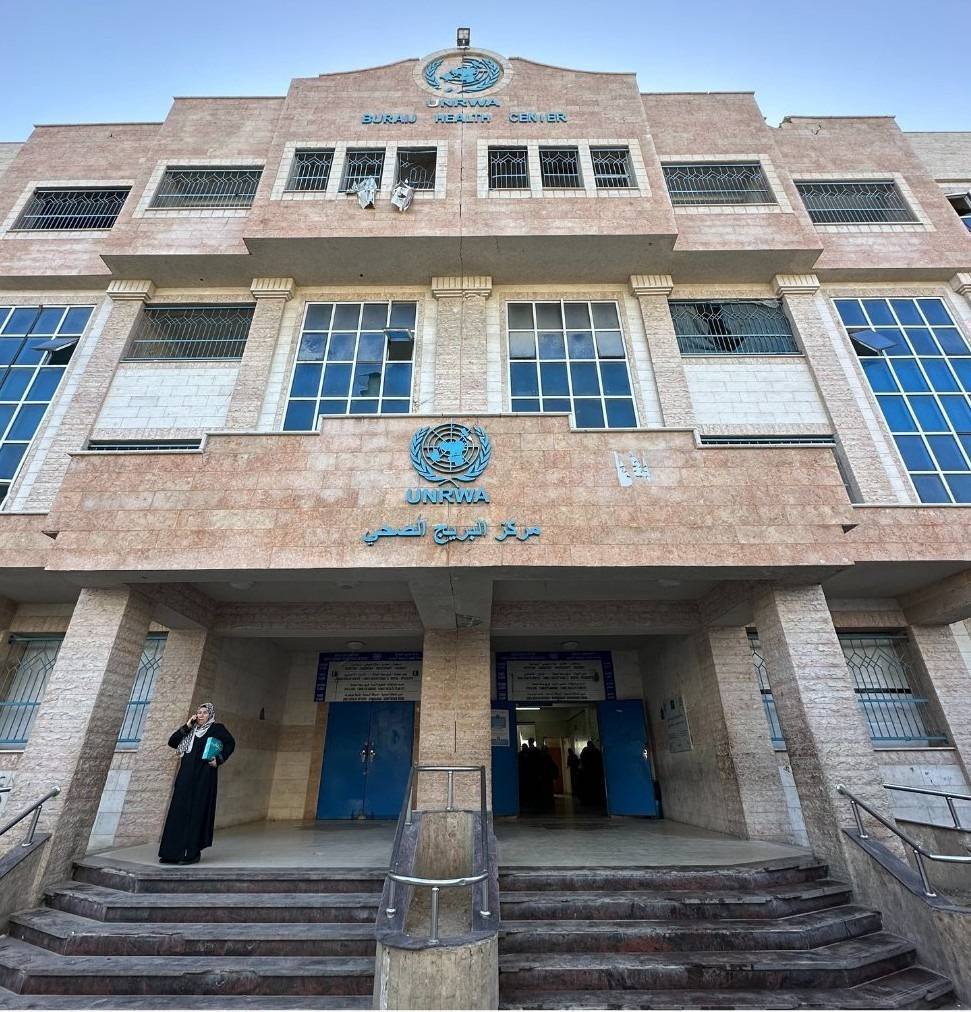
For Lazzarini, sustainable access to essential services must rest on a clear political framework.

Rethinking UNRWA’s future

Looking ahead, Lazzarini said UNRWA cannot continue indefinitely in its current form.

He called for a phased transition in service delivery, enabling Palestinian institutions to build capacity to assume those responsibilities over time.

The agency must remain the custodian of the refugee cause until a just solution is achieved, he said. But the mechanics of delivering services should not remain frozen, waiting endlessly for a political breakthrough.



Makkah Deputy Governor Carries Out Field Inspection of Grand Mosque Readiness for Ramadan 

Deputy Governor of the Makkah Region Prince Saud bin Mishaal bin Abdulaziz is seen during his inspection tour at the Grand Mosque in the holy city of Makkah. (SPA)
TT

Makkah Deputy Governor Carries Out Field Inspection of Grand Mosque Readiness for Ramadan 

Deputy Governor of the Makkah Region Prince Saud bin Mishaal bin Abdulaziz is seen during his inspection tour at the Grand Mosque in the holy city of Makkah. (SPA)

Deputy Governor of the Makkah Region Prince Saud bin Mishaal bin Abdulaziz inspected the readiness of the Grand Mosque and its facilities, conducting a field tour to review operational and service preparations for receiving worshippers and Umrah performers during the holy month of Ramadan, reported the Saudi Press Agency on Tuesday.

Prince Saud was briefed on the operational plans implemented by the relevant authorities, including crowd management mechanisms, service enhancements, and facility preparations aimed at ensuring smooth movement and enhancing comfort and safety levels for visitors to the Grand Mosque, particularly during peak times.

He reviewed developmental initiatives and smart services supporting the operational system, notably electric mobility carts for transporting the elderly, persons with disabilities, and those in need of assistance within the Grand Mosque.

The tour also included an overview of the efforts of guidance teams deployed across the corridors and courtyards of the Grand Mosque, providing multilingual assistance and direction.

Prince Saud reviewed the interactive map and digital mobility platform, which allows visitors to plan their routes in advance and identify service locations, entrances and exits, and less crowded pathways.

He was briefed on crowd management systems, including the visitor density sensor platform that measures human density in real time, and the Tawaf and Sa’i crowd status display service, which allows worshippers to select appropriate times to perform rituals with ease. Models of the modern multilingual guidance system were also reviewed.

Prince Saud also visited the Smart Engineering Command and Control Center, which serves as an advanced central platform linking operational systems and monitoring performance in real time, boosting operational efficiency and raising readiness levels during Ramadan.


Saudi Leadership Provides Two Donations Worth SAR150 Mln Through Jood Eskan Platform

Custodian of the Two Holy Mosques King Salman bin Abdulaziz Al Saud and Prince Mohammed bin Salman bin Abdulaziz Al Saud, Crown Prince and Prime Minister. (SPA)
TT

Saudi Leadership Provides Two Donations Worth SAR150 Mln Through Jood Eskan Platform

Custodian of the Two Holy Mosques King Salman bin Abdulaziz Al Saud and Prince Mohammed bin Salman bin Abdulaziz Al Saud, Crown Prince and Prime Minister. (SPA)

Custodian of the Two Holy Mosques King Salman bin Abdulaziz Al Saud and Prince Mohammed bin Salman bin Abdulaziz Al Saud, Crown Prince and Prime Minister, have provided two generous donations amounting to SAR150 million through the Jood Eskan platform.

The move aligns with the leadership's commitment to supporting all national efforts and initiatives to provide suitable housing for deserving families.

Minister of Municipalities and Housing and Chairman of the Board of Trustees of the Developmental Housing Foundation (Sakan) Majed Al-Hogail expressed his deep gratitude to the leadership for its unwavering support to all national efforts and initiatives aimed at providing suitable housing for eligible families across the Kingdom.

He noted the effective impact of previous generous donations in achieving the goals of housing development, and motivating individuals and institutions to donate through the Jood Eskan platform that is based on community giving that helps provide decent housing and boosts stability and quality of life for deserving families.


Saudi Crown Prince Receives Message on Bilateral Ties from President of Kazakhstan

Prince Mohammed bin Salman bin Abdulaziz Al Saud, Saudi Crown Prince and Prime Minister. (SPA file)
TT

Saudi Crown Prince Receives Message on Bilateral Ties from President of Kazakhstan

Prince Mohammed bin Salman bin Abdulaziz Al Saud, Saudi Crown Prince and Prime Minister. (SPA file)

Prince Mohammed bin Salman bin Abdulaziz Al Saud, Saudi Crown Prince and Prime Minister, received on Tuesday a written message from President of Kazakhstan Kassym-Jomart Tokayev on bilateral relations between their two countries.

The message was received by Minister of Foreign Affairs Prince Faisal bin Farhan bin Abdullah during a meeting with his Kazakh counterpart Yermek Kosherbayev in Riyadh.