


Gaza Braces for More Protests as Death Toll in Border Unrest Rises to 59

Dozens of people were killed by Israeli gunfire during Gaza border protests on Monday. (Reuters)
TT

Gaza Braces for More Protests as Death Toll in Border Unrest Rises to 59

Dozens of people were killed by Israeli gunfire during Gaza border protests on Monday. (Reuters)

The death toll from Monday’s Gaza border protests rose to 59 as more demonstrations are scheduled later in the day when Palestinians will commemorate Nakba Day.

Nakba, or "catastrophe," commemorates the more than 700,000 Palestinians who fled or were expelled in the 1948 war surrounding Israel's creation.

It comes a day after the United States transferred its Israel embassy from Tel Aviv to the disputed city of Jerusalem in a move that infuriated the Palestinians and was widely condemned.

Most of the 59 Gazans who died Monday were shot by Israeli snipers, Gaza's health ministry said.

The toll included a baby who died from tear gas inhalation along with eight children under the age of 16, the ministry said.

Khaled Batsh, the head of the grass-roots organizing committee of the protests, said Tuesday would be set aside for funerals and a general strike, suggesting that there were no plans for renewed mass protests that day.

Speaking on condition of anonymity, a senior Hamas official said that while protests would continue, turnout would likely be low as Gaza residents were busy with funerals.

At least 2,400 others were wounded in the bloodiest day in the Israeli-Palestinian conflict since the 2014 Gaza war.

In the West Bank, Palestinian President Mahmoud Abbas declared a general strike on Tuesday after accusing Israel of "massacres". He had declared three days of mourning on Monday.

On Monday, tens of thousands had gathered near the border in protest while smaller numbers of stone-throwing Palestinians approached the fence and sought to break through, with Israeli snipers positioned on the other side.

The death toll led to strong condemnation from rights groups and concern from a range of countries.

But the United States blocked the adoption of a UN Security Council statement that would have called for an independent probe into the violence, diplomats at the United Nations said.

Despite the violence, the embassy inauguration went on as planned in Jerusalem, attended by a Washington delegation that included US President Donald Trump's daughter Ivanka and her husband Jared Kushner, both White House aides.

French President Emmanuel Macron condemned the "violence of the Israeli armed forces against the protesters" as several countries urged restraint.

Britain's minister for the Middle East, Alistair Burt acknowledged "Israel's right to defend its borders" but also said "the large volume of live fire is extremely concerning".

"We continue to implore Israel to show greater restraint," he said.

EU foreign policy chief Federica Mogherini said "we expect all to act with utmost restraint to avoid further loss of life".

Turkish President Recep Tayyip Erdogan accused Israel of "state terror" and "genocide."

Turkey also said it was recalling its ambassadors to the United States and Israel "for consultations," while South Africa recalled its ambassador to Israel "until further notice".

At least 113 Palestinians have been killed in a campaign of protests along the Gaza border since March 30, the vast majority by Israeli snipers during clashes.

Only one Israeli soldier has been reported wounded during that time.

Israel has defended its actions, saying troops were defending its border. It also accused Hamas of trying to carry out attacks under the cover of the protests.

The Israeli military said Tuesday that its aircraft had struck 11 "terror targets" in a Hamas military compound a day earlier, and that tanks targeted two Hamas posts. It said protesters used 10 explosive devices and firebombs against troops and that shots were fired at soldiers positioned along the border.

Israel occupied the West Bank and east Jerusalem in 1967 and later annexed east Jerusalem in a move never recognized by the international community.

Jerusalem's status is perhaps the thorniest issue in the Israeli-Palestinian conflict.

Israel considers the entire city its capital, while the Palestinians see east Jerusalem as the capital of their future state.

International consensus has been that the city's status must be negotiated between the two sides, but Trump broke with that to global outrage.


Israeli Minister Calls West Bank Measures ‘De Facto Sovereignty,’ Says No Future Palestinian State

Palestinian boys look out over the Israeli-occupied West Bank city of Hebron from a rooftop on February 9, 2026. (AFP)
TT

Israeli Minister Calls West Bank Measures ‘De Facto Sovereignty,’ Says No Future Palestinian State

Palestinian boys look out over the Israeli-occupied West Bank city of Hebron from a rooftop on February 9, 2026. (AFP)

A top Israeli official said Tuesday that measures adopted by the government that deepen Israeli control in the occupied West Bank amounted to implementing “de facto sovereignty,” using language that mirrors critics' warnings about the intent behind the moves.

The steps “actually establish a fact on the ground that there will not be a Palestinian state,” Energy Minister Eli Cohen told Israel’s Army Radio.

Palestinians, Arab countries and human rights groups have called the moves announced Sunday an annexation of the territory, home to roughly 3.4 million Palestinians who seek it for a future state.

Cohen’s comments followed similar remarks by other members of Prime Minister Benjamin Netanyahu’s government, including Finance Minister Bezalel Smotrich and Defense Minister Israel Katz.

The moves — and Israeli officials’ own descriptions of them — put the country at odds with both regional allies and previous statements from US President Donald Trump. Netanyahu has traveled to Washington to meet with him later this week.

Last year, Trump said he won’t allow Israel to annex the West Bank. The US-brokered ceasefire between Israel and Hamas that aimed to stop the war in Gaza also acknowledged Palestinian aspirations for statehood.

Widespread condemnation

The measures further erode the Palestinian Authority’s limited powers, and it’s unclear the extent to which it can oppose them.

Still, Hussein Al Sheikh, the Palestinian Authority’s deputy president, said on Tuesday "the Palestinian leadership called on all civil and security institutions in the State of Palestine" to reject them.

In a post on X on Tuesday, he said the Israeli steps “contradict international law and the agreements signed with the Palestine Liberation Organization."

A group of eight Arab and Muslim-majority countries expressed their “absolute rejection” of the measures, calling them in a joint statement Monday illegal and warning they would “fuel violence and conflict in the region.”

Israel’s pledge not to annex the West Bank is embedded in its diplomatic agreements with some of those countries.

United Nations Secretary General Antonio Guterres said he was “gravely concerned” by the measures.

“They are driving us further and further away from a two-State solution and from the ability of the Palestinian authority and the Palestinian people to control their own destiny," his spokesperson, Stephane Dujarric, said on Monday.

What the measures mean

The measures, approved by Netanyahu's Security Cabinet on Sunday, expand Israel’s enforcement authority over land use and planning in areas run by the Palestinian Authority, making it easier for Jewish settlers to force Palestinians to give up land.

Smotrich and Katz on Sunday said they would lift long-standing restrictions on land sales to Israeli Jews in the West Bank, shift some control over sensitive holy sites — including Hebron’s Ibrahimi Mosque, also known as the Tomb of the Patriarchs — and declassify land registry records to ease property acquisitions.

They also revive a government committee empowered to make what officials described as “proactive” land purchases in the territory, a step intended to reserve land for future settlement expansion.

Taken together, the moves add an official stamp to Israel’s accelerating expansion and would override parts of decades-old agreements that split the West Bank between areas under Israeli control and areas where the Palestinian Authority exercises limited autonomy.

Israel has increasingly legalized settler outposts built on land Palestinians say documents show they have long owned, evicted Palestinian communities from areas declared “military zones” and villages near archaeological sites it has reclassified as “national parks.”

More than 700,000 Israelis live in the occupied West Bank and east Jerusalem, territories captured by Israel in 1967 and sought by the Palestinians for an independent state along with the Gaza Strip.

Palestinians are not permitted to sell land privately to Israelis. Settlers can buy homes on land controlled by Israel’s government.

The international community overwhelmingly considers Israeli settlement construction to be illegal and an obstacle to peace.

“These decisions constitute a direct violation of the international agreements to which Israel is committed and are steps toward the annexation of Areas A and B,” anti-settlement watchdog group Peace Now said on Sunday, referring to parts of the West Bank where the Palestinian Authority exercised some autonomy.


Over 4,500 ISIS Detainees Brought to Iraq from Syria, Says Official

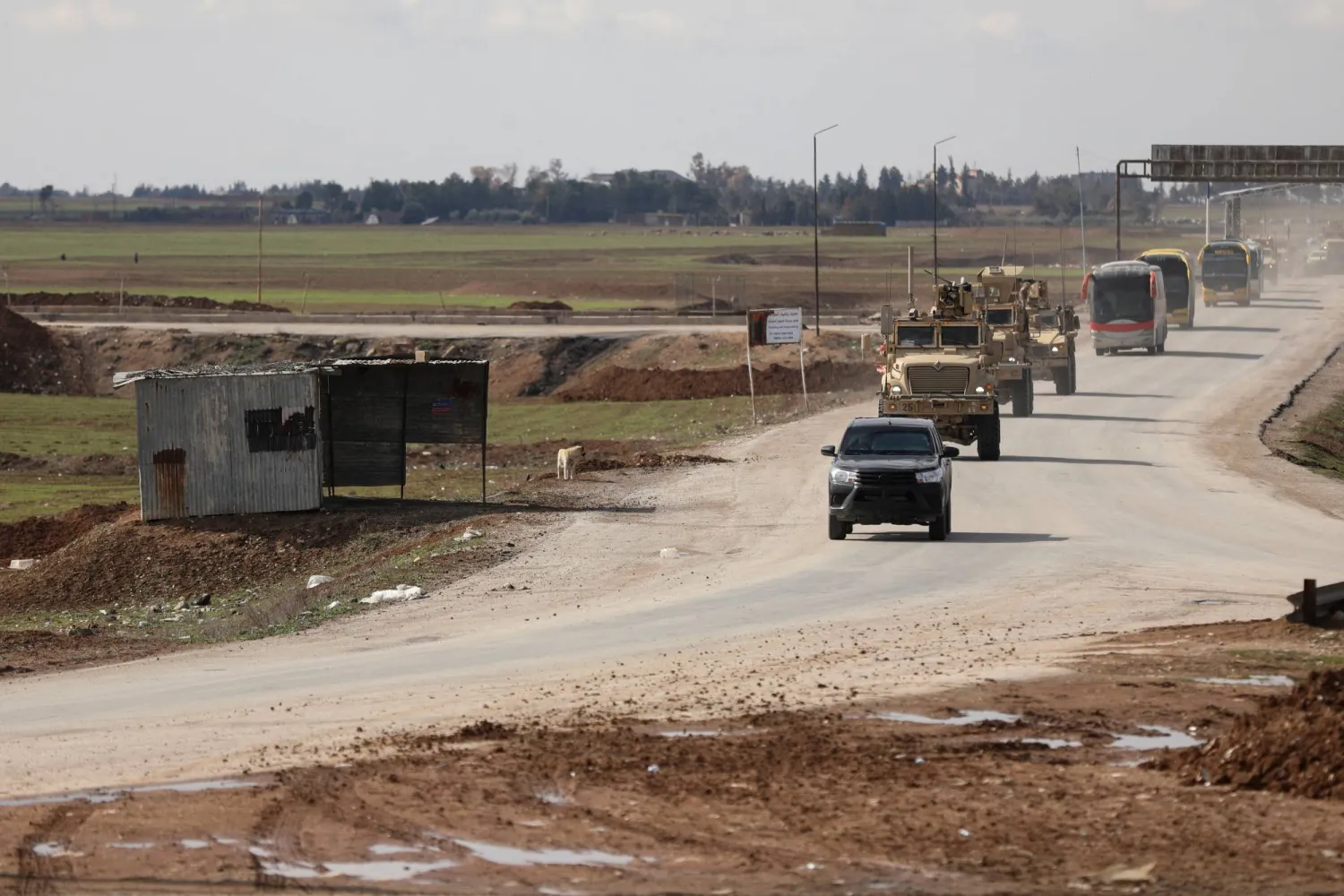
Vehicles transporting ISIS detainees by the US military, according to a security source from the Syrian Democratic Forces, head from Syria towards Iraq, in Qamishli, Syria, February 8, 2026. (Reuters)
TT

Over 4,500 ISIS Detainees Brought to Iraq from Syria, Says Official

Vehicles transporting ISIS detainees by the US military, according to a security source from the Syrian Democratic Forces, head from Syria towards Iraq, in Qamishli, Syria, February 8, 2026. (Reuters)

More than 4,500 suspected extremists have been transferred from Syria to Iraq as part of a US operation to relocate ISIS group detainees, an Iraqi official told AFP on Tuesday.

The detainees are among around 7,000 suspects the US military began transferring last month after Syrian government forces captured Kurdish-held territory where they had been held by Kurdish fighters.

They include Syrians, Iraqis and Europeans, among other nationalities.

Saad Maan, a spokesperson for the Iraqi government's security information unit, told AFP that 4,583 detainees had been brought to Iraq so far.

ISIS swept across swathes of Syria and Iraq in 2014 where it committed massacres. Backed by US-led forces, Iraq proclaimed the defeat of ISIS in 2017, while in neighboring Syria the Kurdish-led Syrian Democratic Forces ultimately beat back the group two years later.

The SDF went on to jail thousands of suspected extremists and detain tens of thousands of their relatives in camps.

In Iraq, where many prisons are packed with ISIS suspects, courts have handed down hundreds of death sentences and life terms to those convicted of terrorism offences, including many foreign fighters.

This month Iraq's judiciary said it had begun investigations into detainees transferred from Syria.


UN Force to Withdraw Most Troops from Lebanon by Mid-2027

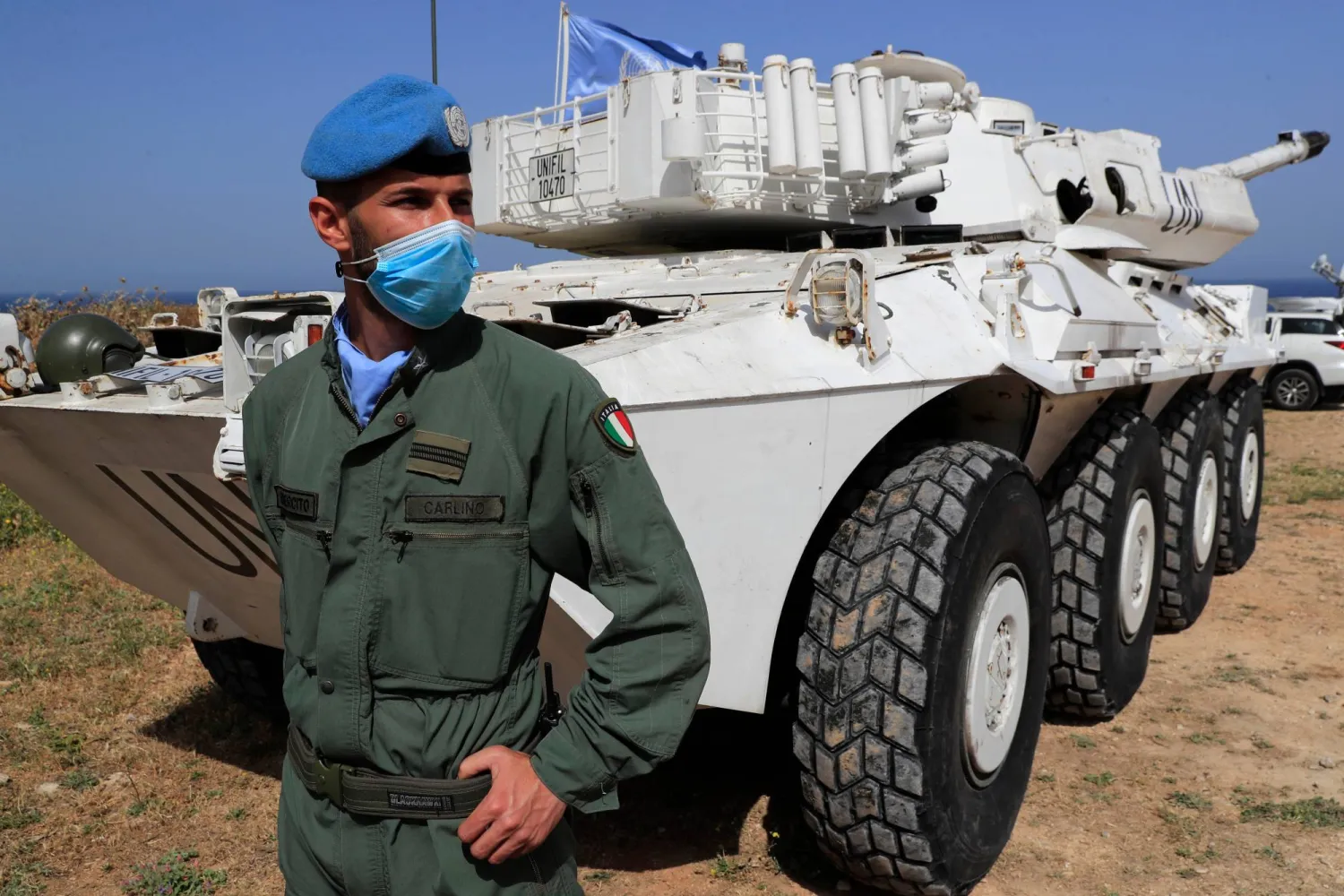
An Italian UN peacekeeper soldier stands guard at a road that links to a United Nations Interim Force In Lebanon (UNIFIL) base, in Naqoura town, Lebanon, on May 4, 2021. (AP)
TT

UN Force to Withdraw Most Troops from Lebanon by Mid-2027

An Italian UN peacekeeper soldier stands guard at a road that links to a United Nations Interim Force In Lebanon (UNIFIL) base, in Naqoura town, Lebanon, on May 4, 2021. (AP)

The United Nations Interim Force in Lebanon plans to withdraw most of its troops by mid 2027, its spokesperson told AFP on Tuesday, after the peacekeepers' mandate expires this year.

UNIFIL has acted as a buffer between Israel and Lebanon for decades and has been assisting the Lebanese army as it dismantles Hezbollah infrastructure near the Israeli border after a recent war between Israel and the Iran-backed group.

Under pressure from the United States and Israel, the UN Security Council voted last year to end the force's mandate on December 31, 2026, with an "orderly and safe drawdown and withdrawal" within one year.

Spokesperson Kandice Ardiel, said that "UNIFIL is planning to draw down and withdraw all, or substantially all, uniformed personnel by mid-year 2027", completing the pullout by year end.

After UNIFIL operations cease on December 31 this year, she said that "we begin the process of sending UNIFIL personnel and equipment home and transferring our UN positions to the Lebanese authorities".

During the withdrawal, the force will only be authorized to perform limited tasks such as protecting UN personnel and bases and overseeing a safe departure.

Despite a November 2024 ceasefire that sought to end more than a year of hostilities with Hezbollah, Israel has kept up regular strikes on Lebanon, mainly saying it is targeting Hezbollah, and has maintained troops in five border areas.

UNIFIL patrols near the border and monitors violations of a UN resolution that ended a 2006 war between Israel and Hezbollah and which forms the basis of the current ceasefire.

It has repeatedly reported Israeli fire at or near its personnel since the truce.

Ardiel said UNIFIL had reduced the number of peacekeepers in south Lebanon by almost 2,000 in recent months, "with a couple hundred more set to leave by May".

The force now counts some 7,500 peacekeepers from 48 countries.

She said the reduction was "a direct result" of a UN-wide financial crisis "and the cost-saving measures all missions have been forced to implement", and unrelated to the end of the force's mandate.

Lebanese authorities want a continued international troop presence in the south after UNIFIL's exit, even if its numbers are limited, and have been urging European countries to stay.

French Foreign Minister Jean-Noel Barrot said in Beirut this month that Lebanon's army should replace the force when the peacekeepers withdraw.

Italy has said it intends to keep a military presence in Lebanon after UNIFIL leaves.