


Qatari Banks, the Weakest in Gulf, with Ninth Benchmark

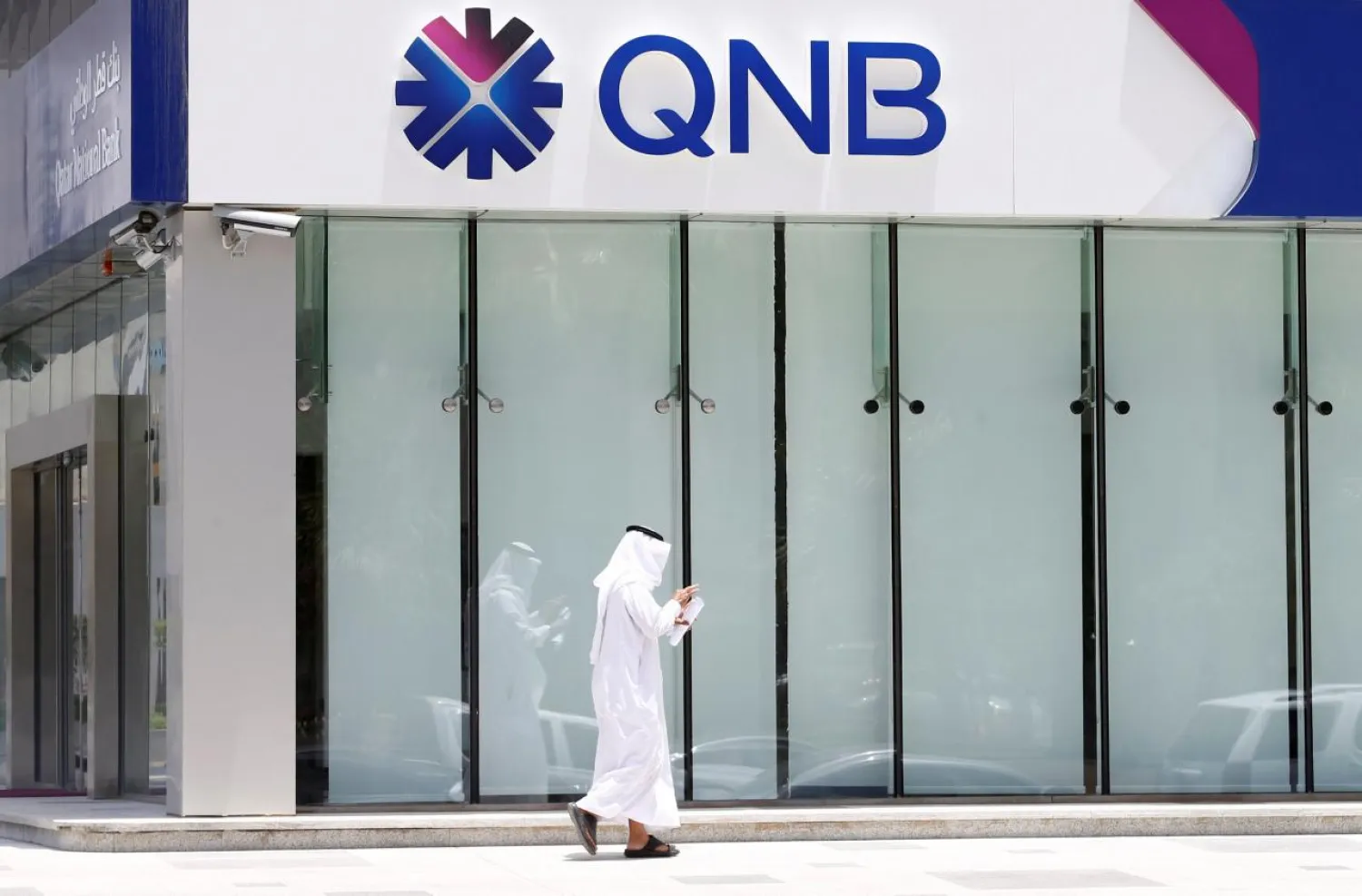
A man walks past a branch of Qatar National Bank (QNB) in Riyadh, Saudi Arabia, June 5, 2017. REUTERS/Faisal Al Nasser
TT

Qatari Banks, the Weakest in Gulf, with Ninth Benchmark

A man walks past a branch of Qatar National Bank (QNB) in Riyadh, Saudi Arabia, June 5, 2017. REUTERS/Faisal Al Nasser

The banks in the Gulf have started to apply the ninth benchmark of the international standards to prepare financial reports on the financial conditions. The report published on Thursday by Standard & Poor's said these banks would be able to handle the overall impact.

More importantly, classification and measurement under IFRS 9 have a slight influence on the overall effect, due to the good quality of their investment, limited trading activities, the use of the financial asset retention model to collect their contractual cash flows or the model for the collection of contractual cash flows and the sale of financial assets to a big limit.

IFRS 9 is a new reporting standard for financial instruments which specifies the requirements for classifying and measuring financial instruments, impairment of financial assets and hedge accounting. This standard was developed in response to criticism of the previous Standard (IAS 39) that led to the banks’ late recognition of credit losses. The ninth criterion aims at correcting this by requiring banks to keep provisions in advance, based on their loss expectations.

IFRS 9 requires banks to classify their financial instruments in one of three categories, based on the credit quality of the instrument. Class 1 comprises active financial instruments and category 2 is a low-performing financial instrument where credit risk has increased significantly since its issuance, “Class 3” Non-performing financial instruments are considered to be impaired.

Gulf banks’ application of IFRS 9 on 1 January 2018 led to an increase of provisions of 1.1 percent of total loans, equivalent to one third of their net operating income before deduction of loan losses. The last measure is used for illustrative purposes only, since the initial effect of IFRS 9 is reflected in equity in banks. These results are in line with previous expectations that the impact of applying IFRS 9 will be limited to the financial conditions of rated banks.

Saudi Arabia

The average provision for Saudi and UAE banks was slightly higher than the initial forecast. In Saudi Arabia, the adoption of a more conservative policy by some banks, with the impact of economic performance on higher average provisions in the banking sector. The challenges faced by contractors and the real estate sector in general are key factors contributing to this. It also shows that some banks have become more conservative in an attempt to avoid the future volatility of net income caused by the initial effect of applying IFRS 9 to equity.

UAE

The decision of some banks in the UAE to settle their loan portfolios and retain provisions for old loans largely explains the existence of such a difference. Real estate prices in the UAE are expected to push asset quality indicators at banks and provision requirements. Furthermore, it is expected that some large loans of government-linked entities will be transferred to Category 2 (if not primarily from this category) in view of refinancing conditions, which may prompt some of these entities to restructure their debt. Government-linked entities are expected to reach $ 13.5 billion due in 2018-2019 and will need refinancing as global liquidity declines and investor appetite declines as a result of rising geopolitical risks.

Kuwait

It appears that Kuwaiti banks are now the least vulnerable to the effects of applying IFRS 9. Kuwaiti banks have not yet finished working with the regulator to develop assumptions about the impact of the implementation of Standard 9 on their loan portfolios. The regulator requires banks to maintain general provisions for operating facilities equivalent to 1 percent of cash facilities and 0.5 percent of non-cash facilities, which will help to mitigate the impact of the application of IFRS 9 on banks’ financial statements. Total additional allocations are estimated at 0.7 percent of total loans, on average.

Classification and measurement

The impact of classification and measurement on investments was limited, according to the agency, and amounted to about 4 percent of the total effect on retained earnings, on average. This was due to the relative strength of the credit quality of the investment portfolios of classified banks and their traditional business models. For some banks, reclassification of certain investments, from held to maturity investments to investments held at fair value through other comprehensive income, has led to a positive revaluation.

Outlook for this year and next year

Due to the relative weakness of the operating environment in some Gulf countries, it is expected that the growth rate of loans in banks will be between 3 and 4 percent only. Thus, most banks will most likely continue to prioritize quality loans at the expense of size and avoid high-risk profitable exposures. This is in particular because IAS 9 requires lifetime allowances for exposures with impaired credit quality or repayment difficulties.

It is also believed that the cost of risk will continue to rise and will then stabilize at a higher level. The cost of risk will remain high for a longer period as a result of debt restructuring, overdue and undervalued loans, which have seen a remarkable rise in some banking systems, and provisions under the Ninth Standard.

This is what prompted some Gulf banks to absorb the impact of applying the new standard in the first year to avoid potential erosion of their profitability in the future. The agency reflected these factors in its credit ratings for Gulf banks. Therefore, do not expect any major changes to the credit ratings of these banks unless unexpected events occur (for example, geopolitical stability is a major shock).

In fact, most future outlooks are stable, noting that most of the negative outlook banks in Qatar alone, according to the credit rating agency, said in its report: “Qatar’s rated banks were the most affected, as we expected in 2017. The average provisions an additional 1.5 percent of total loans. However, this figure hides significant differences between banks, since the minimum increase was 0.5 percent, while the ceiling was 2.8 percent.

She pointed out that the shift in the operating environment after the boycott of many Arab countries to Qatar, and in particular the pressures on the real estate sector and the hospitality sector, continue to contribute to increased allocations with banks. This is because a larger number of exposures have moved, or will move, to Category 2 under Standard IX, which require larger allocations.

“About 56 percent of the Gulf banks we classify as a result of the application of the ninth criterion since 1 January 2018 were below our expectations of printing losses,” the agency said in its report.

It is important to make it clear that print losses in our calculations represent an additional amount of pressure for the expected losses for 12 months (our calibration is based on a 12-year economic cycle, including 3 years of moderate pressure).

The impact of banks’ implementation of IFRS 9 was somewhat close to our estimate of print losses in economies that experienced a significant slowdown in growth, with a negative impact on cash flow and corporate creditworthiness. This is because some exposures have fallen to Tier 2 and therefore, have required lifetime provisions.

The impact on some banks was much higher than our estimate of print losses. This was not surprising, however, because these banks have also shown a significant increase in restructured loans or overdue and undervalued loans that require life-long provisions under IFRS 9.



Abu Dhabi Ports Signs MoU to Develop, Operate Shuaiba Container Terminal in Kuwait

Containers are seen at Abu Dhabi's Khalifa Port, UAE, December 11, 2019. REUTERS/Satish Kumar
TT

Abu Dhabi Ports Signs MoU to Develop, Operate Shuaiba Container Terminal in Kuwait

Containers are seen at Abu Dhabi's Khalifa Port, UAE, December 11, 2019. REUTERS/Satish Kumar

Kuwait Ports Authority (KPA) said on Monday it had signed a memorandum of understanding with Abu Dhabi Ports Group to develop and operate the container terminal at Kuwait’s Shuaiba port under a concession agreement.

Shuaiba port, established in the 1960s, is Kuwait’s oldest port. It covers a total area of 2.2 million square metres (543.63 acres) and has 20 berths, while the container terminal has a storage area of 318,000 sqare metres, according to KPA’s website.

The port, located about 60 km (37.3 miles) south of the capital, handles commercial cargo, heavy equipment, raw materials and chemicals essential to various industries.

The MoU represents “the first preliminary step” toward concluding a concession contract, subject to the completion of required studies, KPA said in a statement without disclosing the value of the deal, Reuters reported.

Under the agreement, Abu Dhabi Ports Group will prepare the technical, environmental and financial studies needed for the project, including infrastructure requirements.


Iran’s Rial Currency Plummets to New Low, Sparking Fears of Higher Food Prices

An Iranian trader counts money in Tehran's Grand Bazaar. (Reuters)
TT

Iran’s Rial Currency Plummets to New Low, Sparking Fears of Higher Food Prices

An Iranian trader counts money in Tehran's Grand Bazaar. (Reuters)

Iran’s rial slid further Monday to a new record low of more than 1.3 million to the US dollar, deepening the currency’s collapse less than two weeks after it first breached the 1.2-million mark amid sanctions pressure and regional tensions.

Currency traders in Tehran quoted the dollar above 1.3 million rials, underscoring the speed of the decline since Dec. 3, when the rial hit what was then a historic low.

The rapid depreciation is compounding inflationary pressures, pushing up prices for food and other daily necessities and further straining household budgets, a trend that could be intensified by a gasoline price change introduced in recent days.

Iran on Saturday added a third gasoline price tier, raising the cost of full bought beyond monthly quotes at 50,000 rials (4 US cents). It is the first major adjustment to fuel pricing since a price hike in 2019 that sparked nationwide protests and a crackdown that reportedly killed over 300 people.

Under the revised system, motorists continue to receive 60 liters a month at the subsidized rate of 15,000 rials per liter and another 100 liters at 30,000 rials, but any additional purchases now cost more than three times the original subsidized price. While gasoline in Iran remains among the cheapest in the world, economists warn the change could feed inflation at a time when the rapidly weakening rial is already pushing up the cost of food and other basic goods.

The fall comes as efforts to revive negotiations between Washington and Tehran over Iran’s nuclear program appear stalled, while uncertainty persists over the risk of renewed conflict following June’s 12-day war involving Iran and Israel. Many Iranians also fear the possibility of a broader confrontation that could draw in the United States, adding to market anxiety.

Iran’s economy has been battered for years by international sanctions, particularly after Donald Trump unilaterally withdrew the United States from Tehran’s nuclear deal with world powers in 2018. At the time the 2015 accord was implemented — which sharply curtailed Iran’s uranium enrichment and stockpiles in exchange for sanctions relief — the rial traded at about 32,000 to the dollar.

After Trump returned to the White House for a second term in January, his administration revived a “maximum pressure” campaign, expanding sanctions that target Iran’s financial sector and energy exports. Washington has again pursued firms involved in trading Iranian crude oil, including discounted sales to buyers in China, according to US statements.

Further pressure followed in late September, when the United Nations reimposed nuclear-related sanctions on Iran through what diplomats described as the “snapback” mechanism. Those measures once again froze Iranian assets abroad, halted arms transactions with Tehran and imposed penalties tied to Iran’s ballistic missile program.

Economists warn that the rial’s accelerating decline risks feeding a vicious cycle of higher prices and reduced purchasing power, particularly for staples such as meat and rice that are central to Iranian diets. For many Iranians, the latest record low reinforces concerns that relief remains distant as diplomacy falters and sanctions tighten.


Industry Minister Inaugurates Made in Saudi Expo 2025

Industry Minister Inaugurates Made in Saudi Expo 2025
TT

Industry Minister Inaugurates Made in Saudi Expo 2025

Industry Minister Inaugurates Made in Saudi Expo 2025

Saudi Minister of Industry and Mineral Resources Bandar Alkhorayef inaugurated the third Made in Saudi Expo 2025 at the Riyadh International Convention and Exhibition Center in Malham, organized by the Saudi Export Development Authority through the Made in Saudi Program, with Syria’s Minister of Economy and Industry Dr. Mohammad Nidal al-Shaar in attendance.

The Syrian Arab Republic has been invited as the Guest of Honor at the exhibition, which has attracted strong participation from public and private sector organizations, as well as leading national manufacturers and industry leaders, SPA reported.

In his opening remarks, Alkhorayef emphasized that the exhibition serves as a key platform for showcasing advancements in Saudi industry, the quality of its products, and their competitiveness in local and international markets. He added that it is also an important venue for establishing strategic partnerships that support the growth of national industries.

He pointed out that the Made in Saudi Program, launched in 2021 under the esteemed patronage of HRH the Crown Prince, reflects the Kingdom's ambition to become a leading industrial power. Achieving this goal involves building consumer trust in its products and services in both domestic and global markets by nurturing local talent and innovation, promoting national products, and strengthening companies’ capabilities to expand internationally.

He also highlighted that Saudi non-oil exports have achieved remarkable success, reaching SAR515 billion in 2024, with historic results in the first half of 2025, demonstrating the highest half-year value of SAR307 billion. These figures underscore the industry’s vital role in diversifying the national economy in line with the objectives of Saudi Vision 2030.

The opening ceremony also welcomed the Syrian Arab Republic as this year’s Guest of Honor, highlighting the participation of more than 25 Syrian companies to present opportunities for industrial cooperation and integration, reflecting the strong fraternal ties between the two nations.

Alongside the exhibition, over 25 workshops are being conducted, while more than 50 memoranda of understanding are set to be signed.