Lebanon: Aoun Signs Controversial Naturalization Decree

 Lebanese President Michel Aoun is seen at the presidential palace in Baabda, Lebanon, November 7, 2017. REUTERS/Mohamed Azakir/File Photo
Lebanese President Michel Aoun is seen at the presidential palace in Baabda, Lebanon, November 7, 2017. REUTERS/Mohamed Azakir/File Photo
TT

Lebanon: Aoun Signs Controversial Naturalization Decree

 Lebanese President Michel Aoun is seen at the presidential palace in Baabda, Lebanon, November 7, 2017. REUTERS/Mohamed Azakir/File Photo
Lebanese President Michel Aoun is seen at the presidential palace in Baabda, Lebanon, November 7, 2017. REUTERS/Mohamed Azakir/File Photo

Lebanese President Michel Aoun signed a decree to naturalize dozens of personalities, including Syrian businessmen, stirring a wave of controversial reactions amid fears of resettlement plans.

A Lebanese minister, who declined to be identified, said the decree included the names of businessmen of Syrian, Syrian-Palestinian, Western and Gulf nationalities, noting that the Lebanese authorities had considered individual and collective requests for businessmen facing problems and obstacles in their work.

Speaking on condition of anonymity, the minister said that the largest batch of names came from the Maronite Foundation in the World, and only 10 Syrians were included in the new decree.

The decree gave citizenship to around 300 people, including Syrians, Palestinians, Iraqis, Jordanians, Yemenis, Tunisians, Egyptians, Saudis, Germans, French, British, Iranians, Chileans, Americans and Indians.

The Central News Agency quoted well-informed sources as saying that those benefiting from the new decree included businessmen whose naturalization might contribute to stimulating the economy through the creation of investments and employment opportunities.

Kataeb parliamentary bloc member, MP Nadim Gemayel, said: “This is the start of a nationalization project at the national level which is categorically rejected,” pointing out that “the naturalization decree is a real threat to the balance between the communities.”

“The president usually takes this step at the end of his term, but when the naturalization scandal is to compensate for election expenses and other expenses, it becomes totally unacceptable,” he stressed.

“We have to know who has been given citizenship, and this subject will not pass unnoticed; we will examine the possibility of appeal before the Shura Council immediately after it is published in the Official Gazette,” Gemayel also said.

MP Neemat Frem expressed his support to the naturalization of expatriates of Lebanese origins, meaning giving citizenship to those who are entitled to it.

“But if what is said about the naturalization of others is true, then it would be a surprise and questions must be raised about the background” of such decision, he added.


Yemen Army Makes New Gains on Battlefronts

A Yemeni soldier in battle in Taiz. (AFP)
TT

Yemen Army Makes New Gains on Battlefronts

A Yemeni soldier in battle in Taiz. (AFP)

The Yemeni arena has witnessed a coordinated military escalation across multiple fronts over the past few hours, stretching from the southwestern governorates of Lahj and Taiz to Marib and Al-Jawf in the north.

The flare-up coincided with a wave of Houthi missile and drone strikes targeting Saudi Arabia, including the capital, Riyadh, alongside the Eastern and Southern Regions, as ongoing Yemeni government military operations point toward a broadening confrontation.

Yemeni military sources said that the air force executed a precision airstrike targeting a meeting of prominent Houthi field commanders in the Al-Maqatirah district of northern Lahj. The strike was launched after intelligence assets tracked the commanders' movements and pinpointed the meeting location.

The final toll of human casualties resulting from the strike, as well as the identities of the commanders present at the targeted site, remain unclear.

The strike took place amidst escalating military operations across the Lahj fronts, particularly in areas intersecting the Al-Maqatirah, Al-Mudharabah, and Tur Al-Baha districts.

Over recent days, these zones have witnessed intense clashes and retaliatory attacks, driven by Houthi attempts to advance toward strategic positions and supply routes linking the Lahj and Taiz governorates.

Government forces had previously announced the recapture of strategic positions on the Al-Mudharabah front following fierce clashes with the Houthis. The fighting involved intensive attacks launched by members of the militia against military sites before government forces managed to repel them and force the attackers to retreat.

On Saturday, the Yemeni army carried out 875 military operations against the Houthis, encompassing artillery strikes, ambushes, and targeted attacks on positions, gatherings, and reinforcements.

The campaign resulted in the neutralization of 130 Houthi members and the destruction or damage of some 50 military vehicles and equipment, including rocket launchers.

The attacks were executed across multiple fronts, focusing on the group's positions, reinforcements, and combat capabilities with the participation of ground units supported by air and artillery assets.

Meanwhile, government forces continued their maneuvers in Al-Jawf and other areas as part of ongoing confrontations to recapture military sites and secure liberated zones.

The escalation extended to the Marib fronts, where government forces announced the downing of a Houthi reconnaissance drone, coinciding with the thwarting of simultaneous ground attacks launched by the group against military positions in the Taiz and Lahj governorates.

Yemeni army artillery targeted Houthi military vehicles and barracks on the northern front of Marib following the downing of a drone on the Mas front. Military sources stated the operations are intended to curb the group's surveillance, reconnaissance, and troop-monitoring capabilities.


Al-Zaidi Intensifies Confrontation with Armed Factions

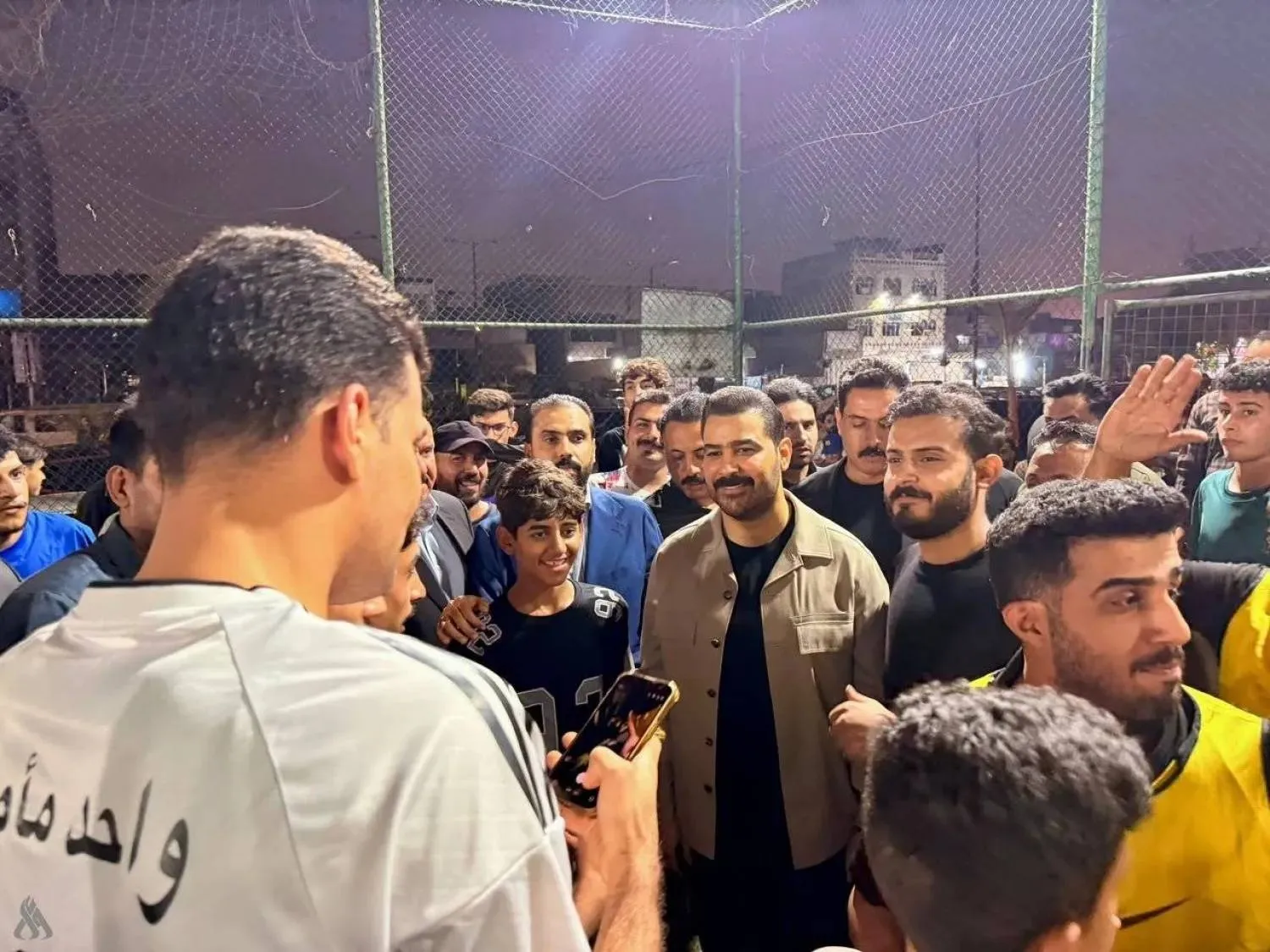
Iraqi PM Ali Al-Zaidi in Sadr City on Saturday. (INA)
TT

Al-Zaidi Intensifies Confrontation with Armed Factions

Iraqi PM Ali Al-Zaidi in Sadr City on Saturday. (INA)

The Iraqi Kataib Hezbollah, one of the armed factions that still refuses to disarm, responded to Prime Minister Ali Al-Zaidi's announcement regarding its possession of investments worth billions of dinars and millions of dollars.

The premier has launched what political observers in Baghdad view as an "open battle" against the armed factions, vowing that he "will not let them remain."

Over recent days, Al-Zaidi canceled multi-million dollar contracts across various locations, ranging from Baghdad Airport and the Ministry of Transport to Mosul Airport. Websites close to the government circulated the names of the armed factions that had control of those contracts.

Al-Zaidi dismissed statements issued against him and his associates, including his own brother, by Kataib Hezbollah, choosing Sadr City in eastern Baghdad to assert his firm stance.

Visiting the popular district late Saturday night, he met directly with citizens at a local restaurant and delivered a clear message to armed factions, signaling the start of an open and uncompromising confrontation.

In his most critical message directed at the factions, he declared: "I will absolutely not let weapon holders remain," adding, "If others allowed them to remain, it was because they were benefiting from them."

Al-Zaidi's response to the armed factions came a day after accusations were leveled against his brother by Kataib Hezbollah, which said in a statement: "We address our remarks directly and explicitly to Hassan Al-Zaidi, the media and security official in the Prime Minister's office. All your allegations regarding investments, companies, and the like - whether accurate or completely fabricated slanders - we consider entirely, along with all their dependencies, a 'gift' to you from the Brigades, to be added to your assets."

On Saturday, Al-Zaidi directed the cancellation of contracts for three companies at Mosul Airport due to their links to armed groups, ordering their referral to international firms.

It has become clear that the initiative to restrict weapons to state control is facing growing setbacks, following announcements by armed factions such as Kataib Hezbollah, Al-Nujaba, and Kataib Sayyid al-Shuhada of their refusal to surrender their arms.

This contrasts with other factions, most notably Asaib Ahl al-Haq and Kataib Imam Ali, which complied and secured ministries, agencies, and embassies in exchange for their stance.

The current truce remains tied to the potential military confrontation between the US and Iran, amid leaks that the Americans delivered a warning to Al-Zaidi regarding potential strikes on those factions should they move against neighboring countries or US bases in the region.

Meanwhile, political forces, particularly certain factions represented by the Coordination Framework, have kicked off efforts to prevent the confrontation between the government and the factions from widening because it has started to impact upon "one of the most critical areas that everyone was keen to avoid over the past years: economic committees and investments," said a well-informed Iraqi politician and lawmaker close to both sides.

Speaking on condition of anonymity to Asharq Al-Awsat, the Iraqi lawmaker and politician noted that "certain forces within the Coordination Framework, during talks between some of its factions and the armed groups, have begun leaning toward the factions' refusal to disarm under Al-Zaidi's vision.”

“This shift follows Al-Zaidi's understandings with the US and President Donald Trump, whom he met twice - first during a visit to Washington last July, and second in New York during the UN General Assembly meetings last September - as it became clear to some Framework leaders that the Al-Zaidi-Trump agreement might not stop at the weapon, but could extend to other factions within the Shiite political structure,” he added.


Train Collision in Egypt’s Giza Province Kills 4 and Injures 88, Health Ministry Says

People stand at the site of a train collision in al-Ayyat in Giza governate southern Cairo on November 8, 2026. (AFP)
TT

Train Collision in Egypt’s Giza Province Kills 4 and Injures 88, Health Ministry Says

People stand at the site of a train collision in al-Ayyat in Giza governate southern Cairo on November 8, 2026. (AFP)

Two passenger trains collided some 76 km (47 miles) south of Cairo on Sunday, killing at least four people and injuring 88, Egypt’s health ministry ‌said.

The state ‌railway authority ‌said ⁠a train traveling ⁠from Giza to Fayoum hit the back of another heading from Cairo to Aswan, derailing ⁠several carriages.

President Abdel ‌Fattah ‌al-Sisi ordered a ‌swift investigation and said ‌anyone found negligent should be held accountable, according to a separate ‌statement.

Emergency crews were clearing the wreckage ⁠to ⁠restore services on the Cairo-Upper Egypt line, the railway authority said, without giving any indication of how long this would take.