


Egyptians Confused by Hike in Fuel Prices

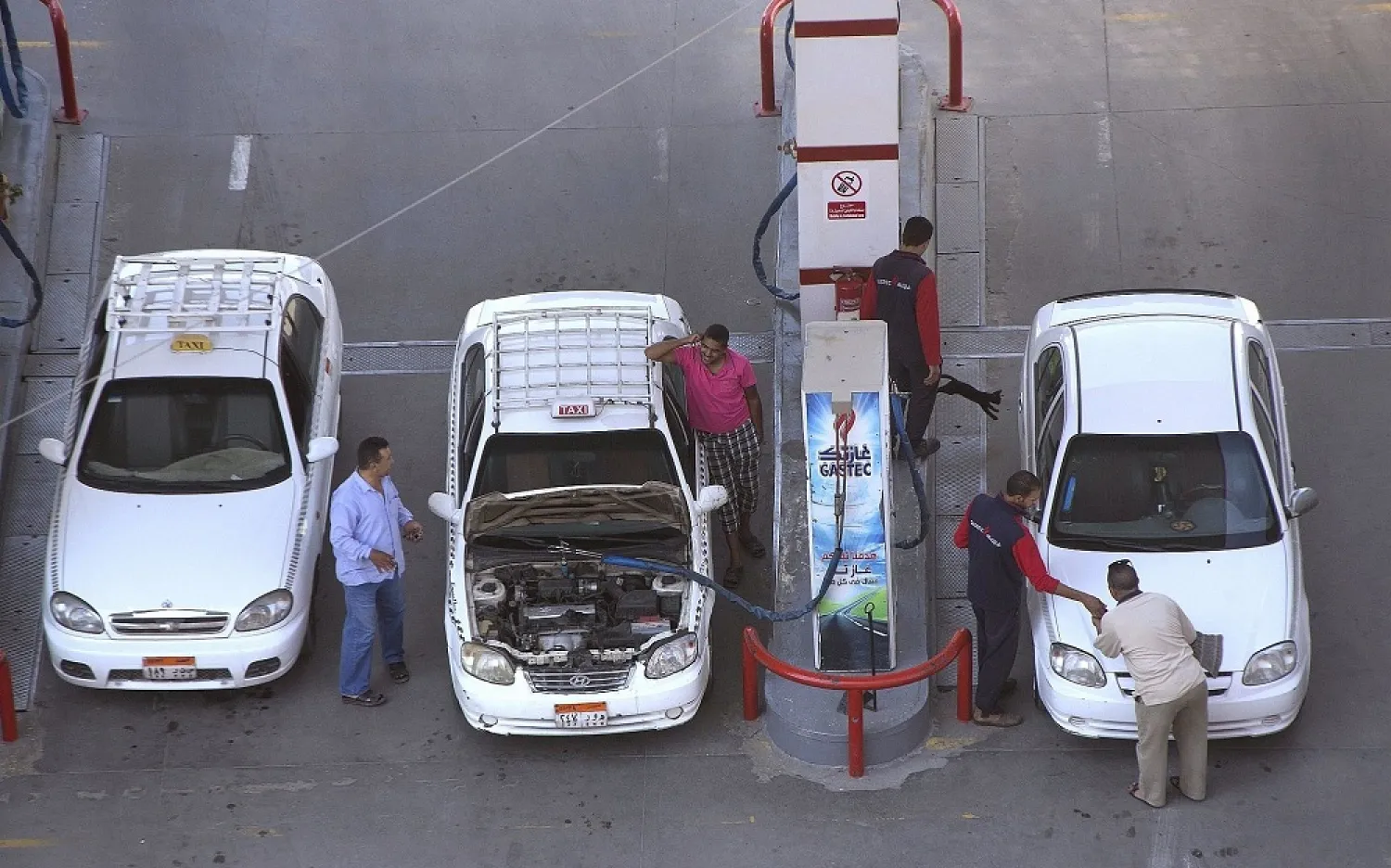
In this June 29, 2017, file photo, taxi drivers chat as they refuel their vehicles at a gas station in Cairo, Egypt. (AP)
TT

Egyptians Confused by Hike in Fuel Prices

In this June 29, 2017, file photo, taxi drivers chat as they refuel their vehicles at a gas station in Cairo, Egypt. (AP)

On the second day of Eid al-Fitr, the holiday that marks the end of the holy month of Ramadan, Egyptians were preoccupied with a 60 percent rise in gasoline prices ordered by the Petroleum Ministry Saturday.

It is the second such hike by the government since Egypt floated its currency in November 2016, under a strict IMF reform plan.

Although the price hike was expected, it nevertheless sparked popular dismay that was expressed on social media and the streets, even reaching parliament.

The Ministry of Petroleum said the government took a series of measures and policies to decrease the negative repercussions caused by the fuel hike and to consider the social impact of such a decision.

The hike came days after an increase in the price of electricity, water and metro fares as part of reforms the government said “were necessary to help bridge the country's general budget deficit as oil prices continued to surge,” topping $80 per barrel.

According to the Petroleum Ministry decision, the price of 95 octane gasoline increased by 17.4 percent to 7.75 Egyptian pounds a liter from 6.60 pounds; 92 octane was raised by 35 percent to 6.75 pounds a liter from 5 pounds and 80 octane went up to 5.50 pounds a liter from 3.65 pounds.

The ministry also raised the price for a canister of household gas to 50 pounds from 30, while a bottle of gas for commercial purposes was raised to 100 pounds from 60, Reuters reported.

Meanwhile, Prime Minister Mustafa Madbouly said a 50.7 percent hike in diesel prices should not affect the bread prices.

He said the Ministry of Supply would bear the extra cost for bakeries to ensure that the price of Egypt’s main staple remains unchanged.



Oil Rises to Near Seven-month Highs on US-Iran Tensions

FILE PHOTO: A view of West Qurna oilfield is seen in Basra, southeast of Baghdad, March 29, 2014. REUTERS/Essam Al-Sudani/File Photo
TT

Oil Rises to Near Seven-month Highs on US-Iran Tensions

FILE PHOTO: A view of West Qurna oilfield is seen in Basra, southeast of Baghdad, March 29, 2014. REUTERS/Essam Al-Sudani/File Photo

Oil prices rose on Tuesday, nearing seven-month highs, with traders assessing risks to supply from any military escalation as another round of US-Iran nuclear talks loomed.

Brent crude futures rose 48 cents, or 0.7%, to $71.97 a barrel by 0658 GMT, while US crude futures climbed 45 cents, or 0.7%, to $66.76 a barrel.

Brent is trading at its highest since July 31, while WTI is at its firmest since August 1.

"At this stage, geopolitics is clearly doing most of ‌the heavy lifting for ‌oil prices, with the current firmness largely driven by ‌anticipation ⁠rather than actual ⁠supply loss," said Phillip Nova senior market analyst Priyanka Sachdeva.

"The risk of possible military escalation in the Middle East is gaining traction, and thus, traders appear to hedge against worst-case scenarios."

Iran and the US will hold a third round of nuclear talks on Thursday in Geneva, Oman's Foreign Minister Badr Albusaidi said on Sunday.

The United States wants Iran to give up its nuclear program, but ⁠Iran has adamantly refused, and denied it is trying to ‌develop an atomic weapon.

The State Department is ‌pulling out non-essential government personnel and their families from the US embassy in ‌Beirut, a senior State Department official said on Monday, amid growing concerns about ‌the risk of a military conflict with Iran.

US President Donald Trump said in a social media post on Monday that it will be a "very bad day" for Iran if it does not make a deal.

"In the near-term, geopolitical factors related to ‌the US-Iran conflict are likely to be the primary driver for oil prices," said OANDA senior market analyst Kelvin ⁠Wong.

"For now, WTI ⁠crude oil is evolving in a short-term bullish dynamic, holding above its 20-day moving average, acting as a key short-term support at $63.90/barrel."

On the trade policy front, Trump on Monday warned countries against backing away from recently negotiated trade deals with the US after the Supreme Court struck down his emergency tariffs, saying that he would hit them with much higher duties under different trade laws.

"US President Donald Trump created uncertainty for global growth and fuel demand with a new round of tariff hikes," UOB Bank analysts said in a client note.

Trump said on Saturday he would raise a temporary tariff to 15% from 10% on US imports from all countries, the maximum level allowed under the law.


FedEx Sues US for Refund on Trump's Emergency Tariffs

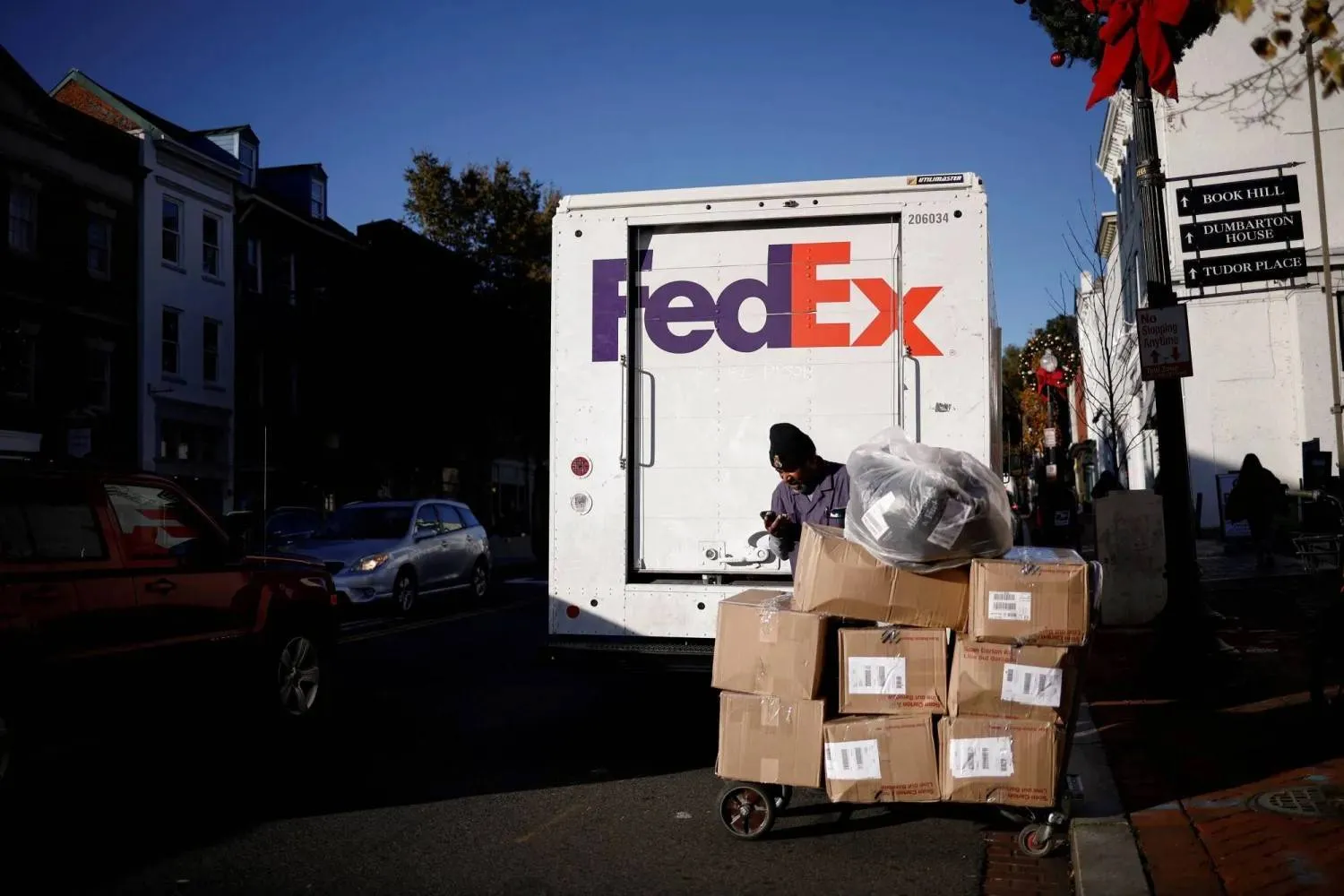
A driver of FedEx stands with packages near a delivery truck during Black Friday preparations in the Georgetown neighborhood of Washington, US, November 26, 2024. REUTERS/Benoit Tessier/File Photo 
TT

FedEx Sues US for Refund on Trump's Emergency Tariffs

A driver of FedEx stands with packages near a delivery truck during Black Friday preparations in the Georgetown neighborhood of Washington, US, November 26, 2024. REUTERS/Benoit Tessier/File Photo 

Global transportation company FedEx on Monday filed a lawsuit in the US Court of International Trade seeking a refund for President Donald Trump's emergency tariffs, one of the highest profile moves to recover funds since the US Supreme Court last week deemed the tariffs illegal.

A flood of lawsuits to recover billions of dollars is expected by trade attorneys after the blockbuster ruling. The recovery process still has to be worked out by a lower court, though, complicating the matter, according to Reuters.

More than $175 billion in US tariff collections are subject to potential refunds after the US Supreme Court on Friday ruled 6-3 that Trump overstepped his authority by using the International Emergency Economic Powers Act, a sanctions law, to impose tariffs on imported goods, Penn-Wharton Budget Model economists said.

“Plaintiffs seek for themselves a full refund from Defendants of all IEEPA duties Plaintiffs have paid to the United States,” FedEx said in the lawsuit, referring to tariffs Trump imposed.

FedEx and its logistics arm served as importer of record on goods subject to IEEPA tariffs. The Memphis-based company did not provide the dollar value of the refund it is seeking.

FedEx in its lawsuit named US Customs and Border Protection, the agency's commissioner Rodney Scott and the United States of America as defendants. CBP and the White House did not immediately respond to requests for comment.

Washington, DC-based Crowell & Moring is representing FedEx in the lawsuit and referred Reuters to the company, which did not immediately comment.


Turkish Central Bank Total Reserves Fell Nearly $6 Bln Last Week, Bankers Say 

People walk with the Suleymaniye Mosque in the background ahead of the holy month of Ramadan in Istanbul, Wednesday, Feb. 18, 2026. (AP)
TT

Turkish Central Bank Total Reserves Fell Nearly $6 Bln Last Week, Bankers Say 

People walk with the Suleymaniye Mosque in the background ahead of the holy month of Ramadan in Istanbul, Wednesday, Feb. 18, 2026. (AP)

The Turkish Central Bank's total reserves are expected to have decreased by around $5.8 billion last week to $206 billion, due to a eurobond redemption, bankers ‌said.

Three bankers ‌consulted by ‌Reuters ⁠calculated that net reserves ⁠decreased by $7 billion to $89 billion in the week ending February 20.

Bankers estimated that ⁠an increase in ‌gold ‌prices in the week ‌to February 20 ‌had an upward impact of around $1 billion on reserves. According to ‌the calculations, the central bank sold $3 ⁠billion ⁠in the market last week.

The reserve calculations are based on preliminary data from the central bank. Official data will be released on Thursday.