

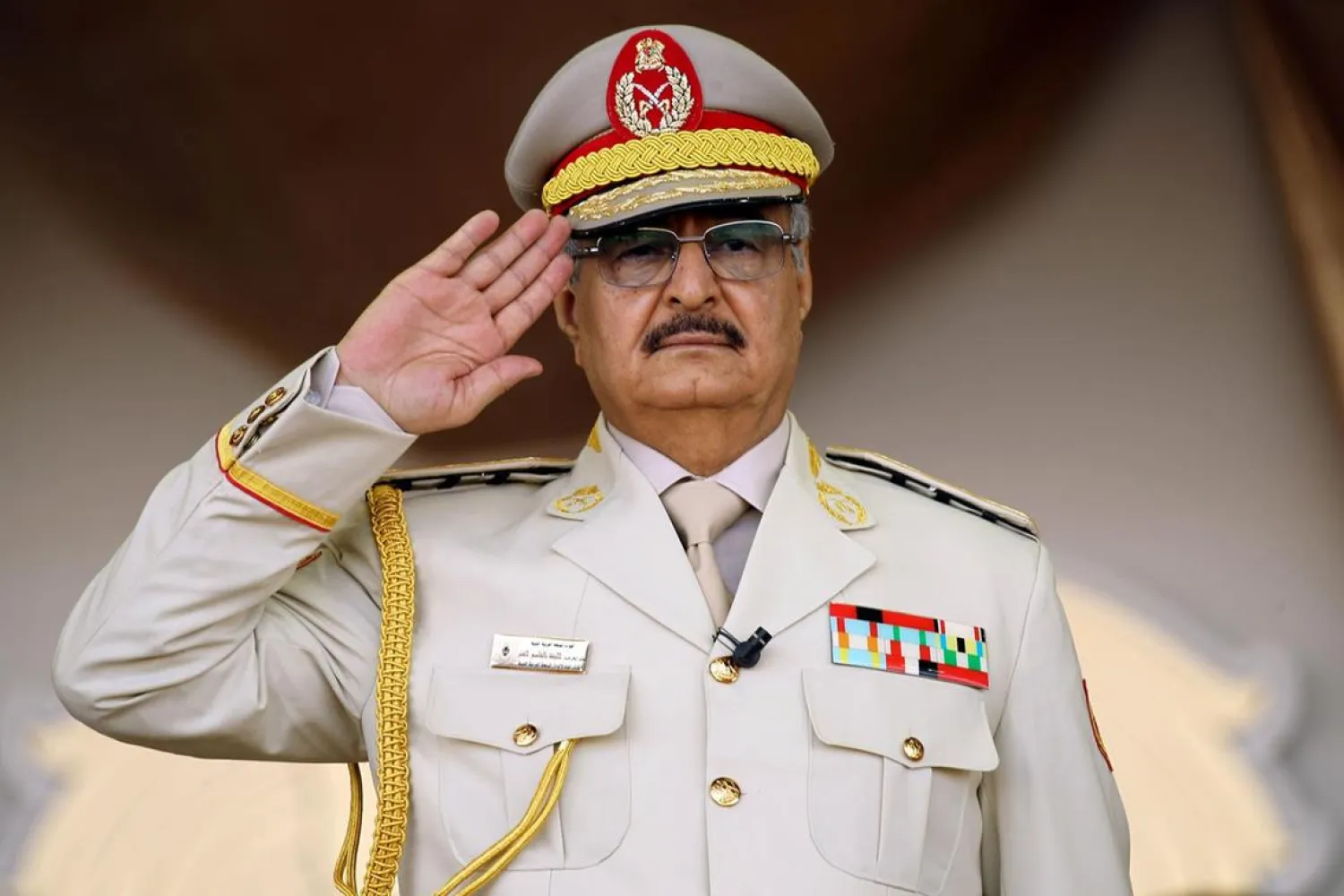

Haftar Announces Liberation of Libya’s Derna

Commander of the Libyan National Army Khalifa Haftar. (AFP)
TT

Haftar Announces Liberation of Libya’s Derna

Commander of the Libyan National Army Khalifa Haftar. (AFP)

Commander of the Libyan National Army Khalifa Haftar declared on Thursday the liberation of the eastern city of Derna from the clutches of extremists.

He said in a televised address to his troops: “Today, the banner of terrorism is lowered by your victories, to be replaced by the banner of peace and tranquility despite the terrorists and those who support them.”

He added that his forces were still pursuing fugitive gunmen in the oil crescent region, which his army seized days earlier.

Haftar also implicitly rejected demands that control of the region be handed over to the Tripoli-based Government of National Accord of Prime Minister Fayez al-Sarraj.

“The LNA made great sacrifices in defending the resources of the people, who refuse to see this wealth become a source of funding for terrorist and mercenary gangs or become a pawn to achieve international interests at the expense of the people,” he added.

Residents of the eastern region are expected to hold popular rallies in support of the LNA’s capture of the oil crescent.

His move has, however, drawn the criticism of the United States, France and United Nations, all of whom demanded that oil facilities be restored to the Tripoli government.

French Ambassador to Libya Brigitte Curmi held talks with Haftar and other officials in the east on the latest developments in the oil region.

A brief statement from Haftar’s office said that the officials discussed the Paris conference and a number of local and international developments.

Paris hosted last month a meeting for the rival Libyan leaders, who agreed to hold presidential and parliamentary elections in December.

US Charge d’Affaires Stephanie Williams condemned the attacks on the oil region, led by militia leader Ibrahim al-Jadhran, while also expressing deep concern over the oil facilities being handed over to the Benghazi-based National Oil Corporation (NOC), which it described as an illegal entity.

Another NOC is based in Tripoli and affiliated to the Sarraj government, which is recognized by the international community.

The US believes that vital Libyan resources must remain under the exclusive control of the legitimate NOC and the supervision of the only government, that of Sarraj, in accordance to UN resolutions, she added.

UN Secretary-General Antonio Guterres echoed Washington’s demand, saying the oil facilities should be handed over to the Sarraj government.

Sarraj, for his part, held talks in the capital with Mustafa Sanalla, chairman of the Tripoli-based NOC.

The PM stressed that the oil wealth belongs to the Libyan people and is their only source of income.

This wealth should be kept away from all forms of conflict and remain under control of his government and NOC, he added.


Lebanon-Israel Truce Committee Talks Widen as Hezbollah Disarmament Deadline Nears

People inspect a damaged building, after Israeli military said on Sunday that it struck a militant from the Lebanese Iran-aligned Hezbollah group, in Beirut's southern suburbs, Lebanon November 23, 2025. REUTERS/Mohamed Azakir
TT

Lebanon-Israel Truce Committee Talks Widen as Hezbollah Disarmament Deadline Nears

People inspect a damaged building, after Israeli military said on Sunday that it struck a militant from the Lebanese Iran-aligned Hezbollah group, in Beirut's southern suburbs, Lebanon November 23, 2025. REUTERS/Mohamed Azakir

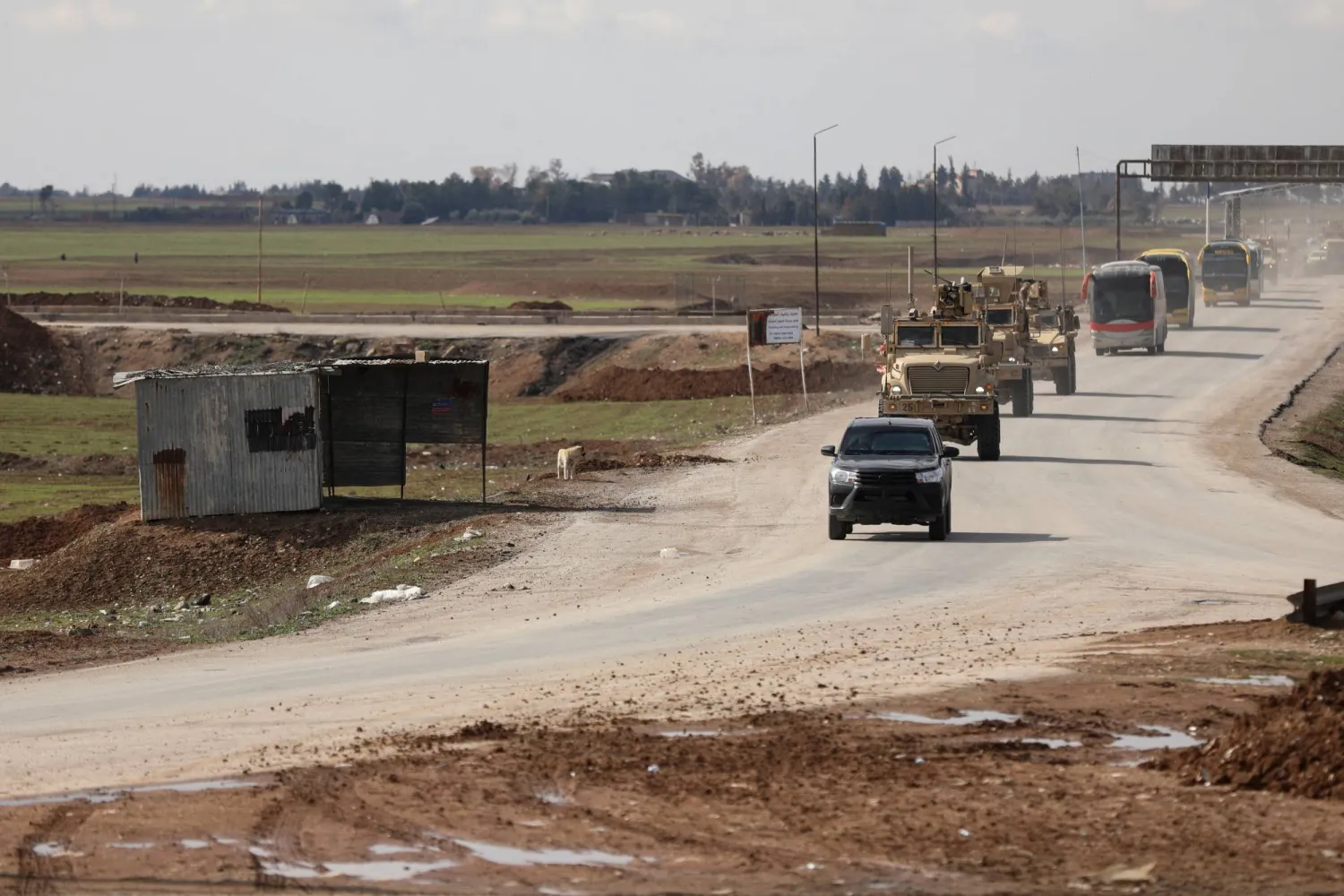
The committee overseeing the Hezbollah-Israel truce in Lebanon focused on Friday on how to return displaced people to their homes, addressing civilian issues to help prevent ​renewed war if a year-end deadline to disarm Hezbollah is not met.

The 15th meeting of the committee reflected a long-standing US push to broaden talks between the sides beyond monitoring the 2024 ceasefire, in line with President Donald Trump's agenda of cementing peace deals across the volatile Middle East, according to Reuters.

Israel has publicly urged Lebanese authorities to fulfil a commitment under the truce to disarm Hezbollah, ‌warning that ‌it would act "as necessary" if Lebanon does not ‌take ⁠steps ​against the ‌Iran-aligned proxy militia.

At Friday's meeting in the south Lebanon coastal town of Naqoura, civilian participants discussed steps to support safe returns of residents uprooted by the 2023-24 war and advance economic reconstruction, the US Embassy in Beirut said.

A source familiar with the discussions told Reuters they also addressed disputes over how to limit weaponry south of the Litani River ⁠and deploying the Lebanese army into Hezbollah's stronghold region.

The Lebanese and Israeli participants agreed ‌that durable political and economic progress was essential ‍to reinforcing security gains and ensuring ‍long-term stability and prosperity, the US Embassy added in a ‍statement.

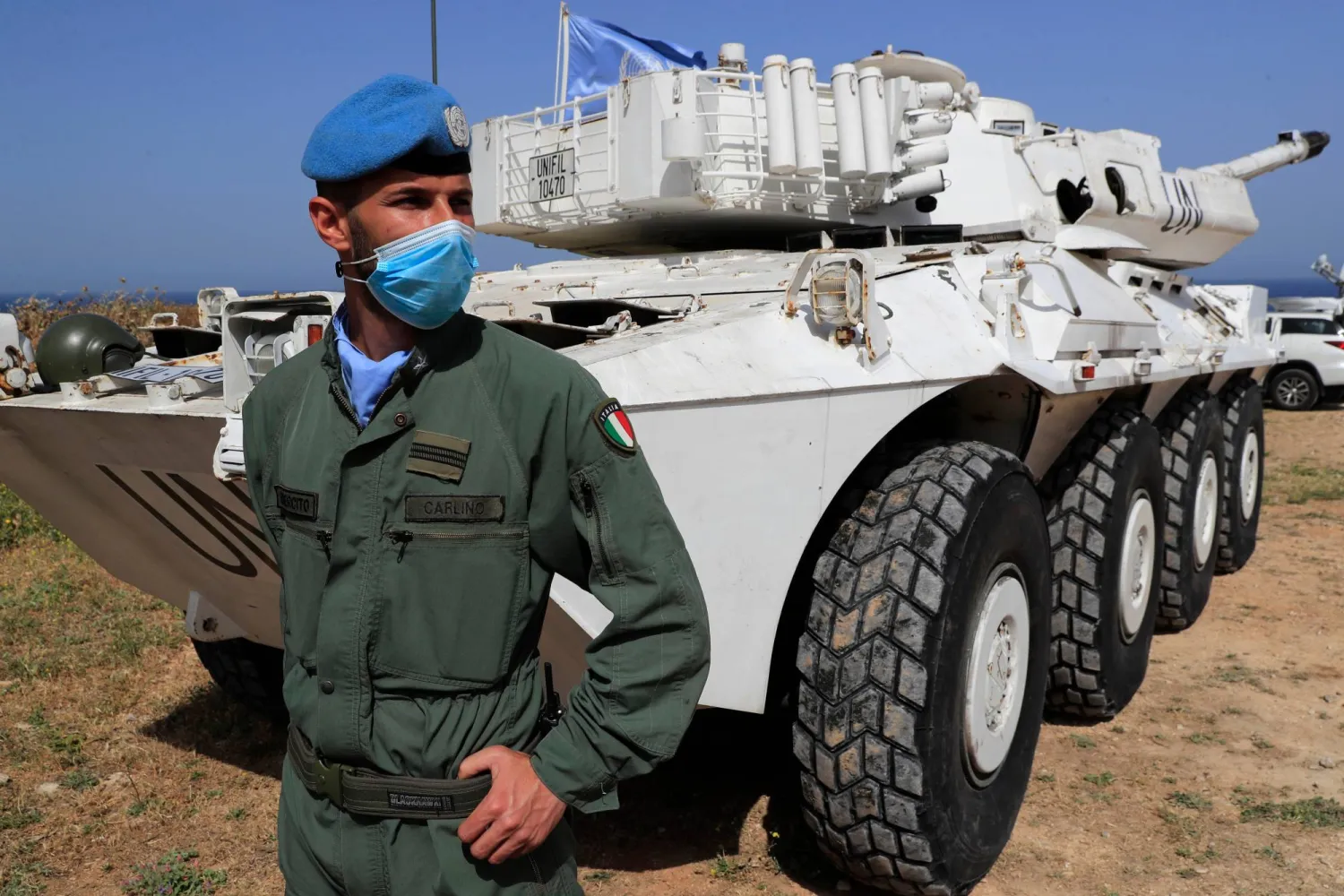
The committee added that a strengthened Lebanese army, which participants described as the guarantor of security south of the Litani River but was for many years outgunned by Hezbollah, was critical to sustaining stability.

Lebanese President Joseph Aoun ​affirmed the priority of returning residents of border villages to their homes, a presidency statement said, adding that the ⁠committee would reconvene on January 7.

Lebanon and Israel have been officially enemy states for more than 70 years. Since the US-brokered truce, the two sides have traded accusations of violations while Israel has continued to carry out strikes that have killed hundreds, saying it is targeting Hezbollah attempts to rebuild military capabilities.

At the committee's December 3 meeting, the first including civilians from both sides, Lebanese Prime Minister Nawaf Salam said he hoped civilian participation would help defuse tensions.

Israeli Prime Minister Benjamin Netanyahu said then the atmosphere at the meeting was good and ‌that the sides agreed to put forth ideas for economic cooperation, but that Hezbollah must be disarmed regardless.


Egypt Says Gas Deal with Israel is 'Strictly Commercial'

Under the deal, Leviathan will sell about 130 bcm of gas to Egypt through 2040 or until all contract values are fulfilled - File Photo
TT

Egypt Says Gas Deal with Israel is 'Strictly Commercial'

Under the deal, Leviathan will sell about 130 bcm of gas to Egypt through 2040 or until all contract values are fulfilled - File Photo

Egypt said that a natural gas deal with Israel was a "strictly commercial" arrangement with no political dimensions, adding it was concluded by private energy companies under market rules without direct government intervention, Reuters reported.

Earlier this week, Israel approved an export deal signed in August with Chevron and its partners, NewMed and Ratio, to supply up to $35 billion of gas to Egypt from the Leviathan natural gas field.

Egypt's position on the Palestinian cause is "firm and unwavering," supporting the legitimate rights of the Palestinian people, rejecting forced displacement, and adhering to a two-state solution, the head of Egypt's State Information Service, Diaa Rashwan, said in a statement.

Israeli Prime Minister Benjamin Netanyahu on Wednesday described the agreement as the largest gas deal in Israel's history, adding it would help bolster regional stability.

Under the deal, Leviathan, which has reserves of around 600 billion cubic metres, will sell about 130 bcm of gas to Egypt through 2040 or until all contract values are fulfilled, NewMed said in a statement.

Egypt's gas production began declining in 2022, forcing it to abandon its ambitions to become a regional supply hub. It has increasingly turned to Israel to make up the shortfall.


Israel Says Man's Capture Sabotaged Secret Hezbollah Naval Unit

Amhaz's ID card at the Maritime Sciences and Technology Institute. (Telegram)
TT

Israel Says Man's Capture Sabotaged Secret Hezbollah Naval Unit

Amhaz's ID card at the Maritime Sciences and Technology Institute. (Telegram)

Israel's military said Friday a man seized last year in Lebanon was a Hezbollah operative who played a key role in planning a covert maritime force for the militant group.

The military said special unit troops apprehended Imad Amhaz in November 2024 from the north Lebanese city of Batroun, and transferred him to Israel, reported AFP.

"During his questioning, Amhaz stated that he held a central role in the 'covert maritime portfolio'," which the military called "one of Hezbollah's most classified and sensitive projects".

It said the portfolio's "core objective is the establishment of organized maritime terrorist infrastructure, under civilian cover, in the maritime domain against Israeli and international targets".

The military added that it had disrupted the portfolio's advancement by dismantling its chain of command and through its questioning of Amhaz.

In November 2024, a Lebanese judicial official told AFP that a preliminary probe found that Israeli commandos used a speedboat equipped with radar-jamming devices to abduct Amhaz.

The official called his capture "a war crime that violated national sovereignty" because it involved the kidnapping of a Lebanese citizen in an area far from the fighting.

Amhaz was studying to become a sea captain at the Maritime Sciences and Technology Institute (MARSATI) in Batroun, Lebanon's primary training college for the shipping industry.

Israel says Amhaz was an "invisible" Hezbollah operative who joined the Lebanese armed group in 2004 and was trained in Iran in 2007.

Hezbollah has not claimed Amhaz as a member of the group.

Despite a November 2024 ceasefire supposed to end more than a year of hostilities between Israel and Hezbollah, Israel has kept up strikes on Lebanon and has also maintained troops in five areas of south Lebanon it deems strategic.

Israel says the strikes target Hezbollah members and infrastructure, and aim to stop the group from rearming.