

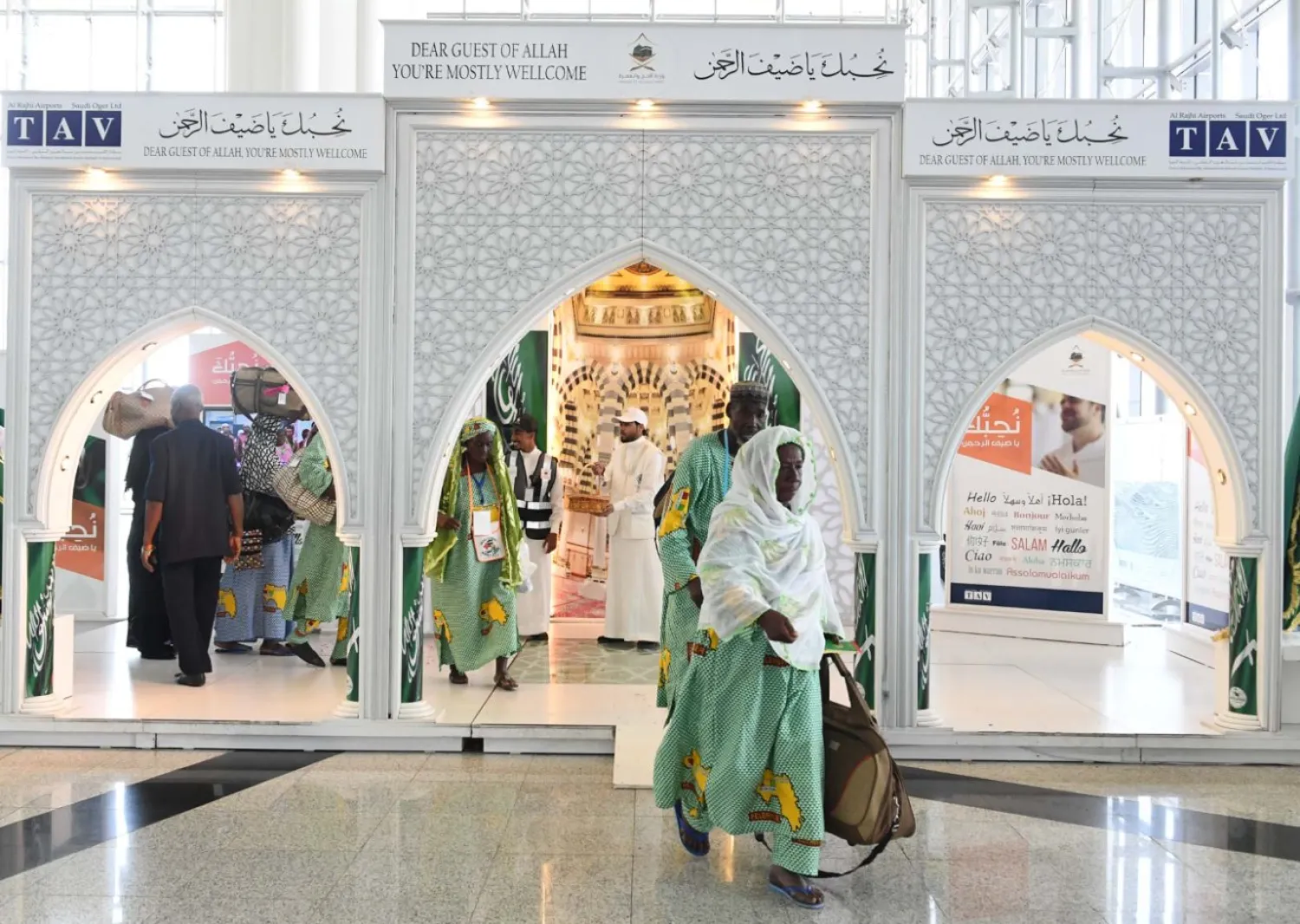

Over 500,000 Hajj Pilgrims from Various Countries, Except Qatar, Arrive in Saudi Arabia

Hajj pilgrims arrive at Madinah airport. (SPA)
TT

Over 500,000 Hajj Pilgrims from Various Countries, Except Qatar, Arrive in Saudi Arabia

Hajj pilgrims arrive at Madinah airport. (SPA)

Governor of the Makkah region and Advisor to Custodian of the Two Holy Mosques, Prince Khalid al-Faisal announced on Wednesday that, so far, some 558,000 pilgrims had arrived in Saudi Arabia to perform the Umrah and annual Hajj.

The pilgrims have come from all over the world, except Qatar, he revealed.

An official from the Ministry of Hajj and Umrah accused authorities in Doha of hindering citizens from performing the Hajj.

Prince Khalid, who is also Chairman of the Hajj's Central Committee, said that the largest number of pilgrims have arrived from Indonesia with 103,000. It is followed by India with 93,000 pilgrims, Pakistan with 82,000, Turkey with some 42,000 and Iraq with around 12,000.

He also condemned campaigns against Saudi Arabia that are aimed tarnishing its image. The best way the Kingdom has responded to these claims is with the good services it has offered the pilgrims.

He made his remarks during the launch of the 11th edition of the “Hajj is Worship and Civilized Behavior” campaign in Jeddah.

On the success of this campaign throughout the past ten years, he stressed: “Our ambition this year is to outdo ourselves.”

He hailed in this regard the participation of the private sector and its role in ensuring the success of the Hajj.

In addition, he commended Custodian of the Two Holy Mosques King Salman bin Abdulaziz for approving the establishment of the Royal Commission for Makkah city and Holy Sites, which is chaired by Crown Prince Mohammed bin Salman, Deputy Prime Minister and Minister of Defense.

This commission reflects the leadership’s keenness on developing these sites and providing the best services to the worshipers, stated Prince Khalid.

On Qatar, Deputy Minister of Hajj and Umrah Dr. Abdul Fattah Mshat said that Doha blocked a new website that the ministry had set up for Qatari pilgrims.

This is the second time that Qatar blocks the website, he stated, while not ruling out the possibility of setting up a new one in the future.

He hoped that Doha would allow the people, who have already registered, to perform the Hajj.

Saudi Arabia had on July 20 set up the new website, which was dedicated to receiving Hajj applications from Qatari pilgrims.

Doha blocked the first website in an attempt to thwart its citizens from performing the Hajj in order to politicize the annual rituals.

Separately, Iranian pilgrims hailed upon their arrival in Madinah on Tuesday the Saudi government for its significant efforts to serve them during the annual Hajj season, reported the Saudi Press Agency (SPA).

They told SPA that all services and facilities have been provided to them without discrimination.

They made their remarks to the agency upon their arrival at the Prince Mohammed bin Abdulaziz International airport in Madinah.

They expressed their happiness at the facilities that have been provided by the Kingdom to all pilgrims, regardless of their nationality, praising the massive efforts that have been exerted to make their pilgrimage a smooth process.

One Iranian pilgrim, Hassan Turabi, highlighted the smooth passport clearance operation, noting that all pilgrims were presented with water, flowers and gifts upon their arrival in the Kingdom.



SDRPY Hosts Yemen Partners Group with UN and International Participation

Officials are seen at the SDRPY-hosted meeting in Riyadh. (SPA)
TT

SDRPY Hosts Yemen Partners Group with UN and International Participation

Officials are seen at the SDRPY-hosted meeting in Riyadh. (SPA)

The Saudi Program for the Development and Reconstruction of Yemen (SDRPY) hosted in Riyadh on Wednesday a meeting of the Yemen Partners Group (YPG), co-chaired by the Yemeni government, United Kingdom, and World Bank, with the participation of the United Nations and international organizations.

Yemeni Prime Minister and Minister of Foreign Affairs and Expatriates Dr. Shaya Mohsin Zindani; UN Secretary-General’s Special Envoy for Yemen Hans Grundberg; UN Resident Coordinator and Humanitarian Coordinator in Yemen Julien Harneis and Saudi Ambassador to Yemen and SDRPY Supervisor General Mohammed bin Saeed Al Jaber, as well as a number of ambassadors, representatives of international organizations, and donor entities attended the meeting.

Zindani expressed confidence in the new government and its clearly defined priorities that it will work to implement, which will help achieve stability and economic recovery.

He stressed the government’s aim to maximize benefit from the vital projects and initiatives provided by Saudi Arabia through the SDRPY, which offers important support for basic sectors and for boosting development efforts across Yemen.

Zindani expressed his appreciation to Saudi Arabia for its continued support to Yemen, commending the level of cooperation with the SDRPY and its efforts in supporting and empowering national institutions.

For his part, Grundberg emphasized the importance of the development projects provided by the Kingdom, particularly at this stage, noting positive indicators in Yemen, especially improvements in energy-sector stability.

Governor of the Central Bank Ahmed Ghaleb reviewed the bank’s priorities, stressing its commitment to transparency, the need to combat inflation, and the importance of international coordination and support to address challenges.

Al Jaber underscored the importance of continuing joint efforts to overcome obstacles facing peace and development in Yemen under the leadership of the Yemeni government.

The meeting is an important opportunity to learn about the priorities of the government and Central Bank, strengthening coordination to ensure that development and financial support is directed efficiently and effectively, and to assist donor entities and international organizations in aligning their interventions with the government’s priorities, he added.

The meeting reviewed a package of Saudi development projects worth SAR1.9 billion provided to Yemen in January, which helped boost energy-sector stability through the fuel derivatives grant, ensuring the continued operation of hospitals and vital service facilities.

It reviewed other development projects and initiatives scheduled for delivery during the coming period.


Saudi Foreign Minister Receives Letter on Bilateral Ties from Russian Counterpart

Vice Minister of Foreign Affairs Waleed Elkhereiji and Russian Ambassador to the Kingdom Sergey Kozlov meet in Riyadh on Wednesday. (SPA)
TT

Saudi Foreign Minister Receives Letter on Bilateral Ties from Russian Counterpart

Vice Minister of Foreign Affairs Waleed Elkhereiji and Russian Ambassador to the Kingdom Sergey Kozlov meet in Riyadh on Wednesday. (SPA)

Saudi Minister of Foreign Affairs Prince Faisal bin Farhan bin Abdullah received on Wednesday a letter from Russian Foreign Minister Sergei Lavrov on bilateral relations and ways to support and boost them across various fields.

The message was received on behalf of the Foreign Minister by Vice Minister of Foreign Affairs Waleed Elkhereiji during a meeting in Riyadh with Russian Ambassador to the Kingdom Sergey Kozlov.

They reviewed bilateral relations and discussed issues of mutual interest.


NAUDI Chairman to Asharq Al-Awsat: Ukraine Aims to Resume, Expand Defense Cooperation with Saudi Arabia

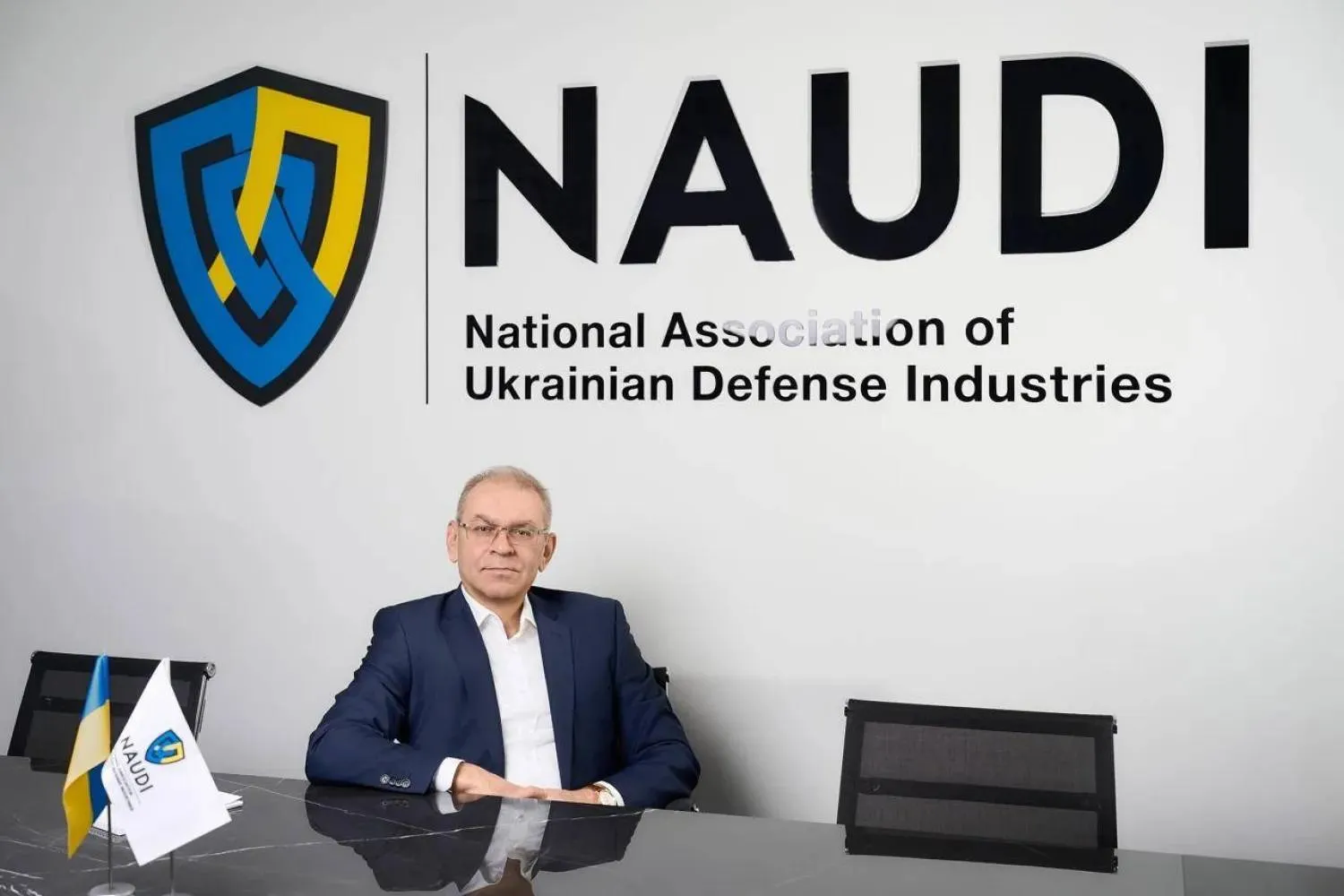
Chairman of the National Association of Ukrainian Defense Industries (NAUDI) Serhii Pashynskyi. (Asharq Al-Awsat)
TT

NAUDI Chairman to Asharq Al-Awsat: Ukraine Aims to Resume, Expand Defense Cooperation with Saudi Arabia

Chairman of the National Association of Ukrainian Defense Industries (NAUDI) Serhii Pashynskyi. (Asharq Al-Awsat)

Chairman of the National Association of Ukrainian Defense Industries (NAUDI) Serhii Pashynskyi revealed that Kyiv was counting on Saudi Arabia to achieve peace and stability in Ukraine given its role as a “significant and authoritative regional leader”.

In an interview to Asharq Al-Awsat, he said: “We aim in the near future to define concrete plans for the renewal and further expansion of Ukrainian-Saudi defense cooperation.”

He made his remarks as NAUDI took part in the World Defense Show 2026 in Riyadh.

“We are open to considering opportunities for establishing joint ventures, developing specific technologies, and localizing production on the territory of Saudi Arabia. We are ready to deepen cooperation that has been actively developing since 2014,” Pashynskyi said.

“Our participation in World Defense Show 2026 has a clear objective: to demonstrate the technological capability of Ukraine’s defense sector, which has undergone real testing in wartime conditions. At the joint NAUDI stand, we present our latest developments with confirmed combat experience, share practical insights into their operational use, and discuss tactics of employment,” he explained.

“Today, member companies of the Association already maintain dozens of international contracts in the format of industrial cooperation, and the geography of our partnerships continues to expand. This is precisely the message we seek to convey to our international and regional partners,” he stated.

Saudi-Ukrainian military cooperation

Commenting on military cooperation between Saudi Arabia and Ukraine, he said: “Prior to the full-scale invasion, there was active and effective cooperation between Ukraine’s defense-industrial complex and the Kingdom’s defense institutions and companies.”

“We are interested in restoring these contacts. In line with the position of Ukrainian President Volodymyr Zelenskyy, regarding controlled exports, we aim in the near future to define concrete plans for the renewal and further expansion of Ukrainian-Saudi defense cooperation,” he went on to say.

Moreover, Pashynskyi revealed that an official intergovernmental agreement between the Ukrainian and Saudi governments on cooperation in the field of defense was signed in Kyiv on February 5, 2020, and duly approved by the respective governments.

“The agreement establishes a comprehensive legal framework for bilateral defense interaction. It covers cooperation between the defense industries of both countries, military education and personnel training, exchange of information in the field of defense technologies, transfer of specific military technologies and equipment, including electronic, radar, and telecommunications systems, as well as issues related to defense medical support,” he explained.

“Ukraine highly values the principled and consistent position of Saudi Arabia, which is based on unwavering respect for the provisions of the UN Charter and the fundamental principles of international law, particularly with regard to ensuring territorial integrity and protecting state sovereignty,” he added.

“An important moral and humanitarian component of Ukrainian-Saudi relations is the Kingdom’s sincere solidarity with the Ukrainian people, which is reflected in the humanitarian assistance provided, particularly to support internally displaced persons,” he told Asharq Al-Awsat.

Ukrainian products at the World Defense Show

Elaborating on the Ukrainian products displayed at the World Defense Show, Pashynskyi said: “NAUDI member companies produce a full spectrum of defense products, from 7-inch FPV drones to the Bohdana self-propelled artillery system, which is physically displayed at the exhibition.”

“Ukraine has become a global pioneer in the mass combat use of FPV drones, as well as in the development and deployment of maritime unmanned platforms. We possess unique and extremely valuable experience in operating these systems under real combat conditions,” he stressed. “The private sector accounts for more than 70% of Ukraine’s total defense-industrial production.”

Among the key exhibits are the Bohdana self-propelled howitzer, manufactured in significant quantities by the company Ukrainian Armor and actively employed in combat operations; the Varta armored vehicle; the Protector unmanned ground system; the MAC maritime drone; reconnaissance UAVs Shark, PD-2, mini Shark, and Furia; the Krechet air defense command-and-control system; heavy drones Kazhan and Shmavik; UAV munitions produced by UBM; FPV drones manufactured by General Cherry; and electronic warfare systems developed by Piranya Tech.

Preserving lives

Pashynskyi revealed that more than 50% of the needs of Ukraine’s Defense Forces are currently met by the domestic defense-industrial complex, from FPV drones to cruise missiles, 155-mm artillery systems, ammunition, electronic warfare (EW) and electronic intelligence (ELINT) systems.

“According to last year’s results, NAUDI member companies supplied the Defense Forces with products worth approximately EUR 4 billion,” he said. “Since 2022, the industry has undergone large-scale relocation and deployment of new production facilities. Today, Ukraine is without exaggeration one of the world’s leaders in the pace of weapons and ammunition production.”

“Our primary priority is preserving the lives of service members. That is why special emphasis is placed on unmanned systems that enhance soldier effectiveness without replacing the soldier,” he continued.

“A key advantage is the direct connection with frontline units. This allows manufacturers to receive real-time feedback and rapidly modernize their solutions. While R&D processes in other countries may take years, for Ukrainian companies the path from concept to serial production often takes just 3 to 6 months.”

“Some companies have increased FPV drone production from several thousand units in 2023 to over 500,000 units in 2025 and these are not isolated cases,” Pashynskyi revealed.