


Iranian Economy Faces ‘Very Tough’ Future

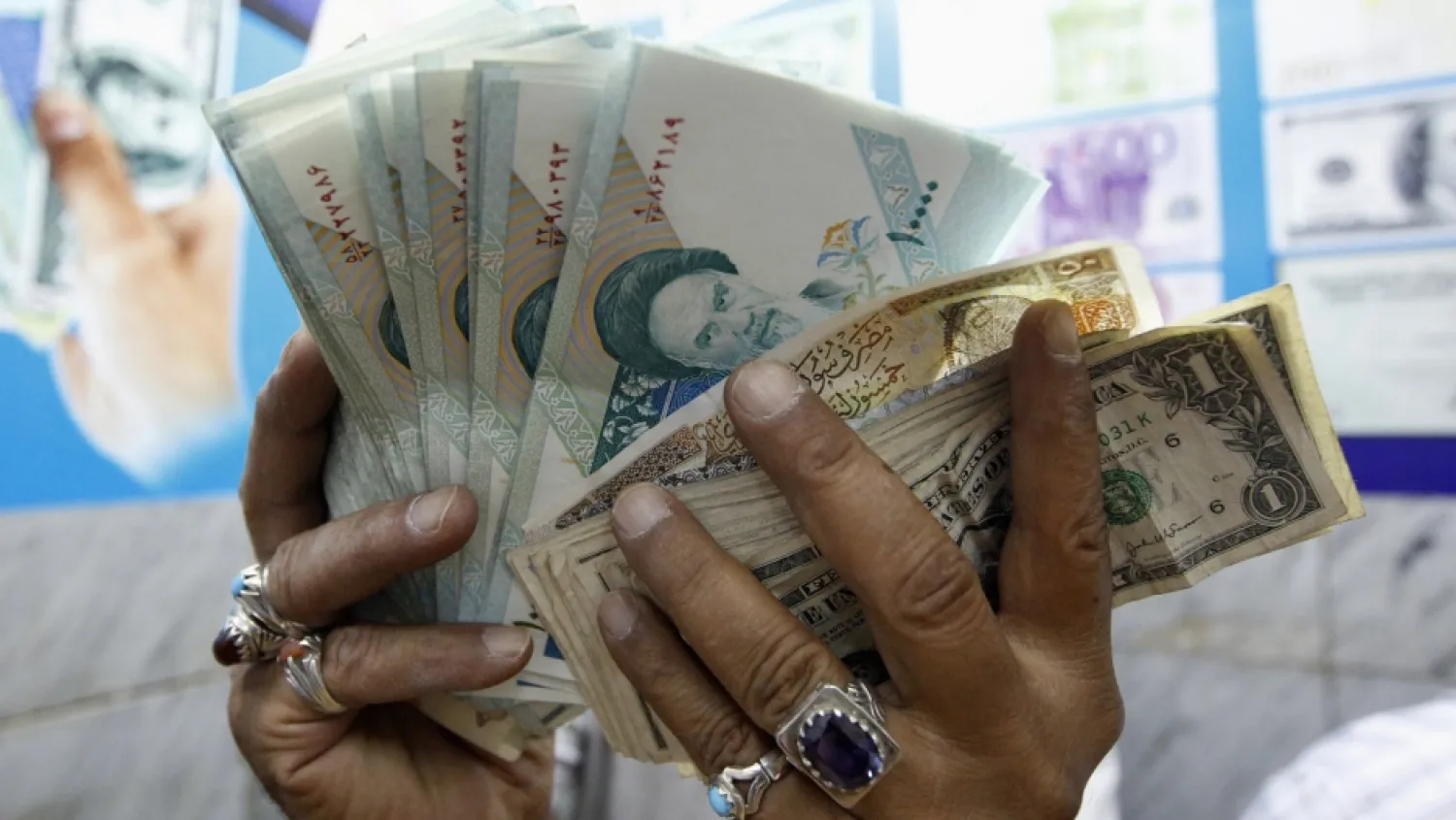
A vendor inspects Iranian rials at a currency exchange shop in Baghdad, October 4, 2012. REUTERS
TT

Iranian Economy Faces ‘Very Tough’ Future

A vendor inspects Iranian rials at a currency exchange shop in Baghdad, October 4, 2012. REUTERS

A recent study has tackled two scenarios of the Iranian economy in light of the current updates. The study was prepared by an economist researcher in Rasanah (International Institute for Iranian Studies) on the Iranian economy, the nuclear deal, performance assessment, future scenarios and the regime options.

First Scenario

In this case, those forecasting the most optimistic scenario for the future of the Iranian economy cannot deny the difficult economic situation in the future, not to mention the difficulty of the current situation, after the US had exited the nuclear agreement, leaving the Iranian economy with grave consequences.

Also, the study sees Iran heading for a stage in which the economic performance will see a severe weakness in terms of the overall economic indication, decline in financial performance, and rise in the day-to-day cost of living. This speculation emerged based on a host of indications, including the drop in crude oil exports.

A report by the British oil industry giant British Petroleum (BP) suggested that the Iranian crude oil exports may fall between 300,000 barrels and one million barrels per day in the future (decreased by 143,000 barrels per day in the first half of June 2018)

The study added that the past period witnessed capital flight and the inability of domestic investment to push growth up. US President Donald Trump’s hard-line tackling of the Iranian file led to the flight of a huge amount of capital outside Iran, amounting to about $ 13 billion in March 2017 / March 2018, according to the Research Center of the Iranian Parliament.

Second Scenario

The second scenario is characterized by sustained recession and stagflation, hyperinflation, civil unrest, high levels of poverty and disruption of financial markets; i.e. a macroeconomic collapse.

Richard Nephew, a senior research scholar at the Center on Global Energy Policy at Columbia University, sees the idea of Iran going to the brink of economic collapse is “exaggerated”. He argues that this speculation stems from the belief that such a collapse would lead to a revolution which will lead to forging positive ties with the outside world after the economic drop that will lead to a revolution that ousts the regime from within.

The study concludes that the concept of economic collapse, from a purely academic perspective, does not apply to the Iranian case at the time being.

Yet, the Iranian economy is not expected to achieve financial or monetary stability, especially with increased spending on conflicts beyond borders (128% increase in spending over the past four years). At the same time, financial resources are eroding after the US sanctions.

Rasanah researcher pointed out that the general government deficit has been increasing since 2014 with $7.6 billion in 2016 to $9.6 billion in 2017. The deficit is expected to worsen, as the actual income is lower than expected due to difficulties in collecting oil revenue payments and spending beyond budget.




Defying Trump, EU Hits X with $140 Million

(FILES) This illustration photograph shows the logo of social network X (formerly Twitter) and a photograph of CEO of social network X, Elon Musk displayed on a smartphone in Brussels on September 27, 2024. (Photo by Nicolas TUCAT / AFP)
TT

Defying Trump, EU Hits X with $140 Million

(FILES) This illustration photograph shows the logo of social network X (formerly Twitter) and a photograph of CEO of social network X, Elon Musk displayed on a smartphone in Brussels on September 27, 2024. (Photo by Nicolas TUCAT / AFP)

Elon Musk's social media company X was fined 120 million euros ($140 million) by EU tech regulators on Friday for breaching online content rules, the first sanction under landmark legislation that once again drew criticism from the US government.

X's rival TikTok staved off a penalty with concessions, according to Reuters.

Europe's crackdown on Big Tech to ensure smaller rivals can compete and consumers have more choice has been criticized by the administration of US President Donald Trump, which says it singles out American companies and censors Americans.

The European Commission, the EU's executive, said its laws do not target any nationality and that it is merely defending its digital and democratic standards, which usually serve as the benchmark for the rest of the world.

The EU sanction against X followed a two-year-long investigation under the bloc's Digital Services Act (DSA), which requires online platforms to do more to tackle illegal and harmful content.

The EU's investigation of ByteDance's social media app TikTok led to charges in May that the company had breached a DSA requirement to publish an advertisement repository allowing researchers and users to detect scam advertisements.

The European Commission's tech chief Henna Virkkunen said X's modest fine was proportionate and calculated based on the nature of the infringements, their gravity in terms of affected EU users and their duration.

“We are not here to impose the highest fines. We are here to make sure that our digital legislation is enforced and if you comply with our rules, you don't get the fine. And it's as simple as that,” she told reporters.

“I think it's very important to underline that DSA is having nothing to do with censorship,” Virkkunen said.

She said forthcoming decisions on companies which have been charged with DSA violations are expected to take a shorter time than the two years for the X case.

“I'm really expecting that we will do the final decisions now faster,” she said.

Ahead of the EU decision, US Vice President JD Vance said on X: “Rumors swirling that the EU commission will fine X hundreds of millions of dollars for not engaging in censorship. The EU should be supporting free speech not attacking American companies over garbage.”

TikTok, which pledged changes to its ad library to be more transparent, urged regulators to apply the law equally and consistently across all platforms.

EU regulators said X's DSA violations included the deceptive design of its blue checkmark for verified accounts, the lack of transparency of its advertising repository and its failure to provide researchers access to public data.

The Commission said the investigation into the dissemination of illegal content on X and measures taken to combat information manipulation and a separate probe into TikTok's design, algorithmic systems and obligation to protect children continue.

DSA fines can be as high as 6% of a company's annual global revenue.


Survey: Swiss Companies Plan Investment Abroad to Offset US Tariffs

FILE PHOTO: Reinsurer Swiss Re's headquarters are seen on the banks of Lake Zurich in Zurich, Switzerland February 21, 2019.  REUTERS/Arnd WIegmann/File Photo
FILE PHOTO: Reinsurer Swiss Re's headquarters are seen on the banks of Lake Zurich in Zurich, Switzerland February 21, 2019. REUTERS/Arnd WIegmann/File Photo
TT

Survey: Swiss Companies Plan Investment Abroad to Offset US Tariffs

FILE PHOTO: Reinsurer Swiss Re's headquarters are seen on the banks of Lake Zurich in Zurich, Switzerland February 21, 2019.  REUTERS/Arnd WIegmann/File Photo
FILE PHOTO: Reinsurer Swiss Re's headquarters are seen on the banks of Lake Zurich in Zurich, Switzerland February 21, 2019. REUTERS/Arnd WIegmann/File Photo

Swiss companies plan to relocate some of their operations and production abroad to deal with the impact of US tariffs, according to a study by business association economiesuisse.

It surveyed more than 400 companies before and after Switzerland last month agreed a deal to reduce US tariffs from 39% to 15%, with a quarter of the firms already having identified concrete steps they were taking, Reuters reported.

Nearly a third of those firms have decided to increase investments outside Switzerland and shift production and operations abroad, the survey said.

Some 16% of companies said they were going to relocate operations to countries outside the European Union or the United States, in addition to 10% going to the US, and another 5% looking at the European Union.

Other options included looking more at other markets, raising prices and even halting exports to the US.

Rudolf Minsch, economiesuisse's chief economist, said the relocation and investment was not damaging for Switzerland, which remained an attractive business location, though he cautioned high-skilled jobs and R&D should be kept.

As part of its agreement, Bern has also pledged $200 billion in investments from its companies in the US, raising concerns about the potential long-term economic impact.

UBS has said if the pharmaceuticals industry - Switzerland's biggest export sector - relocates all US-bound production to that country - cumulative Swiss economic growth over five years would be reduced from a forecast 10% to 7.7%.

Minsch said Switzerland was too small to absorb the $200 billion, and had a long tradition of investing abroad.

Those investments also helped secure jobs at home, he said.


UN's FAO: World Food Prices Fall for 3rd Month in November

FILE PHOTO: Prices of food are displayed at the Borough Market in London, Britain May 22, 2024. REUTERS/Maja Smiejkowska/File Photo
TT

UN's FAO: World Food Prices Fall for 3rd Month in November

FILE PHOTO: Prices of food are displayed at the Borough Market in London, Britain May 22, 2024. REUTERS/Maja Smiejkowska/File Photo

World food commodity prices fell for a third consecutive month in November, with all major staple foods except cereals showing a decline, the United Nations' Food and Agriculture Organization said on Friday.

The FAO Food Price Index, which tracks a basket of globally traded food commodities, averaged 125.1 points in November, down from a revised 126.6 in October and the lowest since January, Reuters reported.

The November average was also 2.1% below the year-earlier level and 21.9% down from a peak in March 2022 following Russia's full-scale invasion of Ukraine, the FAO said.

The agency's sugar price reference fell 5.9% from October to its lowest since December 2020, pressured by ample global supply expectations, while the dairy price index dropped 3.1% in a fifth consecutive monthly decline, reflecting increased milk production and export supplies.

Vegetable oil prices fell 2.6% to a five-month low, as declines for most products including palm oil outweighed strength in soy oil.

Meat prices declined 0.8%, with pork and poultry leading the decrease, while beef quotations stabilized as the removal of US tariffs on beef imports tempered recent strength, the FAO said.

In contrast, the FAO's cereal price benchmark rose 1.8% month-on-month. Wheat prices increased due to potential demand from China and geopolitical tensions in the Black Sea region, while maize prices were supported by demand for Brazilian exports and reports of weather disruption to field work in South America.

In a separate cereal supply and demand report, the FAO raised its global cereal production forecast for 2025 to a record 3.003 billion metric tons, compared with 2.990 billion tons projected last month, mainly due to increased wheat output estimates.

Forecast world cereal stocks at the end of the 2025/26 season were also revised up to a record 925.5 million tons, reflecting expectations of expanded wheat stocks in China and India as well as higher coarse grain stocks in exporting countries, the FAO said.