




Leading members of the General People’s Congress are continuing their efforts in Cairo to unite the ranks of the party in order to restore its role on the Yemeni scene.
The party, which was headed by former President Ali Abdullah Saleh before his assassination by the Iran-backed Houthi militias in December, has grown divided between a camp that supports the late leader and another that backs the legitimate forces, headed by President Abdrabbuh Mansur Hadi.
High-ranking partisan sources told Asharq Al-Awsat that the discussions in the Egyptian capital have made great progress in reaching proposals that would bridge the gap between the rivals.
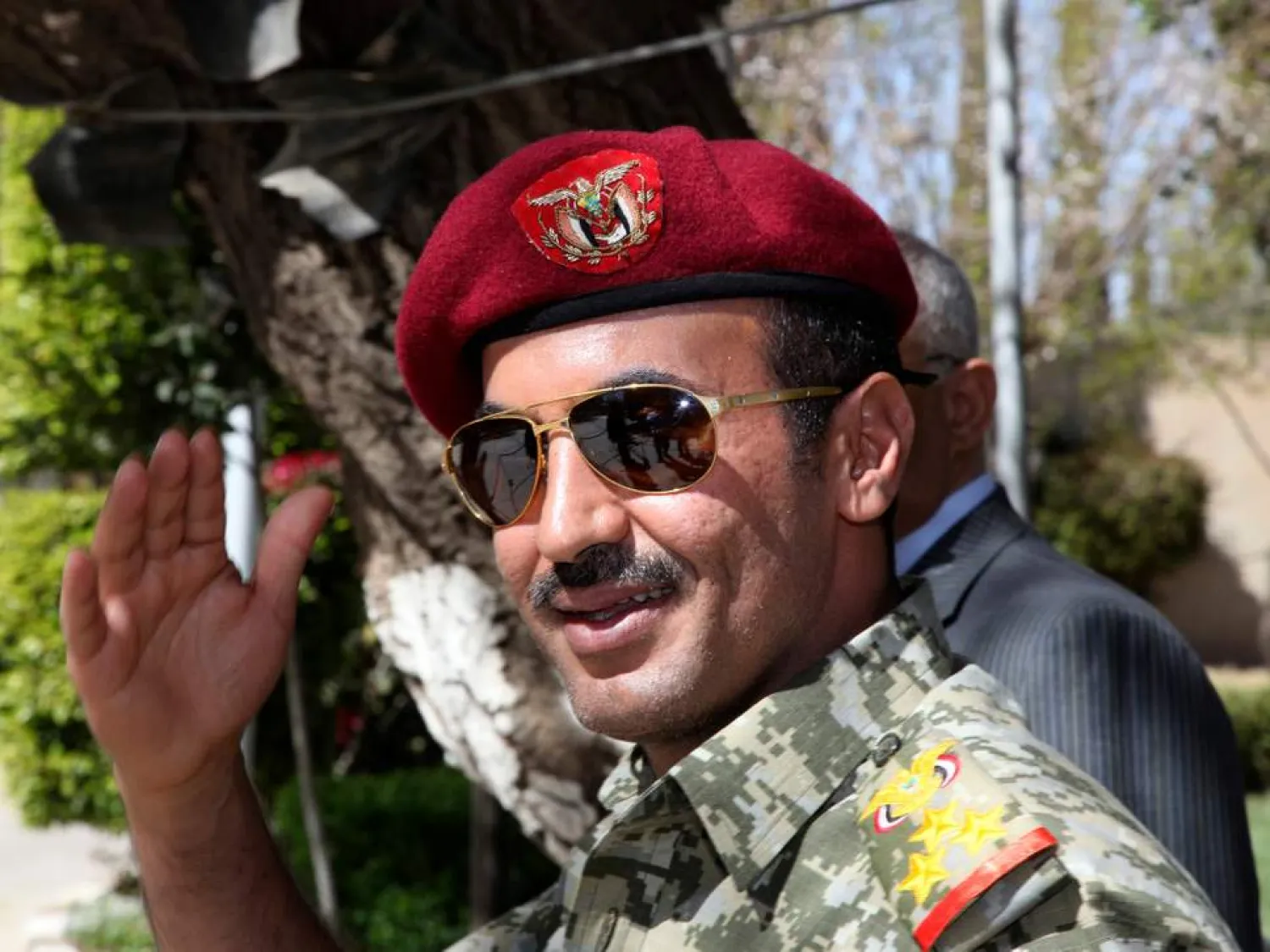
The sources said that the pro-Saleh camp has been demanding the lifting of United Nations sanctions off the slain former president’s oldest son, Ahmed Ali Abdullah Saleh, ahead of granting him a pivotal role in leading the GPC.
This will then be followed by the camp granting its backing to Hadi.
Ahmed is currently in the United Arab Emirates where he used to serve as Yemen’s ambassador to the country. His father was killed by the Houthis after he announced that he was ending his alliance with them and turning to the Saudi-led Arab coalition, which backs Hadi and the legitimate forces.
Leading GPC member Dr. Abdulhafiz al-Nahari told Asharq Al-Awsat that the sanctions against Ahmed were “unjust”.
He also spoke of a crisis in filling the position of GPC president and secretary general.
Resolving this issue is being hindered by organizational problems, he said, revealing that proposals to fill the vacancies have only increased the tensions between leading party members.
Compounding the complications is another camp in the GPC that is subject to Houthi dictates. The members of this branch – dubbed the “Decemebrists” by Nahari - appointed Sadiq Amin Abou Ras as Ali Abdullah Saleh’s successor after his death.
Hadi had paid a visit to Cairo earlier this month in an attempt to bridge the divide between the rival camps in the GPC. He has been hoping to fill the position of party president.
The Decemberists have been rejecting Hadi’s proposals on the GPC.
Nahari hoped that the GPC would speed up efforts to resolve its problems “in order to reach an understanding with the international community and Arab coalition, otherwise it will find itself in a difficult position where it will likely suffer political losses” given the developments in Yemen.
He stressed that leading party members are confident that they will overcome their disputes and they are looking forward to the GPC playing a central role in resolving the crisis in Yemen and returning it to the Arab fold.


