


US Slammed for Halting Funding of UN Agency for Palestinian Refugees

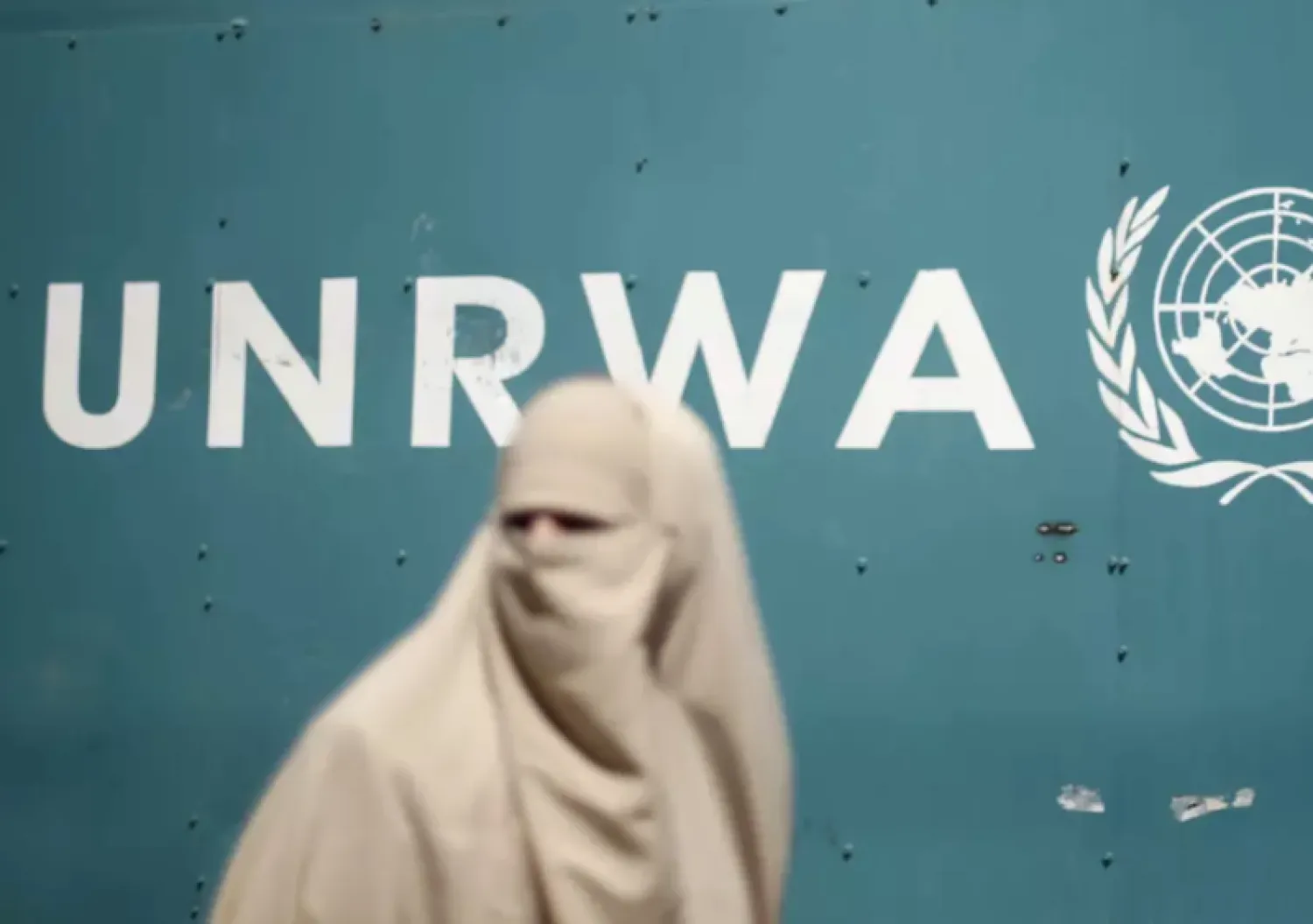
A Palestinian woman takes part in a protest against possible reductions of the services and aid offered by United Nations Relief and Works Agency (UNRWA), in front of UNRWA headquarters in Gaza City August 16, 2015. REUTERS/Mohammed Salem
TT

US Slammed for Halting Funding of UN Agency for Palestinian Refugees

A Palestinian woman takes part in a protest against possible reductions of the services and aid offered by United Nations Relief and Works Agency (UNRWA), in front of UNRWA headquarters in Gaza City August 16, 2015. REUTERS/Mohammed Salem

The United States on Friday halted its decades of funding to a UN agency that helps Palestinian refugees in a decision further heightening tensions between the Palestinian leadership and the Trump administration.

The US supplies nearly 30 percent of the total budget of the UN Relief and Works Agency, or UNRWA, and had been demanding reforms in the way it is run. The department said in a written statement that the United States will no longer commit further funding to the agency. The decision cuts nearly $300 million of planned support.

A spokesman for Palestinian President Mahmoud Abbas denounced the decision as “a flagrant assault against the Palestinian people and a defiance of UN resolutions.”

State Department spokeswoman Heather Nauert said the business model and fiscal practices of UNRWA were an “irredeemably flawed operation.”

“The administration has carefully reviewed the issue and determined that the United States will not make additional contributions to UNRWA,” she said in a statement.

Nauert said the agency’s “endlessly and exponentially expanding community of entitled beneficiaries is simply unsustainable and has been in crisis mode for many years.”

The latest announcement comes a week after the administration said it would redirect $200 million in Palestinian economic support funds for programs in the West Bank and Gaza.

UNRWA released a statement late Friday slamming the decision as disappointing and surprising and rejecting the US assertion that its programs were irredeemably flawed.

“We reject in the strongest possible terms the criticism that UNRWA’s schools, health centers, and emergency assistance programs are ‘irredeemably flawed,’” Chris Gunness, a spokesman for the United Nations Relief and Works Agency, said in a series of Twitter posts.

The 68-year-old agency says it provides services to about 5 million Palestinian refugees in Jordan, Lebanon, Syria and the West Bank and Gaza. Most are descendants of people who were driven out of their homes or fled the fighting in the 1948 war that led to Israel’s creation.

US President Donald Trump and his aides say they want to improve the Palestinians’ plight, as well as start negotiations on an Israeli-Palestinian peace agreement.

But under Trump, Washington has taken a number of actions that have alienated the Palestinians. The Palestinian leadership has been openly hostile to any proposal from the administration, citing what it says is a pro-Israel bias, notably after Trump recognized Jerusalem as Israel's capital in December and moved the US embassy there from Tel Aviv in May. The Palestinian Authority broke off contact with the US after the Jerusalem announcement.

Meanwhile, Trump and his Middle East pointmen, Jared Kushner and Jason Greenblatt, are preparing for the rollout of a much-vaunted but as yet unclear peace plan, and it could intensify Palestinian suspicions that Washington is using the humanitarian funding as leverage.

The United States paid out $60 million to UNRWA in January, withholding another $65 million, from a promised $365 million for the year.

“Such a punishment will not succeed to change the fact that the United States no longer has a role in the region and that it is not a part of the solution,” Reuters quoted Abbas spokesman Nabil Abu Rdainah as saying.

He said “neither the United States nor anybody else will be able to dissolve” UNRWA.

In Gaza, "Hamas" group condemned the US move as a “grave escalation against the Palestinian people.”

“The American decision aims to wipe out the right of return and is a grave US escalation against the Palestinian people,” said Hamas spokesman Sami Abu Zuhri.

He told Reuters the “US leadership has become an enemy of our people and of our nation and we will not surrender before such unjust decisions.”

Earlier on Friday, German Foreign Minister Heiko Maas said Germany would increase its contributions to UNRWA because the funding crisis was fueling uncertainty. “The loss of this organization could unleash an uncontrollable chain reaction,” Maas said.

UNRWA has faced a cash crisis since the United States, long its biggest donor, slashed funding earlier this year, saying the agency needed to make unspecified reforms and calling on the Palestinians to renew peace talks with Israel.

The last Palestinian-Israeli peace talks collapsed in 2014, partly because of Israel’s opposition to an attempted unity pact between the Fatah and Hamas Palestinian factions and to Israeli settlement building on occupied land that Palestinians seek for a state.

Nauert said the United States would intensify talks with the United Nations, the region’s governments and international stakeholders that could involve bilateral US assistance for Palestinian children.

“We are very mindful of and deeply concerned regarding the impact upon innocent Palestinians, especially school children, of the failure of UNRWA and key members of the regional and international donor community to reform and reset the UNRWA way of doing business,” she said.

Earlier this month, Reuters quoted Gunness as saying that UNRWA’s support would be needed as long as the parties failed to reach an agreement to end the crisis.

“UNRWA does not perpetuate the conflict, the conflict perpetuates UNRWA,” he said. “It is the failure of the political parties to resolve the refugee situation which perpetuates the continued existence of UNRWA.”



Trump Signs Order Preparing for Tariffs on Iran’s Trade Partners

A man walks past a mural depicting the US Statue of Liberty with the torch-bearing arm broken, painted on the outer walls of the former US embassy, in Tehran on February 6, 2026. (AFP)
TT

Trump Signs Order Preparing for Tariffs on Iran’s Trade Partners

A man walks past a mural depicting the US Statue of Liberty with the torch-bearing arm broken, painted on the outer walls of the former US embassy, in Tehran on February 6, 2026. (AFP)

US President Donald Trump on Friday signed an executive order threatening tariffs on Iran's trade partners, after he pledged a further round of talks with Tehran next week.

The order, effective from Saturday, called for a fresh "imposition of tariffs" on countries still doing business with Iran.

It comes amid heightened tensions between Washington and Tehran, with an American naval group led by an aircraft carrier in Middle Eastern waters and indirect talks held on Tehran's nuclear program in Oman on Friday.

The levies "may be imposed on goods imported into the United States that are products of any country that directly or indirectly purchases, imports, or otherwise acquires any goods or services from Iran", the order said.

Trump issued a threat of 25 percent tariffs on any country trading with Iran last month.

This order establishes a process for his administration to impose tariffs on goods from those countries.

The rate is to be determined by Secretary of State Marco Rubio, although the order specifies that it could be "for example" 25 percent, the level first mentioned by the US president in mid-January.

Tariffs would affect trade with a number of countries including Russia, Germany, Türkiye and the United Arab Emirates.

More than a quarter of Iran's trade is with China, with $18 billion in imports and $14.5 billion in exports in 2024, according to World Trade Organization data.

The talks on Friday in Muscat, mediated by Oman, were the first between the two foes since the United States joined Israel's war with Iran in June with strikes on nuclear sites.

"We likewise had very good talks on Iran," Trump told reporters on board Air Force One en route to his Mar-a-Lago resort in Florida, adding, "we're going to meet again early next week."

Diplomatic relations between Iran and the US broke down with the 1979 revolution that brought the current government into power after hostages were taken at the US embassy in Tehran for 444 days.

Direct engagement has been rare in the decades since.

Iran remains under an internet blackout amid a harsh government crackdown on economic protests that began in December across the country.

The US-based Human Rights Activists News Agency (HRANA) said Friday it has confirmed 6,505 protesters were killed, as well as 214 members of the security forces and 61 bystanders.


Trump Says US Talks with Iran ‘Very Good,’ More Negotiations Expected

US President Donald Trump gaggles with reporters while aboard Air Force One on February 6, 2026 en route to Palm Beach, Florida. (Getty Images via AFP)
TT

Trump Says US Talks with Iran ‘Very Good,’ More Negotiations Expected

US President Donald Trump gaggles with reporters while aboard Air Force One on February 6, 2026 en route to Palm Beach, Florida. (Getty Images via AFP)

US President Donald Trump said Friday Washington held "very good talks" on Iran after the two sides held an indirect dialogue in Oman.

Iran for its part said it expected to hold more negotiations with the United States, hailing a "positive atmosphere" during a day of talks in the Gulf sultanate.

With an American naval group led by an aircraft carrier in Middle Eastern waters, US and Iranian delegations held talks in Muscat mediated by Oman without publicly meeting face-to-face.

Shortly after the talks concluded, the US announced new sanctions against shipping entities and vessels, aimed at curbing Iran's oil exports. But it was not clear if the move was linked to the talks.

The talks were the first between the two foes since the United States joined Israel's war with Iran in June with strikes on nuclear sites.

"We likewise had very good talks on Iran," Trump told reporters on board Air Force One en route to his Mar-a-Lago resort in Florida, adding, "we're going to meet again early next week."

However, as Iran warned against further threats after Washington raised the specter of new military action, Trump said: "If they don't make a deal, the consequences are very steep."

Foreign Minister Abbas Araghchi, who led Iran's delegation in Muscat, said talks "focused exclusively" on the Iranian nuclear program, which the West believes is aimed at making an atomic bomb but Tehran insists is peaceful.

The US delegation, led by Middle East envoy Steve Witkoff and Trump's influential son-in-law Jared Kushner, had also wanted Tehran's backing for militant groups, its ballistic missile program and treatment of protesters on the agenda.

"In a very positive atmosphere, our arguments were exchanged and the views of the other side were shared with us," Araghchi told Iranian state TV, adding that the two sides had "agreed to continue negotiations."

Speaking to the official IRNA news agency, Araghchi expressed hope that Washington would refrain from "threats and pressure" so that "the talks can continue."

- 'Destabilizing power' -

Admiral Brad Cooper, the commander of US Central Command, was present at the talks, according to images published by the Oman News Agency.

Multiple sessions of talks in the morning and afternoon saw both sides shuttling to and from the residence of Omani Foreign Minister Badr Albusaidi.

The foreign ministry of US ally Qatar expressed hope the talks would "lead to a comprehensive agreement that serves the interests of both parties and enhances security and stability in the region."

The White House has made clear it wants the talks to rein in Tehran's ability to make a nuclear bomb, an ambition the country has always denied.

French Foreign Minister Jean-Noel Barrot said on Friday that Iran should stop being a "destabilizing power," citing its nuclear program and support for "terrorist" groups.

Barrot also called on "groups supported by Iran" to exert "the utmost restraint" in the event of any military escalation involving Iran.

- 'Maximum pressure' -

Trump initially threatened military action against Tehran over its crackdown on protesters last month, which rights groups say killed thousands, and even told demonstrators "help is on its way."

Regional powers urged the United States not to intervene, calling on Washington and Tehran to instead return to talks.

The US-based Human Rights Activists News Agency (HRANA) said Friday it has confirmed 6,505 protesters were killed, as well as 214 members of the security forces and 61 bystanders.

Those numbers are expected to climb because the magnitude of the crackdown has masked by the blanket internet shutdown imposed by the authorities for a fortnight, rights groups say.

Almost 51,000 people are also confirmed to have been arrested amid "the growing use of forced confessions," according to HRANA.

Yet Trump's rhetoric in recent days has focused on reining in the Iranian nuclear program and the US has maneuvered a naval group led by aircraft carrier USS Abraham Lincoln into the region.

Iran has repeatedly vowed it will hit back at US bases in the region if attacked.

The new sanctions to curb Iran's oil exports come with Trump "committed to driving down the Iranian regime's illicit oil and petrochemical exports under the administration's maximum pressure campaign," State Department spokesman Tommy Pigott said in a statement.


Zelenskyy Says Ukrainian Air Force Needs to Improve as Russian Drone Barrages Take a Toll

 Ukrainian President Volodymyr Zelenskyy attends a joint news conference with NATO Secretary General Mark Rutte in Kyiv, Ukraine, Tuesday, Feb. 3, 2026. (AP)
Ukrainian President Volodymyr Zelenskyy attends a joint news conference with NATO Secretary General Mark Rutte in Kyiv, Ukraine, Tuesday, Feb. 3, 2026. (AP)
TT

Zelenskyy Says Ukrainian Air Force Needs to Improve as Russian Drone Barrages Take a Toll

 Ukrainian President Volodymyr Zelenskyy attends a joint news conference with NATO Secretary General Mark Rutte in Kyiv, Ukraine, Tuesday, Feb. 3, 2026. (AP)
Ukrainian President Volodymyr Zelenskyy attends a joint news conference with NATO Secretary General Mark Rutte in Kyiv, Ukraine, Tuesday, Feb. 3, 2026. (AP)

Ukrainian President Volodymyr Zelenskyy on Friday described the performance of the air force in parts of the country as “unsatisfactory," and said that steps are being taken to improve the response to large-scale Russian drone barrages of civilian areas.

The repeated Russian aerial assaults have in recent months focused on Ukraine’s power grid, causing blackouts and disrupting the heating and water supply for families during a bitterly cold winter.

With the war about to enter its fifth year later this month following Russia’s all-out invasion of its neighbor, there is no sign of a breakthrough in US-led peace efforts following the latest talks this week. Further US-brokered meetings between Russian and Ukrainian delegations are planned “in the near future, likely in the United States,” Zelenskyy said.

Zelenskyy said Friday he had discussed with his defense minister and the air force commander what new air defense measures Ukraine needs to counter the Russian barrages. He didn’t elaborate on what would be done.

Russia fired 328 drones and seven missiles at Ukraine overnight and in the early morning, the air force said, claiming that air defenses shot down 297 drones.

One person was killed and two others were injured in an overnight Russian attack using drones and powerful glide bombs on the central Dnipropetrovsk region, according to the head of the regional military administration, Oleksandr Hanzha.

A Russian aerial attack on the southern Zaporizhzhia region during early daylight hours injured eight people and damaged 18 apartment blocks, according to regional military administration head Ivan Fedorov.

A dog shelter in the regional capital was also struck, killing 13 dogs, Zaporizhzhia City Council Secretary Rehina Kharchenko said.

Some dogs were rushed to a veterinary clinic, but they could not be saved, she said. Seven other animals were injured and are receiving treatment.

Amid icy conditions in Kyiv, more than 1,200 residential buildings in multiple districts of the capital have had no heating for days due to the Russian bombardment of the power grid, according to Zelenskyy.

The UK defense ministry said Friday that Ukraine’s electricity network “is experiencing its most acute crisis of the winter.”

Mykola Tromza, an 81-year-old pensioner in Kyiv, said he has had his power restored, but recently went without heating and water at home for a week.

“I touched my nose and by God, it was like an icicle,” Tromza said. He said he ran up and down to keep warm.

Russia’s Defense Ministry said that air defenses downed 38 Ukrainian drones overnight, including 26 over the Bryansk region.

Bryansk Gov. Alexander Bogomaz said the attack briefly cut power to several villages in the region.

Another Ukrainian nighttime strike damaged power facilities in the Russian city of Belgorod, disrupting electricity distribution, Gov. Vyacheslav Gladkov said.

Local reports said that Ukrainian missiles hit a power plant and an electrical substation, cutting power to parts of the city.

Fierce fighting has also continued on the front line despite the frigid temperatures.

Ukraine’s Commander in Chief, Col. Gen. Oleksandr Syrskyi, said the front line now measures about 1,200 kilometers (750 miles) in length along eastern and southern parts of Ukraine.

The increasing technological improvements to drones on both sides mean that the so-called “kill zone” where troops are in greatest danger is now up to 20 kilometers (12 miles) deep, he told reporters on Thursday in comments embargoed until Friday.