


Iran's Domestic Car Market Stalls as Nuclear Deal Falters

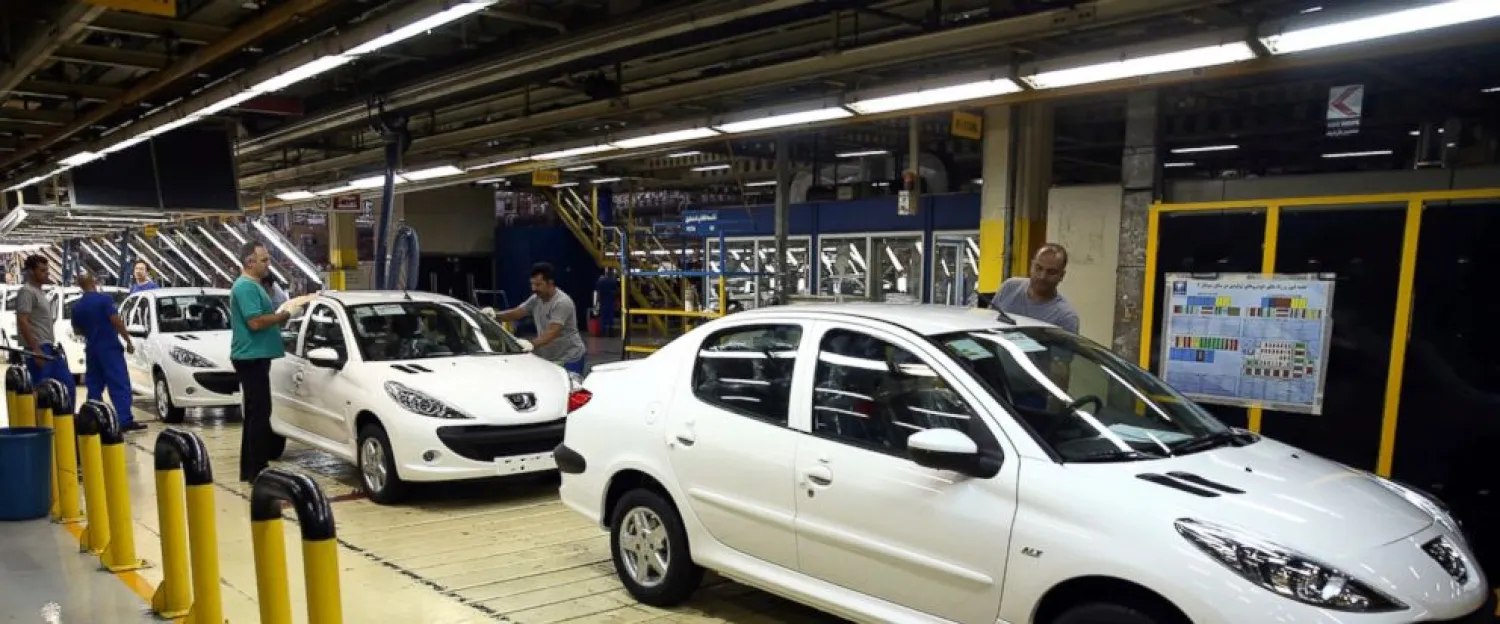
In this Sunday, Sept. 9, 2018 photo, a line of Peugeot cars rolls out at the state-run Iran Khodro automobile manufacturing plant, just outside Tehran, Iran. (AP)
TT

Iran's Domestic Car Market Stalls as Nuclear Deal Falters

In this Sunday, Sept. 9, 2018 photo, a line of Peugeot cars rolls out at the state-run Iran Khodro automobile manufacturing plant, just outside Tehran, Iran. (AP)

Across Iran's capital, rush-hour traffic always grinds to a halt, a sea of boxy Renault four-doors and Peugeot coupes all idling their way through the streets of Tehran.

Soon, however, Iran's faltering nuclear deal with world powers may be what causes the country's domestic automotive market to stall out, said an Associated Press report on Friday.

As Iran's currency suffers precipitous falls against the US dollar — the rial lost two-thirds of its value against the dollar since President Donald Trump withdrew America from the accord — cars are growing more and more expensive even as tens of thousands clamor to order domestic models online.

Meanwhile, Western manufacturers are pulling out of the country and foreign-produced parts are becoming harder to find as Chinese cars fill the void.

"It is clear and obvious that the US is purposefully putting pressure on the people of Iran to instigate discontent" over the auto market, said Mohammad Reza Najfimaneh, the head of the Iranian Specialized Manufacturers of Auto Parts Association.

Iran, home to 80 million people, has a huge demand for automobiles. In 2017 alone, Iran produced more than 1.5 million cars, up some 14 percent from the year before, according to a report by Iran's Ministry of Industries, Mines and Trade earlier this year.

Some 90 percent of market share is controlled by two local companies: Iran Khodro, which assembles Peugeot-branded vehicles from kits, and SAIPA, which has made Citroens and Kias. Both manufacturers also build Renaults.

Iran's auto industry suffered under US and Western sanctions, which targeted Iran over fears about its nuclear program. The West worries Iran could use its technology to build atomic bombs. Iran long has said its program is for peaceful purposes, reported the AP.

The 2015 nuclear deal, which saw Iran limit its enrichment of uranium in exchange for the lifting of some sanctions, provided a needed boost to the industry.

French car-maker PSA Peugeot Citroen reached a deal in 2016 to open a plant producing 200,000 vehicles annually in Iran. Fellow French automobile manufacturer Groupe Renault signed a $778-million deal to build 150,000 cars a year at a factory outside of Tehran. Meanwhile, Volkswagen announced plans to import vehicles into Iran.

Now, however, those firms have pulled back on those plans.

Concern over Iran's domestic auto industry has been high. That was shown in a visit to Iran-Khodro last week by Ali Shamkhani, the secretary of Iran's Supreme National Security Council.

"The enemy in the economic war is after damaging public contentment and the auto industry is one of the front lines in the war," Shamkhani said during his visit.

More than 100,000 people are employed by Iran-Khodro and SAIPA, while another 700,000 Iranians work in industries related to car manufacturing.

There are fears by some business analysts in Iran that any downturn in the auto industry would further worsen unemployment in the country.

Iran's official unemployment rate is 12.3 percent, meaning some 3 million people are out of work, but experts believe it is much higher, especially among university graduates. Those unemployed often try to scrape enough money together to work as taxi drivers in the city, meaning they could be doubly hit, said the AP.

Meanwhile, the drop in the rial has made buying a car difficult. The rial traded at 62,000 to the dollar before Trump's pullout from the nuclear deal in May. It has gone as high as 150,000 to $1 since.

"I saved some money to buy an Iranian car, but prices jumped and factories do not provide cars on time," said Mahin Tabrizi, a 45-year-old teacher. "I don't know what I can do."

Those prices also have hurt auto parts sales.

"Prices of car parts are crazy, all because of the sanctions," said Mahmoud Rahimi, a taxi driver. "I bought brake pads for my car for double the price in less than a year."

Even those who pay for an Iranian car can face delays in having them delivered. Iranian car production reportedly dropped 29 percent in June compared to the same month last year. Analysts blamed that on lack of parts due to currency fluctuation, reported the AP.

Meanwhile, importing a foreign car grows more expensive as the rial drops in value. Iran places import taxes of more than 100 percent on foreign cars. A ban on importing foreign cars also has been in force since April, halting new orders.

"Nearly two years ago, I paid for an imported car, yet they have not delivered it due to upheavals in the rial rate and sanctions," said Reza Piltan, a retired engineer waiting for an SUV by South Korean manufacturer SSangYong.

Last week, in less than an hour, 50,000 customers rushed the website of SAIPA to pay nearly $2,000 each to buy cars that the company plans to make in the future. The move is largely an effort by buyers to save on their purchases as the rial continues to fall. Another factory, Iran-Khodro, has a similar plan for selling future cars next week.

Still, anger over quality lurks.

"In other countries people pay small advance fees to buy a standard car based on installments," said Fatemeh Azari, whose son last week managed to buy a car on SAIPA's website. "Here, we pay all the money in advance to receive a clunker months later."


Trump Calls for Russia Deal with Zelenskiy, Vague on Pressure

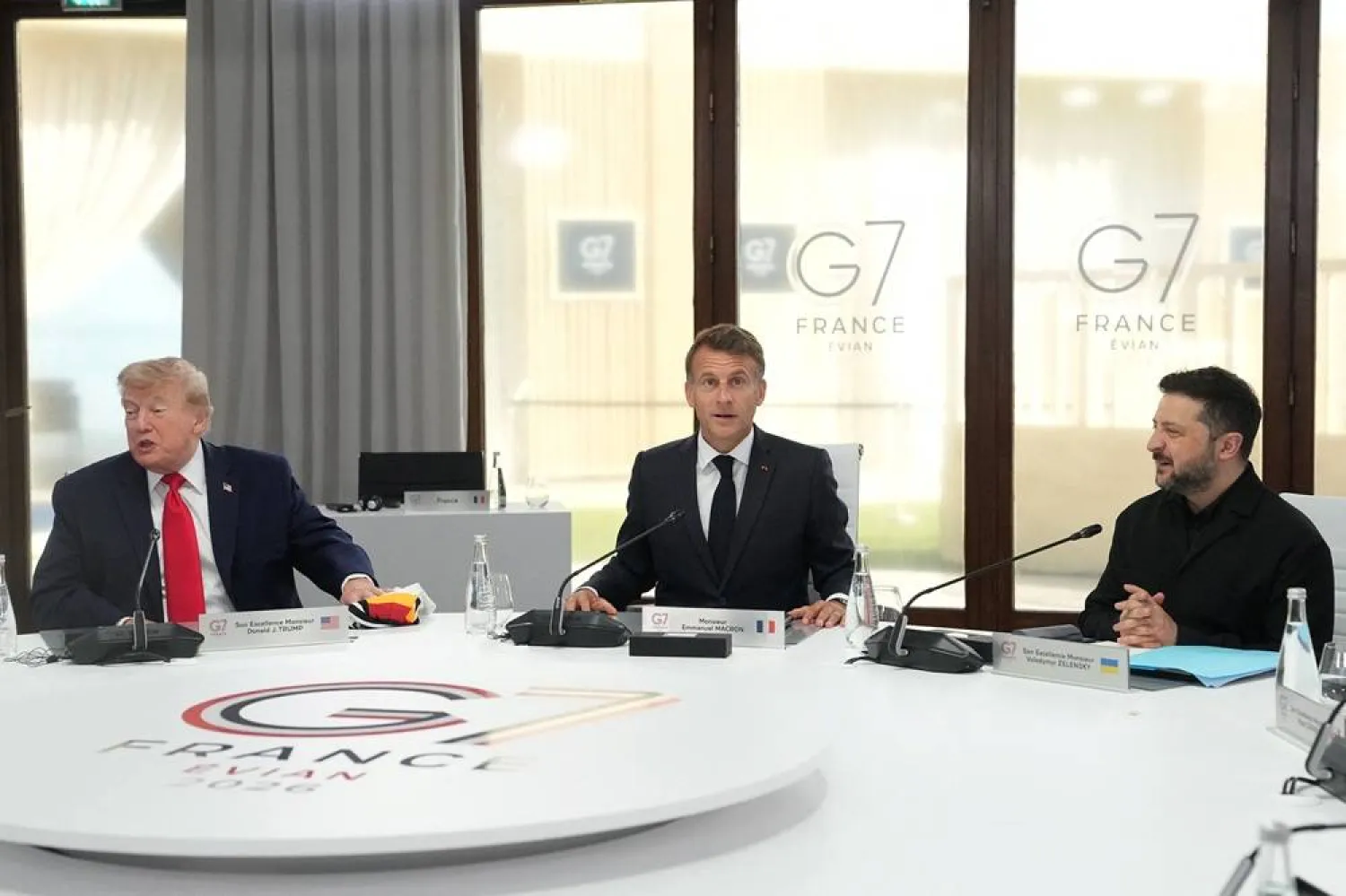
US President Donald Trump, French President Emmanuel Macron and Ukrainian President Volodymyr Zelenskiy during a working session at the G7 summit in Evian-les-Bains, France, June 16, 2026. (Reuters)
TT

Trump Calls for Russia Deal with Zelenskiy, Vague on Pressure

US President Donald Trump, French President Emmanuel Macron and Ukrainian President Volodymyr Zelenskiy during a working session at the G7 summit in Evian-les-Bains, France, June 16, 2026. (Reuters)

US President Donald Trump said Russia should make peace with Ukraine after a "very good" meeting with President Volodymyr Zelenskiy on Tuesday, but there were few details of any concrete steps to raise the pressure on Moscow.

Trump, who arrived at the G7 summit in the French lakeside resort of Evian-les-Bains brandishing a preliminary deal to end his war with Iran, said he would do what he could do to end the conflict in Ukraine, now deep into its fifth year.

"Look, Russia should make a deal," Trump told reporters, adding that too many young men were dying on the battlefield on both sides. "I'm gonna do whatever I can."

After the group meeting with Trump, Zelenskiy told Reuters that G7 leaders agreed that Russia was not winning the war. He said they also ‌discussed additional sanctions ‌targeting Russia's oil exports, its banking sector and its military production to bring Moscow to the ‌negotiating ⁠table.

Zelenskiy and his ⁠European allies want to underline to Trump how Ukraine's battlefield fortunes have shifted, hoping he will lean harder on Russia to gain leverage in eventual peace talks.

Zelenskiy said on Monday he had offered to meet Russia's Vladimir Putin at the G7 summit, but a Kremlin aide said on Tuesday that did not come up in a call between Trump and Putin.

Trump was due to have face-to-face talks with Zelenskiy later on Tuesday. Earlier, Ukraine's presidency shared images of Zelenskiy in conversation with Trump and US Secretary of State Marco Rubio on the summit's sidelines.

POSITIVE TALKS ON UKRAINE

Two European diplomats said that, during the meeting, Zelenskiy showed Trump images ⁠of the aftermath of a Russian strike on Monday on Kyiv's Pechersk Lavra monastery.

Trump expressed ‌disapproval of the strike, one of the European diplomats said, while the other ‌said that it had been "psychologically" a good move by Zelenskiy to show the images.

European diplomats said the tone of the ‌meeting had been constructive.

But two of the diplomats said Trump had been noncommittal on imposing further US sanctions on Moscow, ‌as European leaders want.

Trump told reporters Washington was now in a position to let Russian oil waivers lapse after an interim accord to end the Iran war soothed markets, but he did not address the question of broader punitive measures.

European leaders have wanted to convince Trump that previous US positions on the possible terms of a deal were overly favorable towards Moscow, particularly now that Ukraine's drone incursions into Russia have ‌improved its fortunes.

"The tide is turning for Ukraine," European Commission President Ursula von der Leyen posted on X. "Russia's fatigue is openly showing. That's the time to double down on ⁠our support."

A French diplomat ⁠said G7 leaders had agreed that the battlefield dynamic was now in Ukraine's favor, and committed to providing Kyiv with more air defense capabilities - a key priority for Zelenskiy as he grapples with increased civilian strikes from Russia.

G7 TO EXAMINE HORMUZ SHIPPING PROBLEM

European leaders were also set to warn Trump that an interim deal with Iran risks entrenching Tehran's nuclear and ballistic missile programs. President Emmanuel Macron said the priority was to ensure there was a "solid, serious agreement that is finalized".

Tuesday's working lunch focused on the safe reopening of the Strait of Hormuz, which Iran largely closed at the end of February. Leaders also sought to identify alternative routes to bypass the waterway, which Trump said would be "completely open" on Friday.

The interim deal should open a 60-day window for complex technical negotiations that would include the fate of Iran's stockpile of highly enriched uranium and the lifting of international sanctions.

However, European allies fear that an inexperienced US negotiating team may fail to secure a robust nuclear agreement or address Iran's ballistic missile program in the next phase, potentially creating a prolonged standoff.

Trump said the deal stated "loud and clear" that Iran would not develop a nuclear weapon - something Iran has long denied seeking to do.


Iran Says Talks on Final US Deal to Begin This Week

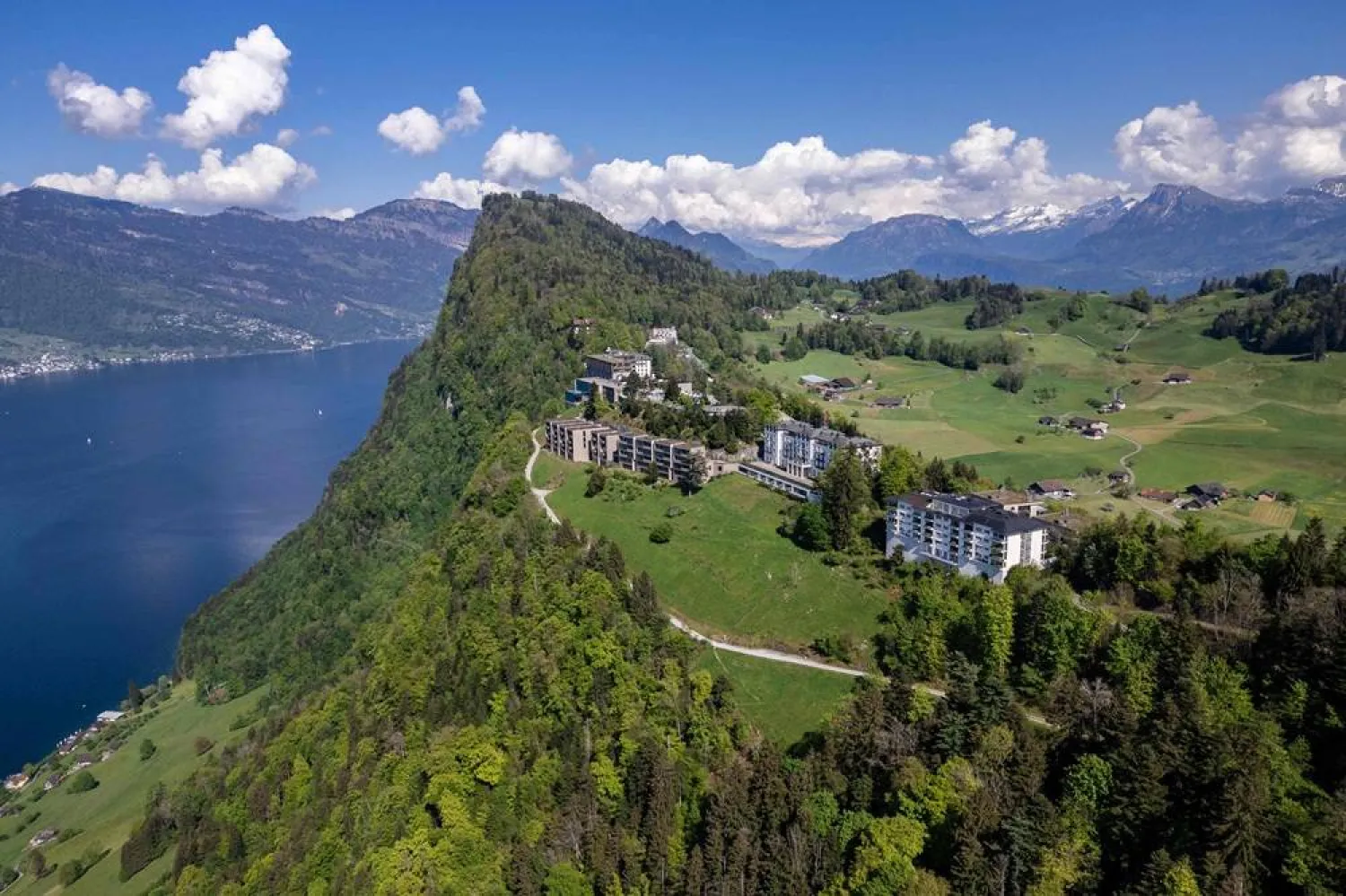
An aerial picture taken on May 10, 2024 shows the Burgenstock resort above Lake Lucerne. (AFP)
TT

Iran Says Talks on Final US Deal to Begin This Week

An aerial picture taken on May 10, 2024 shows the Burgenstock resort above Lake Lucerne. (AFP)

Iran on Tuesday said talks with the United States on its nuclear program and sanctions relief would likely begin later this week, as President Donald Trump's announcement that the Strait of Hormuz would reopen sent oil prices tumbling. 

Officials say negotiations over a final deal will take place within a 60-day window after the memorandum of understanding to end nearly four months of war triggered by US-Israeli strikes on Iran is physically signed. 

"Likely on Friday, at a location to be determined... a new round of negotiations between Iran and the United States to reach a final agreement will begin," Iranian Foreign Minister Abbas Araghchi said. 

"In the final agreement, decisions will be made on the nuclear issues and the lifting of sanctions." 

According to Iran's deputy foreign minister Majid Takht-Ravanchi, Iran's top negotiator Mohammad Bagher Ghalibaf will attend the signing in Switzerland, which Bern said would take place at the luxury Burgenstock resort overlooking Lake Lucerne. 

The mountainside venue "was proposed by Pakistani and Qatari mediators, as well as by the US and Iran," the Swiss foreign ministry told AFP. 

The US side will be represented by Vice President JD Vance, who said Trump might also attend. 

The developments came after Trump said an Iranian blockade on the crucial Hormuz strait oil and gas route would be fully lifted by Friday, which would be a major boost to the global economy. 

"Ships are starting to move, many loaded up with Oil, out of the Strait of Hormuz," Trump said Monday. 

Optimism over the reopening of Hormuz has sent the price of the international benchmark Brent North Sea crude tumbling below $80 a barrel, a three-month low. 

The US had, in retaliation, imposed its own blockade on Iranian ports. 

Iranian state television said Iranian oil tankers and other vessels had resumed shipping following the deal, with Takht-Ravanchi saying the US blockade "has been lifted prior to the formal signing". 

Sporadic episodes of violence since an April ceasefire had threatened a deal, but weeks of indirect negotiations mediated by Pakistan and Qatar built momentum for an interim agreement. 

- 'Powerful document' - 

Yet a comprehensive agreement on Iran's nuclear ambitions and Western sanctions remains elusive. 

Washington and close ally Israel are pressing to strip Iran of its stockpile of highly enriched uranium, said to have been buried by US strikes last year, while Iran has insisted on its right to enrichment. 

The agreed framework has however paved the way for talks on those key disputes. 

Asked at the G7 in France when the text would be released, Trump said: "It's a very powerful document, and I want it to be released. So probably pretty soon." 

Iran's ultraconservative newspaper Vatan-e Emrooz praised the agreement as a "Trump surrender document". 

But Araghchi struck a more cautious note. 

"We have a history of broken commitments... we have a history of agreements being torn up. All of this is present in our minds," he said. 

A senior US administration official, however, said Trump, Vance and negotiator Ghalibaf had already signed the text electronically. 

In a flurry of interviews to talk up the deal, Vance said no US taxpayer money would go to Iran under the deal, as Iranian media reported $12 billion of frozen assets would be released. 

Vance told NBC that nuclear inspectors would also be allowed to enter Iran. 

- Lebanon crucial to deal - 

Analysts have warned that the parallel conflict in Lebanon between Israel and Iran-backed Hezbollah presents the biggest threat to the diplomatic thaw. 

Lebanon was pulled into the war in March when Hezbollah launched rockets at Israel after the killing of Iran's supreme leader, prompting Israeli strikes and a ground invasion. 

That theater of the conflict could be "the biggest ultimate spoiler" of the coming negotiations, said Ross Harrison, a senior fellow at the Middle East Institute. 

Lebanon's president and prime minister on Tuesday discussed preparations for a new round of direct talks with Israel scheduled to begin next week, seeking a permanent truce and withdrawal of Israeli troops from the country's south, according to a presidency statement. 

But Israeli figures quickly condemned the US-Iran deal that included Lebanon, and Prime Minister Benjamin Netanyahu pledged that the country's forces would remain in Gaza, Lebanon and Syria "for as long as necessary". 

Araghchi however said ending the war on all fronts including Lebanon was "the most important" issue in the peace deal. 

"Ending the war in Lebanon is an inseparable part of the complete end of the war". 


China Warns Next Phase of US-Iran Talks Will Be ‘More Difficult’

 Tankers and cargo vessels are seen in the Gulf of Oman, along shipping routes linking the Strait of Hormuz and the Arabian Sea, Tuesday, June 16, 2026. (AP)
Tankers and cargo vessels are seen in the Gulf of Oman, along shipping routes linking the Strait of Hormuz and the Arabian Sea, Tuesday, June 16, 2026. (AP)
TT

China Warns Next Phase of US-Iran Talks Will Be ‘More Difficult’

 Tankers and cargo vessels are seen in the Gulf of Oman, along shipping routes linking the Strait of Hormuz and the Arabian Sea, Tuesday, June 16, 2026. (AP)
Tankers and cargo vessels are seen in the Gulf of Oman, along shipping routes linking the Strait of Hormuz and the Arabian Sea, Tuesday, June 16, 2026. (AP)

China's top diplomat told his Pakistani counterpart on Tuesday that the next phase of negotiations between the United States and Iran -- which Pakistan has helped mediate -- will be "more difficult".

In a phone conversation ahead of the planned signing on Friday of a US-Iran memorandum of understanding to end their war, Chinese Foreign Minister Wang Yi told Pakistan's Ishaq Dar that "it is foreseeable that, compared with the first stage, the second stage of negotiations will be more difficult".

Wang added that the United Nations Security Council "should also play a greater role" in supporting these talks, according to a statement from Beijing's foreign ministry.

"The current consensus is far from the final destination, rather it is a new starting point," Wang said.

"Achieving lasting peace in the Middle East and Gulf region still requires unremitting efforts from all parties," Wang said, adding that China was willing to work with Pakistan to promote peace.

Pakistani officials have previously said China, Islamabad's close ally and Iran's top trading partner, played a key role in supporting its mediation efforts.

Pakistan's foreign ministry said Wang and Dar agreed during their call to continue "engagement for the peaceful settlement of all outstanding issues", including the Strait of Hormuz maritime oil route that is subject to competing blockades that have roiled energy markets.

"They noted the importance of opening of the Strait of Hormuz for the global economy, energy security, and international trade," a ministry statement said.