


Lebanon: 'Blind-Friendly Supermarket '...to Make Their Lives Easier

Blind person. MARTIN BUREAU/AFP/Getty Images
TT

Lebanon: 'Blind-Friendly Supermarket '...to Make Their Lives Easier

Blind person. MARTIN BUREAU/AFP/Getty Images

In a first-of-its-kind initiative in Lebanon and the Arab world, the Red Oak organization has launched a "Blind-friendly supermarket." 

The move is the fruit of cooperation between Marqet (a shopping center in Koraytem area) and The Youth Association of the Blind (YAB) to help people with vision impairment or loss and facilitate their lives. 

Nadine Abou Zaki, president of the Red Oak, told Asharq Al Awsat: "By applying this idea, we have tried to provide a normal life for blind people so they can go to this supermarket and buy their needs like others. They can enjoy learning about the products' characteristics thanks to specially trained people accompanying them on their tours since they arrive at the store and until they leave."

Ten employees had been trained to help the blind and the visually impaired people who visit Marqet every day. The supermarket has opened its doors to those people as part of its owner Rola Abdul Baqi's keenness to participate in humanitarian works despite the commercial framework that dominates her place.

"The training of these employees was the most important part of this initiative. The professional cooperation with the blind people, meeting their requirements, and accompanying them in their tours within the "supermarket" was supervised by Amer Makarem, chairman of the Youth Association of the Blind," explains Nadine Abou Zaki. 

At the blind-friendly supermarket, people who suffer from visual loss wander in the supermarket around the shelves displaying many products including grains, toiletries, milk, dairy, and soft drinks.

They put their items in shopping carts, and the trained employees accompany and brief them on the quality of goods and offers till they reach the cash desk. "I enjoyed this tour," says Marwan, a blind man who was the first to try the new concept. 

Halim danced with Ruwaida Al Ghali, director of the music performance organized during the store opening, to express his delight at the humanitarian move developed by the Red Oak Society. "We have introduced the language of music during the opening because we are keen to make those people happy and entertain them," says Nadine Abou Zaki.

A team of artists composed of the Director Rowaida Al-Ghali, and dancers like Bechara Atallah, Nivine Kallas, Stephanie Stephan, and Lama el-Amine along with many other music players, introduced performances in which they used symbols that are usually used by blind people (the stick and black glasses) to emphasize their support for the supermarket's visitors who suffer from visual problems.

"People with visual impairment are many and they rarely find someone who cares about their needs." Abou Zaki explains that this initiative is aimed at anyone who suffers from visual problems without distinction.

A small sandy area was also created in the store where the blind visitors stopped to write their names to confirm their visit. "It is a different mean of expression that serves the sense of touch that these people are very interested in," says Abou Zaki, who founded the Red Oak Society, aiming at empowering Lebanese youth to build their capacities in cultural, educational, artistic, theatrical and other fields. 

Such stores are expected to expand in various areas in Lebanon in order to facilitate the lives of blind people and motivate them to live normally.

On the other hand, on October 29, the visually impaired people are set to visit the National Museum, where they will learn about its displays as part of a special initiative dubbed "Please Touch" organized by Red Oak in cooperation with the Ministry of Culture. 

The move will also take place in to two other museums, namely Maqam in Byblos and the Sursock Museum in Ashrafieh, which have developed a special service for blind visitors, always in cooperation with the Italian Omero Museum. The visitors will be accompanied by trained guides who can read "Braille" (blind language) so that they could provide the needed help.


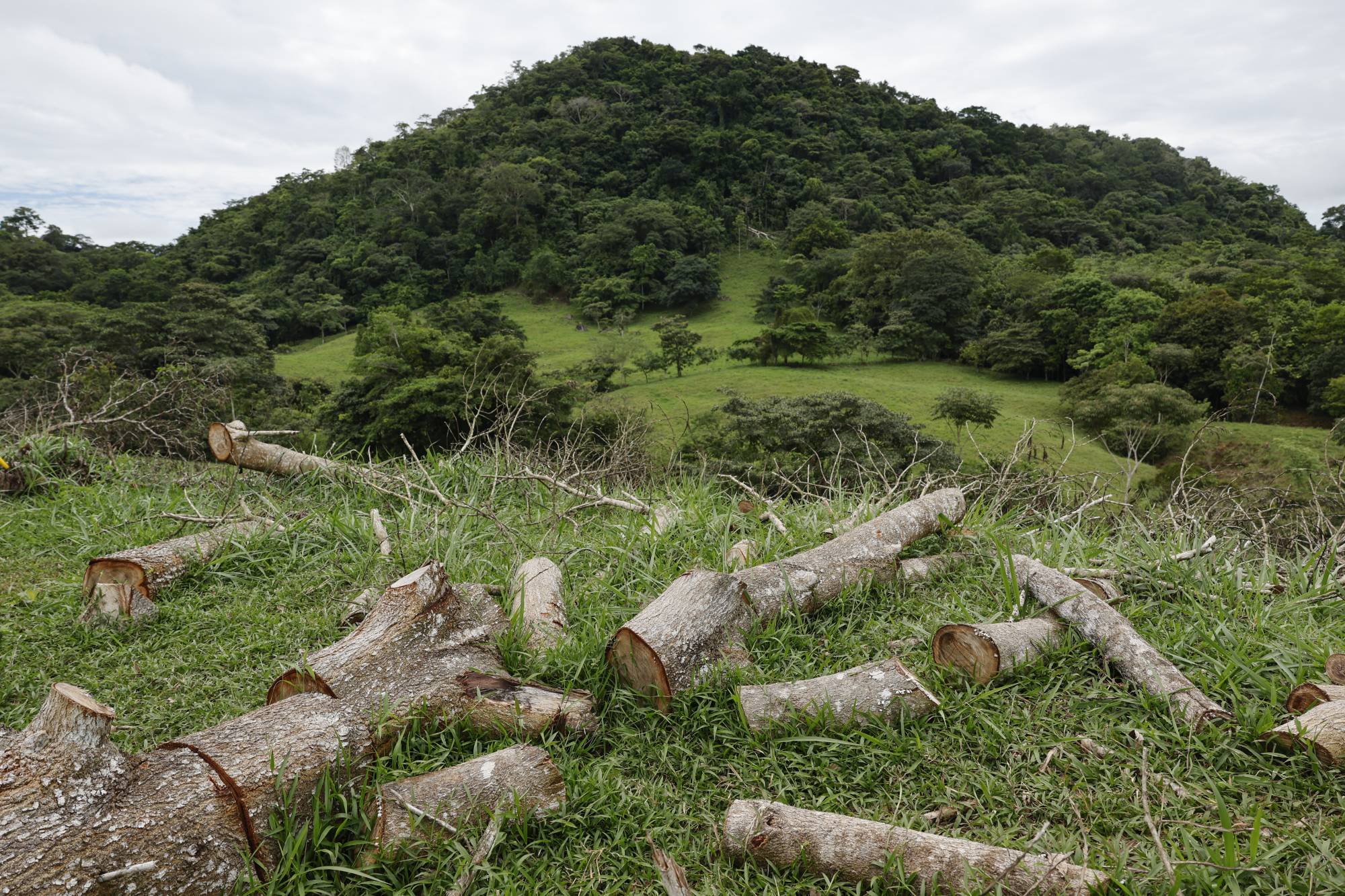
Saudi Arabia Advances Global Environmental Leadership with IUCN Green List Milestone

Several of the Kingdom's reserves have earned certification on the International Union for Conservation of Nature (IUCN) Green list - SPA
TT

Saudi Arabia Advances Global Environmental Leadership with IUCN Green List Milestone

Several of the Kingdom's reserves have earned certification on the International Union for Conservation of Nature (IUCN) Green list - SPA

Saudi Arabia Advances Global Environmental Leadership with IUCN Green List MilestoneThe Kingdom of Saudi Arabia continues to strengthen its international standing in environmental protection and sustainability, underpinned by the wise leadership’s prioritization of environmental affairs within national development priorities, in line with Saudi Vision 2030, SPA reported.

These efforts are reinforced by the Saudi Green Initiative, which targets the protection of 30% of the Kingdom's terrestrial and marine areas by 2030.

In a milestone reflecting effective natural resource management, several of the Kingdom's reserves have earned certification on the International Union for Conservation of Nature (IUCN) Green List following a rigorous evaluation process, demonstrating the Kingdom's sound governance, effective management, and measurable conservation outcomes.

Saudi Arabia's environmental achievements represent a comprehensive institutional framework that has transformed natural reserves from restricted geographical zones into an integrated national system balancing environmental stewardship with development imperatives, serving as a model for future generations.


KFSH Performs World First Single-Port Robotic Living Donor Liver Resection

‏The achievement further reinforces KFSH’s position as a global leader in robotic surgery - SPA
TT

KFSH Performs World First Single-Port Robotic Living Donor Liver Resection

‏The achievement further reinforces KFSH’s position as a global leader in robotic surgery - SPA

King Faisal Specialist Hospital and Research Center (KFSH) has performed the world’s first series of single-port robotic liver resections from living donors, marking a major advancement in organ transplantation.

The procedures were conducted through a single incision not exceeding 3.5 cm, replacing the multiple incisions required in conventional robotic surgery, reducing surgical pain and accelerating recovery while maintaining high safety standards, SPA reported.

‏The milestone, said a KFSH press release issued today, is particularly significant for donor safety, as living donors are healthy individuals undergoing surgery for the benefit of others. Procedures performed on six donors resulted in minimal blood loss without complications, with low pain levels and discharge within two to three days.

‏The approach also makes liver donation safer for pediatric recipients, as it typically involves the left lateral segment, which represents around 20% of total liver volume, making it well suited for single-port access while minimizing surgical burden on the donor.

Executive Director of the Organ Transplant Center of Excellence ‏Prof. Dieter Broering said the development reflects a structured expansion of robotic liver surgery built on extensive experience.


He noted that KFSH has performed more than 1,600 robotic living donor liver resections, the highest volume globally, supported by a progressive model integrating training, simulation, and phased clinical implementation.

‏The achievement, added the release, further reinforces KFSH’s position as a global leader in robotic surgery and organ transplantation, advancing care models that balance innovation with patient and donor safety, in line with the Health Sector Transformation Program and the hospital’s vision to deliver world-class specialized care.

‏King Faisal Specialist Hospital and Research Center ranks first in the Middle East and North Africa and 12th globally among the world’s top 250 Academic Medical Centers in 2026, and is the most valuable healthcare brand in Saudi Arabia and the Middle East according to Brand Finance 2025.


It is also listed by Newsweek among the World’s Best Hospitals 2026, World’s Best Smart Hospitals 2026, and World’s Best Specialized Hospitals 2026.


Saudi Arabia Launches ‘Shams,’ 1st Arab Satellite to Monitor Space Weather from Distant Orbit

The satellite represents a milestone in Saudi innovation (Saudi Space Agency)
TT

Saudi Arabia Launches ‘Shams,’ 1st Arab Satellite to Monitor Space Weather from Distant Orbit

The satellite represents a milestone in Saudi innovation (Saudi Space Agency)

The Saudi Space Agency announced the successful launch of its new satellite, Shams, and established contact with it as part of the Artemis II mission, marking the Kingdom’s emergence as both the leading Arab partner in the program and the first to deploy a dedicated national mission to study space weather.

The satellite represents a milestone in Saudi innovation. Developed domestically by Saudi engineers, Shams has evolved from a national ambition into a scientific platform designed to monitor solar activity and radiation and their effects on Earth, with implications for safeguarding global communications and navigation systems.

The Artemis program, led by NASA in partnership with dozens of countries, aims to return humans to lunar orbit for the first time in more than 50 years, paving the way for future missions to Mars. Saudi Arabia joined the Artemis Accords in 2022 alongside more than 60 nations to help establish a framework for space exploration and strengthen its role in the sector.

The Artemis II mission will carry four astronauts on the first crewed flight to orbit the Moon aboard the Orion spacecraft, launched by the Space Launch System (SLS), the most powerful rocket ever operated. Shams is included as one of the mission’s scientific payloads.

The satellite will operate in a highly elliptical orbit (HEO), ranging from approximately 500 km to 70,000 km above Earth. This trajectory enables broad monitoring of solar and radiation activity, advancing space weather research and supporting critical applications.

Space laboratory to tackle radiation and solar activity challenges

Shams is designed to study space weather through four scientific areas: space radiation, solar X-rays, Earth’s magnetic field and high-energy solar particles. It will also collect data to support the development of protection technologies for future human spaceflight and improve understanding of solar particle behavior and magnetic fields.

The mission is expected to enhance the reliability and sustainability of key sectors such as communications, aviation and navigation by providing data that improves operational readiness and strengthens the security of critical infrastructure.

The Saudi Space Agency said the project aims to boost scientific research, develop future solutions and support a knowledge-based economy through the localization of advanced technologies, in line with Saudi Vision 2030. It also seeks to reinforce Saudi Arabia’s global standing in the space sector and empower national talent in space science and technology.

Data from Shams is expected to improve early warning systems for solar storms that can disrupt internet services, telecommunications and navigation signals. The findings could also help protect power grids and energy infrastructure from severe solar activity that can cause outages or damage.

By improving monitoring of radiation and solar winds, the mission may contribute to safer air travel and future crewed missions to the Moon and Mars, while opening new avenues in medicine, energy and science.
