



IMF Says Gulf Economies Recovering

Jihad Azour, the IMF's Director for the Middle East and Central Asia, speaks during an interview with Reuters television in Beirut, Lebanon, July 12, 2018. (Reuters)
TT

IMF Says Gulf Economies Recovering

Jihad Azour, the IMF's Director for the Middle East and Central Asia, speaks during an interview with Reuters television in Beirut, Lebanon, July 12, 2018. (Reuters)

Economic growth in the Gulf will recover in 2018 from a contraction last year but remains vulnerable to volatility in crude oil prices, the International Monetary Fund (IMF) said on Tuesday.

The Fund predicted that an overall energy price recovery from 2015-2016 lows would spur the economies of the six-nation Gulf Cooperation Council (GCC) to grow by 2.4 percent in 2018 and 3.0 percent in 2019, after a contraction of 0.4 percent last year.

GCC states together pump over 17 million barrels per day (bpd) and depend heavily on crude revenues, however, it warned that growth outlook for oil exporters remains subject to significant uncertainty about the future path of oil prices.

Director of the Middle East and Central Asia Department at the IMF, Jihad Azour announced that economic reforms are going in the right direction in Saudi Arabia and the United Arab Emirates, including expanding the role of women in the workplace.

“Well-designed public finance reforms can help policymakers reduce debt while preserving growth and protecting the most vulnerable,” said Azour.

“The changing global economic environment is bringing new challenges for the region. Near-term prospects for oil exporters in the Middle East and North Africa region have improved modestly on the back of higher oil prices and a slower pace of fiscal consolidation,” Azour indicated during a press conference in Dubai, UAE.

He indicated that growth in oil importers is uneven, with rising oil prices adding to fiscal pressures in many countries. Risks from escalating global trade tensions, further tightening of financial conditions, the oil price trajectory, and geopolitical developments cloud the outlook.

The Director asserted that fiscal and structural reforms to increase resilience and promote private sector growth need to be sustained and even accelerated if the region is to become a place where all citizens have the equal opportunity to build a more prosperous future.

“The IMF stands ready to assist in this journey through policy advice as well as technical and financial assistance,” reiterated Azour.

Saudi Arabia, the region’s largest economy, is forecast to grow at 2.2 percent this year and 2.4 percent next year, after contracting 0.9 percent in 2017, as the oil price recovery helps “to improve the outlook.” It indicated that it is not changing its forecasts for a recovery in Saudi Arabia’s economy.

Growth in GCC is expected to recover due to the implementation of public investment projects, including those consistent with the five-year development plan in Kuwait and ongoing preparations for Expo 2020 in the United Arab Emirates (UAE). In Bahrain, the expected fiscal consolidation is projected to dampen non-oil activity, despite rising aluminum production capacity.

Growth in non-GCC oil exporters in the MENA region, which include Iran, Iraq, Algeria, and Libya, is projected to slow to 0.3 percent in 2018, from three percent the previous year, and pick up to 0.9 percent in 2019, the IMF said.

“Notwithstanding recent oil price developments and some increase in futures prices relative to the May 2018 Regional Economic Outlook Update: the Middle East and Central Asia, markets continue to expect oil prices to peak in 2018 and then decline gradually to about $60 a barrel by 2023.”

With the recovery in oil prices and non-oil activity, combined in some countries with revenue mobilization measures - like the introduction of a value-added tax in Saudi Arabia and the UAE - fiscal balances are expected to improve notably across MENAP oil exporters.

In several countries, including Saudi Arabia and the UAE, higher oil revenue has more than offset increases in public spending.

“The overall fiscal deficit for MENAP oil exporters is therefore projected to decline from 5.1 percent of GDP in 2017 to 1.6 percent in 2018 and 0.1 percent in 2019, and average 1.1 percent during 2020–23,” the IMF noted.
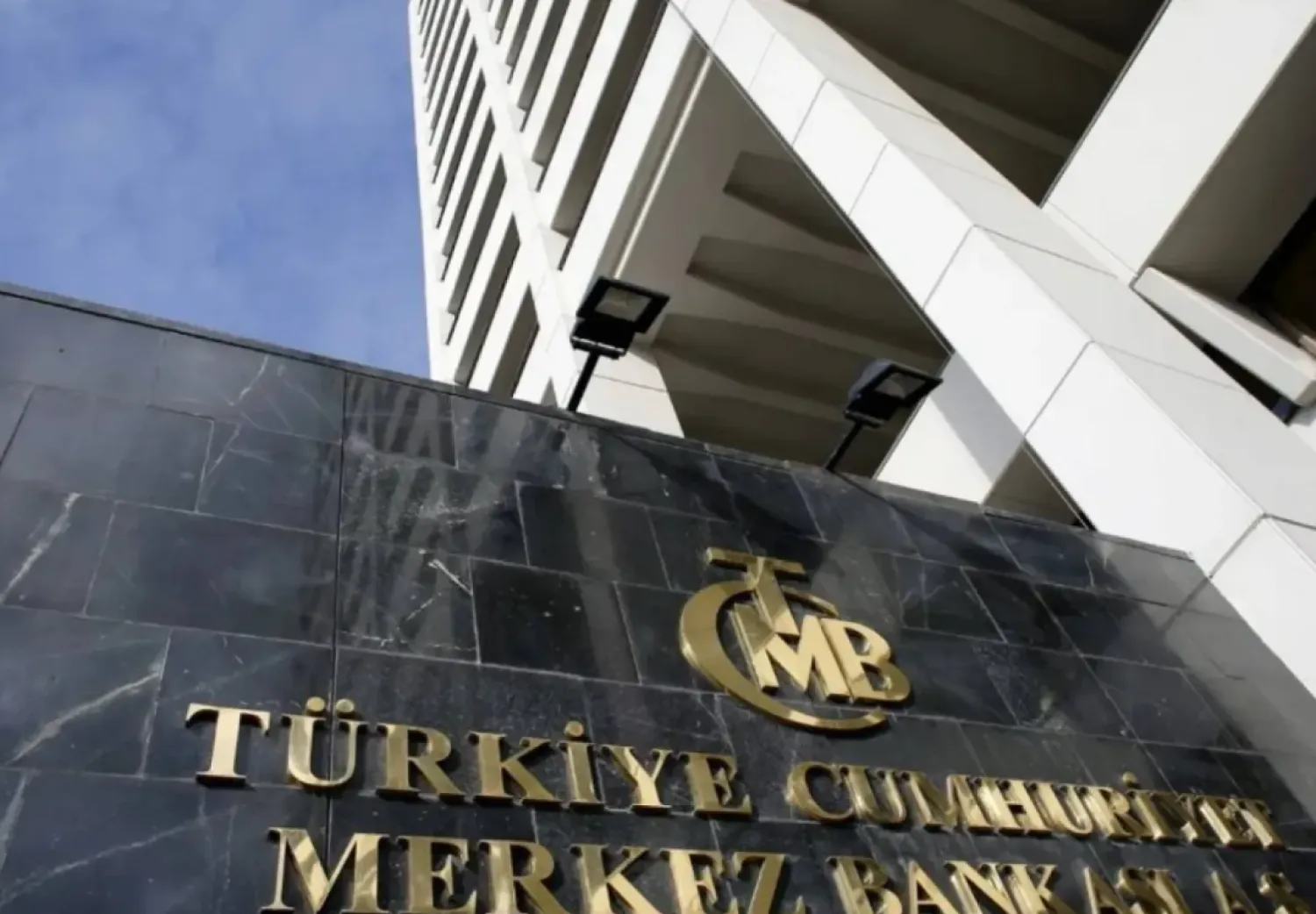



Türkiye's Central Bank Lifts 2026 Inflation Forecasts

Türkiye's Central Bank headquarters is seen in Ankara, Türkiye in this January 24, 2014 file photo. REUTERS/Umit Bektas
TT

Türkiye's Central Bank Lifts 2026 Inflation Forecasts

Türkiye's Central Bank headquarters is seen in Ankara, Türkiye in this January 24, 2014 file photo. REUTERS/Umit Bektas

Türkiye's central bank on Thursday increased its estimates for inflation as officials try to rein in soaring price increases that have weighed on the economy for years.

The official inflation rate is now seen falling to between 15 and 21 percent by the end of this year, up from a previous forecast of 13 to 19 percent.

"We have increased our forecast range because of better visibility on certain risks," the central bank's governor Fatih Karahan said in a statement, without further detail, Reuters reported.

The forecast would still be a sharp decline from the annual inflation rate of 30.7 percent in January, following years of interest rate hikes in a bid to slow runaway price increases.

However, the official figures are disputed by ENAG, a group of independent economists that publishes its own data every month, with the organisation saying year-on-year inflation stood at 53.4 percent in January.

Türkiye has experienced double-digit inflation since 2019, making life increasingly more expensive for millions of people, after President Recep Tayyip Erdogan ordered interest rate cuts in a bid to spur growth.

The cuts sent the lira plunging on currency markets, further fuelling inflation and leading Erdogan to reverse his unorthodox policy in 2023.

But in January the central bank cut its benchmark interest rate to 37 percent, citing a continued slowing of price increases.


Mawani Reports 2.01% Increase in Container Throughput for January 2026

Mawani Reports 2.01% Increase in Container Throughput for January 2026
TT

Mawani Reports 2.01% Increase in Container Throughput for January 2026

Mawani Reports 2.01% Increase in Container Throughput for January 2026

Ports overseen by the Saudi Ports Authority (Mawani) reported a 2.01% increase in container handling for January 2026, totaling 738,111 TEUs, up from 723,571 TEUs in January 2025. Transshipment containers rose significantly by 22.44%, reaching 184,019 TEUs compared to 150,295 TEUs the previous year.

However, the number of imported containers decreased by 3.23% to 284,375 TEUs, and exported containers dropped by 3.47% to 269,717 TEUs year-over-year, SPA reported.

Passenger numbers surged by 42.27%, totaling 143,566 passengers compared to 100,909 last year. Vehicle volumes increased by 3.31% to 109,097, and the ports received 886,908 heads of livestock, a 49.86% increase from the same period in 2025.

In terms of cargo tonnage, liquid bulk cargo rose by 0.28% to 14,102,495 tons, general cargo totaled 839,987 tons, and solid bulk cargo reached 4,263,168 tons. The total tonnage handled was 19,205,650 tons, reflecting a 3.04% decrease from the previous year. Vessel traffic recorded 1,121 ships, a slight decrease of 1.75%.

This increase in container throughput supports trade, stimulates the maritime transport industry, and enhances supply chains and food security. These achievements align with the National Transport and Logistics Strategy, reinforcing Saudi Arabia's position as a global logistics hub.

In 2025, Mawani ports achieved a 10.58% increase in total handled containers, reaching 8,317,235 TEUs, while transshipment containers for the year rose by 11.78% to 1,927,348 TEUs.


Oil Prices Edge Lower as IEA Reduces Demand Forecast

Oil platforms and pumpjacks at Lake Maracaibo, in Cabimas, Venezuela, January 26, 2026. REUTERS/Leonardo Fernandez Viloria/File Photo
TT

Oil Prices Edge Lower as IEA Reduces Demand Forecast

Oil platforms and pumpjacks at Lake Maracaibo, in Cabimas, Venezuela, January 26, 2026. REUTERS/Leonardo Fernandez Viloria/File Photo

Oil prices slipped on Thursday as investors weighed the International Energy Agency's lowering of its global oil demand forecast for 2026 against potential escalation of US-Iran tensions.

Brent crude oil futures were down 19 cents, or 0.27%, at $69.21 a barrel by 1232 GMT. US West Texas Intermediate crude fell 8 cents, or 0.12%, to $64.55.

Global oil demand will rise more slowly than previously expected this year, the IEA said on Thursday while projecting a sizeable surplus despite outages that cut supply in January.

The Brent and WTI benchmarks reversed gains to turn negative after the IEA's monthly report, having derived support earlier from concerns over the US-Iran backdrop.

US President Donald Trump said after talks with Israeli Prime Minister Benjamin Netanyahu on Wednesday that they had yet to reach a definitive agreement on how to move forward with Iran but that negotiations with Tehran would continue.

Trump had said on Tuesday that he was considering sending a second aircraft carrier to the Middle East if a deal is not reached with Iran. The date and venue of the next round of talks have yet to be announced.

A hefty build in US crude inventories had capped the early price gains. US crude inventories rose by 8.5 million barrels to 428.8 million barrels last week, the Energy Information Administration said, far exceeding the 793,000 increase expected by analysts in a Reuters poll.

US refinery utilization rates dropped by 1.1 percentage points in the week to 89.4%, EIA data showed.

On the supply side, Russia's seaborne oil products exports in January rose by 0.7% from December to 9.12 million metric tons on high fuel output and a seasonal drop in domestic demand, data from industry sources and Reuters calculations showed.