

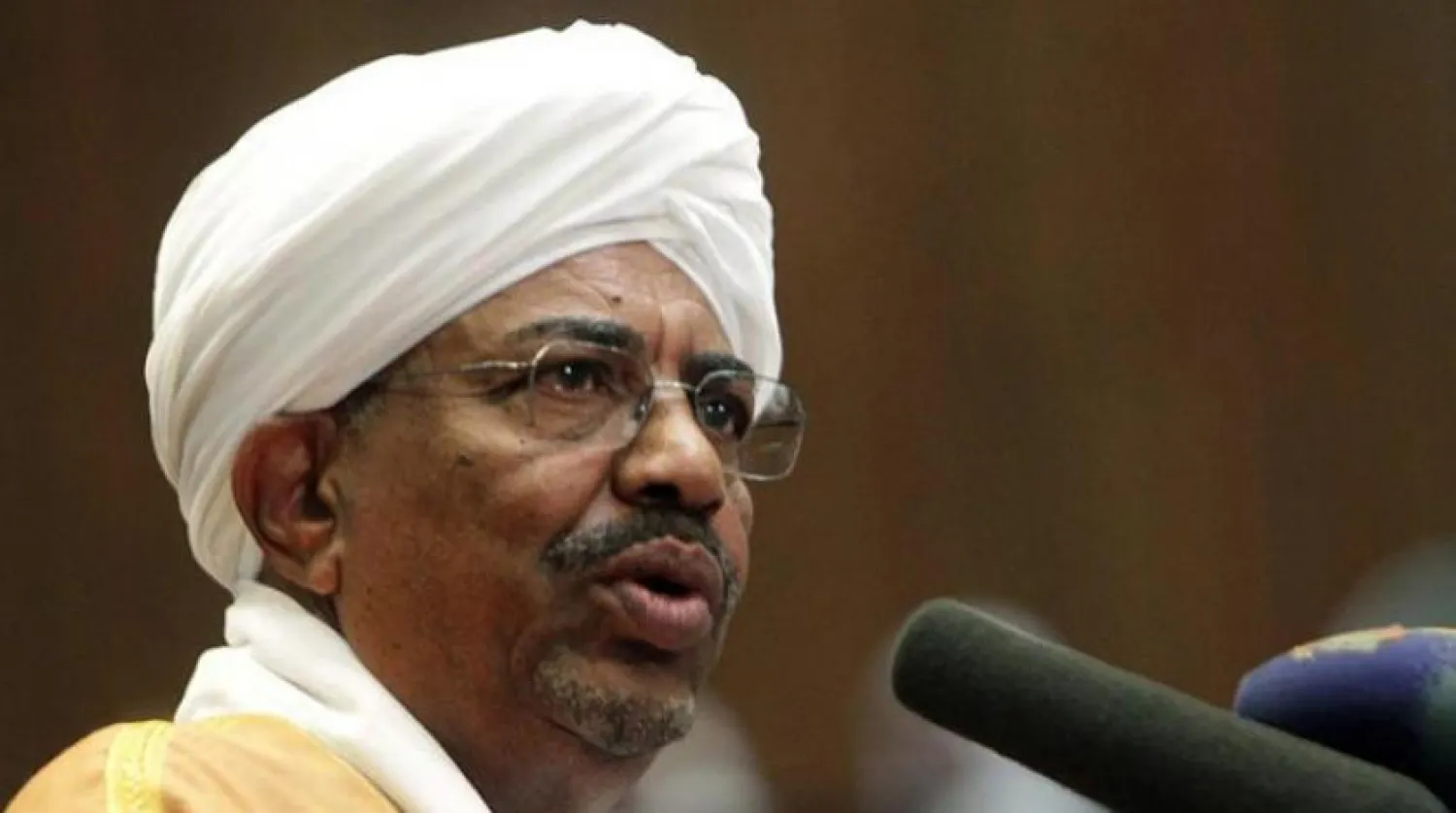

Bashir Criticizes West after Resumption of Sudanese-US Dialogue

Bashir Criticizes West after Resumption of Sudanese-US Dialogue
TT

Bashir Criticizes West after Resumption of Sudanese-US Dialogue

Bashir Criticizes West after Resumption of Sudanese-US Dialogue

Sudanese President Omar al-Bashir Tuesday sharply criticized the US and Western policies in the region, saying his country would not link its fate to any party.

His comments were made after the official announcement of the beginning of the second phase of the Sudanese-US dialogue aimed at removing Sudan from the list of state sponsors of terrorism.

The US embassy, for its part, confirmed Tuesday Washington’s seriousness in removing Sudan from the terror list, provided that it is committed to the recently announced “5+1” plan.

Addressing the 29th anniversary of the establishment of the Popular Defense Forces (PDF) in Kosti, White Nile State, Bashir demanded the US to stop any assistance rendered to his country, saying Sudan would “take refuge in Allah [God] alone”.

“We wouldn’t kneel or prostrate to anyone except Allah … Sudan is the most country being targeted and fought against because of its adherence to Sharia [Islamic Law] and independent decision,” he added

Sudan is still strong despite the dire circumstances compared to other nations in the region that have been destroyed by wars and conflicts, he added.

In October 2017, Washington decided the lift of a 20-year embargo on Sudan, saying Khartoum has fully cooperated on five key areas of concerns agreed in December 2016.

These areas include counterterrorism cooperation, humanitarian access to the conflict areas, and Sudan’s support to regional efforts to end the South Sudanese conflict and to fight against the Ugandan rebel Lord Resistance Army. In July 2017, Trump administration added the commitment to the international sanctions on North Korea.

Meanwhile, US Charge d’Affaires in Khartoum Steven Koutsis held a news conference on the second phase of dialogue between Sudan and the US

According to a press release from the US embassy, Koutsis said: “The completion of the Five-Track Engagement Plan and the lifting of certain sanctions in October 2017 marked an important milestone in US-Sudanese relations”.

“However, our progress thus far serves as only the first step in a long road to improving bilateral relations,” he said.

“We have therefore launched the ‘Phase II’ framework for our bilateral engagement, which is designed to expand our cooperation, facilitate meaningful reforms in Sudan and achieve further progress in a number of areas of longstanding mutual concern,” added the US envoy.

He pointed out that the second phase “has the potential to make the US-Sudan relationship more productive than it has been in 30 years,” adding that Washington “remains committed to positive engagement with Sudan and to achieving our shared goals on the basis of mutual understanding and respect.”

According to Koutsis, the shared second phase priorities between the two sides include expanding counter-terrorism cooperation, enhancing human rights protections and practices, improving humanitarian access throughout Sudan, ceasing internal hostilities to create a conducive environment for progress in Sudan’s peace process, taking necessary steps to address certain outstanding terrorism-related claims and adhering to UN Security Council resolutions related to North Korea.

“As part of this engagement, the United States is prepared to initiate the process of rescinding Sudan’s designation as a State Sponsor of Terrorism — if the determination is made that all of the relevant statutory criteria have been met, and if Sudan makes progress in addressing each of the six key areas of mutual concern prioritized by the Phase II framework,” he stressed.



EU Condemns Israel's West Bank Control Measures

The Israeli settlement of Har Homa, seen from the West Bank city of Bethlehem, Tuesday, Dec. 17, 2024. (AP)
TT

EU Condemns Israel's West Bank Control Measures

The Israeli settlement of Har Homa, seen from the West Bank city of Bethlehem, Tuesday, Dec. 17, 2024. (AP)

The European Union on Monday condemned new Israeli measures to tighten control of the West Bank and pave the way for more settlements in the occupied Palestinian territory, AFP reported.

"The European Union condemns recent decisions by Israel's security cabinet to expand Israeli control in the West Bank. This move is another step in the wrong direction," EU spokesman Anouar El Anouni told journalists.


Atrocities in Sudan's El-Fasher Were 'Preventable Human Rights Catastrophe'

Sudanese displaced people who left El Fasher after its fall, sit in the shade in Tawila at the Rwanda camp reception point on December 17, 2025. (Photo by AFP)
TT

Atrocities in Sudan's El-Fasher Were 'Preventable Human Rights Catastrophe'

Sudanese displaced people who left El Fasher after its fall, sit in the shade in Tawila at the Rwanda camp reception point on December 17, 2025. (Photo by AFP)

The atrocities unleashed on El-Fasher in Sudan's Darfur region last October were a "preventable human rights catastrophe", the United Nations said Monday, warning they now risked being repeated in the neighbouring Kordofan region.


"My office sounded the alarm about the risk of mass atrocities in the besieged city of El-Fasher for more than a year ... but our warnings were ignored," UN rights chief Volker Turk told the Human Rights Council in Geneva.


He added that he was now "extremely concerned that these violations and abuses may be repeated in the Kordofan region".


Arab League Condemns Israel's Decisions to Alter Legal, Administrative Status of West Bank

A general view shows the opening session of the meeting of Arab foreign ministers at the Arab League Headquarters (Reuters)
TT

Arab League Condemns Israel's Decisions to Alter Legal, Administrative Status of West Bank

A general view shows the opening session of the meeting of Arab foreign ministers at the Arab League Headquarters (Reuters)

The General Secretariat of the Arab League strongly condemned decisions by Israeli occupation authorities to impose fundamental changes on the legal and administrative status of the occupied Palestinian territories, particularly in the West Bank, describing them as a dangerous escalation and a flagrant violation of international law, international legitimacy resolutions, and signed agreements, SPA reported.

In a statement, the Arab League said the measures include facilitating the confiscation of private Palestinian property and transferring planning and licensing authorities in the city of Hebron and the area surrounding the Ibrahimi Mosque to occupation authorities.

It warned of the serious repercussions of these actions on the rights of the Palestinian people and on Islamic and Christian holy sites.

The statement reaffirmed the Arab League’s firm support for the legitimate rights of the Palestinian people, foremost among them the establishment of their independent state on the June 4, 1967 borders, with East Jerusalem as its capital.