


Hezbollah Not Enthusiastic about Lebanon’s Defense Strategy

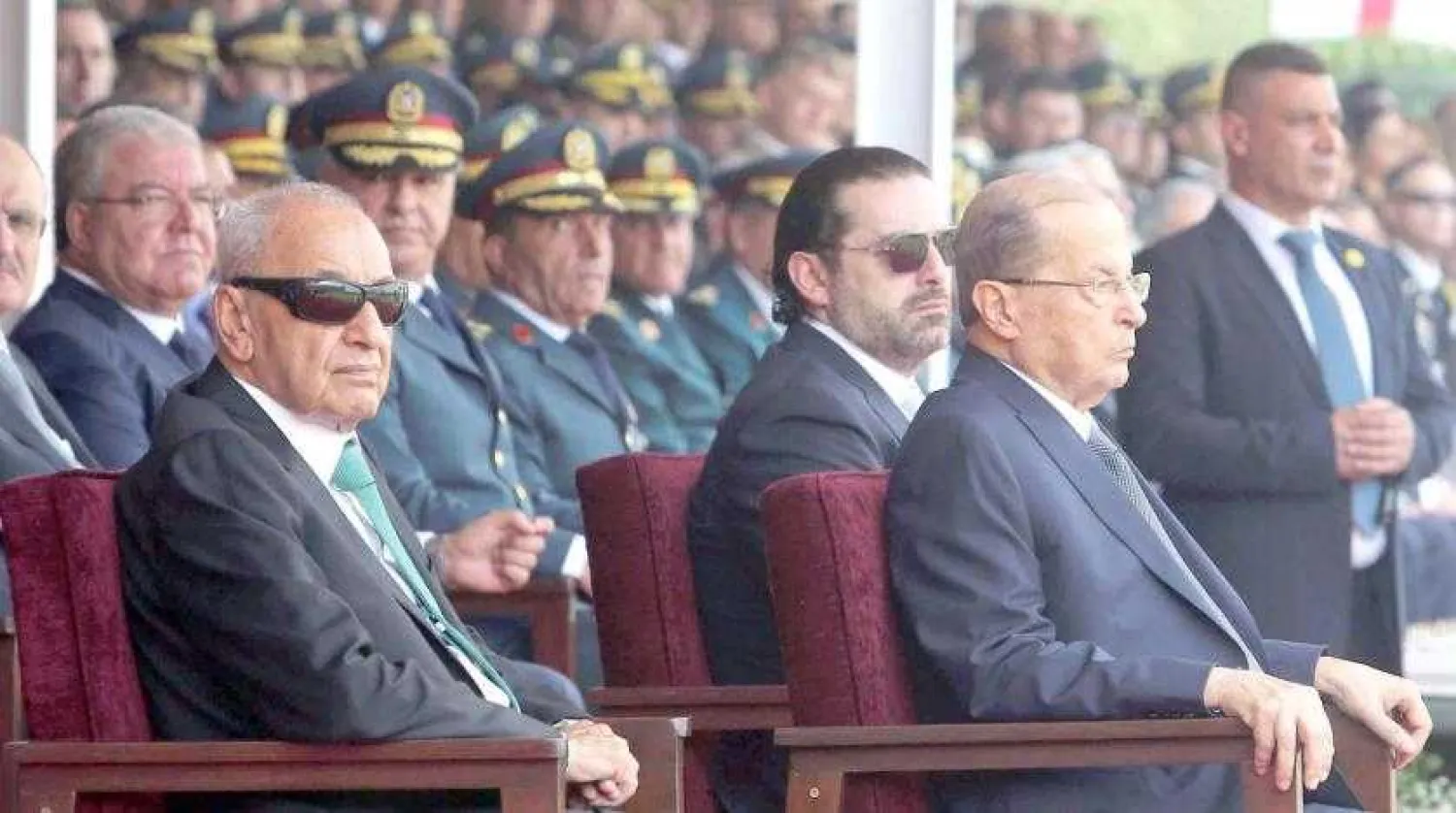
Lebanon’s President Michel Aoun (R), Prime Minister Saad Hariri (2nd R) and Parliament Speaker Nabih Berri (L) attend a parade at a military academy in Fayadieh near Beirut. Reuters
TT

Hezbollah Not Enthusiastic about Lebanon’s Defense Strategy

Lebanon’s President Michel Aoun (R), Prime Minister Saad Hariri (2nd R) and Parliament Speaker Nabih Berri (L) attend a parade at a military academy in Fayadieh near Beirut. Reuters

Lebanon’s defense strategy, which should decide on the fate of Hezbollah’s arms, has returned to the table of negotiations. President Michel Aoun promised last March to discuss the matter following the parliamentary elections held across the country six months ago.

Discussions should pave the way for the potential integration of Hezbollah’s arsenal within the framework of a national defense strategy.

However, the Shiite party does not seem enthusiastic about returning to the negotiating table where rival parties should engage in dialogue to safeguard the country’s stability and advance its national interest.

Military experts said current local and regional conditions may not be ripe to place the defense strategy back on the negotiation table. They believe that no solutions are possible in the near future, mainly due to Hezbollah turning into a “regional military force.”

Member of Strong Lebanon parliamentary bloc MP Shamel Roukoz told Asharq Al-Awsat that there should be an effective government capable of knowing the risks facing Lebanon and coming up with measures to counter them.

“There are two principle threats ... the first is the Israeli enemy and the second is terrorism,” he said.

Dialogue on the defense strategy was halted at the end of the term of former President Michel Suleiman in 2014.

The country’s leaders have failed in national dialogue sessions held over the span of eight years to agree on the fate of Hezbollah’s arms.

In September 2012, Suleiman presented his vision of a national strategy for the defense of Lebanon, stating that the appropriate frameworks and mechanisms should be agreed upon to use Hezbollah’s weapons and to place them under the army’s mandate. Lebanese leaders discussed this strategy without reaching a conclusion.

But decision-makers adopted the-called “Baabda Declaration”. Article 12 of the Declaration calls for “dissociating Lebanon from the policy of regional and international axes and conflicts, and avoiding the negative repercussions of regional tensions and crises.”

However, with Hezbollah’s decision to send its fighters to Syria to participate in the war, the party has bluntly violated the Declaration.

Head of Hezbollah’s parliamentary bloc MP Mohammed Raad has said that the Declaration was “born dead and is mere ink on paper.”

Lebanese Forces deputy Wehbe Qatisha told Asharq Al-Awsat that defense strategy discussions should not be linked to the government crisis.

“A national dialogue can be launched to discuss the defense strategy immediately,” he said, adding that the LF party has a clear vision concerning the issue.

The MP said claims of Hezbollah becoming a regional military force should not make it difficult for Lebanese parties to discuss the fate of its arms.

“A proposal stipulating that Hezbollah be merged with the Lebanese army is impossible and unacceptable,” he added.



EU Condemns Israel's West Bank Control Measures

The Israeli settlement of Har Homa, seen from the West Bank city of Bethlehem, Tuesday, Dec. 17, 2024. (AP)
TT

EU Condemns Israel's West Bank Control Measures

The Israeli settlement of Har Homa, seen from the West Bank city of Bethlehem, Tuesday, Dec. 17, 2024. (AP)

The European Union on Monday condemned new Israeli measures to tighten control of the West Bank and pave the way for more settlements in the occupied Palestinian territory, AFP reported.

"The European Union condemns recent decisions by Israel's security cabinet to expand Israeli control in the West Bank. This move is another step in the wrong direction," EU spokesman Anouar El Anouni told journalists.


Atrocities in Sudan's El-Fasher Were 'Preventable Human Rights Catastrophe'

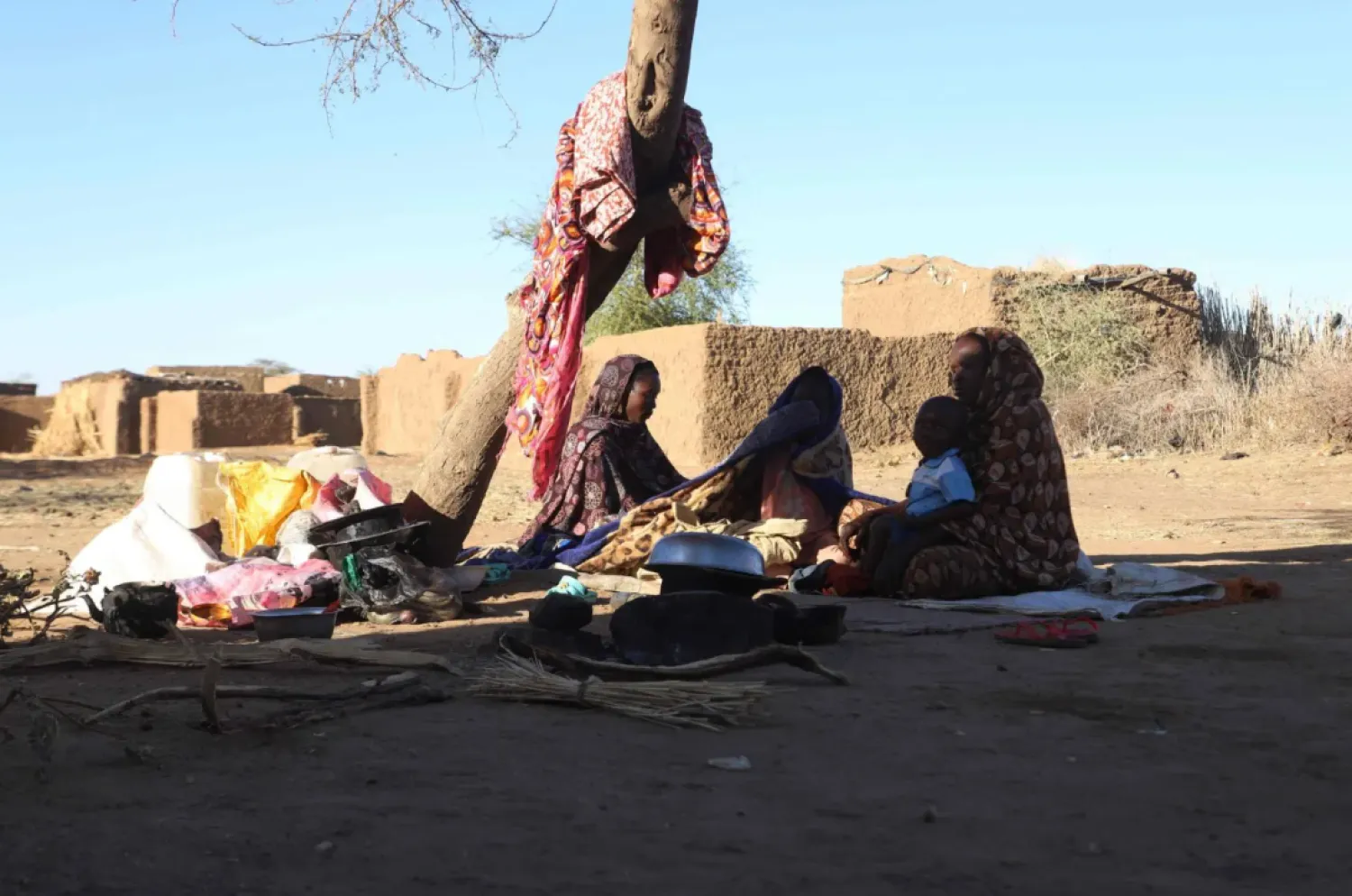
Sudanese displaced people who left El Fasher after its fall, sit in the shade in Tawila at the Rwanda camp reception point on December 17, 2025. (Photo by AFP)
TT

Atrocities in Sudan's El-Fasher Were 'Preventable Human Rights Catastrophe'

Sudanese displaced people who left El Fasher after its fall, sit in the shade in Tawila at the Rwanda camp reception point on December 17, 2025. (Photo by AFP)

The atrocities unleashed on El-Fasher in Sudan's Darfur region last October were a "preventable human rights catastrophe", the United Nations said Monday, warning they now risked being repeated in the neighbouring Kordofan region.


"My office sounded the alarm about the risk of mass atrocities in the besieged city of El-Fasher for more than a year ... but our warnings were ignored," UN rights chief Volker Turk told the Human Rights Council in Geneva.


He added that he was now "extremely concerned that these violations and abuses may be repeated in the Kordofan region".


Arab League Condemns Israel's Decisions to Alter Legal, Administrative Status of West Bank

A general view shows the opening session of the meeting of Arab foreign ministers at the Arab League Headquarters (Reuters)
TT

Arab League Condemns Israel's Decisions to Alter Legal, Administrative Status of West Bank

A general view shows the opening session of the meeting of Arab foreign ministers at the Arab League Headquarters (Reuters)

The General Secretariat of the Arab League strongly condemned decisions by Israeli occupation authorities to impose fundamental changes on the legal and administrative status of the occupied Palestinian territories, particularly in the West Bank, describing them as a dangerous escalation and a flagrant violation of international law, international legitimacy resolutions, and signed agreements, SPA reported.

In a statement, the Arab League said the measures include facilitating the confiscation of private Palestinian property and transferring planning and licensing authorities in the city of Hebron and the area surrounding the Ibrahimi Mosque to occupation authorities.

It warned of the serious repercussions of these actions on the rights of the Palestinian people and on Islamic and Christian holy sites.

The statement reaffirmed the Arab League’s firm support for the legitimate rights of the Palestinian people, foremost among them the establishment of their independent state on the June 4, 1967 borders, with East Jerusalem as its capital.