

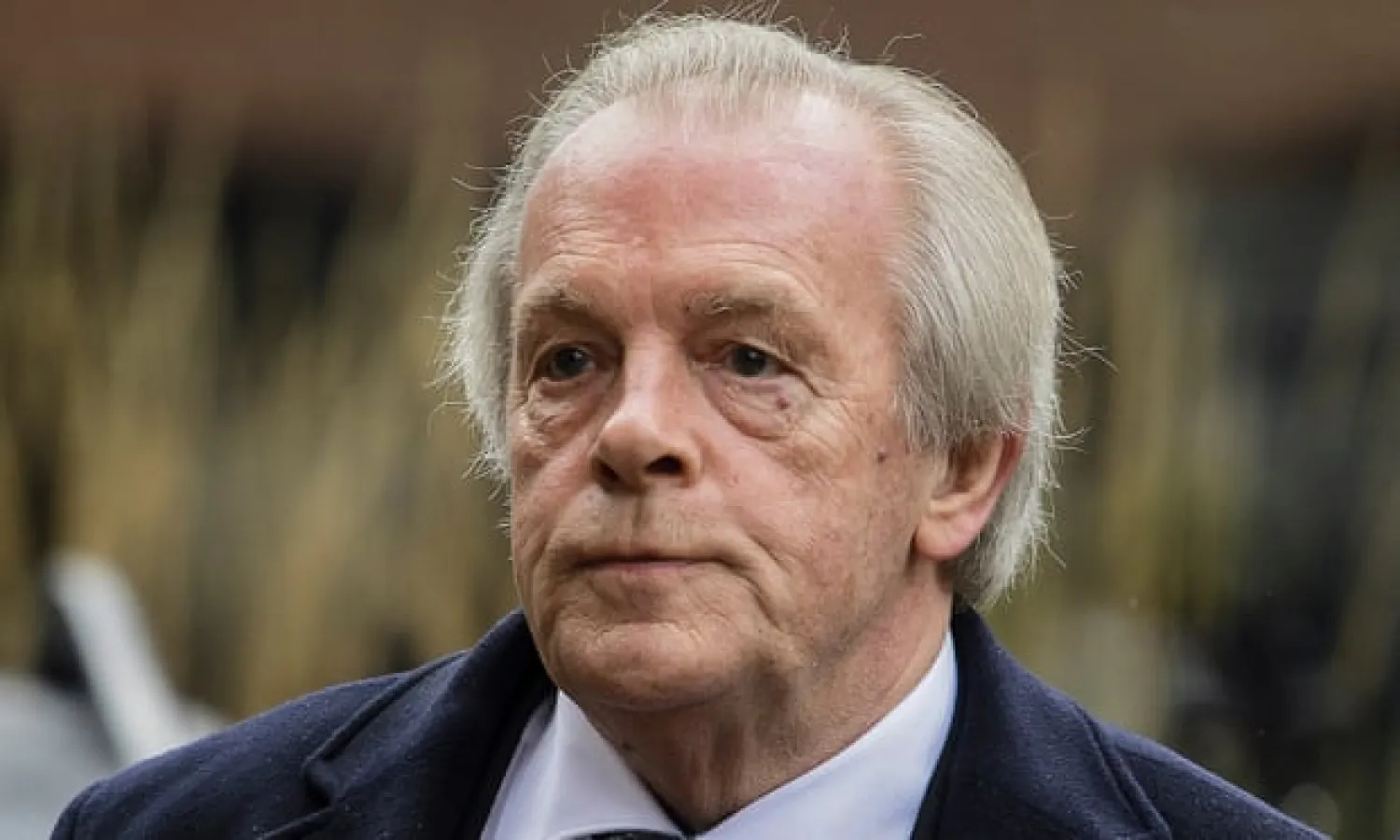

Gordon Taylor, Football’s Fattest Cat, Must Go If PFA Is to Modernise

 Gordon Taylor, who has just celebrated his 40th anniversary at the PFA, who became chairman in November 1978 and chief executive three years later. Photograph: Ben Cawthra/REX/Shutterstock
Gordon Taylor, who has just celebrated his 40th anniversary at the PFA, who became chairman in November 1978 and chief executive three years later. Photograph: Ben Cawthra/REX/Shutterstock
TT

Gordon Taylor, Football’s Fattest Cat, Must Go If PFA Is to Modernise

 Gordon Taylor, who has just celebrated his 40th anniversary at the PFA, who became chairman in November 1978 and chief executive three years later. Photograph: Ben Cawthra/REX/Shutterstock
Gordon Taylor, who has just celebrated his 40th anniversary at the PFA, who became chairman in November 1978 and chief executive three years later. Photograph: Ben Cawthra/REX/Shutterstock

What would your reaction be if I were to point out that in the past week Gordon Taylor has quietly passed the 40th anniversary since he took his place at football’s top table and set about the process of transforming himself from a barrel-chested winger at Bury, from the puddles and potholes of the old Third Division, into a life of establishment wealth?

If you could put aside any cynicism, try not to dwell too long on the deficiencies of his organisation and overlook that it is traditionally he, not Richard Scudamore, who is the real Bagpuss of football’s fat-cat culture, it might even be possible to manage some grudging admiration for such a feat of longevity.

When Taylor replaced Derek Dougan as chairman of the Professional Footballers’ Association on 13 November, 1978, the other stories of the time included a strike of bakery workers that had led to bread rationing. Watership Down was at the pictures. A pint of milk cost 11p and the average annual salary was £5,440. Taylor had chestnut hair, a kipper tie and a boy-next-door look. If, without wishing to be too cruel, you lived next door to a boy who turned out to be monotone, divisive, wildly over‑remunerated and puffed up with self-importance.

In fairness to the old boy, nobody could argue that, on a personal level, his professional life has not been a success when Taylor has hived off preposterously large amounts of money for himself, held a position of influence for four decades and been decorated in the 2008 New Year honours list with an OBE that I am reliably assured doesn’t stand for Other Buggers’ Efforts.

Taylor’s first interview as chairman, three years before taking the chief executive role, emphasised his desire to create a better understanding between players, their clubs and referees. He might not have succeeded on that front but he must have done something right to last so long and, though it is a challenge sometimes to remember exactly what that is, he did earn the accolade from the Times in 1985 for being “undoubtedly the most impressive administrator and negotiator in football”. Most heroically, you might recall, when the big television money arrived and he threatened a players’ strike unless his union clawed its way to a decent wedge.

The Premier League duly came up with an offer to settle everything amicably. Gordon’s response, true to form, was that they might have to be a lot more amicable than that.

Out of that, he hasn’t done too badly bearing in mind we live in an age when marvelling, queasily, at the sums he pays himself feels like an annual part of the football calendar. Last year, the PFA’s accounts revealed it was £2.29m. Previously, his earnings multiplied almost three fold, from £1.13m to £3.37m after bonuses. Which is nice work if you can get it: Taylor was not just raking in more than any other trade union boss on the planet, but upwards of Didier Deschamps and Joachim Löw, managers of the last two World Cup‑winning sides.

It is no wonder he has taken exception that Ben Purkiss, the current PFA chairman, has broken ranks by calling for an independent review into how the organisation is run and the possibility, ultimately, of regime change. “Sometimes you have to make a stand for what is right,” Purkiss says. “Football is rapidly evolving, players are rapidly evolving and the PFA needs to evolve, too. Players past, present and future need a PFA for the modern player.” Which is one way of saying the organisation is stuck in a time warp.

Taylor, of course, will see it differently and perhaps we should no longer be surprised by the self‑interest at this end of the sport when the Strange Case of Richard Scudamore’s Golden Handshake has given us another eye-watering glimpse into the football bubble over the last week. The news of Bruce Buck, Chelsea’s chairman, arranging for the Premier League’s chief executive – a friend with whom he goes shooting, we are informed – to receive a £5m farewell gift, comprising £250,000 from each club, was certainly a spectacular low. Though we probably should not be surprised that Taylor was conspicuous by his absence in the stampede to point that out. It must be quite hard, I suspect, lecturing about money when one Premier League chairman has previously accused Taylor of “building a mausoleum of greed” and, lest it be forgotten, the PFA’s leader once signed a hush-hush £700,000 payment from News International for being a victim of phone-hacking, as opposed to exposing a scandal he might have reasonably assumed had affected his members. As the News of the World’s lawyers put it in a letter to the Commons culture, media and sport committee, Taylor’s legal team was operating with the clear instructions he “wanted to be vindicated or made rich”.

If nothing else, he has achieved that last ambition. I do wonder, though, if there is ever a flicker of embarrassment when he considers that his last reported salary was more than four times the amount the PFA paid that year in benevolent grants for the thousands of former professionals it is supposed to represent and look after.

Does the thought occur that the financial distribution can look wildly disproportionate, callous even, when there are so many veterans of the sport hobbling around on arthritic joints or struggling in some cases, through the fog of irreparably damaged minds, to remember the days when they pulled on a football strip? Can Gordon look in the mirror and tell himself, hand on heart, that his priorities have not been badly distorted when most reasonable people might assume the principal purpose of the PFA is to care for the members who have addictions, mental health issues, serious financial difficulties and so on? Is he so brass-necked he can possibly find justification that an organisation with £50m in the bank has, according to Purkiss, spent only £100,000 on its studies into dementia? Or that it was 2002 when the PFA, together with the Football Association, announced a joint 10-year research programme but not until late 2017, unforgivably, that they decided it was time to go through with it properly?

The family of Jeff Astle, one of the men who suffered catastrophic brain trauma from repeatedly heading the ball, has already called for Taylor to resign. Astle was 59 when he died and maybe you caught the BBC Inside Out feature when Dawn, the daughter of the former England and West Bromwich Albion striker, walked out of a meeting at PFA headquarters with the man who should have been offering her, and the sport as a whole, more than watery excuses. Not that the evidence of Taylor’s jumbled priorities is restricted to just the one matter. It intrigues me, for example, that the PFA can fork out nearly £2m for an LS Lowry painting, plus £70,000 every year on a box at Manchester City and goodness knows how much more on a museum’s worth of other football memorabilia, but will donate only £125,000 annually to keep the chronically under-resourced Kick It Out ticking over.

I also wonder if it ever crosses Gordon’s mind that when the Dispatches documentary Soccer’s Foul Play highlighted, in 1997, the monstrous crimes committed by Barry Bennell, as well as flagging up the very significant likelihood of other paedophiles lurking within the sport, that was the point the leader of the PFA should have recognised there was a serious problem, rather than when Andy Woodward came forward, via the Guardian, almost 20 years later.

It has not been easy for the FA, Manchester City and some of the other clubs who are most seriously implicated in football’s sexual-abuse scandal to understand why more was not done at the time, mostly because they are investigating regimes that are long gone. But the PFA and Gordon Taylor don’t have that get-out clause. He was there. He has been full-time at the PFA since 1980 and chief executive since 1981.

Can he understand, therefore, why so many of the victims are looking his way, wondering why the PFA – the players’ union, for heaven’s sake – is guilty of, at best, a startling lack of curiosity? Or why Deborah Davies, the brilliant journalist who put together the documentary for Channel 4, says his apparent inaction – “I wasn’t aware of any serious commitment by Gordon Taylor to investigate” – was particularly shocking given that he had helped to develop a youth training scheme programme throughout the game? “That was the 1980s,” she says, “when so many of those 16-year-olds had endured years of sexual abuse, partly because they felt no one in the professional game would support them if they spoke out.”

As you might expect, the PFA has shifted its priorities, post-Woodward, and been particularly obliging to SAVE, one of the survivors’ groups. But the point remains: how many boys could have been saved if the relevant authorities had acted differently at the time? Some of the letters and other messages that reached the PFA after Dispatches were heartbreaking. And if Clive Sheldon, the QC in charge of the FA’s independent inquiry, makes the same observation, as he undoubtedly should, it feels perfectly reasonable to suggest Taylor should do the decent thing and walk.

Don’t bet on it, though. There is a reason why the Daily Mail’s Charlie Sale described Taylor as “untouchable” recently, surrounded by some loyal allies in an organisation that has the feel sometimes of a personalty cult, dominated by one man. The PFA has some good people among its ranks. It is also desperately in need of modernisation and the bottom line here is perfectly simple: it will never happen until there has been a change at the top.

What puzzles me, more than anything, is the general reaction throughout football when the sport is reminded of Taylor’s elastic principles. The time, for instance, it was reported that the man who backed a “zero-tolerance” policy towards gambling had splurged £4m on 2,000 bets and owed a bookmaker more than £100,000. Or you might remember his efforts to bar the agent Rachel Anderson from his organisation’s annual dinner because he wanted a men-only event; the cack-handed apology after likening Ched Evans to the Hillsborough justice campaigners; the tragicomedy of Reginald D Hunter’s N-word routine at the PFA’s 2013 awards do; and on and on. Every time, the sport seems to roll its eyes, nod knowingly and accept that is the way Gordon Taylor OBE operates. Nobody, until now, seems willing to take him on properly and ask whether it should be better, and what needs to be done about it.

Perhaps that is because he is not an easy man to take on. Purkiss now says he has been informed his eligibility as chairman is under question, on the grounds that the 34-year-old defender is currently a non-contract player at Walsall. It stinks, and once again I am reminded of what Gareth Southgate said about loving the sport but not necessarily liking the industry. Though, strictly speaking, it was William McGregor, founder of the Football League, who made the point first. McGregor was quoted, in 1909, in League Football and the Men Who Made It. “Beware of the clever, sharp men who are creeping into the game,” he said, very astutely.

The Guardian Sport


‘Don’t Jump in Them’: Olympic Athletes’ Medals Break During Celebrations

Gold medalists team USA celebrate during the medal ceremony after the Team Event Free Skating of the Figure Skating competitions at the Milano Cortina 2026 Winter Olympic Games, in Milan, Italy, 08 February 2026. (EPA)
TT

‘Don’t Jump in Them’: Olympic Athletes’ Medals Break During Celebrations

Gold medalists team USA celebrate during the medal ceremony after the Team Event Free Skating of the Figure Skating competitions at the Milano Cortina 2026 Winter Olympic Games, in Milan, Italy, 08 February 2026. (EPA)

Handle with care. That's the message from gold medalist Breezy Johnson at the Milan Cortina Winter Olympics after she and other athletes found their medals broke within hours.

Olympic organizers are investigating with "maximum attention" after a spate of medals have fallen off their ribbons during celebrations on the opening weekend of the Games.

"Don’t jump in them. I was jumping in excitement, and it broke," women's downhill ski gold medalist Johnson said after her win Sunday. "I’m sure somebody will fix it. It’s not crazy broken, but a little broken."

TV footage broadcast in Germany captured the moment biathlete Justus Strelow realized the mixed relay bronze he'd won Sunday had fallen off the ribbon around his neck and clattered to the floor as he danced along to a song with teammates.

His German teammates cheered as Strelow tried without success to reattach the medal before realizing a smaller piece, seemingly the clasp, had broken off and was still on the floor.

US figure skater Alysa Liu posted a clip on social media of her team event gold medal, detached from its official ribbon.

"My medal don’t need the ribbon," Liu wrote early Monday.

Andrea Francisi, the chief games operations officer for the Milan Cortina organizing committee, said it was working on a solution.

"We are aware of the situation, we have seen the images. Obviously we are trying to understand in detail if there is a problem," Francisi said Monday.

"But obviously we are paying maximum attention to this matter, as the medal is the dream of the athletes, so we want that obviously in the moment they are given it that everything is absolutely perfect, because we really consider it to be the most important moment. So we are working on it."

It isn't the first time the quality of Olympic medals has come under scrutiny.

Following the 2024 Summer Olympics in Paris, some medals had to be replaced after athletes complained they were starting to tarnish or corrode, giving them a mottled look likened to crocodile skin.


African Players in Europe: Ouattara Fires Another Winner for Bees

Football - Premier League - Newcastle United v Brentford - St James' Park, Newcastle, Britain - February 7, 2026 Brentford's Dango Ouattara celebrates scoring their third goal with Brentford's Rico Henry. (Reuters)
TT

African Players in Europe: Ouattara Fires Another Winner for Bees

Football - Premier League - Newcastle United v Brentford - St James' Park, Newcastle, Britain - February 7, 2026 Brentford's Dango Ouattara celebrates scoring their third goal with Brentford's Rico Henry. (Reuters)

Burkina Faso striker Dango Ouattara was the Brentford match-winner for the second straight weekend when they triumphed 3-2 at Newcastle United.

The 23-year-old struck in the 85th minute of a seesaw Premier League struggle in northeast England. The Bees trailed and led before securing three points to go seventh in the table.

Last weekend, Ouattara dented the title hopes of third-placed Aston Villa by scoring the only goal at Villa Park.

AFP Sport highlights African headline-makers in the major European leagues:

ENGLAND

DANGO OUATTARA (Brentford)

With the match at Newcastle locked at 2-2, the Burkinabe sealed victory for the visitors at St James' Park by driving a left-footed shot past Magpies goalkeeper Nick Pope to give the Bees a first win on Tyneside since 1934. Ouattara also provided the cross that led to Vitaly Janelt's headed equalizer after Brentford had fallen 1-0 behind.

BRYAN MBEUMO (Manchester Utd)

The Cameroon forward helped the Red Devils extend their perfect record under caretaker manager Michael Carrick to four games by scoring the opening goal in a 2-0 win over Tottenham after Spurs had been reduced to 10 men by captain Cristian Romero's red card.

ISMAILA SARR (Crystal Palace)

The Eagles ended their 12-match winless run with a 1-0 victory at bitter rivals Brighton thanks to Senegal international Sarr's 61st-minute goal when played in by substitute Evann Guessand, the Ivory Coast forward making an immediate impact on his Palace debut after joining on loan from Aston Villa during the January transfer window.

ITALY

LAMECK BANDA (Lecce)

Banda scored direct from a 90th-minute free-kick outside the area to give lowly Leece a precious 2-1 Serie A victory at home against mid-table Udinese. It was the third league goal this season for the 25-year-old Zambia winger. Leece lie 17th, one place and three points above the relegation zone.

GERMANY

SERHOU GUIRASSY (Borussia Dortmund)

Guirassy produced a moment of quality just when Dortmund needed it against Wolfsburg. Felix Nmecha's silky exchange with Fabio Silva allowed the Guinean to sweep in an 87th-minute winner for his ninth Bundesliga goal of the season. The 29-year-old has scored or assisted in four of his last five games.

RANSFORD KOENIGSDOERFFER (Hamburg)

A first-half thunderbolt from Ghana striker Koenigsdoerffer put Hamburg on track for a 2-0 victory at Heidenheim. It was their first away win of the season. Nigerian winger Philip Otele, making his Hamburg debut, split the defense with a clever pass to Koenigsdoerffer, who hit a shot low and hard to open the scoring in first-half stoppage time.

FRANCE

ISSA SOUMARE (Le Havre)

An opportunist goal by Soumare on 54 minutes gave Le Havre a 2-1 home win over Strasbourg in Ligue 1. The Senegalese received the ball just inside the area and stroked it into the far corner of the net as he fell.


Olympic Town Warms up as Climate Change Puts Winter Games on Thin Ice

 Milano Cortina 2026 Olympics - Alpine Skiing - Men's Team Combined Downhill - Stelvio Ski Centre, Bormio, Italy - February 09, 2026. Alexis Monney of Switzerland in action during the Men's Team Combined Downhill. (Reuters)
Milano Cortina 2026 Olympics - Alpine Skiing - Men's Team Combined Downhill - Stelvio Ski Centre, Bormio, Italy - February 09, 2026. Alexis Monney of Switzerland in action during the Men's Team Combined Downhill. (Reuters)
TT

Olympic Town Warms up as Climate Change Puts Winter Games on Thin Ice

 Milano Cortina 2026 Olympics - Alpine Skiing - Men's Team Combined Downhill - Stelvio Ski Centre, Bormio, Italy - February 09, 2026. Alexis Monney of Switzerland in action during the Men's Team Combined Downhill. (Reuters)
Milano Cortina 2026 Olympics - Alpine Skiing - Men's Team Combined Downhill - Stelvio Ski Centre, Bormio, Italy - February 09, 2026. Alexis Monney of Switzerland in action during the Men's Team Combined Downhill. (Reuters)

Olympic fans came to Cortina with heavy winter coats and gloves. Those coats were unzipped Sunday and gloves pocketed as snow melted from rooftops — signs of a warming world.

“I definitely thought we’d be wearing all the layers,” said Jay Tucker, who came from Virginia to cheer on Team USA and bought hand warmers and heated socks in preparation. “I don’t even have gloves on.”

The timing of winter, the amount of snowfall and temperatures are all less reliable and less predictable because Earth is warming at a record rate, said Shel Winkley, a Climate Central meteorologist. This poses a growing and significant challenge for organizers of winter sports; The International Olympic Committee said last week it could move up the start date for future Winter Games to January from February because of rising temperatures.

While the beginning of the 2026 Olympic Winter Games in Cortina truly had a wintry feel, as the town was blanketed in heavy snow, the temperature reached about 40 degrees Fahrenheit (4.5 degrees Celsius) Sunday afternoon. It felt hotter in the sun.

This type of February “warmth” for Cortina is made at least three times more likely due to climate change, Winkley said. In the 70 years since Cortina first held the Winter Games, February temperatures there have climbed 6.4 degrees Fahrenheit (3.6 degrees Celsius), he added.

For the Milan Cortina Games, there's an added layer of complexity. It’s the most spread-out Winter Games in history, so Olympic venues are in localities with very different weather conditions. Bormio and Livigno, for example, are less than an hour apart by car, but they are separated by a high mountain pass that can divide the two places climatically.

The organizing committee is working closely with four regional and provincial public weather agencies. It has positioned weather sensors at strategic points for the competitions, including close to the ski jumping ramps, along the Alpine skiing tracks and at the biathlon shooting range.

Where automatic stations cannot collect everything of interest, the committee has observers — “scientists of the snow”— from the agencies ready to collect data, according to Matteo Pasotti, a weather specialist for the organizing committee.

The hope? Clear skies, light winds and low temperatures on race days to ensure good visibility and preserve the snow layer.

The reality: “It’s actually pretty warm out. We expected it to be a lot colder,” said Karli Poliziani, an American who lives in Milan. Poliziani was in Cortina with her father, who considered going out Sunday in just a sweatshirt.

And forecasts indicate that more days with above-average temperatures lie ahead for the Olympic competitions, Pasotti said.

Weather plays a critical role in the smooth running and safety of winter sports competitions, according to Filippo Bazzanella, head of sport services and planning for the organizing committee. High temperatures can impact the snow layer on Alpine skiing courses and visibility is essential. Humidity and high temperatures can affect the quality of the ice at indoor arenas and sliding centers, too.

Visibility and wind are the two factors most likely to cause changes to the competition schedule, Bazzanella added. Wind can be a safety issue or a fairness one, such as in the biathlon where slight variations can disrupt the athletes' precise shooting.

American alpine skier Jackie Wiles said many races this year have been challenging because of the weather.

“I feel like we’re pretty good about keeping our heads in the game because a lot of people are going to get taken out by that immediately,” she said at a team press conference last week. “Having that mindset of: it’s going to be what it’s going to be, and we still have to go out there and fight like hell regardless.”
