


Report: Iran Nuclear Program has Cost over $500 Bn

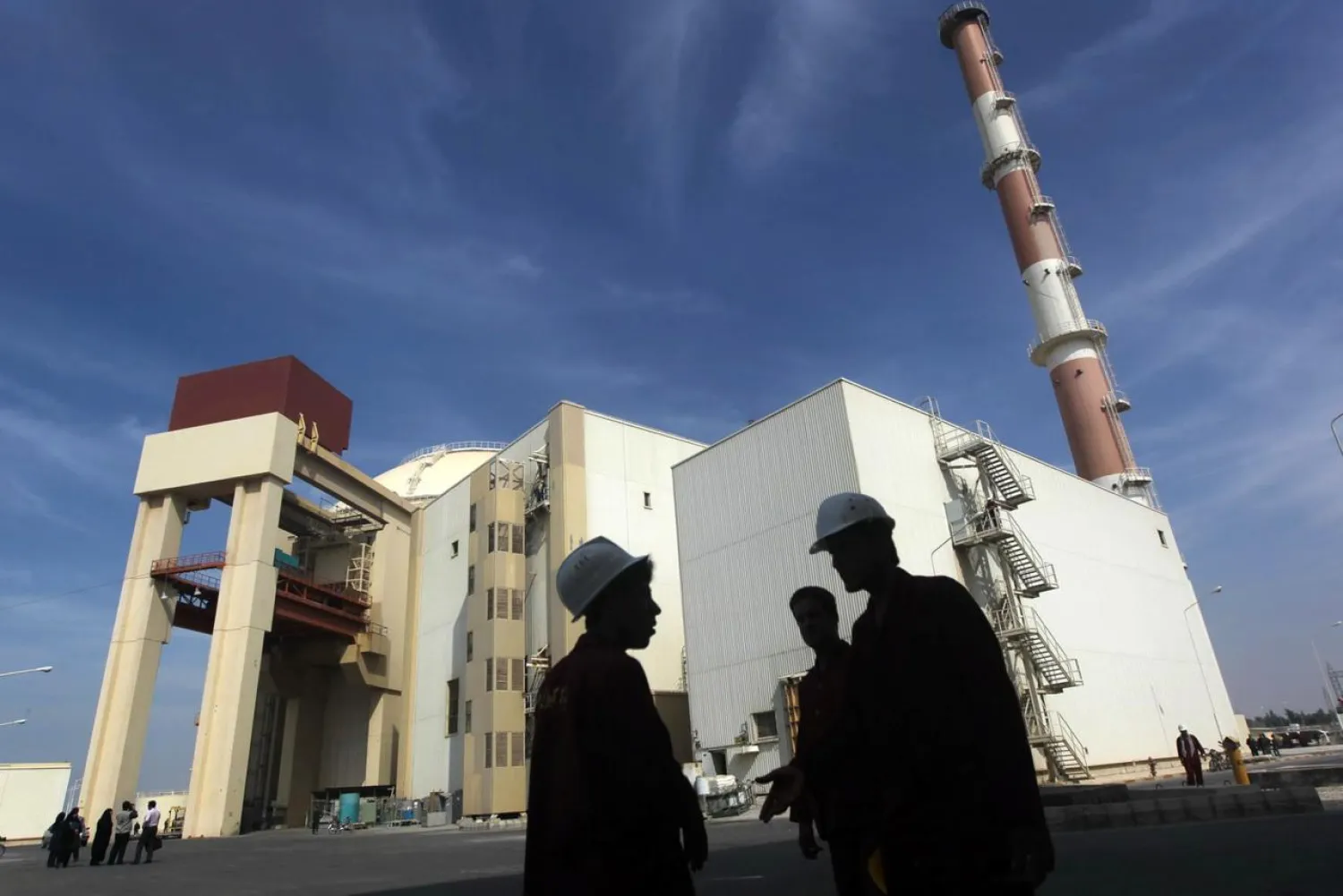
FILE PHOTO: Iranian workers stand in front of the Bushehr nuclear power plant, about 1,200 km south of Tehran October 26, 2010. REUTERS
TT

Report: Iran Nuclear Program has Cost over $500 Bn

FILE PHOTO: Iranian workers stand in front of the Bushehr nuclear power plant, about 1,200 km south of Tehran October 26, 2010. REUTERS

A report issued by the Arab Strategy Forum in Dubai has estimated the total cost of Iran’s nuclear program to have exceeded more than $500 billion since 2006.

The report titled ‘The Economic Costs and Consequences of Iran’s Nuclear Program’, found that international economic sanctions have cost Iran more than $500 billion to date.

The costs of developing and operating infrastructure and facilities for the program have added some US$50 billion to the bill, it said.

The Arab Strategy Forum is set to take place on Dec.12 in Dubai. Its report was issued at a panel discussion on Wednesday in collaboration with Al-Ahram Center for Political and Strategic Studies.

Led by Dr. Sultan Mohammed Al-Nuaimi, Associate Professor at Abu Dhabi University and Expert on Iranian Affairs, the discussion drew the participation of prominent academics and media personalities.

In addition to the cost of the Iranian nuclear program, the report “examines the consequences of the program in terms of economic hardship among the population," Nuaimi said.

According to the report, the adverse economic situation in Iran has led to frequent protests in various regions across the country throughout the past years, with protesters citing inflation, unemployment, poverty, and corruption as their primary concerns.

The United States decided in May to withdraw from the 2015 nuclear deal and reimpose sanctions on Iran, making the situation worse.

The report highlights how the ongoing sanctions on Iran have limited foreign direct investment, FDI, flow to the country. Moreover, foreign companies have canceled new investment contracts worth tens of billions of dollars, especially in the energy sector that needs between $130 billion and $300 billion of new investments to maintain productivity until 2020.

As a result, unemployment rates in Iran have risen, especially among youth. About one-third of the country’s young people have no job opportunities, which fuels their frustration with the local economic situation. The value of the Iranian rial has also plummeted due to sanctions, especially the recent US sanctions, which led to a surge in the price of the US dollar on the black market to IRR112,000 in August 2018, compared with IRR36,000 on the official market in early 2018, before the new sanctions regime.

The inflation rate has witnessed unprecedented levels and is projected to reach an annual average of 203 percent by end-2018 according to some estimates, said the report.

Various economic sectors in Iran were affected by the sanctions and their consequences, it said.

Notably, the oil sector, which the country’s economy heavily relies on, has seen production and exports decline. The Iranian industrial sector, another target of the recent US sanctions, has also suffered. The agricultural industry has borne the negative impact of insufficient automation and the absence of modern technologies, and, to make matters worse, the local industrial sector is unable to provide an alternative. International sanctions have also led to the deterioration of Iran's infrastructure due to the drop in public revenue from oil exports and the reluctance of foreign companies to invest in the sector.

Also, the sanctions have restricted knowledge exchange and imports of modern equipment, which has adversely affected the technology sector. This has resulted in heavy wear of Iran's infrastructure, especially energy networks, which has caused significant annual losses due to reduced efficiency and productivity.



Iran Urges Wounded Protesters to Seek Hospital Care as Arrest Reports Spark Alarm

 People walk on a sidewalk at the Enqelab-e-Eslami street in downtown Tehran, Iran, Sunday, Jan. 25, 2026. (AP)
People walk on a sidewalk at the Enqelab-e-Eslami street in downtown Tehran, Iran, Sunday, Jan. 25, 2026. (AP)
TT

Iran Urges Wounded Protesters to Seek Hospital Care as Arrest Reports Spark Alarm

 People walk on a sidewalk at the Enqelab-e-Eslami street in downtown Tehran, Iran, Sunday, Jan. 25, 2026. (AP)
People walk on a sidewalk at the Enqelab-e-Eslami street in downtown Tehran, Iran, Sunday, Jan. 25, 2026. (AP)

Iran's health ministry on Monday urged those injured in recent protests to go to hospital, after rights groups reported that security forces have been detaining demonstrators wounded in a violent crackdown.

Protests broke out in late December over economic grievances, but turned into a mass movement against the country , with huge street demonstrations for several days from January 8.

Rights groups have accused authorities of killing thousands in an unprecedented crackdown under the cover of an ongoing internet shutdown, while Iranian authorities say the violence was caused by "rioters" spurred by the United States and Israel.

"Our advice to the public is that if they suffer any kind of injury, they should not try to treat it at home, and they should not worry about going to medical centers," the health ministry said in a statement carried by state television.

Rights groups have accused Iranian security forces of firing rifles and shotguns loaded with metal pellets directly at protesters' heads and torsos during the crackdown and then raiding medical centers and homes to identify protesters from their wounds and arrest them.

"Some wounded individuals were detained before receiving medical treatment, others during treatment, and some immediately after discharge, and were transferred to unknown locations," the US-based Center for Human Rights in Iran (CHRI) said in a Friday report.

Amnesty International last week reported a young man, Amirhossein Ghaderzadeh, was arrested after security forces raided his home and stripped him and his sisters -- one of them a minor -- naked to search for injuries related to the protests.

The 19-year-old was arrested after he was found to have pellet wounds, according to sources speaking to Amnesty.

The General Directorate of Prisons of Tehran Province denied on Monday that injured "rioters" were being taken to prison instead of medical centers, the judiciary's Mizan website said.

Iranians speaking to AFP outside the country said protesters who were injured were often too afraid to go to hospital because police were there and that doctors had been treating people at their homes.

An image shared on social media but not immediately verifiable by AFP shows three women in a home working with the help of a cellphone flashlight to remove almost two dozen pellets from a prone woman's back.

On Sunday, Reza Pahlavi, the son of the ousted shah who had called for people to take to the streets, echoed the reports of security personnel "embedded" in hospitals to arrest protesters.

He called on Iranians to "document the names of those who obstruct the treatment of the wounded" so that "at the appropriate time, their crimes and acts of betrayal may be addressed".


Italy Summons Israeli Ambassador After Police Held at Gunpoint in West Bank

Italy's Foreign Minister Antonio Tajani speaks to the media near the "Le Constellation" bar, after a fire and explosion during a New Year's Eve party where several people died and others were injured, according to Swiss police, in the upscale ski resort of Crans-Montana in southwestern Switzerland, January 2, 2026. (Reuters)
TT

Italy Summons Israeli Ambassador After Police Held at Gunpoint in West Bank

Italy's Foreign Minister Antonio Tajani speaks to the media near the "Le Constellation" bar, after a fire and explosion during a New Year's Eve party where several people died and others were injured, according to Swiss police, in the upscale ski resort of Crans-Montana in southwestern Switzerland, January 2, 2026. (Reuters)

Italy on Monday summoned Israel's ambassador to protest after two Italian policemen were threatened at gunpoint by an Israeli during a field visit in the occupied West Bank, the foreign ministry said. 

The two military policemen were stopped on Sunday by an armed ‌Israeli while they ‌were carrying ‌out ⁠a site ‌inspection ahead of a planned visit by EU ambassadors to a village near Ramallah. 

According to a government source, the Israeli, believed to have been a settler, forced the ⁠two men to kneel at gunpoint ‌and subjected them to ‍an improvised ‍interrogation. 

The soldiers were travelling in ‍a vehicle with diplomatic license plates and carrying diplomatic passports. 

Italian Foreign Minister Antonio Tajani wanted the Israeli ambassador in Rome to receive a "strong protest" over the incident, the ⁠foreign ministry said in a statement. 

Italy's embassy to Israel has already submitted a formal protest to the Israeli government, contacting the foreign ministry, the Israeli military, the police and the Shin Bet domestic security agency. 

The two policemen returned unharmed to Italy's Consulate General ‌in Jerusalem following the incident. 


Italy Declares State of Emergency After Storms in Southern Regions

Areas affected by bad weather are seen along the seafront in Santa Teresa di Riva, Sicily, Italy, 21 January 2026. (EPA)
TT

Italy Declares State of Emergency After Storms in Southern Regions

Areas affected by bad weather are seen along the seafront in Santa Teresa di Riva, Sicily, Italy, 21 January 2026. (EPA)

Italy's government on Monday declared a state of emergency for southern regions battered by a violent storm last week, pledging swift financial aid to rebuild roads and businesses hit by the severe weather.

Relentless rain, powerful winds and waves as high as nine meters (30 ft) battered Sicily, Sardinia and Calabria for two days, pushing water inland and overwhelming coastal defenses.

Authorities have estimated that the damage ran to more than 1 billion euros ($1.19 billion) but despite the scale of the destruction, officials reported no casualties.

Prime Minister Giorgia Meloni's ‌government set aside ‌an initial 100 million euros to address ‌the ⁠initial needs ‌of the hardest-hit areas, Civil Protection Minister Nello Musumeci said in a statement.

"In the coming days, the government will adopt a new interministerial measure to allow the restoration and reconstruction of the damaged infrastructure," Musumeci said.

Sicily alone suffered around 740 million euros worth of damage, the regional government said last week, but the island's governor, Renato ⁠Schifani, warned on Monday that the final amount could be double that.

The sea ‌flooded streets in popular hotspots near ‍Taormina, wrecking infrastructure such as wastewater ‍treatment facilities, and raising concerns over the forthcoming tourist season. ‍In Catania, a section of sidewalk collapsed on the seafront.

Land subsidence, probably triggered by the bad weather, is now threatening the town of Niscemi, in central Sicily, and around 1,000 people have had to be evacuated from their homes, the civil protection said in a statement.

Sardinia was also badly hit. Beniamino Garau, ⁠the mayor of Capoterra in the south of the island, said the sea had pushed about 100 meters inland.

In Calabria, the regional administration said the storm caused "major damage to agricultural business...with serious repercussions for the rural economy" in one of Italy's least developed areas.

Extreme weather events have become more frequent in Italy in recent years. Floods have devastated cities across the country, killing dozens of people and amplifying risks of landslides and floods also in historically less exposed areas.

However, locals said regional civil protection alerts issued ahead of ‌the storm had persuaded people to stay at home, preventing any deaths or serious injuries.