


What Next for Manchester United? Sort Pogba Mess, Show Humility

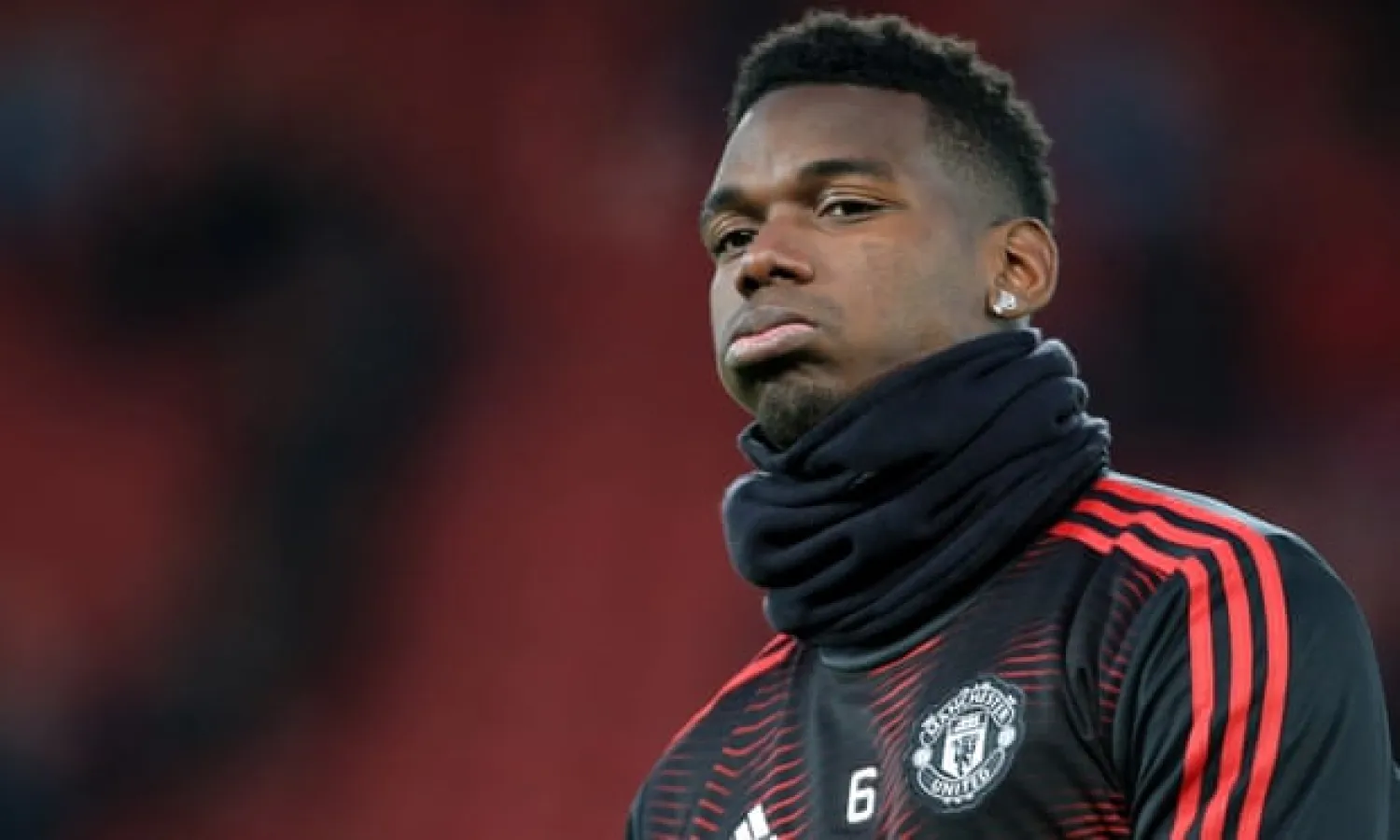
 Can the relationship between Manchester United and Paul Pogba, here looking dejected before spending Sunday on the bench at Anfield, be fixed? Photograph: Simon Stacpoole/Offside/Getty Images
Can the relationship between Manchester United and Paul Pogba, here looking dejected before spending Sunday on the bench at Anfield, be fixed? Photograph: Simon Stacpoole/Offside/Getty Images
TT

What Next for Manchester United? Sort Pogba Mess, Show Humility

 Can the relationship between Manchester United and Paul Pogba, here looking dejected before spending Sunday on the bench at Anfield, be fixed? Photograph: Simon Stacpoole/Offside/Getty Images
Can the relationship between Manchester United and Paul Pogba, here looking dejected before spending Sunday on the bench at Anfield, be fixed? Photograph: Simon Stacpoole/Offside/Getty Images

Resolve the Paul Pogba situation

The last thing a new manager needs is to walk into a divisive disagreement between the club and its most expensive acquisition. José Mourinho’s adversarial habit of picking fights with key members of staff is not for everyone and his replacement will have to find out quickly whether the United dressing room is a happy place. It has frequently been suggested that Pogba’s apparent restlessness is down to a personality clash with the manager, in which case the air should be cleared now and United could, in theory, find themselves virtually with a new player on their hands. On the other hand it is possible that Pogba wants away regardless, which would make it sensible to sell him in January and try to recoup at least some of the club’s losses. Pogba has rarely been seen at his exciting best since rejoining United for £89m in 2016. It might be a challenge too far, amid all the other challenges facing the next permanent United manager, to retrieve an awkward relationship at this late stage.

Appoint someone to be in overall charge of transfers

Mourinho spent most of the past year moaning about his club’s inactivity or indecisiveness in the transfer market. The club did not do quite so much moaning, but let it be known that they had given their manager sufficient backing, and it was no one’s fault but Mourinho’s if the players he had brought in at considerable expense were no longer considered suitable. There is some merit on both sides of this argument, though it is a long way from the template that brought United success. In the later years of Sir Alex Ferguson’s reign, all the big decisions over scouting and player recruitment went through the same office and were meticulously checked and ratified by a bona fide football expert with a lifetime’s experience in professional football, Ferguson himself. Small wonder United are finding that level of knowhow and hands-on experience hard to replace but it has been clear for some time that Ed Woodward and his manager of the moment are not the answer. When Pep Guardiola is asked about recruitment he smiles and says it is out of his hands, safe in the knowledge that when he asked for three full-backs they duly arrived to order. United might never be able to match that expense or efficiency, but any sort of transfer continuity would be an improvement on what is presently haphazard.

Draw up a long-term plan to be competitive

This might come as a shock to United and their supporters, but things have moved on since the time when the all-conquering Reds could scoop in the best players with little more than a phone call and a promised pay rise. Manchester City and Liverpool are doing that now, while other clubs, most notably Tottenham, are reaping the rewards of intelligent sourcing and managerial stability. United have spent the post-Ferguson years not knowing which course to pursue. Their three managers since 2013 have been very different, as have been their respective recruitment policies. David Moyes found it hard to pull off major signings, Louis van Gaal played it too safe, Mourinho tried to make statements but frequently saw them blow up in his face. As a result big-name players such as Ángel Di María, Henrikh Mkhitaryan, Bastian Schweinsteiger and Radamel Falcao have been brought in and moved quickly out, with Paul Pogba, Alexis Sánchez and quite possibly Fred in danger of the same fate. Arguably the most successful bit of business United have conducted since Ferguson stepped down was paying over the odds for Marouane Fellaini, which was not something anyone was saying or predicting at the time. Self-evidently that is not a recipe for success or progress, and it comes with the added disadvantage of being wildly and wastefully expensive. United need to be wary of a manager demanding only ready-made players, because experience has shown that the best ones go elsewhere. For perhaps the first time since Ferguson retired United need to heed one of his catchphrases and properly start looking for value in the market.

Build from the back

Few would dispute that United’s No 1 asset at the moment is David de Gea, who has just had a contract extension activated to guarantee at least one more season at Old Trafford. After that De Gea will probably review his options and who can blame him? Does a world-class goalkeeper really need to be playing behind a shifting backline that occasionally includes Phil Jones, Eric Bailly and Chris Smalling or does he look at last year’s Champions League finalists and envy goalkeepers screened by Sergio Ramos or Virgil van Dijk? After all the money United have spent, can it really be that they are persisting with Ashley Young at left-back? Mourinho was fond of accusing City of buying four full-backs at once to illustrate the sort of financial might he was up against, but it is not all about money. Man of the match at Anfield on Sunday in the abject defeat that probably cost Mourinho his job, was Andy Robertson, the Liverpool left-back signed for £8m from Hull City. When United won the treble in 1999 their left-back was Denis Irwin, signed for £625,000 from Oldham. Joe Royle referred to that deal as a robbery for years afterwards, but Ferguson not only knew something about football economics, he knew how to put a team together.

Give the sense of entitlement a rest

Mourinho was said to have privately felt that the United squad was not good enough, the training ground was not good enough and the club’s drive and ambition in terms of ownership and leadership left plenty to be desired as well. Plainly Manchester was not good enough either, since Mourinho would only commit to living out of a hotel. All of which makes it appear that the north-west of England is some sort of hell-hole and that a manager would have to be desperate to take on a beached whale of a club such as United. None of which happens to be true. United may never be able to outspend City but there is no reason why they should find themselves overtaken by Liverpool, Tottenham and Arsenal. At a time when at least half a dozen English clubs are striving for trophies and competing for the best players United have managed to lose some of their lustre. It happens – it has even happened to United before – but with the right, positive attitude and a sensible acknowledgment of the club’s new place in the overall scheme of things the situation can be retrieved. A little humility is needed, in other words, not just on the part of the manager but also from the support base. The club has some work to do and the rewards might not be immediate. For everyone’s sake it will be better if expectations are not set impossibly high from the start. The glorious past is just that for the foreseeable future.

The Guardian Sport


Chelsea Injuries up 44% After Club World Cup but Report Says Event Has Had ‘Minimal’ Impact

Chelsea's Reece James, center, lifts the trophy following the Club World Cup final soccer match between Chelsea and PSG at MetLife Stadium in East Rutherford, N.J., Sunday, July 13, 2025. (AP)
TT

Chelsea Injuries up 44% After Club World Cup but Report Says Event Has Had ‘Minimal’ Impact

Chelsea's Reece James, center, lifts the trophy following the Club World Cup final soccer match between Chelsea and PSG at MetLife Stadium in East Rutherford, N.J., Sunday, July 13, 2025. (AP)

Chelsea suffered a 44% spike in injuries after competing in the supersized Club World Cup this year, according to findings published on Tuesday.

But the newly expanded tournament has so far had a “minimal impact” on injuries overall, the latest edition of the Men’s European Football Injury Index found.

There was fierce opposition to FIFA's new flagship club event when it was confirmed in 2023 that it would increase from seven to 32 teams, with players' unions warning of physical and mental burnout of players due to an ever expanding match schedule. But FIFA pressed ahead and staged the tournament in the United States in June-July.

Chelsea went on to win the inaugural competition, receiving the trophy from US President Donald Trump at MetLife Stadium and taking home prize money of around $125 million. But, according to the Index, from June-October, Chelsea picked up more injuries — 23 — than any of the nine clubs from Europe's top leagues that participated in the Club World Cup.

They included star player Cole Palmer, and was a 44% increase on the same period last year.

While Chelsea, which played 64 games over the entire 2024-25 season, saw an increase in injuries, the Index, produced by global insurance firm Howden, found that overall there was a decrease.

“In principle you would expect this increased workload to lead to an increase in the number of injuries sustained, as a possible rise in overall injury severity,” the Index report said, but added: “The data would suggest a minimal impact on overall injury figures.”

Despite the figures, the authors of the report accept it was too early to assess the full impact of the Club World Cup, with the findings only going up to October.

“We would expect to see the impact to spike in that sort of November to February period,” said James Burrows, Head of Sport at Howden. “What we’ve seen previously is that’s where the impact is seen from summer tournaments."

Manchester City has sustained 22 since the tournament, which is the highest among the nine teams from Europe's top leagues — England, Spain, Italy, Germany and France.

Those teams have recorded 146 injuries from June-October, which is down on the previous year's figure of 174.

From August-October that number is 121, the lowest for that three-month period in the previous six years of the Index.


Sunderland Worst Hit by Losing Players to African Cup of Nations 

14 December 2025, United Kingdom, London: Sunderland's Habib Diarra (L) and Leeds United's Gabriel Gudmundsson battle for the ball during the English Premier League soccer match between Brentford and Leeds United at the Gtech Community Stadium. (dpa)
TT

Sunderland Worst Hit by Losing Players to African Cup of Nations 

14 December 2025, United Kingdom, London: Sunderland's Habib Diarra (L) and Leeds United's Gabriel Gudmundsson battle for the ball during the English Premier League soccer match between Brentford and Leeds United at the Gtech Community Stadium. (dpa)

Premier League Sunderland will have to do without six players over the next few weeks and are the club worst hit as the Africa Cup of Nations takes its toll on European clubs competing over the holiday season.

Sunderland, eighth in the standings, had four of their African internationals in action when they beat Newcastle United on Sunday, but like 14 other English top-flight clubs will now lose those players to international duty.

The timing of the African championship, kicking off in Morocco on Sunday and running through to January 18, has long been an irritant for coaches, with leagues in Belgium, France, Germany, Italy, Netherlands, Portugal, and Spain also affected.

Hosting the tournament in the middle of the season impacts around 58% of the players at the Cup of Nations, though the Confederation of African Football did try to mitigate the impact by moving the start to before Christmas, so it is completed before the next round of Champions League matches.

The impact on European clubs was also lessened by allowing them to release players seven days, rather than the mandatory 14 days, before the tournament, meaning they could play for their clubs last weekend.

Sunderland's Congolese Arthur Masuaku and Noah Sadiki, plus full back Reinildo (Mozambique), midfielder Habib Diarra (Mali), and attackers Chemsdine Talbi (Morocco) and Bertrand Traore (Burkina Faso) have now departed for Morocco.

Ironically, Mohamed Salah’s absence from Liverpool to play for Egypt should lower the temperature at the club after his recent outburst against manager Arne Slot, but Manchester United will lose three players in Noussair Mazraoui, Bryan Mbeumo and Amad Diallo, who scored in Monday’s 4-4 draw with Bournemouth.

France is again the country with the most players heading to the Cup of Nations, and with 51 from Ligue 1 clubs. But their absence is much less impactful than previously as Ligue 1 broke after the weekend’s fixtures and does not resume until January 2, by which time the Cup of Nations will be into its knockout stage.

There are 21 players from Serie A clubs, 18 from the Bundesliga, and 15 from LaLiga teams among the 24 squads at the tournament in Morocco.


Rodgers Takes Charge of Saudi Team Al-Qadsiah After Departure from Celtic 

Then-Celtic head coach Brendan Rodgers greets supporters after a Europa League soccer match between Red Star and Celtic at Rajko Mitic Stadium in Belgrade, Serbia, Sept. 24, 2025. (AP)
TT

Rodgers Takes Charge of Saudi Team Al-Qadsiah After Departure from Celtic 

Then-Celtic head coach Brendan Rodgers greets supporters after a Europa League soccer match between Red Star and Celtic at Rajko Mitic Stadium in Belgrade, Serbia, Sept. 24, 2025. (AP)

Brendan Rodgers has returned to football as the coach of Saudi Arabian club Al-Qadsiah, six weeks after resigning from Scottish champion Celtic.

Al-Qadsiah, whose squad includes Italian striker Mateo Retegui and former Real Madrid defender Fernandez Nacho, is in fifth place in the Saudi Pro League in its first season after promotion.

Rodgers departed Celtic on Oct. 27 and has opted to continue his managerial career outside Britain for the first time, having previously coached Liverpool, Leicester and Swansea.

In its statement announcing the hiring of Rodgers on Tuesday, Al-Qadsiah described him as a “world-renowned coach” and said his arrival “reflects the club’s ambitious vision and its rapidly growing sporting project.”

Aramco, the state-owned Saudi oil giant, bought Al-Qadsiah in 2023 in a move that has helped to transform the club’s status.

“This is a landmark moment for the club,” Al-Qadsiah chief executive James Bisgrove said. “The caliber of his experience and track record of winning reflects our ambition and long-term vision to establish Al-Qadsiah as one of Asia’s leading clubs.”

Rodgers is coming off winning back-to-back Scottish league titles with Celtic, where he won 11 major trophies across his two spells. He also won the FA Cup with Leicester.

Al-Qadsiah's last two coaches were former Liverpool striker Robbie Fowler and former Spain midfielder Michel.
