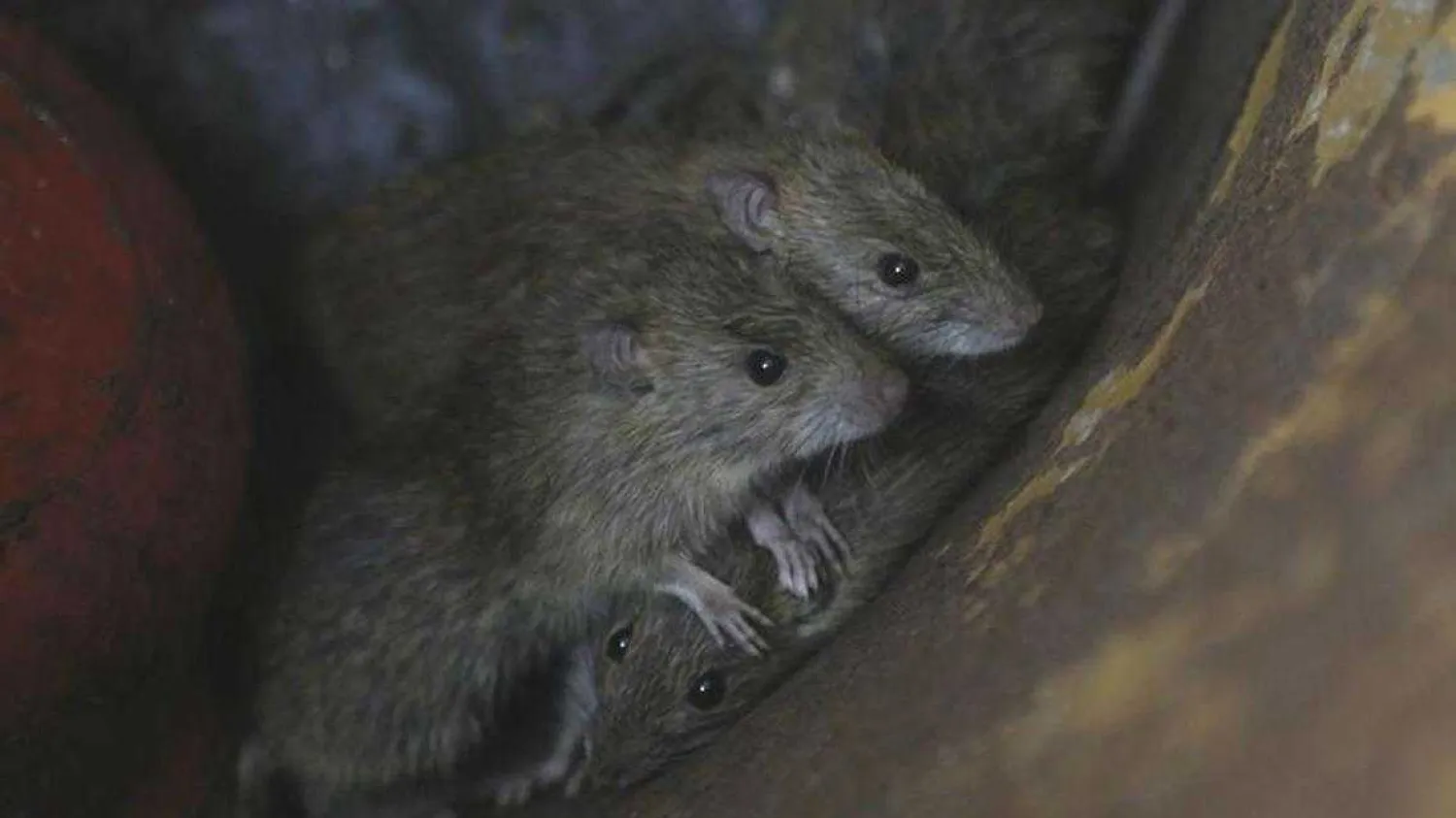

This luxurious area in Washington D.C. has suffered for years from dark rats roaming its streets, eating their way through trash cans.
On Monday, a rat made its way onto the White House lawn. FoxNews' Reporter John Roberts tweeted: "I am standing in our FoxNews standup location on the White House North Lawn and notice in my peripheral vision something moving at my left foot. I assumed it was one of the ubiquitous WH squirrels. But no! It was a big brown rat."
According to Gerard Brown, a program manager at the DC Department of Health, the creature was likely one of many rats flushed out of its burrow by heavy rain last week.
"The rain makes it difficult for rats to find food," Brown added. Recently, the capital has had a perfect storm of all three, with mild winters and booming development bringing more people, and trash, into the District.
On January 12, an additional $906,000 the city allocated to help the Department of Health get a handle on the rat problem. Brown said the money will be used to hire staff and equip exterminators with mobile devices that use geolocation data to track rat complaints. "Technology is evolving into rodent control," he said.
According to data obtained by the Washington Post, reports of rat complaints on the city's hotline (311) hit its highest level in 2017, totaling 5310, up to 50% from the same period in 2016. Brown expected the number of complaints to be the same as 2017, by the end of this year.
The White House and neighboring Lafayette Square are under maintenance through weekly rats cleaning operations.
The Department's spokeswoman Jenny Anzelmo-Sarles said recent rat activity near the White House has not increased.
"Rats are very much an urban challenge. We haven't seen a change, or a need for immediate concern, around the White House," she said.
Brown said the city's rat offensive, which includes sterilization and extermination, will kick off next year and work its way through each ward in numerical succession.
Columbia Heights and Capitol Hill have the highest number of reports on rodents and rats, according to city data, but that does not mean ignoring other areas.