


Sudan Bids to Import Flour, Wheat

Supporters gather outside the National Prison during the release of politicians and journalists, after demonstrations in Khartoum, Sudan February 18, 2018. REUTERS/Mohamed Nureldin Abdallah
TT

Sudan Bids to Import Flour, Wheat

Supporters gather outside the National Prison during the release of politicians and journalists, after demonstrations in Khartoum, Sudan February 18, 2018. REUTERS/Mohamed Nureldin Abdallah

The Ministry of Finance and Economic Planning launched Sunday an open tender on the supply of 500,000 tons of wheat and flour, in response to a wave of protests Sudan witnessed in the past days.

Days earlier, Sudan's Prime Minister Moataz Moussa announced budget 2019 that encapsulates subsidies allocations of SDG66 billion (USD1.4 billion) and SDG53 billion out of them are for bread and fuel.

Sources told Asharq Al-Awsat newspaper that the wheat and flour bid is meant to calm protesters and easing living conditions that are affected by bread prices and scarcity of wheat.

Economist Prof. Mohamed Jack Ahmad told Asharq Al-Awsat that the success of the public budget is hinged to negative economic indicators including the inflation rate, foreign currencies exchange, the rise of services and commodities prices, and the recession in Sudanese markets.

Director-General of the Agricultural Bank of Sudan Salah al-Din Hassan said that the amount of the tender is to be determined later after the closing date of submission, pointing out that the last tender for the supply of wheat issued by the Ministry of Finance was about two years ago.

Former deputy minister of foreign trade and former official of the wheat file Al-Kindi Yusuf pointed out that the scarcity of strategic commodities, including wheat and bread flour, has become a phenomenon associated with the economies of developing countries, which is always paid to plan for self-sufficiency.

Yusuf pointed out that the tender for wheat and bread flour at this particular time means that the government has renewed the support that stopped the commodity to absorb the political turmoil caused by citizens in protest against the high prices of bread.



Morocco’s Royal Air Maroc Scales Back Flights Due to Fuel Costs

 People board a Royal Air Maroc flight on July 15, 2020 at Bordeaux airport. (AFP)
People board a Royal Air Maroc flight on July 15, 2020 at Bordeaux airport. (AFP)
TT

Morocco’s Royal Air Maroc Scales Back Flights Due to Fuel Costs

 People board a Royal Air Maroc flight on July 15, 2020 at Bordeaux airport. (AFP)
People board a Royal Air Maroc flight on July 15, 2020 at Bordeaux airport. (AFP)

Morocco's state-owned carrier Royal Air Maroc (RAM) said on Saturday it would temporarily suspend several routes to African and European destinations due to ‌rising jet ‌fuel prices, ‌elevated ⁠operating costs and ⁠weak demand.

Tensions in the Middle East have driven a surge in global jet fuel ⁠prices, putting ‌pressure ‌on carriers and ‌prompting temporary route suspensions.

RAM ‌will pause flights linking Moroccan airports with several African cities ‌of Bangui, Brazzaville, Kinshasa, Douala, Yaounde and ⁠Libreville, ⁠the airline said in a statement.

It will also halt flights to the European destinations of Malaga, Barcelona, Lyon, Bordeaux, Marseille and Brussels.


Official: Iraq Has Not Yet Applied for an IMF Loan

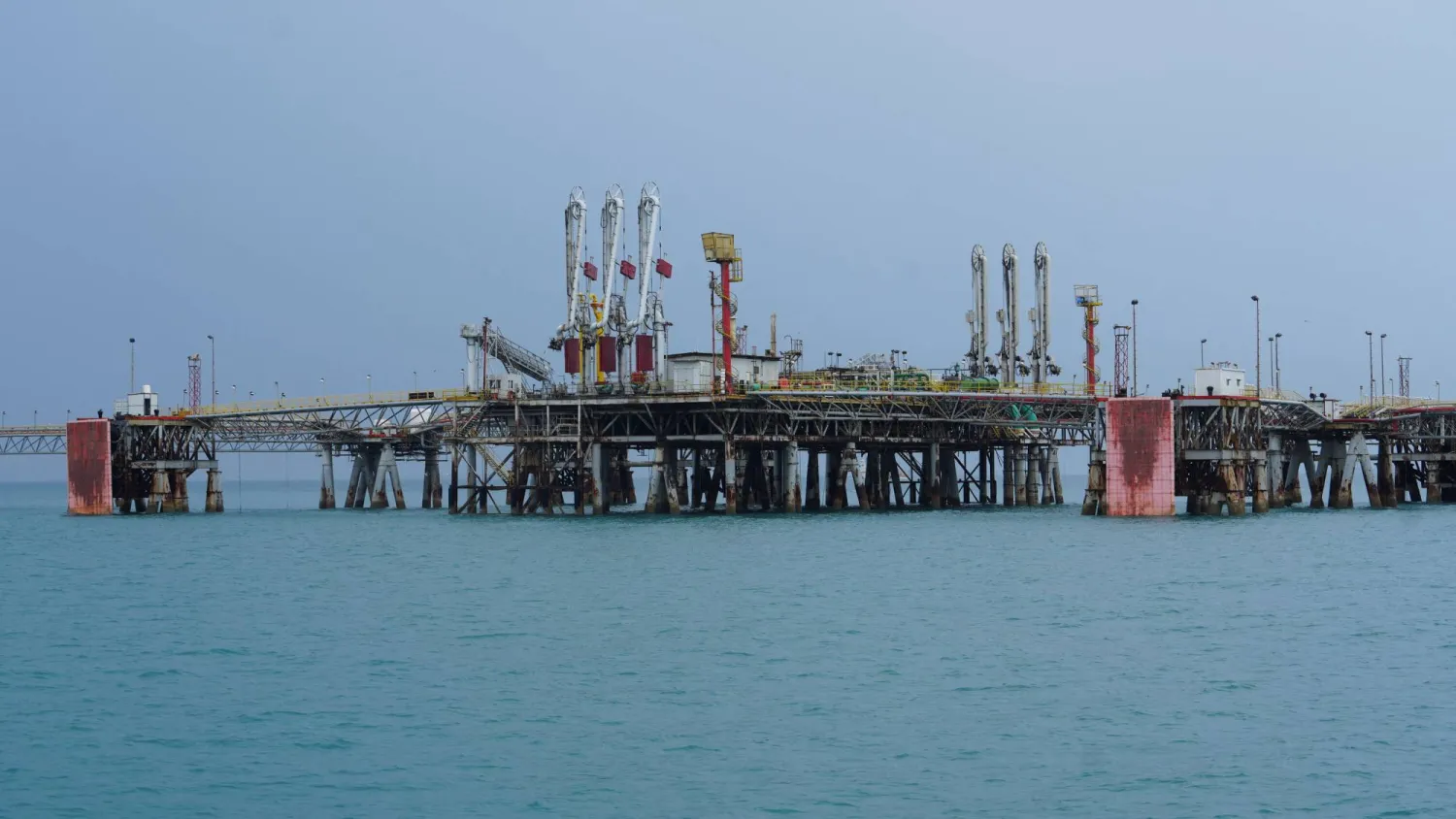
A floating oil export platform in Basra port, Iraq (Reuters)
TT

Official: Iraq Has Not Yet Applied for an IMF Loan

A floating oil export platform in Basra port, Iraq (Reuters)

Financial Advisor to the Iraqi Prime Minister Mazhar Mohammed Saleh revealed on Saturday that Iraq has not yet submitted a formal request for a loan from the International Monetary Fund (IMF).

The Iraqi News Agency quoted Saleh as saying that “Iraq enjoys close relations with the IMF, and since 2003, it has concluded more than five agreements, three of which were Stand-by Arrangements, while the other agreements related to emergency support.”

Iran's war has caused significant disruptions in supply chains, especially in the energy sector, which was severely affected by a near-complete closure of the Strait of Hormuz, through which about 20 percent of global oil supplies pass.

Saleh stated that “the Fund has played a significant role in supporting the Iraqi economy over the past 23 years, especially since Iraq is now considered one of the biggest victims of the ongoing war in the region, considering that 85 percent of its oil exports pass through the Strait of Hormuz. This has caused significant harm and international concern, given that Iraq is an important and active member in the stability of the region and world markets.”

He pointed out that there is an Iraqi government team in contact with the IMF, meeting with Fund officials for consultations twice a year.

He clarified that “Iraq signed an agreement with the IMF on July 7, 2016, for a Stand-by Arrangement by providing a significant loan, which played a major role in supporting the general budget,” noting that “signing an agreement with the Fund is a matter decided by the Iraqi government, and this does not prevent consultations between the two parties, as Iraq is a member of this institution responsible for global stability.”

Saleh mentioned that “Iraq will borrow from the International Monetary Fund if the need arises, but there is no formal request from the government yet, and the current need is for the war in the region to stop, and for its geopolitical impacts on oil exports to cease.”

He added that “technical assistance from the IMF is available now, unlike the issue of financing, which requires the approval of a program by the Iraqi government.”

He explained that “the loan itself represents a reform program to support the budget or to achieve social goals, such as supporting the health and education sectors, because it is a human investment that must be subject to conditions defining expenditure directions and commitment to a reform program agreed upon by the Iraqi state and the IMF.”


Mawani Adds CMA CGM’s Ocean Rise Express Service to Jeddah Port

Mawani Adds CMA CGM’s Ocean Rise Express Service to Jeddah Port
TT

Mawani Adds CMA CGM’s Ocean Rise Express Service to Jeddah Port

Mawani Adds CMA CGM’s Ocean Rise Express Service to Jeddah Port

The Saudi Ports Authority (Mawani) has added CMA CGM's Ocean Rise Express (OCR) shipping service to Jeddah Islamic Port, aiming to strengthen maritime connectivity between Saudi Arabia and global markets, support the smooth flow of supply chains, and increase the efficiency of port operations.

The OCR service will connect Jeddah to key international ports, including Kobe, Nagoya, and Yokohama in Japan; Xiamen, Yantian, and Nansha in China; Rotterdam in the Netherlands; Hamburg in Germany; and Southampton in the United Kingdom.

The route will utilize vessels with a capacity of up to 10,000 TEUs, according to SPA.

This addition aligns with Mawani’s efforts to enhance Jeddah Islamic Port’s global competitiveness and support international trade.

By enabling access to new markets, the initiative reinforces the Kingdom's position as a global logistics hub in line with the National Transport and Logistics Strategy and Saudi Vision 2030.