


Iran Approves Anti-money Laundering Bill

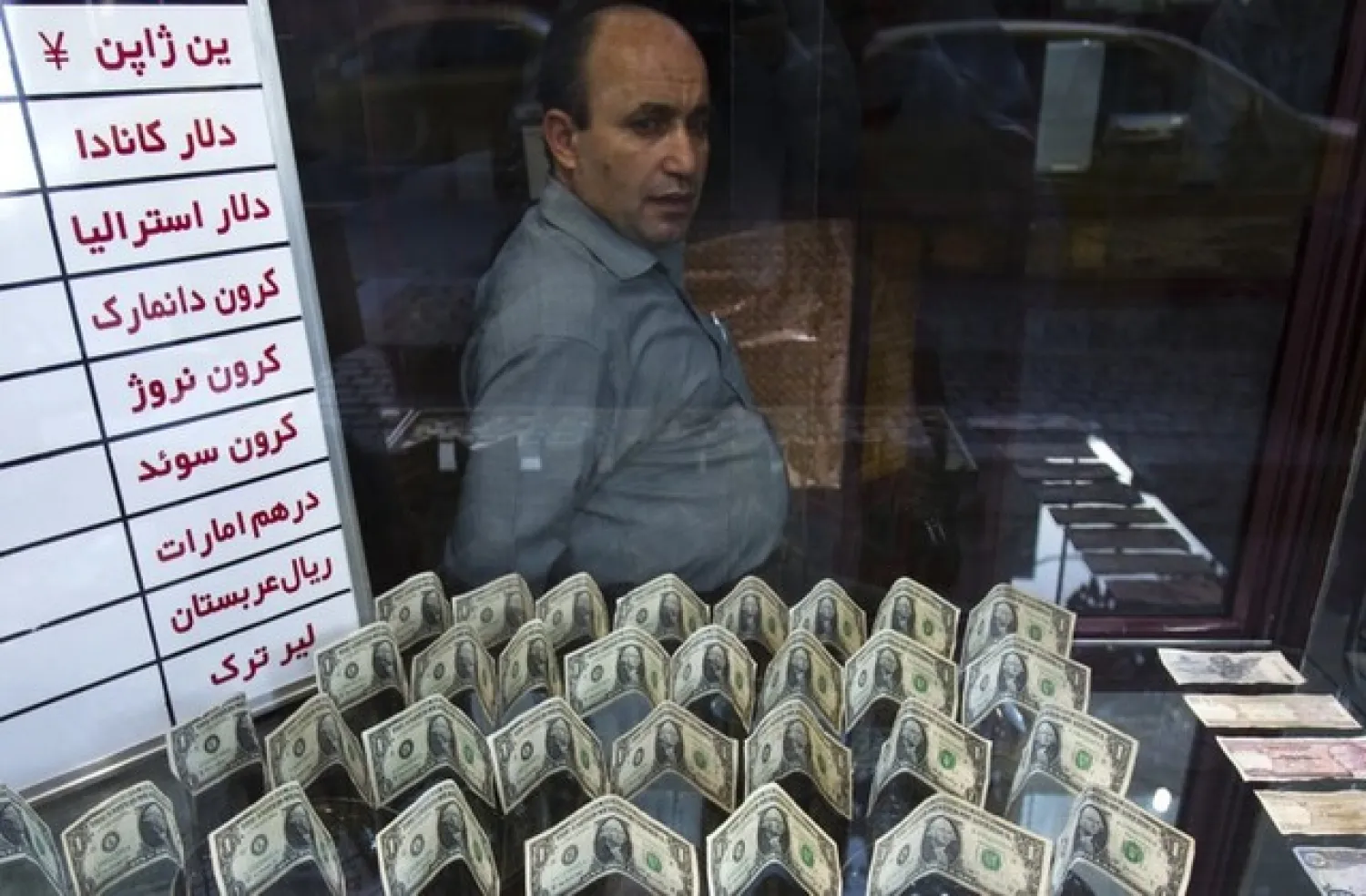
An exchange currency dealer sits at his shop October 24, 2011. (File Photo: Reuters)
TT

Iran Approves Anti-money Laundering Bill

An exchange currency dealer sits at his shop October 24, 2011. (File Photo: Reuters)

Iran's Expediency Discernment Council (EDC) approved Saturday an anti-money laundering bill, during the first meeting chaired by Sadeq Larijani who was appointed last week as the head of the Council.

The new bill will allow the government to execute several reforms in order to implement standards set by the Financial Action Task Force (FATF).

"The bill on amending the law to counter money laundering was approved with certain changes and will be sent to the parliament speaker to be communicated to the government," Expediency Council member Gholamreza Mesbahi told IRNA.

The amendment is one of four proposed by the government in March to facilitate joining FATF, and the three regulations are: amending the anti-terrorism act, signing Combating the Financing of Terrorism(CFT), and signing the Convention against Transnational Organized Crime.

The parliament also passed two other bills allowing Iran to join to international treaties on the financing of terrorism and organized crime, but their approval was delayed by higher authorities, including the Guardian Council.

In mid-December, the secretary of the Expediency Council, Mohsen Rezaee, said CFT, FATF, and other conventions on organized crime and money laundry opposes the constitution and general policies.

The anti-money laundering bill is one of four of legislation put forward by the government to that end. A previous bill on the mechanics of monitoring and preventing terrorist financing was signed into law in August.

The EDC is an assembly that resolves disputes between the parliament and the high legislative body of the Guardian Council of the Constitution. It currently has 44 members, all appointed by Supreme Leader Ayatollah Ali Khamenei.

The Iranian government has only one month to implement the criteria set by FATF, an international body to combat money laundering and terrorism financing.

The list of FATF includes Iran and North Korea, although the Paris-based organization has temporarily suspended its measures against the country since June 2017, while Tehran is working on reforms.

Iran's foreign minister, Mohammad Javad Zarif, told parliament in October that the remaining countries in the nuclear deal, including China and Russia, will require Iran to join FATF to facilitate banking transactions, denying it will falter activities of domestic bodies if Tehran agreed to FATF standards.

European countries say Iran's commitment to the FATF standards and its removal from the organization's black list are necessary to increase its investment, especially after the re-imposition of US sanctions on Tehran.

Iranian hardliners pointed that the legislation toward compliance with the FATF, will grant the Western powers influence on the Iranian economy and could hamper Iranian financial support for allies such as Lebanon’s Hezbollah.

Parliament last year passed the anti-money laundering bill, one of four amendments Iran needs to implement to meet FATF requirements, but the Guardian Council rejected it, saying it was against Islam and the constitution.

Seven months after his harsh dismissal of parliamentary efforts to adapt FATF and other international conventions on money laundering, Supreme Leader Khamenei seems to have warmed to the reforms, which experts believe is aimed at preventing Iran’s economic collapse.

In recent months, several protests swept the country against economic hardship. The sanctions have depressed the value of Iran’s rial currency and aggravated annual inflation fourfold to nearly 40 percent in November.

US President Donald Trump withdrew from a nuclear deal with Iran last year and reimposed the sanctions on its banking and energy sectors, hoping to curb its missile and nuclear programs and counter its growing influence in the Middle East.

European signatories are still committed to the nuclear deal and seek to launch the mechanism, special purpose vehicle (SPV), aiming to sidestep the US financial system by using an EU intermediary to handle trade with Iran.

The director general of Iran’s Strategic Council on Foreign Relations, an advisory body set up by Khamenei, voiced his support for the FATF-related bills on Friday, according to Reuters.

Semi-official ISNA new agency quoted Abdolreza Faraji as saying: “It is better to finalize the FATF and CFT in the earliest time, so the Europeans have no excuse not to implement SPV mechanism.”



Russia: Man Suspected of Shooting Top General Detained in Dubai

An investigator works outside a residential building where the assassination attempt on Russian Lieutenant General Vladimir Alexeyev took place in Moscow, Russia February 6, 2026. REUTERS/Anastasia Barashkova
TT

Russia: Man Suspected of Shooting Top General Detained in Dubai

An investigator works outside a residential building where the assassination attempt on Russian Lieutenant General Vladimir Alexeyev took place in Moscow, Russia February 6, 2026. REUTERS/Anastasia Barashkova

Russia's Federal Security Service (FSB) said on Sunday that the man suspected of shooting top Russian military intelligence officer Vladimir Alexeyev in Moscow has been detained in Dubai and handed over to Russia.

Lieutenant General Vladimir Alexeyev, deputy head of the GRU, ⁠Russia's military intelligence arm, was shot several times in an apartment block in Moscow on Friday, investigators said. He underwent surgery after the shooting, Russian media ⁠said.

The FSB said a Russian citizen named Lyubomir Korba was detained in Dubai on suspicion of carrying out the shooting.

Russian Foreign Minister Sergei Lavrov accused Ukraine of being behind the assassination attempt, which he said was designed to sabotage peace talks. ⁠Ukraine said it had nothing to do with the shooting.

Alexeyev's boss, Admiral Igor Kostyukov, the head of the GRU, has been leading Russia's delegation in negotiations with Ukraine in Abu Dhabi on security-related aspects of a potential peace deal.


Factory Explosion Kills 8 in Northern China

Employees work on an electric vehicle (EV) production line at the Volkswagen Anhui factory in Hefei, Anhui province, China, February 4, 2026. REUTERS/Florence Lo
TT

Factory Explosion Kills 8 in Northern China

Employees work on an electric vehicle (EV) production line at the Volkswagen Anhui factory in Hefei, Anhui province, China, February 4, 2026. REUTERS/Florence Lo

An explosion at a biotech factory in northern China has killed eight people, Chinese state media reported Sunday, increasing the total number of fatalities by one.

State news agency Xinhua had previously reported that seven people died and one person was missing after the Saturday morning explosion at the Jiapeng biotech company in Shanxi province, citing local authorities.

Later, Xinhua said eight were dead, adding that the firm's legal representative had been taken into custody.

The company is located in Shanyin County, about 400 kilometers west of Beijing, AFP reported.

Xinhua said clean-up operations were ongoing, noting that reporters observed dark yellow smoke emanating from the site of the explosion.

Authorities have established a team to investigate the cause of the blast, the report added.

Industrial accidents are common in China due to lax safety standards.
In late January, an explosion at a steel factory in the neighboring province of Inner Mongolia left at least nine people dead.


Iran Warns Will Not Give Up Enrichment Despite US War Threat

Traffic moves through a street in Tehran on February 7, 2026. (Photo by ATTA KENARE / AFP)
TT

Iran Warns Will Not Give Up Enrichment Despite US War Threat

Traffic moves through a street in Tehran on February 7, 2026. (Photo by ATTA KENARE / AFP)

Iran will never surrender the right to enrich uranium, even if war "is imposed on us,” its foreign minister said Sunday, defying pressure from Washington.

"Iran has paid a very heavy price for its peaceful nuclear program and for uranium enrichment," Abbas Araghchi told a forum in Tehran.

"Why do we insist so much on enrichment and refuse to give it up even if a war is imposed on us? Because no one has the right to dictate our behavior," he said, two days after he met US envoy Steve Witkoff in Oman.

The foreign minister also declared that his country was not intimidated by the US naval deployment in the Gulf.

"Their military deployment in the region does not scare us," Araghchi said.