4 European Countries Ask Iran to Amend its Regional Stanceshttps://english.aawsat.com/home/article/1616106/4-european-countries-ask-iran-amend-its-regional-stances
4 European Countries Ask Iran to Amend its Regional Stances
EU Energy Commissioner Miguel Arias Canete and Iranian nuclear energy chief Ali Akhbar Salehi shake hands after a joint news conference in Brussels, Belgium, November 26, 2018. (Reuters)
4 European Countries Ask Iran to Amend its Regional Stances
EU Energy Commissioner Miguel Arias Canete and Iranian nuclear energy chief Ali Akhbar Salehi shake hands after a joint news conference in Brussels, Belgium, November 26, 2018. (Reuters)
Four European countries have asked Iran to amend its positions in four countries: Lebanon, Syria, Yemen and Iraq, and strengthen its relations with them in accordance with the Vienna Convention. Tehran must “reconcile with the international community rather than collide with it”, said European diplomatic reports sent to Beirut.
France, Britain, Germany and Italy, also known as E4, hold regular meetings between their representatives and Iranian representatives to discuss unacceptable actions in Lebanon, Syria, Yemen and Iraq.
A European source said that some of the issues addressed at the meetings are met with understanding, while others do not, because they deal with Iran’s activities and attempt to make it abandon its financial and military support of political forces, which it supports with the pretext of helping them in liberation efforts.
The E4 asserted that such an argument is unacceptable and constitutes a violation of the sovereignty of these countries.
However, the group's sources confirmed to Asharq Al-Awsat that Iran's objections to these demands will not deter it from continuing to persuade it to "normalize its relations with the West". The normalization will put an end to the negative effects that could result from the sharp conflict between US President Donald Trump and Iran.
The continuation of the conflict could threaten the security of a number of countries where Tehran enjoys political influence and a strong military force that does not comply with the orders of the executive power of the state. This force is allegedly used to liberate occupied territory.
"At the same time as Trump is stepping up his attack on Iran, France is leading the European Quartet to calm the situation, recognizing that such escalation carries a lot of risk," the sources added.
The member states of the E4 are committed to the policy of French President Emmanuel Macron, which has two goals: non-proliferation by keeping Iran within the nuclear agreement and preventing it from obtaining an atomic bomb, and protecting national security.
The group regretted the US decision to withdraw from the 2015 nuclear deal, saying it will continue to support it.
The European countries have identified three issues that Iran must recognize in order to "normalize relations with the West." First, it must recognize the danger of Shiite military forces it has formed, which compete with state structures and threaten many Arab countries in Lebanon, Syria, Iraq and Yemen.
Second, the group rejects Iran's national program for the production of ballistic missiles and the Iranian national program for its development, deployment and construction of such missiles in countries where it has military forces.
The third is to “give up its threats to the existence and security of Israel.”
A senior Lebanese official assessed the role played by the E4 as "good, but it would be difficult to pass as long as Trump insists on his position to withdraw from the nuclear agreement."
"The European countries should coordinate with the US President to reach a solution that does not show that he is backtracking on his stance,” he added. Moreover, he said the three steps set by the E4 could be a draft for this solution “after adding paragraphs that reassure Iran.”
Thousands of Pro-Palestinian Demonstrators Rally in Londonhttps://english.aawsat.com/world/5328105-thousands-pro-palestinian-demonstrators-rally-london
People cross Westminster Bridge as they take part in a National March in support of Palestine, organised by Palestine Solidarity Campaign, in central London on October 10, 2026. (Photo by JUSTIN TALLIS / AFP)
Thousands of Pro-Palestinian Demonstrators Rally in London
People cross Westminster Bridge as they take part in a National March in support of Palestine, organised by Palestine Solidarity Campaign, in central London on October 10, 2026. (Photo by JUSTIN TALLIS / AFP)
Several thousand pro-Palestinian protesters marched through central London on Saturday, calling for an end to Israeli strikes on Gaza, three years after Hamas's October 7 attack.
Marchers carried placards reading "End the genocide" and "Free Palestine" as they made their way along the route near the British parliament.
"We are here today to mark three years of the ongoing genocide in Gaza," Aimee Shalan, director of the Palestine Solidarity Campaign, told AFP.
She said UK-led Western sanctions over settler violence did not go far enough, calling for "full sanctions on Israel".
A ceasefire began a year ago and although Israel has reduced its level of attacks it has kept striking Gaza on a near-daily basis.
Strikes have killed some 1,450 Palestinians since the ceasefire, according to Gaza's health ministry.
Police said they had made "several arrests" including a man and a woman with placards of support for the banned organization Palestine Action.
Recent graduate Hibo Hassan, 23, said she was there to show her solidarity.
"Although it is happening in the Middle East, it affects us here now," she said.
"It's extremely dystopian and that is something we should be all scared about," she added.
Another protester, a 32-year-old Kosovar immigrant who gave his name as Kobe, said his own experience of war made him want to "stand up today and not let history repeat" itself.
The "National March for Palestine" organized by the Palestine Coalition, according to police, came three days after the third anniversary of the October 7, 2023 attack.
Putin Told Trump about Iran's Position on Peace Dealhttps://english.aawsat.com/world/5328080-putin-told-trump-about-irans-position-peace-deal
This combination of pictures shows (L/R) US President Donald Trump in the Oval Office of the White House in Washington, DC, on August 10, 2026 and in this pool photograph distributed by the Russian state agency Sputnik, Russia's President Vladimir Putin in the Novosibirsk region on August 11, 2026. (AFP)
TT
TT
Putin Told Trump about Iran's Position on Peace Deal
This combination of pictures shows (L/R) US President Donald Trump in the Oval Office of the White House in Washington, DC, on August 10, 2026 and in this pool photograph distributed by the Russian state agency Sputnik, Russia's President Vladimir Putin in the Novosibirsk region on August 11, 2026. (AFP)
Russian President Vladimir Putin has told Donald Trump about Iran's position on a possible Mideast peace deal, the Kremlin said Saturday.
The Kremlin said Tehran's stance was relayed in a phone call held between the two leaders on Friday. It did not say how Trump responded, nor elaborate on Iran's position.
Diplomatic efforts to end the more-than-seven-month-long Iran conflict, which began with US-Israeli strikes on Iran in February, have been at an impasse since the summer, according to AFP.
Putin met Iranian President Masoud Pezeshkian on the sidelines of a summit in Turkmenistan earlier this week, where the Russian leader expressed an interest in helping broker peace.
"In coordination with the Iranian president, Putin conveyed the Iranian side's views on a possible resolution to the conflict to Trump," Kremlin spokesman Dmitry Peskov said Saturday, according to Russia's state RIA news agency.
The United States and Iran agreed a memorandum of understanding in June that spelled out a framework for ending their conflict, but Iranian attacks on ships in the Strait of Hormuz prompted a resumption of US military operations.
Recent indirect talks between Washington and Tehran on the sidelines of the UN General Assembly failed to produce a breakthrough.
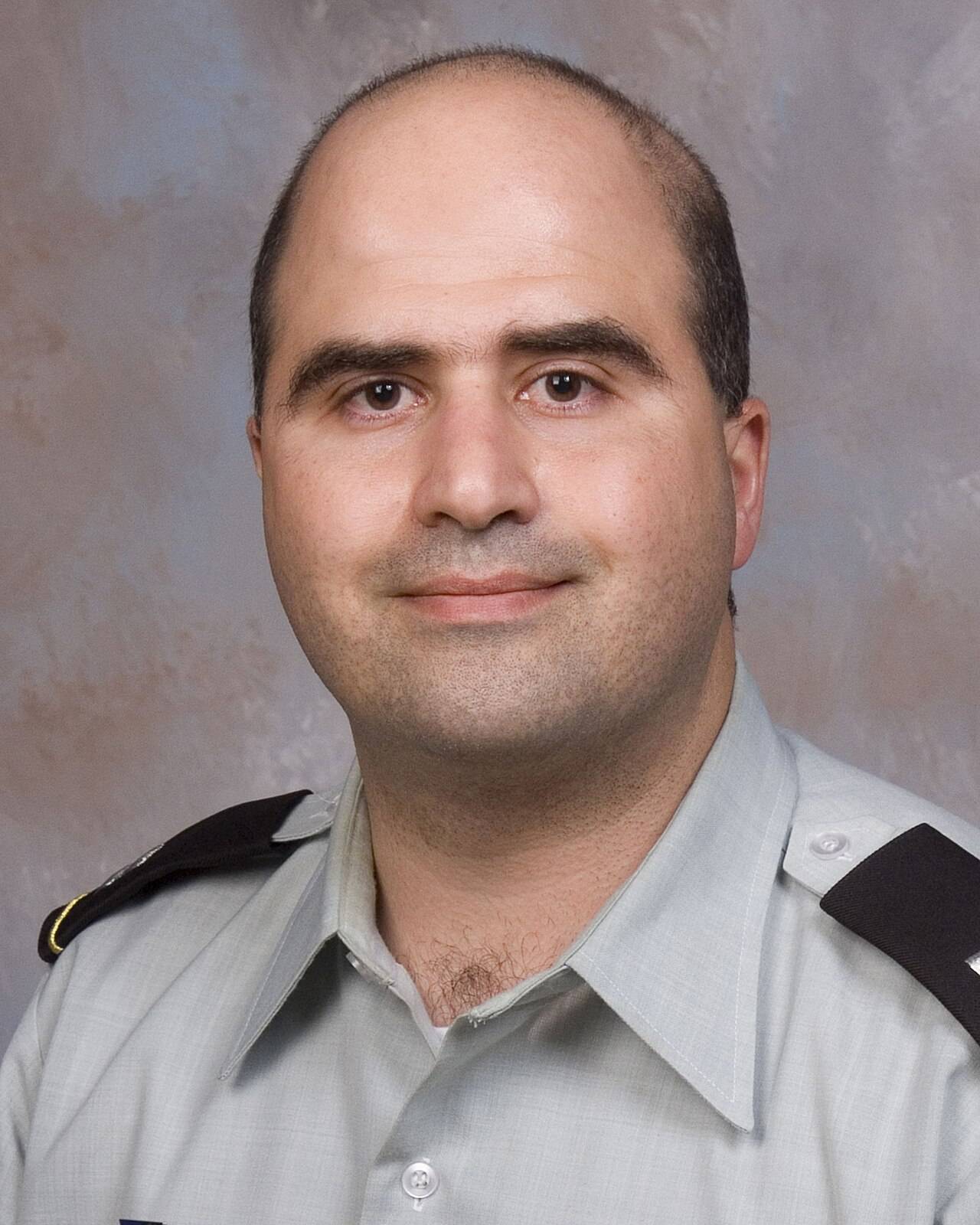
First Execution to Be Livestreamed in the US: Nidal Hasan’s Journey from Psychiatric Clinic to Death Rowhttps://english.aawsat.com/world/5328061-first-execution-be-livestreamed-us-nidal-hasan%E2%80%99s-journey-psychiatric-clinic-death-row
(FILES) This April 9, 2010 file photo released by the Bell County Sheriffs Department, shows US Major Nidal Hasan after being moved from Brooke Army Medical Center in San Antonio to Bell County Jail in Belton, Texas. . (Photo by Handout / BELL COUNTY SHERIFFS DEPARTMENT / AFP)
First Execution to Be Livestreamed in the US: Nidal Hasan’s Journey from Psychiatric Clinic to Death Row
(FILES) This April 9, 2010 file photo released by the Bell County Sheriffs Department, shows US Major Nidal Hasan after being moved from Brooke Army Medical Center in San Antonio to Bell County Jail in Belton, Texas. . (Photo by Handout / BELL COUNTY SHERIFFS DEPARTMENT / AFP)
In an unprecedented move that has shaken Washington’s political and legal establishment, American society stands on the threshold of a deeply sensitive historical and moral turning point. The Pentagon is preparing to carry out what would be the first public execution broadcast live over the internet in modern US history, sentencing former Army Major and psychiatrist Nidal Malik Hasan to death on December 3.
The case is particularly significant because it would mark the first execution by firing squad under military law since 1945, the end of World War II. It would place a US Army major before the ultimate punishment, in a highly publicized execution watched by millions on their screens, after decades in which such military sentences had remained uncarried out.
Origins and Background: Between Achievement and Extremism
Nidal Malik Hasan was born in September 1970 in Arlington County, Virginia, to a family of Palestinian origin. He attended American schools before deciding to join the military in 1988, immediately after graduating from high school.
The US government fully funded his university education until he earned his medical degree in psychiatry. He steadily advanced through the military ranks, eventually becoming a major and Army psychiatrist, a position that placed him on a promising career path.
Behind this distinguished military career, however, a profound identity crisis and bitter ideological struggle were taking shape out of sight. Subsequent investigations revealed that Hasan had engaged in extensive ideological correspondence with extremist figures abroad, most notably Anwar al-Awlaki, a leader in Al-Qaeda, according to US media reports.
Hasan increasingly voiced strong opposition to US foreign policy, viewing the wars in Iraq and Afghanistan as direct attacks on his beliefs. The crisis reached its peak when he received official military orders assigning him to active duty in Afghanistan.
Fort Hood and the Mass Shooting
On November 5, 2009, just weeks before he was scheduled to deploy to Afghanistan, Major Nidal Hasan made the decision to completely repudiate his military oath and stormed the Soldier Readiness Processing Center at the well-known Fort Hood military base in Texas.
Hasan drew his firearm and opened fire indiscriminately and repeatedly on his fellow service members, who were unarmed and waiting to undergo medical examinations and routine vaccinations before deployment.
The surprise attack killed 13 people, including 12 military personnel and one civilian, and wounded another 32, with injuries of varying severity. It was described as the deadliest attack on a US military base in modern history.
The shooting ended when civilian security personnel at the base opened fire on Hasan, leaving him partially paralyzed and confined to a wheelchair from that day onward.
The Courtroom and the Shocking Admission
During his landmark military trial in 2013, Nidal Hasan stunned those present by refusing to use lawyers and choosing to represent himself before the military jury.
Hasan made no effort to defend himself or offer excuses. Instead, he openly accepted full responsibility for the incident before the court, stating that he had changed his allegiance and switched sides to protect those he believed were fighting against US forces.
The 13-member military panel convicted him on 45 counts, including premeditated murder and attempted premeditated murder. He was sentenced to death and subsequently transferred to the strict military confinement facilities at Fort Leavenworth, Kansas.
Hasan was not formally convicted of terrorism, as US military criminal law does not contain a separate offense bearing that designation. Instead, the case was prosecuted as a major mass-murder crime.
Nidal Hasan in a 2007 photograph at the Uniformed Services University of the Health Sciences. Hasan held the rank of captain in the US Army when the photograph was taken. (Wikipedia)
Trump’s Approval and the End of Six Decades
Under the strict and complex provisions of US military law, the death sentence of a serving military member cannot be carried out without formal approval and the final signature of the US president in his capacity as commander-in-chief of the armed forces.
After all available levels of appeal and legal challenges had been exhausted, and the Supreme Court had rejected his petitions, President Donald Trump signed the execution order following an explicit recommendation from his defense secretary, Pete Hegseth.
The presidential decision paves the way for the end of decades without military executions. The planned execution would be the first of its kind in the US military overall since 1961, when soldier John Bennett was hanged. Its particular historical significance lies in the fact that it would be the first military execution by firing squad since soldier Eddie Slovik was executed for desertion in 1945 during World War II.
Screens of Death and Divisions in the White House
The US Department of Defense sparked a major controversy when it announced that the execution by firing squad would be public and available to watch live on internet platforms. The Pentagon justified the unprecedented measure as an effort to establish a decisive deterrent and demonstrate the grave consequences of military betrayal.
Officials selected 1:30 p.m. as the execution time, precisely matching the time Hasan carried out his deadly attack at Fort Hood years earlier.
The announcement of the livestream triggered a storm of controversy and sharp divisions within American political circles. US Vice President JD Vance expressed serious reservations and deep skepticism about broadcasting the execution publicly, stating that he would not watch the spectacle under any circumstances.
Democrats strongly criticized the move, calling it a regressive act unbecoming of a country governed by institutions. Some prominent Republicans also expressed disgust at turning judicial justice into a media spectacle resembling practices associated with extremist totalitarian regimes.
Nidal Hasan in his 1986 high school yearbook. (Wikipedia)
The Legal Clash and the Constitutionality of a Public Broadcast
The decision to livestream the execution opens a dark and contentious legal and constitutional chapter in the American justice system. No official execution has been broadcast on public screens in the country’s modern history since the last authorized public execution took place in the 1930s.
This political ambition faces a complex legislative framework governing the public disclosure of executions, with substantial differences between state and federal law. In most US states, local laws prohibit filming and broadcasting executions, allowing only a limited number of witnesses and journalists to attend for transparency purposes.
Meanwhile, Federal Military Regulation 190-55 restricts attendance to a small group that includes victims’ relatives and accredited journalists, while imposing an absolute ban on anyone below the legal age.
Despite efforts by the defense to submit emergency petitions to civil courts seeking to halt the execution on the basis of these legal loopholes, the Pentagon appears determined to overcome the obstacles and proceed with both the execution and its broadcast on the scheduled date.
لم تشترك بعد
انشئ حساباً خاصاً بك لتحصل على أخبار مخصصة لك ولتتمتع بخاصية حفظ المقالات وتتلقى نشراتنا البريدية المتنوعة