Sudanese Banks Get behind African State’s Real Estate Sector

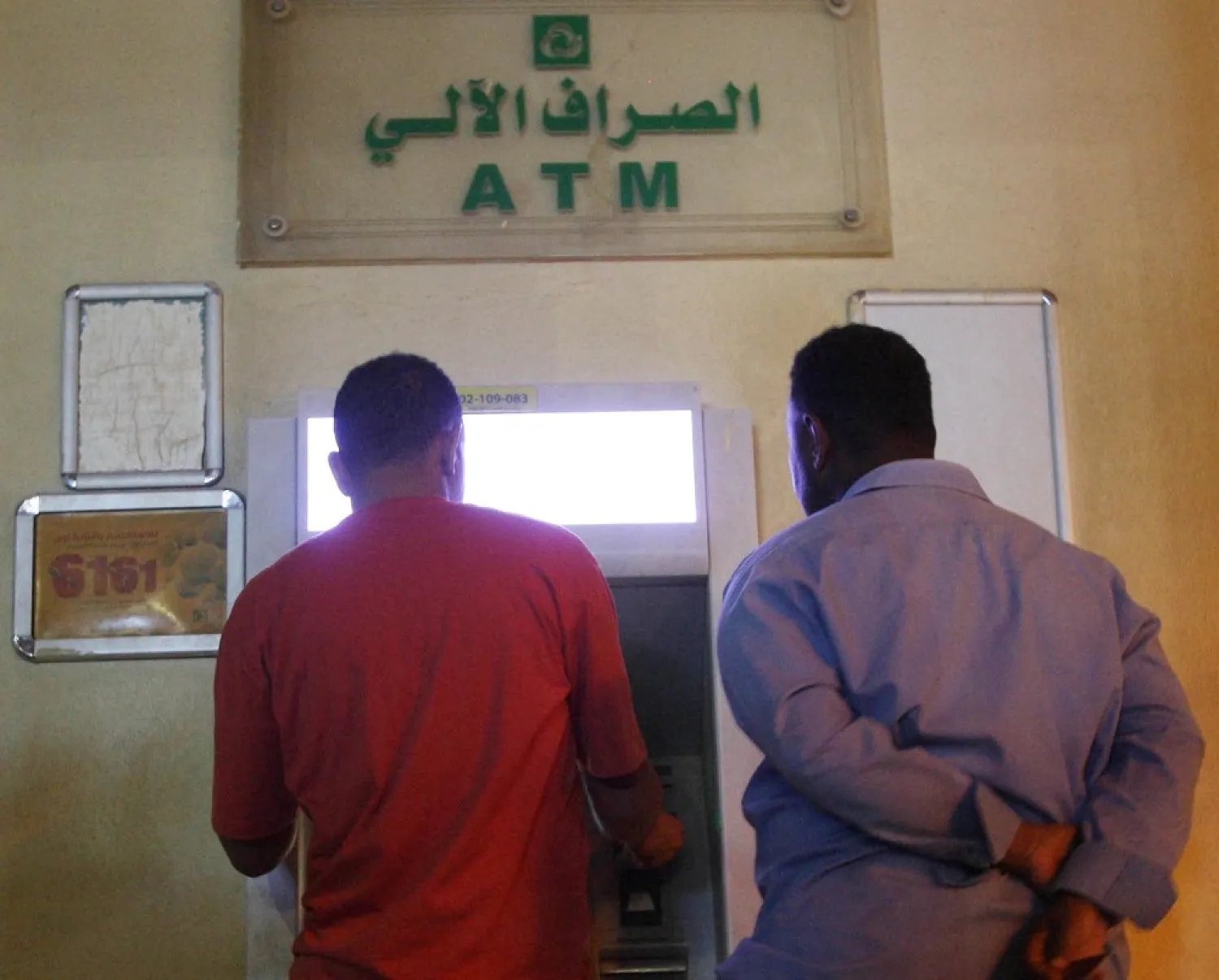
Residents stand outside an (ATM in Khartoum, Sudan November 8, 2018. (Reuters)
TT

Sudanese Banks Get behind African State’s Real Estate Sector

Residents stand outside an (ATM in Khartoum, Sudan November 8, 2018. (Reuters)

Sudan’s Central Bank announced it was lifting a five-year ban on banks property loans to individuals and companies. The decision will enable grant mortgages to eligible beneficiaries, without third party real estate agents or brokers.

Subsequently, Sudan’s Real Estate Commercial Bank, alongside other local commercial banks, started offering individuals housing plans. In order to become eligible for a property loan, applicants need to accept the fund at a 20% interest rate, and provide a 15%-20% down payment of total costs in advance.

No ceiling on offered loans was specified.

The conditions for obtaining mortgages from banks, with a repayment period up to seven years, include a search certificate for the property. The applicant must attach an official blueprint for the land plot--a building permit from the local authorities and the concerned parties is required if the property is yet to be built.

In the case of erecting a new construction unit or rehabilitating a preexisting one, applicants must also provide a quota on quantities of construction materials to be used in the project. A feasibility study of the housing project, whether commercial, investment or housing must also be attached.

Any applicant must also have an arrangement with a state-approved contractor that will provide building materials and other supplies. The applicant is required to pay an advance payment of 15 to 25% of the loan amount and will also bear the engineering supervision fee of 3% of total financing costs.

In accordance with the decision of the Central Bank of Sudan, the mortgage will be cleared for both companies and entitled individuals.

Sanahuri Saghirun, former director at Sudan’s Ministry of Urban Planning, said that unblocking real estate loans will revive the construction and housing market in the African country.

Saghirun added that companies, before, had resorted to backdoor solutions to circumvent the decision to halt all real estate loans, which raised the cost of construction and made housing units more expensive.


Gold Eases as Strong US Jobs Data Tempers Fed Rate‑cut Expectations

FILE PHOTO: An employee places ingots of 99.99 percent pure gold in a workroom at the Novosibirsk precious metals refining and manufacturing plant in the Siberian city of Novosibirsk, Russia, September 15, 2023. REUTERS/Alexander Manzyuk/File Photo
TT

Gold Eases as Strong US Jobs Data Tempers Fed Rate‑cut Expectations

FILE PHOTO: An employee places ingots of 99.99 percent pure gold in a workroom at the Novosibirsk precious metals refining and manufacturing plant in the Siberian city of Novosibirsk, Russia, September 15, 2023. REUTERS/Alexander Manzyuk/File Photo

Gold prices ticked lower on Thursday, after unexpectedly strong US jobs data for January dented hopes for more interest rate cuts from the Federal Reserve in the near term, while a firmer dollar added to pressure on the market.

Spot gold edged 0.3% lower to $5,064.90 per ounce by 0820 GMT. US gold futures for April delivery lost 0.2% to $5,086.30 per ounce.

Spot ‌silver fell 0.5% ‌to $83.59 per ounce, after a 4% climb ‌on ⁠Wednesday, Reuters said.

"Gold eased back ⁠from above $5,100 and silver from above $86 after stronger-than-expected US jobs data tempered expectations of imminent Fed rate cuts, lifting the dollar," said Ole Hansen, head of commodity strategy at Saxo Bank.

The US dollar index edged higher, making dollar-priced metals more expensive for other currency holders.

"The renewed focus on incoming economic data suggests ⁠a degree of normalization following the recent volatility ‌spike, while the upcoming Lunar New ‌Year holiday in China may further dampen risk appetite and liquidity," ‌Hansen added.

Fed policymakers appear likely to keep interest rates ‌on hold for longer after data on Wednesday showed the US job market began 2026 on a stronger footing than expected.

US job growth unexpectedly increased in January by 130,000 jobs after a downwardly revised ‌48,000 rise in December, while the unemployment rate fell to 4.3%.

Economists polled by Reuters had forecast ⁠payrolls advancing by ⁠70,000 jobs.

Lower interest rates reduce the opportunity cost of holding non-yielding gold.

Investors are waiting for the weekly US jobless claims report later in the day and inflation data on Friday for more cues on the Fed's monetary policy path.

"I think the CPI (inflation) print on Friday will be key. If we get a softer CPI print coupled with the jobs report data, that could keep gold from advancing much further and could see gold make a foray back below the $5000/oz mark," said Zain Vawda, analyst at MarketPulse by OANDA.

Spot platinum shed 0.7% to $2,117.09 per ounce, while palladium rose 0.7% to $1,704.50.


Riyadh Implements More Than 8,000 Infrastructure Projects

An employee at the Riyadh Infrastructure Projects Center (SPA)
TT

Riyadh Implements More Than 8,000 Infrastructure Projects

An employee at the Riyadh Infrastructure Projects Center (SPA)

The Riyadh Infrastructure Projects Center said it coordinated and delivered more than 8,000 infrastructure projects across the Saudi capital in 2025 under a comprehensive master plan launched last year.

The center explained that the plan is built on an integrated spatial and scheduling methodology designed to unify efforts, improve planning and execution efficiency, and reduce conflicts between projects.

The approach helped cut infrastructure project delivery times by 24 percent and generated cost savings through stronger governance, reduced unnecessary road resurfacing, and fewer service disruptions.

The methodology allows projects to be managed within a single regulatory framework that links spatial planning with implementation timelines and provides a centralized source of data.

This framework supports informed decision-making and improves coordination among the energy, water, telecommunications and road sectors.

According to the center, implementation of the master plan led to the resolution of 9,550 spatial conflicts and the management of 82,627 scheduling overlaps, in addition to addressing 436 conflicts related to major public events. These measures reduced project clashes, accelerated delivery, improved operational stability, and minimized the impact of construction on traffic flow and surrounding activities.

The center said the comprehensive master plan is one of its core strategic mandates and has become a unified regulatory reference that strengthens integration among government entities and raises the level of institutional coordination.

Working with more than 22 relevant stakeholders, the center exceeded its first-year targets by 108 percent.

It added that the achievements reflect a commitment to sound regulatory practices that support the sustainability of infrastructure projects, enhance service quality, and maximize developmental impact across the Riyadh region.


Syria Opens its Energy Sector to Global Oil Majors

A man walks past oil pumps in the oil-rich city of Rmelan in Syria (Reuters)
TT

Syria Opens its Energy Sector to Global Oil Majors

A man walks past oil pumps in the oil-rich city of Rmelan in Syria (Reuters)

Syria is moving swiftly to reclaim its role as a regional energy player, as the head of the Syrian Petroleum Company, Youssef Qiblawi, outlined ambitious plans to open the country’s oil and gas sector to major international firms, including Chevron, ConocoPhillips, TotalEnergies and Eni.

In comments to The Financial Times, Qiblawi said Syria has explored less than a third of its hydrocarbon potential. He noted that trillions of cubic meters of gas remain untapped in largely untouched areas, awaiting international expertise and technology to be brought into production.

Strategic alliances and offshore exploration

Signs of a new energy map are already emerging. Chevron has signed an agreement with Qatar’s Power International Holding to begin exploration in an offshore block, with field operations expected to start within two months.

Plans extend beyond that first project. QatarEnergy and TotalEnergies are considering participation in a second offshore block, while talks are under way with Italy’s Eni over a third.

ConocoPhillips has also strengthened its presence through a previously signed memorandum of understanding, reflecting what Qiblawi described as growing confidence among global energy companies in the commercial potential of Syria’s energy sector.

The production challenge

After years of conflict, the Syrian government has reasserted control by force over oilfields in the northeast that were previously held by Kurdish forces. Qiblawi described the condition of these fields as poor, saying production has fallen from about 500,000 barrels a day to roughly 100,000.

He attributed the decline to sabotage and the use of explosives to boost short-term output at the expense of long-term reservoir health.

Qiblawi said he would offer international companies existing fields to rehabilitate, allowing them to use the revenues to fund exploration elsewhere. “That would be costly, but I will give them some pieces of cake to generate money,” he said.

Closing the technology gap

Syria is seeking to bridge a significant technical gap, particularly in deep-water exploration. While seismic surveys and preliminary mapping of potential fields have been completed, advanced technology is lacking. Talks are planned with BP in London, while the government says it remains open to cooperation with Russian and Chinese firms.

Industry estimates suggest Syria holds proven reserves of around 1.3 billion barrels of oil, alongside vast unexplored areas, especially offshore.

Separately, Reuters reported that a large consortium is preparing to launch extensive exploration and production operations in northeastern Syria.

The group includes Saudi Arabia’s TAQA alongside US energy and oilfield services companies Baker Hughes, Hunt Energy and Argent LNG.

The consortium aims to develop four to five exploration blocks in areas previously under Kurdish control, with executives framing the effort as a step toward unifying the country’s resources and delivering tangible economic gains.

Toward energy stability

With around 2,000 engineers currently assessing damage in the northeast, the Syrian government hopes to publish a full recovery timetable by the end of February.

Officials at the Syrian Petroleum Company say they are optimistic that gas production can be doubled to 14 million cubic meters a day by the end of 2026, supported by renewed regional investment led by Saudi and US firms in energy and infrastructure projects.