


Afghanistan Feels Impact of Iran's Economic Isolation

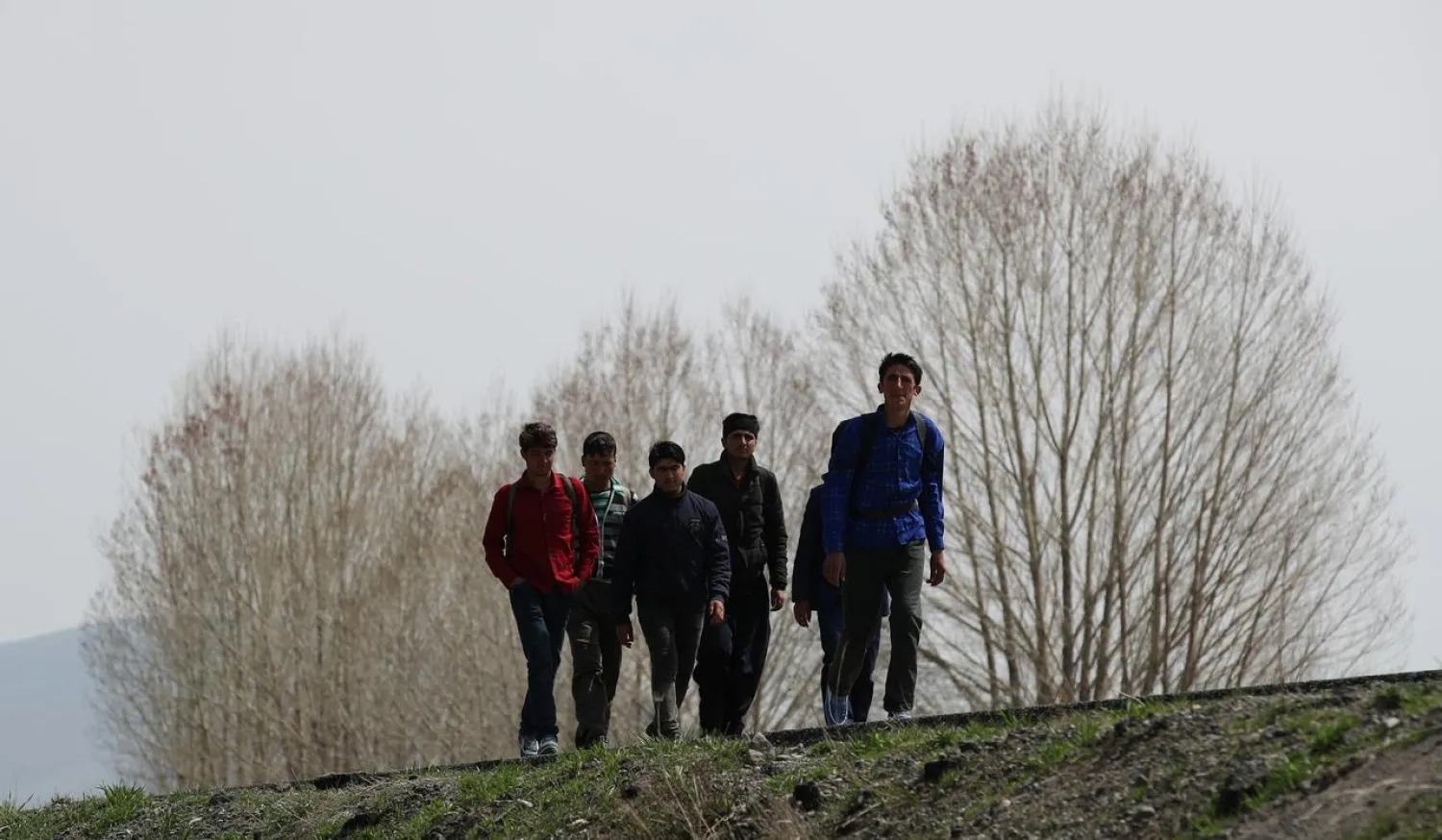
A group of Afghan migrants walk along a main road after crossing the Turkey- Iran border near Erzurum, eastern Turkey, April 12, 2018. (Reuters)
TT

Afghanistan Feels Impact of Iran's Economic Isolation

A group of Afghan migrants walk along a main road after crossing the Turkey- Iran border near Erzurum, eastern Turkey, April 12, 2018. (Reuters)

Abdul Saboor escaped poverty and instability in Afghanistan three years ago with his wife and three children and found work in neighboring Iran. Now he has returned home, despite the fact that life there has not improved.

His job at a grocery store in the central Iranian city of Isfahan brought in about 280 dollars a month, enough to support his family. But the Iranian rial took a dive last year and his employer cut his wages to less than 100 dollars a month, said a Reuters report on Thursday.

“The economic situation in Iran is really bad,” said the 28-year-old. “Wages have gone down since last year and a lot of families had to return to Afghanistan.”

Afghans began moving to Iran in large numbers after the Soviet invasion in 1979 and they continued to migrate for work through decades of conflict, sending money to relatives back home that helped bolster Afghanistan’s struggling economy.

In 2017, there were approximately 2.5 million to 3 million Afghans in Iran, according to Iranian government estimates cited by the United Nations.

That number could be cut in half by the end of this year. More than 770,000 Afghans left Iran last year as the currency faltered and an extra 570,000 are expected to go this year, the International Organization for Migration (IOM) said in January.

Iran’s economy has been squeezed since President Donald Trump reimposed sanctions on Iran last year after pulling out of a 2015 nuclear deal between Tehran and world powers.

US officials have said the sanctions are intended to pressure Iran to negotiate over what they say are its aggressive missile program and regional policy.

The rial lost approximately 70 percent of its value last year before recovering slightly, disrupting Iran’s foreign trade and helping boost annual inflation fourfold to nearly 40 percent in November. Currency fluctuations and the unstable economy have led to sporadic street protests since late 2017.

An IOM report in January noted that a big jump in the number of Afghans returning from Iran last year was “largely driven by recent political and economic issues in Iran including massive currency devaluation”.

Afghans typically took harsh, labor-intensive jobs in Iran and their departure will mean higher production costs, said Saeed Leylaz, a Tehran-based economist and political analyst, according to Reuters.

Over the past year, many Afghans in Iran have sought advice about returning from the office of Grand Ayatollah Mohaghegh Kabuli - a senior Afghan religious leader based in the holy city of Qom, according to an administrator in the office who asked not to be identified because of the sensitivity of the subject.

“With the crash of the value of the rial, staying in Iran has become very difficult for Afghan migrants,” he said. “They are under pressure.”

Naim, 18, followed the path of two of his older brothers and came to Iran from Afghanistan when he was only ten years old but quickly managed to find work in construction in Tehran.

The work was backbreaking and his family faced hardship: one brother lost four fingers in a construction accident in Tehran.

But he persevered, because he could make more money than at home, and eventually got a job as a doorman at a multi-story apartment complex in Tehran.

Last year, as the economic situation in Iran began to deteriorate, one of his older brothers decided he could no longer support his wife and six children and moved back to Herat in western Afghanistan.

“My brother’s wife and children were hungry and this currency has no value so they went back,” Naim said.

His brother started working in agriculture and has been able to open a small shop in Herat with his earnings. He is now pushing Naim to come home from Iran, a trip that he and approximately 150 friends and extended family are planning to take in two months.

“We work and we work and for what?” Naim said. “We have to go back.”

He could face an uncertain future once he returns.

“The economic opportunities in Afghanistan are no longer there. It’s not like there’s a lack of opportunities in Iran and new opportunities in Afghanistan,” said Sarah Craggs, IOM’s senior program coordinator for Afghanistan, who is based in Kabul. “There are no opportunities in either country really.”

Afghans have long sought better lives in other countries and a lack of jobs in Iran could also boost numbers trying to head further west to Europe.

The latest drop in remittances from Iran is already having an impact on the economies of the Afghan provinces of Herat, Badghis and Ghor, an IOM report said in January.

Abdul Saboor now earns about 130 dollars a month working at a restaurant in Herat.

“Life was much better in Iran but since the financial crisis, it was difficult to survive so we had to come back despite all the hardship here,” he said. “I was the lucky one and found a job while thousands of others are jobless.”


Top Trump Iran Negotiator Says Visits US Aircraft Carrier in Middle East

US Special Envoy Steve Witkoff delivers a press conference upon the signing of the declaration on deploying post-ceasefire force in Ukraine, during the so-called "Coalition of the Willing" summit, at the Elysee Palace in Paris, France, January 6, 2026. (Reuters)
TT

Top Trump Iran Negotiator Says Visits US Aircraft Carrier in Middle East

US Special Envoy Steve Witkoff delivers a press conference upon the signing of the declaration on deploying post-ceasefire force in Ukraine, during the so-called "Coalition of the Willing" summit, at the Elysee Palace in Paris, France, January 6, 2026. (Reuters)

US President Donald Trump's lead Iran negotiator Steve Witkoff on Saturday said he visited the USS Abraham Lincoln aircraft carrier currently in the Arabian Sea, with Washington and Tehran due to hold further talks soon.

"Today, Adm. Brad Cooper, Commander of US Naval Forces Central Command, Jared Kushner, and I met with the brave sailors and Marines aboard the USS Abraham Lincoln, her strike group, and Carrier Air Wing 9 who are keeping us safe and upholding President Trump's message of peace through strength," said Witkoff in a social media post.

Iranian Foreign Minister Abbas Araghchi said on Saturday he hoped talks with the United States would resume soon, while reiterating Tehran's red lines and warning against any American attack.


Israel’s Netanyahu Expected to Meet Trump in US on Wednesday and Discuss Iran

Israeli Prime Minister Benjamin Netanyahu delivers a speech during a special session to mark the 77th anniversary of the Knesset's establishment and the 60th anniversary of the dedication of the current building at the Knesset, the Israeli parliament, in Jerusalem, 02 February 2026. (EPA)
TT

Israel’s Netanyahu Expected to Meet Trump in US on Wednesday and Discuss Iran

Israeli Prime Minister Benjamin Netanyahu delivers a speech during a special session to mark the 77th anniversary of the Knesset's establishment and the 60th anniversary of the dedication of the current building at the Knesset, the Israeli parliament, in Jerusalem, 02 February 2026. (EPA)

Israeli Prime Minister Benjamin Netanyahu is expected to meet US President Donald Trump on Wednesday in Washington, where they will discuss negotiations with Iran, Netanyahu's office said on Saturday.

Iranian and US officials held indirect nuclear ‌talks in the ‌Omani capital ‌Muscat ⁠on Friday. ‌Both sides said more talks were expected to be held again soon.

A regional diplomat briefed by Tehran on the talks told Reuters Iran insisted ⁠on its "right to enrich uranium" ‌during the negotiations with ‍the US, ‍and that Tehran's missile capabilities ‍were not raised in the discussions.

Iranian officials have ruled out putting Iran's missiles - one of the largest such arsenals in the region - up ⁠for discussion, and have said Tehran wants recognition of its right to enrich uranium.

"The Prime Minister believes that any negotiations must include limiting ballistic missiles and halting support for the Iranian axis," Netanyahu's office said in a ‌statement.


Italy FM Rules Out Joining Trump’s ‘Board of Peace’

Italy's Minister for Foreign Affairs Antonio Tajani speaks to the press during the EPP Leaders’ meeting, in Zagreb, Croatia, 30 January 2026. (EPA)
TT

Italy FM Rules Out Joining Trump’s ‘Board of Peace’

Italy's Minister for Foreign Affairs Antonio Tajani speaks to the press during the EPP Leaders’ meeting, in Zagreb, Croatia, 30 January 2026. (EPA)

Italy will not take part in US President Donald Trump's "Board of Peace", Italian Foreign Minister Antonio Tajani said Saturday, citing "insurmountable" constitutional issues.

Trump launched his "Board of Peace" at the World Economic Forum in Davos in January and some 19 countries have signed its founding charter.

But Italy's constitution bars the country from joining an organization led by a single foreign leader.

Prime Minister Giorgia Meloni, a Trump ally, last month noted "constitutional problems" with joining, but suggested Trump could perhaps reopen the framework "to meet the needs not only of Italy, but also of other European countries".

Tajani appeared Saturday to rule that out.

"We cannot participate in the Board of Peace because there is a constitutional limit," he told the ANSA news agency.

"This is insurmountable from a legal standpoint," he said, the day after meeting US Secretary of State Marco Rubio and US Vice President JD Vance at the Olympics in Milan.

Although originally meant to oversee Gaza's rebuilding, the board's charter does not limit its role to the Palestinian territory and appears to want to rival the United Nations.