Female Firefighters Struggle More Than Males

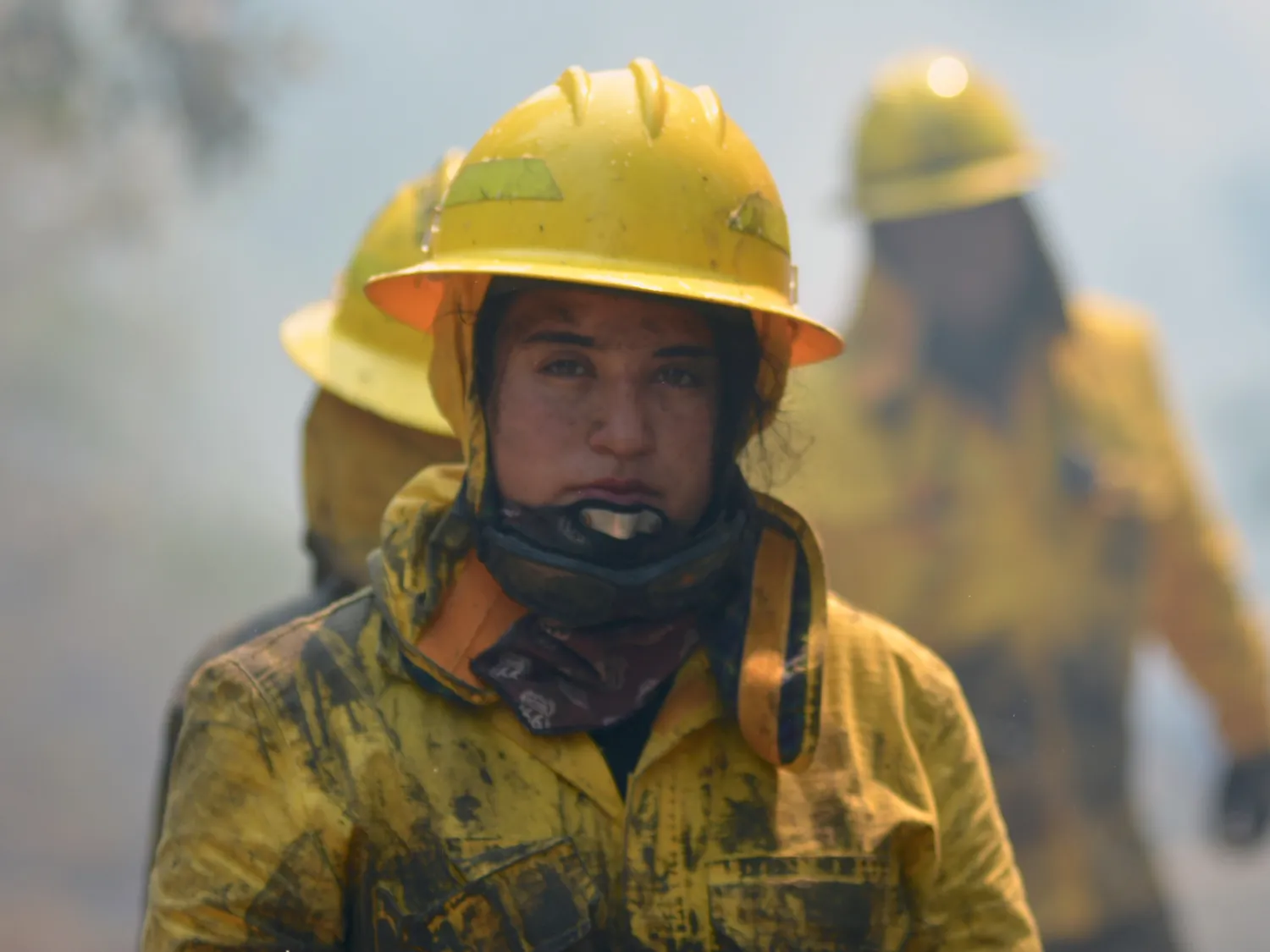
A firefighter working near Concepcion, Chile, where an aircraft assisted teams on the ground working to put out a wildfire. Image:
AFP/AFP/Getty Images
A firefighter working near Concepcion, Chile, where an aircraft assisted teams on the ground working to put out a wildfire. Image: AFP/AFP/Getty Images
TT

Female Firefighters Struggle More Than Males

A firefighter working near Concepcion, Chile, where an aircraft assisted teams on the ground working to put out a wildfire. Image:
AFP/AFP/Getty Images
A firefighter working near Concepcion, Chile, where an aircraft assisted teams on the ground working to put out a wildfire. Image: AFP/AFP/Getty Images

Female firefighters experience post-traumatic stress disorder symptoms more than their male colleagues, according to the German News Agency.

A study conducted by the University of Houston found that one-fifth of female firefighters in a large, urban fire department experience post-traumatic stress disorder symptoms compared with one-eighth of men. It also showed that female firefighters are at higher risk of contemplating suicide.

The post-traumatic stress disorder is a condition that occurs after a traumatic event or a series of harmful incidents over a period of time. It may cause a wide range of symptoms including flashbacks and nightmares causing sleep problems, loss of emotional sense, and high levels of sadness and anger.

The research team assessed 2,639 firefighters of both genders. Among them were 75 women, 15 of whom reported to have suffered post-traumatic stress disorder.

Consuelo Arbona, professor of counseling psychology at the University of Houston sees that: "because women are such a small number of the population in each fire station, they have been somewhat overlooked when they are included in larger studies and their issues are lost."


As Smog Hangs Over Lahore, Pakistan’s New Pollution Squad Races to Douse Stubble Fires

Stubble burns in a crop field amid smog and air pollution, on the outskirts of Lahore, Pakistan, November 12, 2026. (Reuters)
TT

As Smog Hangs Over Lahore, Pakistan’s New Pollution Squad Races to Douse Stubble Fires

Stubble burns in a crop field amid smog and air pollution, on the outskirts of Lahore, Pakistan, November 12, 2026. (Reuters)

As smog again settles over large parts of South Asia, Pakistani authorities are widening a crackdown on illegal stubble burning they say is fueling the region's annual pollution crisis.

On Thursday, officers of a new quick-response unit swung off their vehicles at a paddy field on the edge of Lahore. Smoke curled low over the stubble, and the crew had the fire under control within minutes, keeping it from adding to the haze over a city that Swiss group IQAir rated “very unhealthy” earlier this week.

Farmers in the region commonly set leftover rice residue alight after the October harvest, fueling a toxic mix of industrial emissions, vehicle exhaust and construction dust that lingers under cold winter air, driving pollution to hazardous levels.

The unit is the first of its ‌kind in Pakistan ‌dedicated to fighting pollution, officials say, and it is one of the most visible ‌steps ⁠in a campaign ⁠that Punjab officials claim is working.

Satellites have detected less burned area in India and Pakistan than the historical average at this point in the year, even as many locals in Pakistan say they struggle to notice improvements.

CARROT AND STICK APPROACH

Silwat Saeed, chief of the Environment Protection and Climate Change Department in Pakistan’s Punjab, said the government this year formed a 750-member force in 67 rapid-response units across major rice-growing districts.

Teams aim to reach reported field fires within 10 to 15 minutes. Officials also patrol paddy areas for signs of burning, while complaints can be lodged locally, ⁠said Ashfaq Hussain, a deputy director of the force. “We receive complaints through multiple ‌channels and respond to them in the shortest possible time,” he ‌said.

In a single 24-hour period this week, the department received 679 field fire reports from across Punjab and said it extinguished ‌650 of them.

Violators face fines, arrest or both. Farmers caught burning stubble face fines of 15,000 ‌Pakistani rupees ($54) per acre, said Muhammad Farooq, an assistant director of the Punjab Agriculture Department. Those who fail to pay the fines can also face prosecution and a possible jail term of up to six months.

The government has also distributed more than 10,000 subsidized super seeders, paying 60% of their cost while farmers pay the remaining 40%.

ONGOING HEALTH CRISIS

Muhammad Ismail, ‌who farms 50 acres, said switching from stubble burning to a subsidized super seeder and other machinery had significantly boosted his wheat yield per acre.

Yet adoption ⁠is far from universal. ⁠Saleem Abbas, another local farmer who has shifted away from stubble burning, said many still favor the practice because it is widely regarded as the cheapest and fastest way to clear fields for the next crop.

Over recent years, Pakistan and India have each accused the other of worsening the air. Saeed said the challenge is huge for both countries and that Pakistan has raised it with officials from India at international forums.

India's foreign ministry did not respond to a request for comment.

In recent days, patients have crowded benches and corridors at local hospitals in Lahore. Abdullah Nayyar, director general of the Punjab Environment Protection Department, said health department data show smog-related throat hospitalizations last month were only at 69% of the level recorded in October 2025.

But at Lahore's Sir Ganga Ram Hospital, Ahmed Abubakar, a heart patient who has had a bypass and is diabetic, said smog had brought on breathing problems and eye infections.

Mohammad Niaz Butt, who said his nose and throat blocked up, put it bluntly: “They are burning it, and nothing is done about it.”


Alaska Laments Decline of Its Prized Salmon Populations

A fishing boat is seen in the port of the fishing town of Seward, Alaska on November 5, 2026. (AFP)
TT

Alaska Laments Decline of Its Prized Salmon Populations

A fishing boat is seen in the port of the fishing town of Seward, Alaska on November 5, 2026. (AFP)

In his Alaskan community, fisherman Bob Candopoulos has long welcomed tourists to his business that's showcased by a sign featuring a king salmon.

But this local fish emblematic of the region is growing increasingly rare.

"Ten years ago, we could go out every single day" and hit catch limits, the sports fisherman and charter boat operator told AFP. "Now sometimes we're lucky if we even find any salmon when we're out there fishing."

"It's terrible," Candopoulos said with a sigh, standing on the docks of the small port of Seward, a municipality surrounded by snow-capped mountains along the shores of the North Pacific.

Like many residents of this vast, frigid state, the 64-year-old blames massive trawlers that scour the Gulf of Alaska and the Bering Sea for impacting the king salmon runs.

Industrial vessels target pollock, which is used in products like breaded fish sticks and imitation crab products worldwide.

Their nets are as wide as four commercial airliners, and routinely scoop up thousands of tons of fish other than pollock each year.

This bycatch includes salmon, which then die in the ocean instead of returning to spawn in their native rivers.

The waste is particularly difficult to bear because salmon fishing has been severely restricted -- and even outright banned -- for years among the Indigenous communities along the Yukon and Kuskokwim rivers.

"Our rivers are running dry of fish, but the trawl industry isn't regulated to stop killing them," says Candopoulos.

- 'Preyed on by a billion-dollar industry' -

Most of the trawlers are based in Seattle, Washington state -- and roughly two-thirds of the economic output generated by the pollock fishing industry ends up outside Alaska.

"Alaska is definitely being preyed on by a billion-dollar industry," fumes Candopoulos.

This inequity fuels distrust in a region that's long witnessed the arrival of opportunists eager to exploit its rich resources, including beaver pelts, gold and oil.

Polling has indicated the majority of Alaskans are angry enough they'd like to see trawling banned.

In Seward, fishermen are not necessarily calling for that extreme.

"I'm not necessarily on the 'kill all trawlers' wagon," Chance Miller, 42, told AFP.

The sports fisherman noted that Alaska has a significant fleet of local trawlers, some of which operate on behalf of coastal Indigenous communities.

He also voiced concern over the economic implications.

"Towns are built around processors," Miller said.

"If those guys weren't bringing fish in, those processors might not be able to afford to stay open."

- Climate change impacts -

The thorny issue even found its way into Alaska's recent Senate election.

But science points to another culprit: climate change.

Research from the National Oceanic and Atmospheric Administration (NOAA) shows the decline in Chinook (king) salmon primarily stems from marine heatwaves in the Bering Sea, which renders the waters uninhabitable for the fish's prey.

Brett Watson, a natural resource economist at the University of Alaska Anchorage, said a trawling ban would have "unclear" impacts on salmon runs.

"Climate change has been identified as probably a larger contributor to the declines of salmon runs in on the Yukon and Kuskokwim rivers," he told AFP.

"That's a much more difficult issue to deal with."

In a state where residents receive an annual dividend from oil production, commercial fisherman Ian Raab laments that politicians squabble over trawlers while failing to mention the impacts of climate change.

"One would think Americans would talk more about it," he said. "I would love if we did, if we were more concerned about it."

Raab pivoted from salmon years ago, and instead prioritizes catching halibut and sablefish.

At 58, he is concerned about the Trump administration's dramatic budget cuts to NOAA.

He said the agency's marine weather forecasts have grown less reliable, and he fears reduced research will undermine policies for managing fish stocks.

"We should let them do their job," Raab said, "so I can do mine."


SpaceX's Starship Set for Return to Earth After Booster Catch Aborted

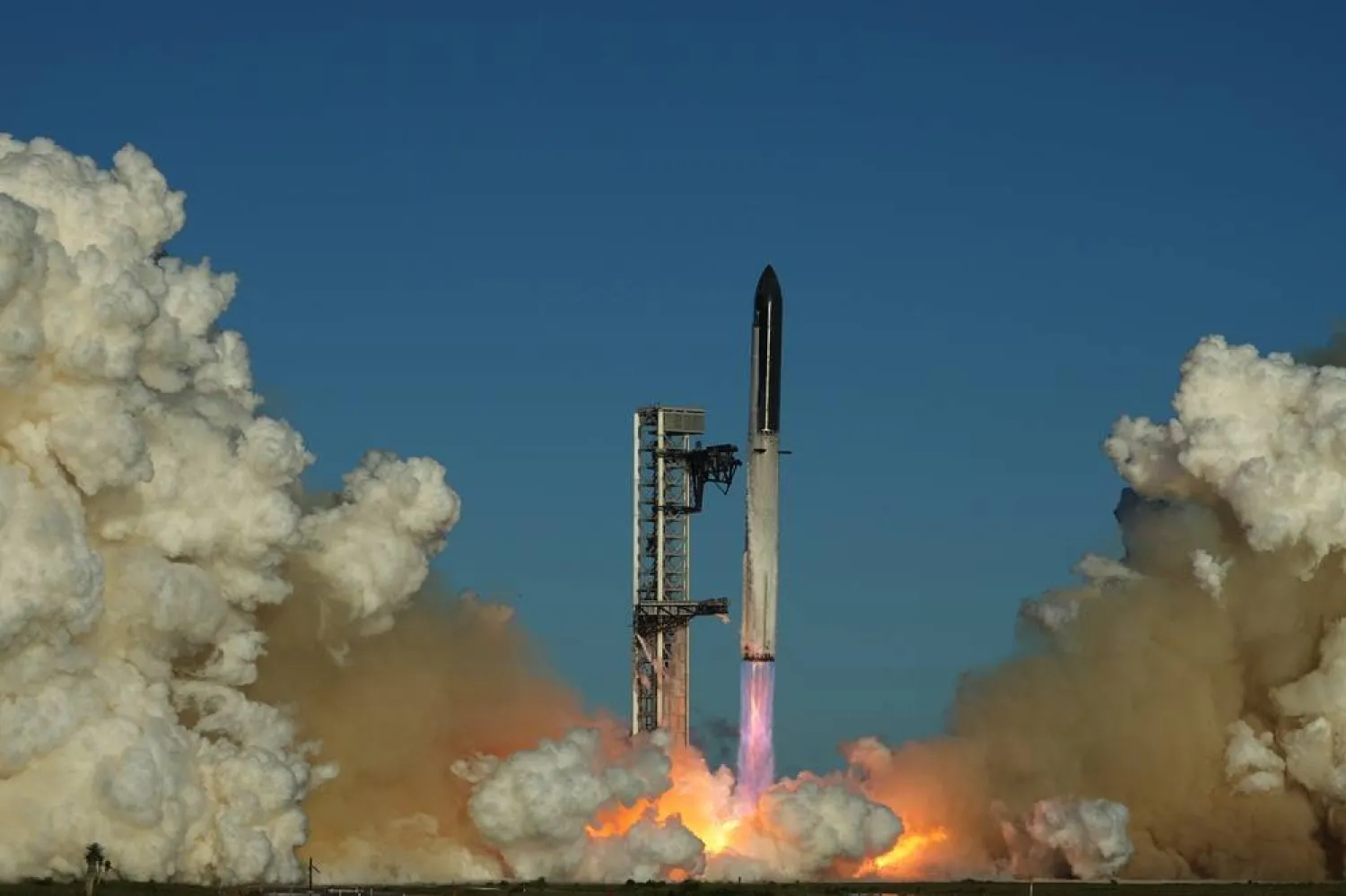
SpaceX's mega rocket Starship lifts off for a test flight from Starbase, Texas, Friday, Nov. 13, 2026. (AP)
TT

SpaceX's Starship Set for Return to Earth After Booster Catch Aborted

SpaceX's mega rocket Starship lifts off for a test flight from Starbase, Texas, Friday, Nov. 13, 2026. (AP)

SpaceX's Starship spacecraft was "healthy" as it orbited the Earth and on track to return Saturday to its Texas launch site, where Elon Musk's company was planning to "catch" the vehicle for the first time. 

It was the 15th test flight of the world's biggest and most powerful rocket system, originally meant to feature a groundbreaking twin capture of both the Super Heavy booster and the Starship. 

Successful recoveries of both stages would have marked a milestone in the space industry's decades-long pursuit of fully reusable rocket systems that can drastically reduce mission costs and make frequent launches possible. 

But that achievement slipped out of reach minutes after the 124-meter (407-foot) rocket blasted off Friday afternoon from its launch pad at Starbase. 

After the mid-air separation of the two stages, the Super Heavy booster was initially set for capture at Launch Pad 2, SpaceX spokesman Dan Huot said. 

But near the end of its descent "the booster aborted itself for a GNC (guidance, navigation and control) issue that it detected," he said. 

It diverted instead to the Gulf of Mexico just off the launch site, where it automatically self-destructed before hitting the water. 

Meanwhile, the Starship spacecraft that gives the rocket system its name was orbiting the Earth, which it was expected to do 14 times before returning Saturday. 

"Starship and its heat shield are healthy," SpaceX said around seven hours after the mission started. 

"We're not tracking any issues right now with the vehicle or with the range for our return, so everything continuing to look good," Huot said. 

Starship on Friday launched 26 satellites to join others in Musk's Starlink satellite internet constellation. 

- Complex catch - 

Clayton Swope, an aerospace expert at the Center for Strategic and International Studies, called the mission a "mixed bag so far" after the failure to catch the Super Heavy, something SpaceX has done three times previously. 

"At least the Starship made it to orbit, like on the last test flight," he said. 

Some versions of the Starship spacecraft are designed to launch internet satellites and data centers into orbit, while other iterations will be made to ferry people to the Moon and Mars. 

US space agency NASA is counting on Starship to serve as a lunar lander on its Artemis mission, and administrator Jared Isaacman congratulated SpaceX on Friday for "another spectacular launch" -- without mentioning the booster disappointment. 

SpaceX plans to return Starship to Earth after more than 22 hours of flight and recover it at around 3:20 pm (2120 GMT) on Saturday. 

The "catch" is extraordinarily complex because the spaceship will be falling much faster and from a much higher altitude than the booster. 

Like the three previous Super Heavy recoveries, Starship is meant to carry out a controlled descent and nestle between two mechanical "chopstick arms" at the launch site. 

"We'll only go for it if the ship passes all of these system checks and decision gates along the way, and there are lots of them," SpaceX commentator Kate Tice said. 

Due to the risks of losing control of Starship, SpaceX has planned for various scenarios where it will shorten the test flight and plunge the spaceship into the Pacific Ocean if necessary. 

- Refueling challenge - 

Musk, the world's richest person, has already revolutionized the space sector with the partially reusable Falcon rockets, which regularly launch satellites and carry astronauts to the International Space Station. 

But the Starship project has been plagued by years-long delays as SpaceX grapples with novel engineering challenges, including the unsolved problem of transferring fuel to the spaceship while in orbit -- a requirement for any journey to the Moon or Mars. 

Following SpaceX's high-profile stock market debut in June that raised about $85.7 billion, the company is investing heavily in production and launch capabilities. 

During a tour of its million-square-foot (93,000-square-meter) factory at Starbase on Friday, SpaceX officials told journalists that it now has the capability to produce a spaceship every two weeks and a booster every four weeks.