


On Hard Road to Reform, Lebanon May Need Old Friends

A general view of Beirut, Lebanon. (Reuters)
TT

On Hard Road to Reform, Lebanon May Need Old Friends

A general view of Beirut, Lebanon. (Reuters)

Heavily indebted Lebanon has passed a budget seen as a “first step” towards fixing its public finances but still has much to do to steer the country away from crisis.

Investors are waiting to see if Gulf Arabs will offer a lifeline that may provide some breathing space, reported Reuters Tuesday.

Lebanon has one of the world’s heaviest public debt burdens, after years of big budget deficits rooted in waste, corruption, and sectarian politics.

The government is now trying to put the public finances on a more sustainable footing with a budget to cut the deficit and a plan to fix the state-run power sector, which bleeds funds while inflicting daily power cuts on Lebanese.

After years of backsliding, the impetus to reform has grown due to economic stagnation and a virtual halt in the flow of dollars into Lebanon’s banks from abroad. Lebanon has depended on such flows from its diaspora to finance the current account and the state budget deficits.

The government hopes the state budget approved by parliament last week will help confidence by slashing the deficit. An international support group for Lebanon, including donor states, welcomed it as “an urgently needed first step” and urged further reforms.

But many doubt the government can meet its goals. The IMF says this year’s deficit is likely to be well above a targeted 7.6% of national output - and donors are still waiting to see important parts of the power plan implemented.

Foreign reserves, while still large relative to the size of the economy, have been falling. This has led banks to launch a new bid to attract dollars by offering 14% a year to depositors willing to lock up large sums for three years - funds which the banks redeposit at the central bank for yet higher returns.

Lebanon’s risks are reflected in the cost of insuring its debt, which surged back to the highest of any government in the world after briefly easing in the wake of parliament approving the budget on Friday, signaling an elevated risk of default.

“We believe investor malaise towards Lebanon is unlikely to dissipate soon,” said Yacov Arnopolin, senior portfolio manager at Pimco, one of the world’s biggest asset managers.

“While the significantly delayed budget passage is a step in the right direction, much remains to be done before the country is on a sustainable trajectory,” he said, according to Reuters. “Foreign investors have been spooked by deposit flight.”

Bank deposits, which have grown consistently on annual basis since the end of Lebanon’s 1975-90 civil war, have dipped by about 1.7% in the first five months of 2019.

Such outflows are typically seen at times of major shocks, such as the 2005 assassination of former Prime Minister Rafik Hariri, economists say.

“Small steps for a big crisis”

The budget included some politically tricky measures, such as a three-year freeze on state hiring. More difficult ideas were torpedoed, such as a public sector pay cut, and critics say the government also avoided the main problem: corruption.

The major deficit reduction measures include hiking tax on the interest paid on bank deposits and government bonds, a new import duty, and a plan to cut debt servicing, though it is not yet clear how that will be achieved.

“It is small steps for a big crisis. We have a very difficult situation that needs drastic steps, drastic measures, and none of them are being taken,” said MP Sami Gemayel, head of the Kataeb Party, one of the few parties not represented in Prime Minister Saad Hariri’s unity government.

Deputy Prime Minister Ghassan Hasbani told Reuters the budget was a good step but fell short of what is needed.

“I expect the sense of urgency to rise over the next few months and trigger a series of major reform activities,” he said. The impact of these would be seen in the 2020 budget.

Hariri hopes reforms will unlock about $11 billion pledged at a Paris conference last year to finance investment.

“We think this budget is a decent start. The deficit will show a contraction,” a Western diplomat said, adding: “They need to crack on with implementation of reforms but also with the 2020 budget.”

A recent IMF mission said this was “an important moment for Lebanon” and the budget and power sector reform plan were “very welcome first steps on a long road”.

It also noted that deposit inflows had virtually stopped and the central bank’s foreign reserves had dropped by around $6 billion since early 2018 despite continued central bank operations to support them.

“Deep-pocketed sponsors”

Investors now hope that Gulf Arab states, notably Saudi Arabia, may offer financial backing after a delegation of former Lebanese prime ministers met Custodian of the Two Holy Mosques King Salman bin Abdulaziz.

One of them, Najib Mikati, said Riyadh would “extend a hand of support”. The Saudi ambassador to Lebanon said the visit heralded a promising future for ties which have been strained in recent years.

Saudi Arabia has yet to spell out what it might do.

Qatar, has also signaled readiness to help, saying last month it had bought Lebanese bonds as part of a planned $500 million investment to support Lebanon.

Farouk Soussa, senior Middle East and North Africa economist with Goldman Sachs, said Lebanon’s deteriorating foreign exchange liquidity was “the real near-term pinch”.

“The real challenge is to stimulate capital inflows, either from depositors or investors,” he said. Gulf support would “underpin investor confidence by sending a strong signal that Lebanon can rely on deep-pocketed sponsors”, he added.

Goldman Sachs remains bearish on Lebanon, said Sara Grut, emerging markets strategist with the bank, according to Reuters.

“Red flags”

Alongside the fiscal crunch, the role of the central bank is also in focus.

The IMF mission said the central bank had skilfully maintained financial stability in difficult circumstances for some years, but the challenges have grown.

It called for action to increase the resilience of the financial sector through a stronger central bank balance sheet and increased bank capital buffers. The central bank should gradually phase out its financial operations and step back from government bond purchases, it said.

Toufic Gaspard, an economist who has worked as an adviser to the IMF and to the Lebanese finance minister, said Lebanon was in “absolutely” its worst ever financial shape.

He says debate about fiscal problems has diverted attention from central bank “financial engineering” operations, which he called “the most important risk”.

“The central bank has been buying dollars because of falling reserves. However this is not the problem per se, the problem is that for many years it has been paying very generous interest rates to banks,” he said. “These are red flags.”

Gaspard wrote a paper in 2017 saying the policy was resulting in “mounting losses” for the central bank, which has not published a profit and loss account since 2002.

The central bank said at the time that its interest rate policies were in line with Lebanon’s risk profile. It said it is required annually to report its balance sheet and profit and loss accounts to the finance minister, and the central bank “continues to generate sustained and substantial profits”.

TotalEnergies Tells Trump ‘Too Expensive’ to Reinvest in Venezuela

FILE PHOTO: A logo of French oil and gas company TotalEnergies is seen on the eve of the opening of the 2025 Paris International Agriculture Fair (Salon International de l'Agriculture) at the Porte de Versailles exhibition center in Paris, France, February 21, 2025. REUTERS/Sarah Meyssonnier/File Photo
TT

TotalEnergies Tells Trump ‘Too Expensive’ to Reinvest in Venezuela

FILE PHOTO: A logo of French oil and gas company TotalEnergies is seen on the eve of the opening of the 2025 Paris International Agriculture Fair (Salon International de l'Agriculture) at the Porte de Versailles exhibition center in Paris, France, February 21, 2025. REUTERS/Sarah Meyssonnier/File Photo

The CEO of French oil major TotalEnergies said it was “too expensive and too polluting” to return to Venezuela, despite calls from US President Donald Trump for oil giants to invest billions in the country.

The company quit Venezuela in 2022 but the Trump administration has urged oil majors to return since the US military operation to capture the country’s president, Nicolás Maduro, on Jan. 3.

Speaking on Wednesday, TotalEnergies CEO Patrick Pouyanné told reporters the company quit the country “because it clashed with our strategy. It was too expensive and too polluting and that is still the case,” according to Reuters.

The Trump administration has called on US energy giants to invest $100 billion to rebuild Venezuela’s oil industry.

Trump has pledged to support American oil companies that invest in Venezuela with government security assistance, saying last month that energy firms previously had problems “because they didn’t have Trump as a president.”

Venezuela boasts the world’s largest oil reserves but some US oil firms have expressed caution about rushing to re-enter — including Exxon Mobil.

Exxon CEO Darren Woods recently made headlines for saying at a White House meeting with Trump that the Venezuelan market is “uninvestable” in its current state.
Trump subsequently lashed out at Woods, threatening to sideline the oil giant and accusing the company of “playing too cute.”

Infrastructure Constraints
TotalEnergies started operating in Venezuela in the 1990s. Its departure followed a strategic shift away from heavy and high-sulfur crude and amid safety concerns.

Pouyanné has previously said that Venezuela is not high on the firm’s agenda.

TotalEnergies on Wednesday reported a slight drop in fourth-quarter profit and reduced share buybacks amid a weaker crude price environment.

Shares of the Paris-listed company rose nearly 2% during morning deals, notching a new 52-week high.


OPEC Forecasts World Demand for OPEC+ Crude Dropping in Q2

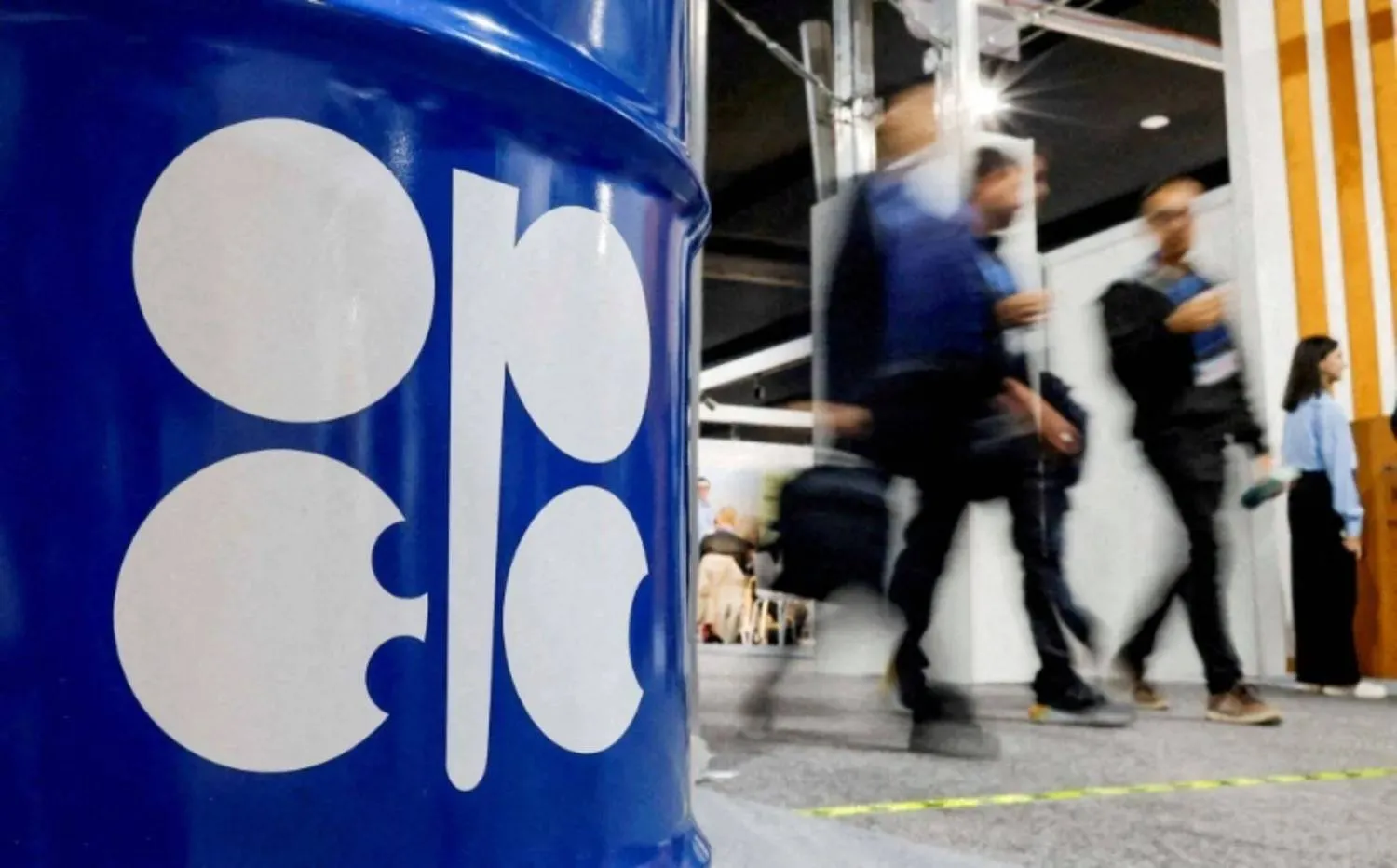
People walk past an installation depicting barrel of oil with the logo of Organization of the Petroleum Exporting Countries (OPEC) during the COP29 United Nations climate change conference in Baku, Azerbaijan November 19, 2024. REUTERS/Maxim Shemetov/File Photo 
TT

OPEC Forecasts World Demand for OPEC+ Crude Dropping in Q2

People walk past an installation depicting barrel of oil with the logo of Organization of the Petroleum Exporting Countries (OPEC) during the COP29 United Nations climate change conference in Baku, Azerbaijan November 19, 2024. REUTERS/Maxim Shemetov/File Photo 

The Organization of the Petroleum Exporting Countries (OPEC) on Wednesday forecast world oil demand for crude from the wider OPEC+ producer group will drop by 400,000 barrels per day in ‌the second quarter of this year, a copy of its monthly oil report on OPEC’s website shows.

World demand for OPEC+ crude ‌will average 42.20 million bpd in ⁠the second quarter, ⁠OPEC said in the report, down from 42.60 million bpd in the first quarter. Both forecasts were unchanged from last month’s report.

The OPEC+ group comprising OPEC nations, plus Russia and other allies, began raising oil output ⁠last year after years ⁠of cuts, and paused production hikes in the first quarter of 2026 amid predictions of a glut.

Eight OPEC+ members meet on ‌March 1 where they are expected to make a decision on whether to resume the hikes in April.

In the report, OPEC also left unchanged its forecasts that world oil demand will rise by 1.34 million bpd in 2027 and by 1.38 million bpd this year. The 2026 forecast is higher than that of other analysts such as the International Energy Agency.

OPEC+ pumped 42.45 million bpd in January, 2026, down 439,000 bpd from December, 2025, driven by reductions in Kazakhstan, Russia, Venezuela and Iran, OPEC said in the report.

OPEC has maintained its forecast for global oil demand in 2026 at approximately 106.5 million barrels per day (mb/d), keeping the projection it announced four months ago.

It also projected that world oil consumption will grow by 1.3 million bpd in 2027 and an average of 107.9 million bpd, unchanged from last month.

OPEC+ oil production declined last month amid losses in Venezuela and Iran, supported by geopolitical tensions, the group said.

Venezuelan and Iranian crude production declined by 87,000 barrels a day and 81,000 barrels a day, respectively.

Meanwhile, the global economic growth forecasts remained unchanged from last month's assessment at 3.1% in 2026 and 3.2% in 2027.

OPEC said world oil demand was gaining support from air travel and road transport, as well as from a drop in the value of the US dollar against a basket of currencies.

“This decline has made dollar-priced commodities, including oil, cheaper for consumers and provided some additional support for global demand,” OPEC said in the report.

Oil prices gained around 2% on Wednesday, buoyed by potential supply risks should US–Iran tensions escalate, while draws of crude from key stockpiles suggested stronger demand.

Brent crude oil futures were up $1.52, or 2.2%, at $70.32 a barrel by 01:20 GMT. US West Texas Intermediate crude rose $1.50, or nearly 2.4%, to $65.46.


Saudi Aramco Achieves 70% Local Content Target through iktva Program

Saudi Aramco Achieves 70% Local Content Target through iktva Program
TT

Saudi Aramco Achieves 70% Local Content Target through iktva Program

Saudi Aramco Achieves 70% Local Content Target through iktva Program

Saudi Aramco announced on Wednesday that its supply chain transformation program, iktva (In-Kingdom Total Value Add), has achieved its target of reaching 70% local content.

Building on this milestone, the company said that it plans to increase local content in its goods and services procurement to 75% by 2030.

Since its launch, the iktva program has contributed more than $280 billion to the Kingdom’s gross domestic product, reinforcing its role as a key driver of industrial development, economic diversification, and long-term financial resilience.

Through the localization of goods and services, the program has strengthened the resilience and reliability of Aramco’s supply chains, enhanced operational continuity, reduced supply chain vulnerabilities, and provided protection against global cost inflation - capabilities that proved critical during periods of disruption.

Aramco President and CEO Amin Nasser expressed pride in the scale of transformation achieved through iktva and its positive impact on the Kingdom’s economy, noting that the announcement represents a major milestone in the program’s journey and reflects a significant leap in Saudi Arabia’s industrial development, fully aligned with the Kingdom’s national vision.

“iktva is a core pillar of Aramco’s strategy to build a competitive national industrial ecosystem that supports the energy sector while enabling broader economic growth and creating thousands of job opportunities for Saudi nationals,” he stressed.

By localizing supply chains, the program ensures operational reliability and mitigates disruptions that may affect global supply chains, he added, noting that its cumulative impact over a decade demonstrates the sustained value it continues to generate.

Over the past decade, iktva has emerged as a leading example of supply-chain-driven economic transformation, converting Aramco’s project spending into domestic economic multipliers that have created jobs, improved productivity, stimulated exports, and strengthened supply chain resilience.

The program has identified more than 200 localization opportunities across 12 key sectors, representing an annual market value of $28 billion. These opportunities have translated into tangible investment outcomes, catalyzing more than 350 investments from 35 countries in new manufacturing facilities within the Kingdom, supported by approximately $9 billion in capital. These investments have enabled the local manufacture of 47 strategic products in Saudi Arabia for the first time.

iktva has also contributed to the creation of more than 200,000 direct and indirect jobs across the Kingdom, further strengthening the local industrial base and national capabilities. To support continued growth, the program organized eight regional supplier forums worldwide in 2025, in addition to its biennial forum. These events helped connect global investors, manufacturers, and suppliers with localization opportunities in Saudi Arabia.