


King Salman to Host 2,000 Pilgrims from Yemen Martyrs’ Families

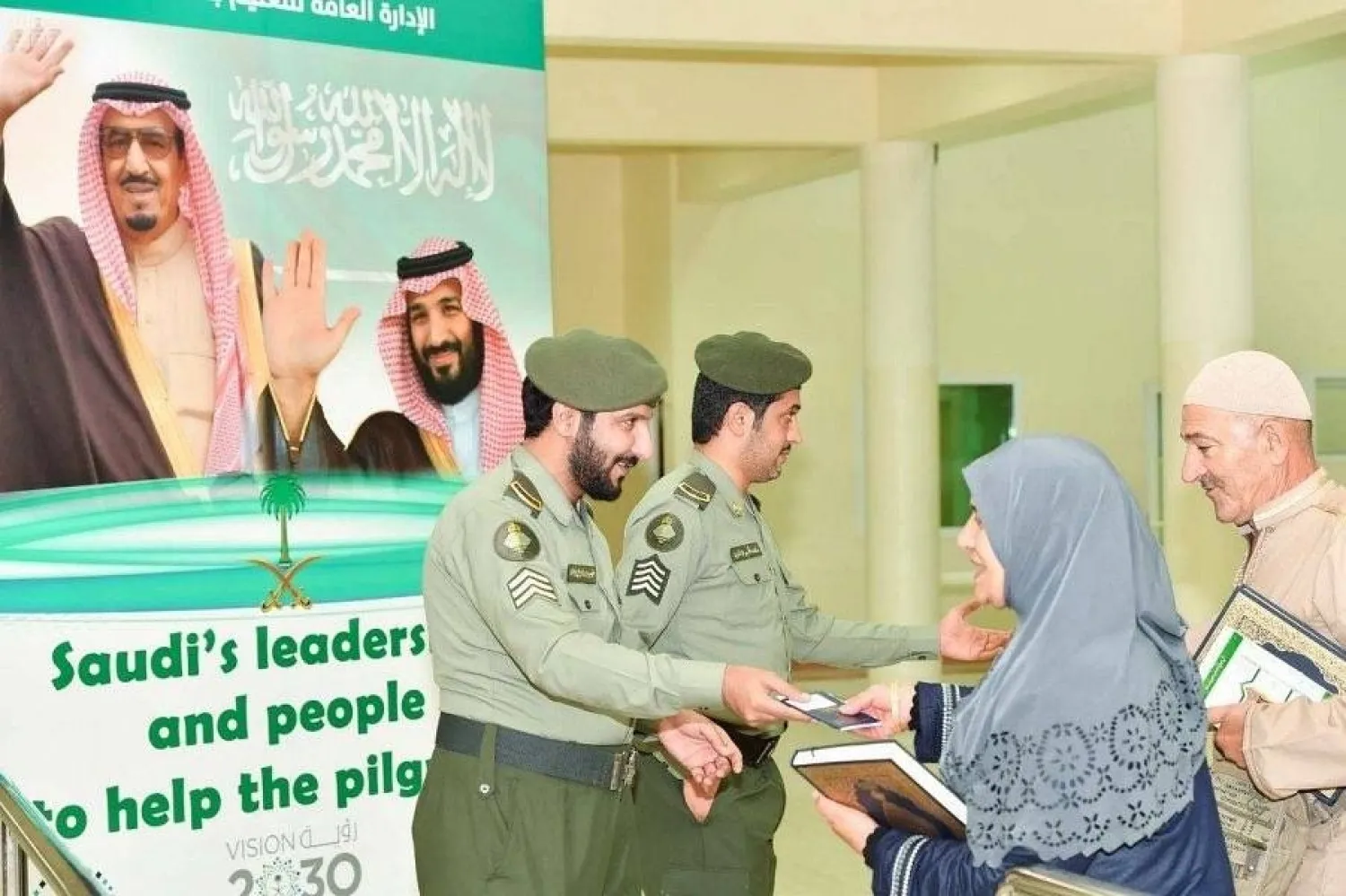
All government sectors mobilize their potentials to receive pilgrims arriving at Halat Ammar border crossing point in the northern part of the Kingdom. — SPA
TT

King Salman to Host 2,000 Pilgrims from Yemen Martyrs’ Families

All government sectors mobilize their potentials to receive pilgrims arriving at Halat Ammar border crossing point in the northern part of the Kingdom. — SPA

Custodian of the Two Holy Mosques King Salman bin Abdulaziz will host during this year’s Hajj 2,000 family members of the Yemeni army and Popular Resistance soldiers who died during the operations of Decisive Storm and Restoring Hope.

The 2,000 pilgrims will perform the pilgrimage as part of the 'Custodian of the Two Holy Mosques’ Guests Program for Hajj and Umrah' which is overseen by the Ministry of Islamic Affairs, Call and Guidance.

Minister of Islamic Affairs, Call and Guidance Sheikh Dr. Abdullatif Al-Sheikh – who is also the supervisor of the program - said that the directive falls under the king’s continuous quest for the best interest of Muslims.

This initiative also embodies the Saudi leadership's support to the Yemeni people and the martyrs' families as an appreciation to their heroic scarifications, he added.

Al-Sheikh continued that the kingdom took it upon itself to defend Yemen's land and people against the Iranian oppression seeking to seize Yemen and demolish its possessions as well as violate its stability and spread chaos.

Earlier, King Salman issued a directive for 200 family members of the victims of the terrorist attack that targeted two mosques in Christchurch, New Zealand to also be hosted during Hajj.

Saudi ambassador to New Zealand Abdulrahman al-Suhaibani, during the farewell of pilgrims at the Al Noor mosque in Christchurch, said that this directive was highly welcomed by the victims who asked to convey their gratitude to the Custodian of the Two Holy Mosques.

Suhaibani added that the king’s directive was well-received by the official, popular and media parties of New Zealand, describing it as a positive and significant initiative towards the victims.

A total of 926,726 pilgrims have arrived in the Kingdom till Friday, according to the Directorate General of Passports (Jawazat). It said 881,229 pilgrims arrived by air through King Abdulaziz International Airport in Jeddah and Prince Mohammad Bin Abdul Aziz International Airport in Madinah.

According to the Jawazat, as many as 35,148 pilgrims have arrived by land through the Kingdom's various inlets and 10,349 by sea.



King Salman: We Thank God for Honoring Us With Serving the Two Holy Mosques and Caring for Pilgrims

Custodian of the Two Holy Mosques King Salman bin Abdulaziz (Asharq Al-Awsat)
TT

King Salman: We Thank God for Honoring Us With Serving the Two Holy Mosques and Caring for Pilgrims

Custodian of the Two Holy Mosques King Salman bin Abdulaziz (Asharq Al-Awsat)

Custodian of the Two Holy Mosques King Salman bin Abdulaziz on Wednesday expressed “gratitude to Almighty God for honoring us with the service of the Two Holy Mosques and the care of pilgrims to His Sacred House.”

King Salman prayed that God accept the pilgrims’ Hajj, rituals and acts of worship.

“With the advent of the blessed Eid al-Adha, we congratulate our people in this blessed homeland and our Islamic nation on this occasion, and pray to Him Almighty to make it an Eid of goodness, peace and stability for our nation and the entire world. May you all be well every year,” the king said.

Since dawn on the first day of Eid al-Adha, pilgrims have begun performing the stoning ritual at Mina, casting seven pebbles at the Grand Jamarat (Jamarat al-Aqaba), amid smooth crowd movement under the prepared dispatching plan.

About 1.7 million pilgrims departed to Muzdalifah after sunset on Tuesday following their standing at Arafat to perform the greatest pillar of Hajj, in safety and dressed in unified white garments.

Security and service teams were deployed across the holy sites to oversee pilgrims’ movement from Arafat to Muzdalifah, where they remained until dawn on Wednesday, the morning of Eid al-Adha, in preparation for proceeding to Mina to perform the stoning of Jamarat al-Aqaba, Tawaf al-Ifadah, the sacrificial offering, and the shaving or trimming of hair, before staying in Mina for the remainder of the Hajj rites.

Saudi Interior Minister Prince Abdulaziz bin Saud bin Naif said the level of security, organizational and service integration across the Hajj system, along with its advanced capabilities and preparations, reflects the scale of care provided to pilgrims and enhances the efficiency of implementing security and operational plans to ensure their safety and enable them to perform their rituals with ease and reassurance.

On Tuesday, the interior minister inspected the Special Security Forces of the Presidency of State Security participating in the Hajj security forces, praising the specialized efforts carried out by the units.


Pilgrims Perform Tawaf Al-Ifadah in Spiritual Atmosphere

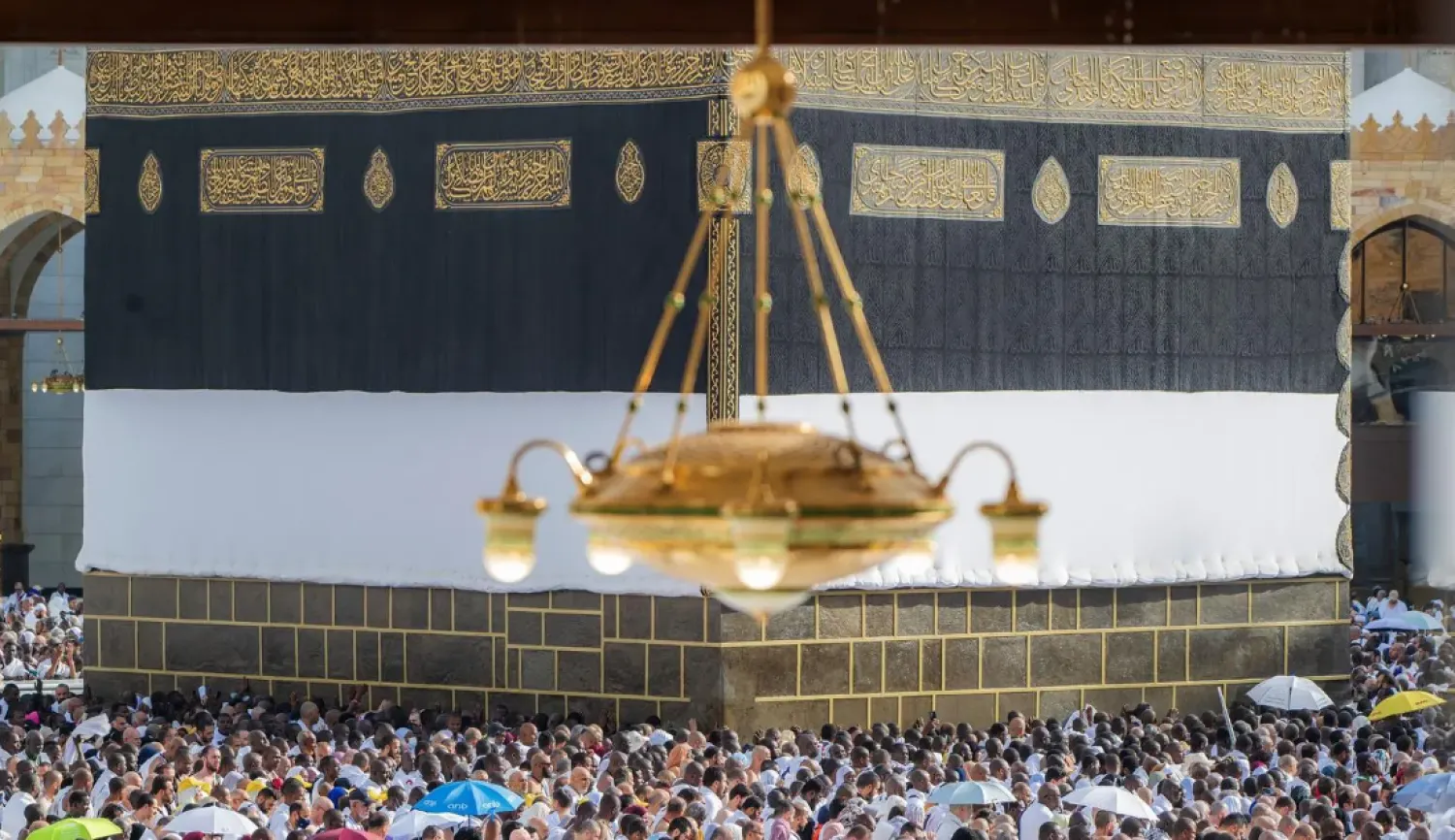
The Grand Mosque witnessed a large influx of pilgrims performing Tawaf Al-Ifadah under the direct supervision of the relevant sectors - SPA
TT

Pilgrims Perform Tawaf Al-Ifadah in Spiritual Atmosphere

The Grand Mosque witnessed a large influx of pilgrims performing Tawaf Al-Ifadah under the direct supervision of the relevant sectors - SPA

Pilgrims Wednesday performed Tawaf Al-Ifadah at the Grand Mosque after standing at Arafat, spending the night in Muzdalifah and performing the stoning of Jamrat Al-Aqaba, SPA reported.

This was facilitated through a comprehensive system of organizational, health, and security services provided by the relevant authorities to ensure the smooth movement and safety of pilgrims throughout their rituals.

The Grand Mosque witnessed a large influx of pilgrims performing Tawaf Al-Ifadah under the direct supervision of the relevant sectors, which mobilized their human and technological resources to serve worshippers and facilitate their movement with ease and efficiency.

Pilgrims will continue performing their rituals in Mina during the Days of Tashreeq, where they will stone the three Jamarat. They will then conclude their Hajj with the Farewell Tawaf before departing Makkah.


Pilgrims Perform Stoning Ritual at Jamrat Al-Aqaba in Mina

Muslim pilgrims cast stones at a pillar symbolizing Satan, during the annual hajj pilgrimage in Mina, Saudi Arabia, May 27, 2026. REUTERS/Ibraheem Abu Mustafa
TT

Pilgrims Perform Stoning Ritual at Jamrat Al-Aqaba in Mina

Muslim pilgrims cast stones at a pillar symbolizing Satan, during the annual hajj pilgrimage in Mina, Saudi Arabia, May 27, 2026. REUTERS/Ibraheem Abu Mustafa

Pilgrims arriving from Muzdalifah began at dawn Wednesday performing the stoning ritual at Jamrat Al-Aqaba in Mina on the first day of Eid Al-Adha, amid an integrated system of security, health, and organizational services provided by the relevant Saudi authorities to facilitate the performance of rituals.

The Jamarat facility witnessed smooth crowd movement supported by direct field monitoring and operational plans designed to regulate pedestrian flows and ensure safe mobility between the holy sites.

Authorities were on hand around the facility through the deployment of ambulance and medical teams, guidance and awareness services, and enhanced sanitation and cleaning operations to provide a safe and comfortable environment for pilgrims.

Meanwhile, shuttle buses and Al Mashaaer Al Mugaddassah Metro continued transporting pilgrims between the holy sites according to operational schedules aligned with traffic and crowd-management plans aimed at easing movement and reducing travel time.

Stoning of Jamrat Al-Aqaba marks one of the key Hajj rituals performed by pilgrims following their overnight stay in Muzdalifah, before continuing the remaining rites of the Day of Al-Nahr (Day of Sacrifice), including animal sacrifice, hair shaving or trimming, and Tawaf Al-Ifadah.