


Arab World Slams Houthi Attack against Saudi Arabia’s Shaybah Facility

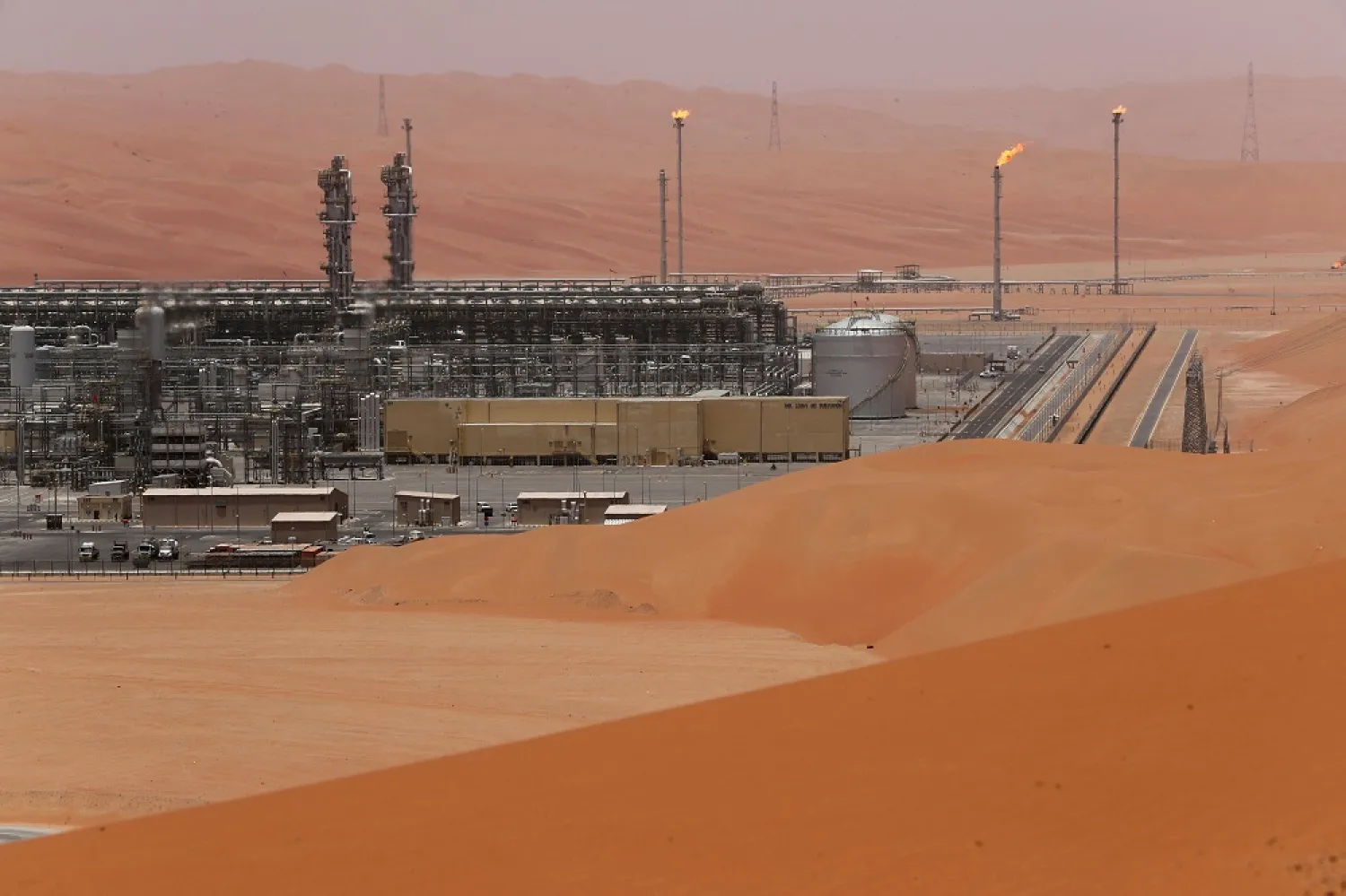
General view of the Natural Gas Liquids facility in Saudi Aramco's Shaybah oilfield at the Empty Quarter in Saudi Arabia May 22, 2018. (Reuters)
TT

Arab World Slams Houthi Attack against Saudi Arabia’s Shaybah Facility

General view of the Natural Gas Liquids facility in Saudi Aramco's Shaybah oilfield at the Empty Quarter in Saudi Arabia May 22, 2018. (Reuters)

Countries across the Arab world condemned the terrorist attack by the Iran-backed Houthi militias in Yemen against Saudi Arabia’s Shaybah natural gas liquefaction facility.

The United Arab Emirates on Sunday strongly condemned the terrorist attack, which poses a “serious danger to world’s energy supplies.”

It renewed its complete solidarity with Saudi Arabia, saying it “supports it in all the measures it takes to protect its security and stability and combat terrorism and extremism.”

The Foreign Ministry said the security of the UAE and Saudi Arabia are “indivisible and any threat against the Kingdom is a threat to the security and stability of the UAE.”

Bahrain’s Foreign Ministry slammed the “cowardly” terrorist attack, saying it posed a “grave danger to the world energy supply.”

It affirmed Manama’s unwavering support to Saudi Arabia to maintain its security and protect its interests, vowing full solidarity and backing its efforts to eradicate terrorist acts of all forms, read a statement carried by the Bahrain news agency (BNA).

It called for “serious and strict measures to put an end to these terrorist acts and attacks and confront those who support and finance them.”

Egypt condemned in the strongest terms the blatant attack, voicing its solidarity with Saudi Arabia and measures it takes to preserve the security and stability of the Kingdom.

It warned against targeting vital facilities in Saudi Arabia, including compromising the safety of energy infrastructure.

Kuwait on Saturday denounced the attack, saying was aimed at “destabilizing the security and stability of the Kingdom and the global energy supply.”

It demanded an “international effort to avoid crises and conflicts and more tension in the region,” said an official source in the Foreign Ministry in a statement carried by the KUNA news agency.

The source underlined Kuwait's full support to Saudi Arabia and all measures taken to maintain its security and stability.

The Jordanian government condemned the vicious terrorist attack as a "very dangerous escalation" targeting Saudi Arabia’s stability and risks further tension in the region.

Spokesman for the Ministry of Foreign Affairs and Expatriates Sufian Qudah underscored Amman’s solidarity with the Kingdom and support for all measures aimed at preserving its security and stability against terrorism.

Saudi Energy Minister Khalid al-Falih said Saturday that drones hit the Shaybah natural gas liquefaction facility, causing a small fire.

In a statement condemning the attack, Falih said there had been “no injuries” and that the fire had been put out.

The “cowardly attack shows once again the importance of the international community confronting all terrorist groups that carry out such sabotage acts, including the Iran-backed Houthi militias.”


GCC Secretary-General, European Parliament President Hold Talks in Brussels

Secretary-General of the Gulf Cooperation Council (GCC) Jasem Albudaiwi. SPA
TT

GCC Secretary-General, European Parliament President Hold Talks in Brussels

Secretary-General of the Gulf Cooperation Council (GCC) Jasem Albudaiwi. SPA

Secretary-General of the Gulf Cooperation Council (GCC) Jasem Albudaiwi met on Thursday with President of the European Parliament Roberta Metsola in Brussels.

Albudaiwi expressed appreciation to the European Parliament for its supportive stance towards the GCC countries, reflecting its firm commitment to the principles of international law.

The meeting addressed regional and international developments, the repercussions of Iranian attacks on Gulf states, and the direct threat these attacks pose to the security and stability of the region, the safety of international maritime navigation, and global energy supplies.

Metsola reiterated the European Parliament's support for the GCC countries against the attacks.

The two sides reviewed the GCC’s proposal for a parliamentary cooperation mechanism involving GCC legislative councils and the European Parliament, aimed at enhancing consultation, coordination, legislative cooperation, and institutional capacity to strengthen relations.


Saudi Arabia, Pakistan Discuss Bilateral Ties, Regional Developments

Saudi Crown Prince and Prime Minister Mohammed bin Salman bin Abdulaziz Al Saud met with Prime Minister of Pakistan Muhammad Shehbaz Sharif. (SPA)
TT

Saudi Arabia, Pakistan Discuss Bilateral Ties, Regional Developments

Saudi Crown Prince and Prime Minister Mohammed bin Salman bin Abdulaziz Al Saud met with Prime Minister of Pakistan Muhammad Shehbaz Sharif. (SPA)

Saudi Crown Prince and Prime Minister, Prince Mohammed bin Salman bin Abdulaziz Al Saud, met on Wednesday with Pakistani Prime Minister Muhammad Shehbaz Sharif in Jeddah to review bilateral relations between the two countries. The discussions focused on existing areas of cooperation and opportunities to further strengthen and expand collaboration across various sectors.

The Crown Prince commended the PM's efforts in supporting Pakistan’s development and advancing the Saudi–Pakistani strategic partnership.

The two leaders also discussed regional and international developments, specifically focusing on the talks between the United States and Iran hosted by Pakistan, emphasizing the importance of continuing diplomatic efforts aimed at ending the war that has swept the Middle East leading to a fragile temporary ceasefire and an initial round of talks in Islamabad.

The Crown Prince praised the diplomatic efforts of both Sharif and Chief of the Defense Forces and Chief of Army Staff Field Marshal Asim Munir.

The meeting was attended by Minister of Defense Prince Khalid bin Salman bin Abdulaziz; Minister of Foreign Affairs Prince Faisal bin Farhan bin Abdullah; and Minister of State and National Security Advisor Dr. Musaed bin Mohammed Al-Aiban. On the Pakistani side, Deputy Prime Minister and Minister of Foreign Affairs Mohammad Ishaq Dar was in attendance.

Saudi Arabia and Pakistan share strong ties, reinforced by a strategic agreement that treats an external attack on one as an attack on both.

Last month, Sharif praised Saudi Arabia for its “notable restraint” amid the ongoing hostilities and stressed the urgent need for de-escalation.

On March 9, the Saudi Crown Prince and Pakistan’s PM held a closed-door meeting during which Sharif expressed full solidarity with Saudi Arabia, and both sides agreed to promote regional peace and stability.


GCC Secretary-General Affirms Gulf Stability as a Cornerstone of Global Stability

Secretary-General of the Gulf Cooperation Council (GCC) Jasem Mohamed Albudaiwi
TT

GCC Secretary-General Affirms Gulf Stability as a Cornerstone of Global Stability

Secretary-General of the Gulf Cooperation Council (GCC) Jasem Mohamed Albudaiwi

Secretary-General of the Gulf Cooperation Council (GCC) Jasem Albudaiwi stressed during a working session before the European Parliament’s Committee on Foreign Affairs (AFET) that Gulf–European relations are more important than ever amid current regional and international challenges, and called for elevating them from consultation to a more practical partnership, SPA reported.

Albudaiwi, who is holding a series of meetings with senior officials in Brussels, explained that recent security developments in the region, along with threats to maritime routes, supply chains, and energy and food security, confirm that Gulf stability is not merely a regional matter, but a fundamental element of global stability.

He emphasized that the Strait of Hormuz must remain open and secure under international law, particularly UNCLOS (1982).

He also praised the EU’s condemnation of Iranian attacks on GCC states and its efforts to contain escalation through urgent diplomatic engagement.