


Several Thousand Amass in Baghdad as Protests Swallow Up South

The tension has been exacerbated by a near-total internet shutdown, closure of government offices and at least one overnight explosion | AFP
TT

Several Thousand Amass in Baghdad as Protests Swallow Up South

The tension has been exacerbated by a near-total internet shutdown, closure of government offices and at least one overnight explosion | AFP

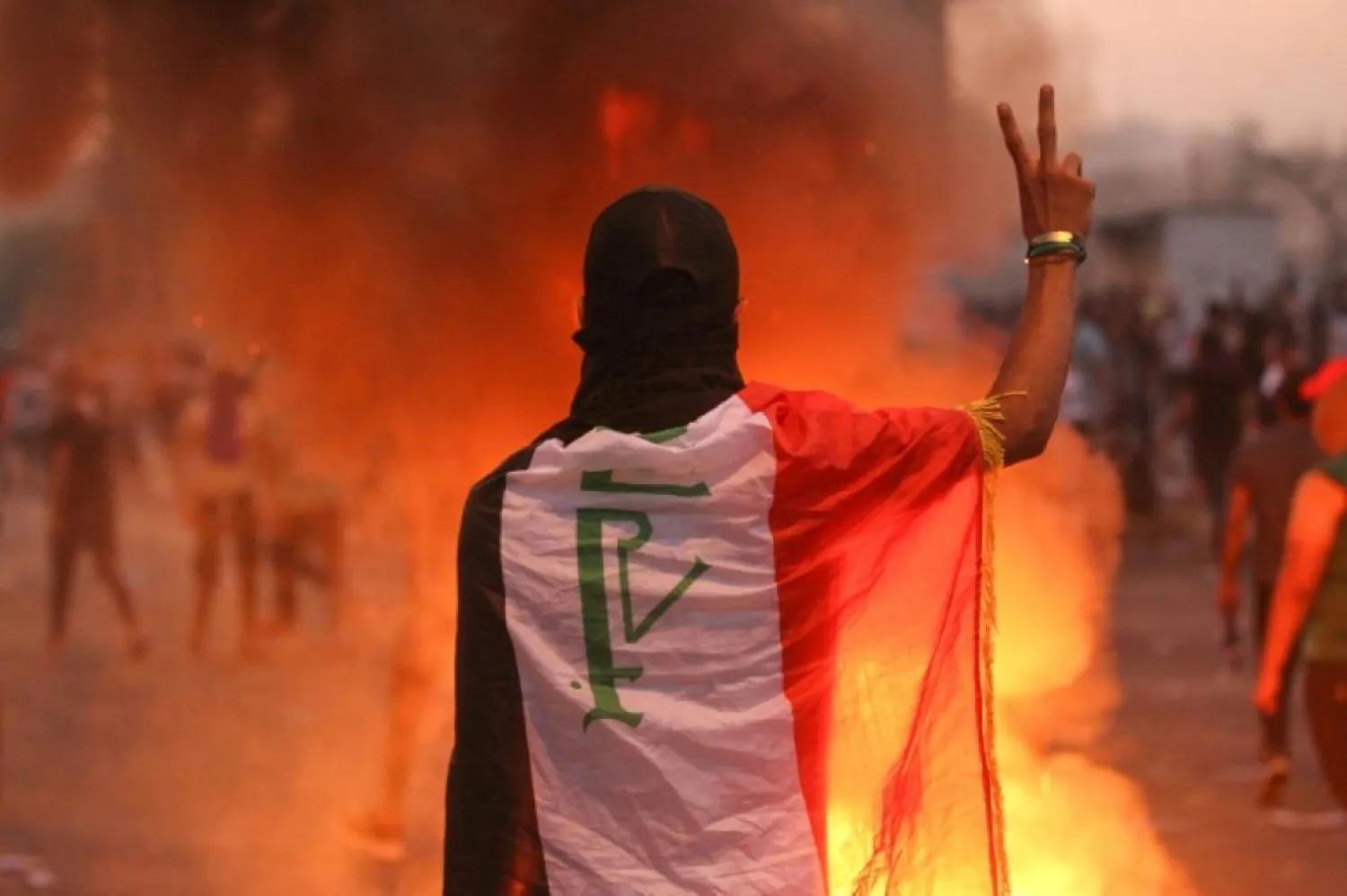
Several thousand Iraqi protesters faced off against security forces in central Baghdad on Thursday, the third day of mass rallies that have left 19 dead as they engulf the country's south.

Defying a curfew in place since dawn, they arrived by truckfuls at the capital's oil and industry ministry to protest against corruption, unemployment and poor services.

The apparently leaderless movement has posed the biggest challenge yet to Prime Minister Adel Abdel Mahdi, who has been in power for less than a year.

The embattled premier ordered a ban on all movement in Baghdad starting at 5:00 am (0200 GMT) Thursday, but it was almost immediately defied by small groups of protesters.

The crowds swelled in the afternoon and pledged to march to the capital's emblematic Tahrir (Liberation) Square.

Riot police and army troops linked arms around ministries and other government buildings, firing tear gas and live rounds into the air in a bid to push the crowds back.

"We will sacrifice our souls and our blood for you, Iraq!" demonstrators chanted.

The protests began Tuesday in Baghdad but have since spread across the mainly Shiite south, including the provinces of Dhi Qar, Missan, Najaf, Basra, Wasit, and Babylon.

Several cities have imposed curfews, but protesters flooded the streets regardless.

The Kurdish northern regions and Sunni western provinces, meanwhile, have remained relatively calm.

- Wounded top 1,000 -

The grievances echo those of mass demonstrations in Iraq's south a little over a year ago which were prompted by a severe water shortage that caused a widespread health crisis.

Since then, southern provinces have accused the central government of failing to address profound infrastructural gaps, chief among them youth unemployment.

Tensions have been exacerbated by the closure of government offices in Baghdad and calls by firebrand cleric Moqtada al-Sadr for "a general strike".

Sadr was behind the last round of major protests in Baghdad in 2016, when his supporters stormed the Green Zone -- home to some ministries and embassies -- but his involvement appears much more limited this time.

If his followers join the protests en masse, particularly as night falls, the rallies are expected to balloon even further.

The three days of demonstrations have left 19 people dead including one police officer, a toll confirmed by Iraq's Human Rights Commission.

More than 1,000 protesters and security personnel have been wounded.

More than half of those killed in the last three days have been in Nasiriyah, about 350 kilometers (200 miles) southeast of Baghdad.

The southern city of Amarah has also seen significant bloodshed, with medics and security sources reporting four protesters shot dead on Thursday.

- Premier under pressure -

With internet access virtually shut off, demonstrators on Thursday struggled to communicate with each other or post footage of the latest clashes.

Approximately 75 percent of Iraq is "offline" after major network operators "intentionally restricted" access, according to cybersecurity monitor NetBlocks.

The protests appear to be largely spontaneous and de-centralized, with virtually no party flags or slogans spotted.

Instead, they brandished Iraqi flags, posters demanding a "real country," and even pictures of an Iraqi general who was recently decommissioned after reported pressure by pro-Iran factions.

"The ability to preserve the right to protest is a sign of political and democratic maturity," the top United Nations official in Iraq, Jeanine Hennis-Plasschaert, said after meeting protesters.

"De-escalation is urgently needed."

The rallies appear to have split Iraqi officials.

President Barham Saleh insisted peaceful protest was a "constitutional right" and parliament demanded an investigation into the deaths.

But in an unpopular move, Abdel Mahdi blamed the violence on "aggressors who... deliberately created casualties".

On Thursday, the premier and the ministers of defense and interior met with the joint operations command but have not made any media appearances, despite swelling pressure.

Abdel Mahdi came to power in October 2018 as a consensus candidate, after last year's popular demonstrations effectively ended his predecessor Haider al-Abadi's chances at a second term.

He pledged to reform inefficient institutions, eradicate corruption and fight unemployment -- unfulfilled promises that appear to have pushed protesters over the edge this week.

In particular, anger has boiled over at the staggering level of youth unemployment, which stands at around 25 percent or double the overall rate, says the World Bank.

"We want jobs and better public services. We've been demanding them for years and the government has never responded," said Abdallah Walid, a 27-year-old protester.



Eight Muslim Countries Condemn Israel’s ‘Illegal’ West Bank Control Measures

 Israeli soldiers stand guard during a weekly settlers' tour in Hebron, in the Israeli-occupied West Bank, February 7, 2026. (Reuters)
Israeli soldiers stand guard during a weekly settlers' tour in Hebron, in the Israeli-occupied West Bank, February 7, 2026. (Reuters)
TT

Eight Muslim Countries Condemn Israel’s ‘Illegal’ West Bank Control Measures

 Israeli soldiers stand guard during a weekly settlers' tour in Hebron, in the Israeli-occupied West Bank, February 7, 2026. (Reuters)
Israeli soldiers stand guard during a weekly settlers' tour in Hebron, in the Israeli-occupied West Bank, February 7, 2026. (Reuters)

Saudi Arabia and seven other Muslim countries on Monday condemned new Israeli measures to tighten control of the West Bank and pave the way for more settlements on the occupied Palestinian territory.

Saudi Arabia, Jordan, the UAE, Qatar, Indonesia, Pakistan, Egypt and Türkiye "condemned in the strongest terms the illegal Israeli decisions and measures aimed at imposing unlawful Israeli sovereignty", a Saudi Foreign Ministry statement said.

Israel's security cabinet approved a series of steps on Sunday that would make it easier for settlers in the occupied West Bank to buy land while granting Israeli authorities more enforcement powers over Palestinians, Israeli media reported.

The West Bank is among the territories that the Palestinians seek for a future independent state. Much of it is under Israeli military control, with limited Palestinian self-rule in some areas run by the Palestinian Authority (PA).

Citing statements by Finance Minister Bezalel Smotrich and Defense Minister Israel ‌Katz, Israeli ‌news sites Ynet and Haaretz said ‌the ⁠measures included scrapping ‌decades-old regulations that prevent Jewish private citizens buying land in the West Bank.

They were also reported to include allowing Israeli authorities to administer some religious sites, and expand supervision and enforcement in areas under PA administration in matters of environmental hazards, water offences and damage to archaeological sites.

Palestinian President Mahmoud Abbas said ⁠the new measures were dangerous, illegal and tantamount to de-facto annexation.

The Israeli ministers ‌did not immediately respond to requests for ‍comment.

The new measures come three ‍days before Prime Minister Benjamin Netanyahu is scheduled to ‍meet in Washington with US President Donald Trump.

In his statement, Abbas urged Trump and the UN Security Council to intervene.

Jordan’s foreign ministry condemned the decision, which it said was “aimed at imposing illegal Israeli sovereignty” and entrenching settlements. The Hamas group called on Palestinians in the West Bank to “intensify the confrontation with the occupation and its settlers.”

Trump has ruled out Israeli annexation of the West Bank, but his administration has not sought to curb Israel's accelerated settlement building, which the Palestinians say denies them a potential state ⁠by eating away at its territory.

Netanyahu, who is facing an election later this year, deems the establishment of any Palestinian state a security threat.

His ruling coalition includes many pro-settler members who want Israel to annex the West Bank, land captured in the 1967 Middle East war to which Israel cites biblical and historical ties.

The United Nations' highest court said in a non-binding advisory opinion in 2024 that Israel's occupation of Palestinian territories and settlements there is illegal and should ‌be ended as soon as possible. Israel disputes this view.

The West Bank is divided between an Israeli-controlled section where settlements are located and sections equaling 40% of the territory where the Palestinian Authority has autonomy.

Palestinians are not permitted to sell land privately to Israelis. Settlers can buy homes on land controlled by Israel’s government.

More than 700,000 Israelis live in the occupied West Bank and east Jerusalem, territories captured by Israel in 1967 from Jordan and sought by the Palestinians for a future state. The international community overwhelmingly considers Israeli settlement construction in these areas to be illegal and an obstacle to peace.

Smotrich, previously a firebrand settler leader and now finance minister, has been granted cabinet-level authority over settlement policies and vowed to double the settler population in the West Bank.

In December, Israel’s Cabinet approved a proposal for 19 new Jewish settlements in the West Bank as the government pushes ahead with a construction binge that further threatens the possibility of a Palestinian state. And Israel has cleared the final hurdle before starting construction on a contentious settlement project near Jerusalem that would effectively cut the West Bank in two, according to a government tender reported in January.


Shibani Meets Barrack in Riyadh

Syrian Foreign Minister Asaad Hassan al-Shibani during his meeting with US Special Envoy to Syria Thomas Barrack in Riyadh (SANA)
TT

Shibani Meets Barrack in Riyadh

Syrian Foreign Minister Asaad Hassan al-Shibani during his meeting with US Special Envoy to Syria Thomas Barrack in Riyadh (SANA)

Syrian Foreign Minister, Asaad al-Shibani, met on Monday in Riyadh with US Special Envoy for Syria, Tom Barrack, the Syrian Foreign Ministry reported via its Telegram channel.

According to the Syrian Arab News Agency (SANA), the meeting took place on the sidelines of the meeting of political leaders of the International Coalition to Defeat ISIS.

Al-Mikdad, accompanied by General Intelligence Chief Hussein al-Salama, arrived in Riyadh on Sunday to participate in the Coalition’s discussions.

On February 4, the UN Security Council warned during a session on threats to international peace and security that the terrorist group remains adaptable and capable of expansion.

The council emphasized that confronting this evolving threat requires comprehensive international cooperation grounded in respect of international law and human rights.


Israel Announces Arrest of Prominent Jamaa Islamiya Member in Southern Lebanon

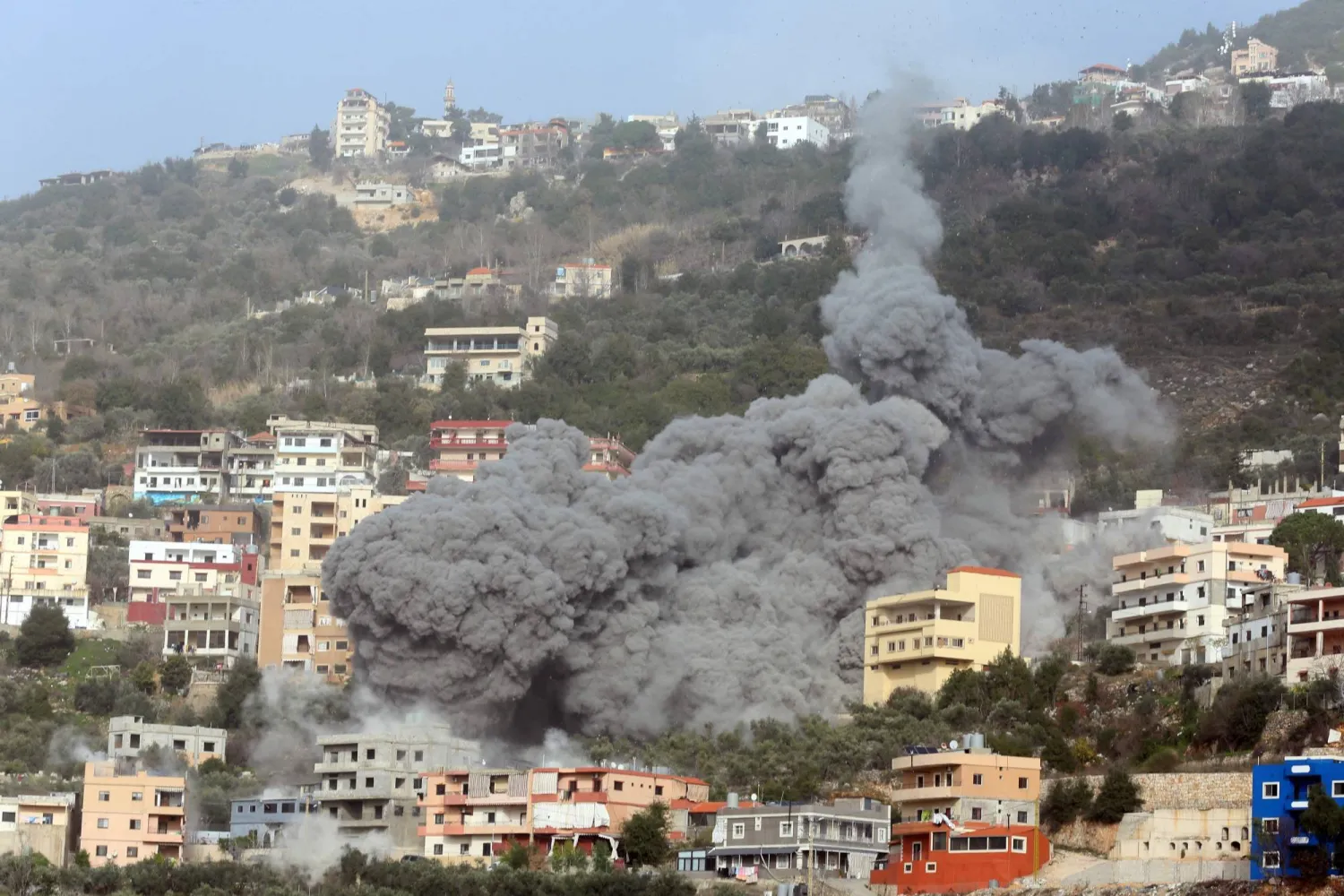
Smoke rises from the site of an Israeli airstrike that targeted a building in the southern Lebanese village of Ain Qana on February 2, 2026. (AFP)
TT

Israel Announces Arrest of Prominent Jamaa Islamiya Member in Southern Lebanon

Smoke rises from the site of an Israeli airstrike that targeted a building in the southern Lebanese village of Ain Qana on February 2, 2026. (AFP)

The Israeli army announced on Monday the arrest of a member of the Jamaa al-Islamiya group in Lebanon.

The military said a unit carried out a night operation in Jabal al-Rouss in southern Lebanon, arresting a “prominent” member of the group and taking him to Israel for investigation.

Israeli army spokesman Avichai Adree revealed that the operation took place based on intelligence gathered in recent weeks.

The military raided a building in the area where it discovered combat equipment, he added, while accusing the group of “encouraging terrorist attacks in Israel”.

He vowed that the Israeli army will “continue to work on removing any threat” against it.

Also on Monday, an Israeli drone struck a car in the southern Lebanese village of Yanouh, killing three people, including a child, Lebanon’s state-run National News Agency. 

Adree confirmed the strike, saying the army had targeted a Hezbollah member.

The Jamaa al-Islamiya slammed the Israeli operation, acknowledging on Monday the kidnapping of its official in the Hasbaya and Marjeyoun regions Atweh Atweh.

In a statement, the group said Israel abducted Atweh in an overnight operation where it “terrorized and beat up his family members.”

It held the Israeli army responsible for any harm that may happen to him, stressing that this was yet another daily violation committed by Israel against Lebanon.

“Was this act of piracy a response to Prime Minister Nawaf Salam’s tour of the South?” it asked, saying the operation was “aimed at terrorizing the people and encouraging them to leave their villages and land.”

The group called on the Lebanese state to pressure the sponsors of the ceasefire to work on releasing Atweh and all other Lebanese detainees held by Israel. It also called on it to protect the residents of the South.

Salam had toured the South over the weekend, pledging that the state will reimpose its authority in the South and kick off reconstruction efforts within weeks.

After the outbreak of the Israel-Hamas war in October 2023, the Jamaa al-Islamiya's Fajr Forces joined forces with Hezbollah, launching rockets across the border into Israel that it said were in support of Hamas in Gaza.

Hezbollah started attacking Israel on Oct. 8, 2023, a day after Hamas attacked southern Israel, triggering the latest Israel-Hamas war. Israel later launched a widespread bombardment of Lebanon that severely weakened Hezbollah, followed by a ground invasion.

The conflict ended with a US-brokered ceasefire in 2024, and since then, Israel has carried out almost daily airstrikes and ground incursions into Lebanon. Israel says it is carrying out the operations to remove Hezbollah strongholds and threats against Israel.

The Israel-Hezbollah war killed more than 4,000 people in Lebanon, including hundreds of civilians, and caused an estimated $11 billion in damage and destruction, according to the World Bank. In Israel, 127 people died, including 80 soldiers.