


Lebanon’s Patriarch Urges Authority to Heed People’s Demands

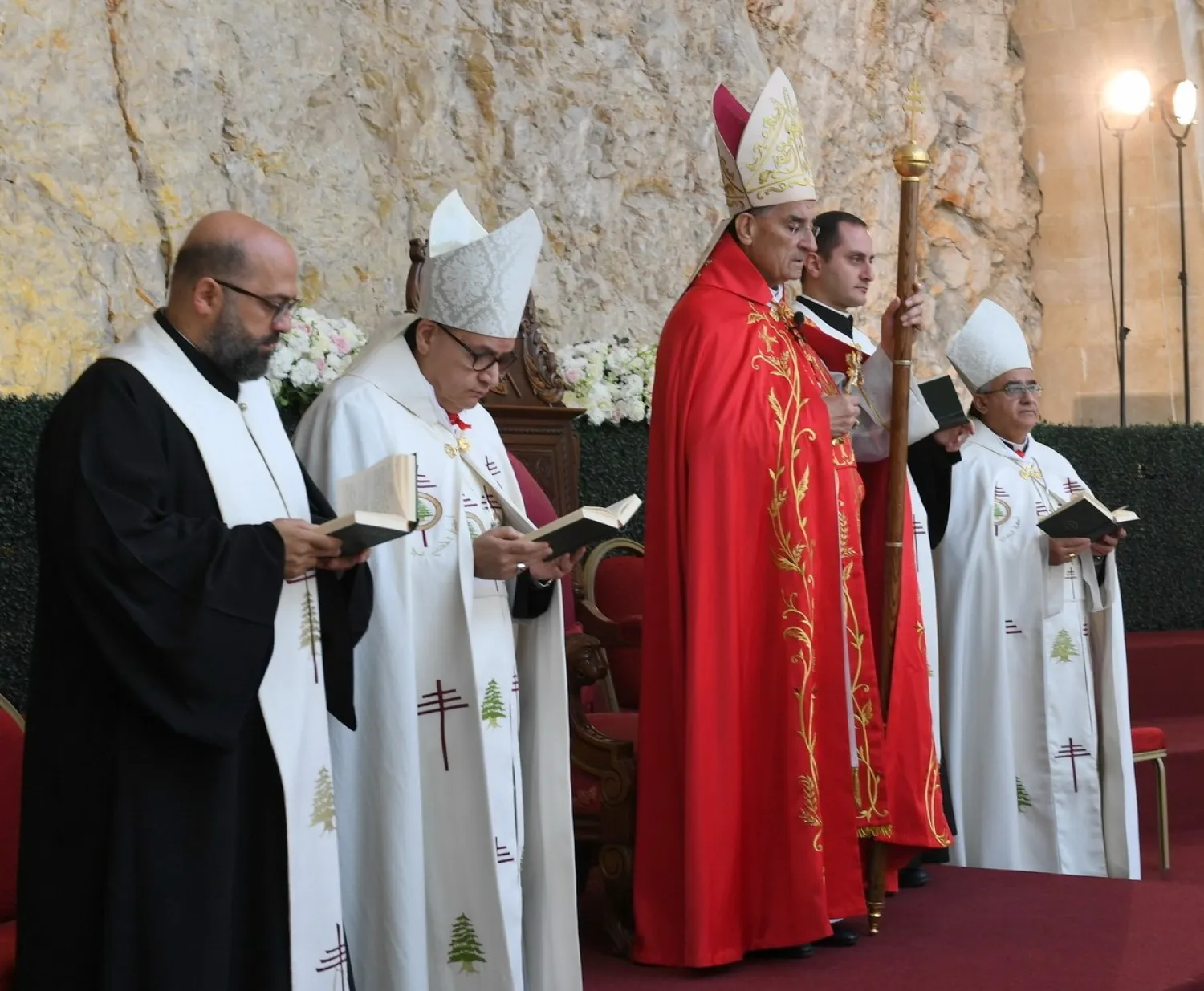
Maronite Patriarch Beshara Boutors Rahi during Sunday’s mass service in Bkirki (NNA)
TT

Lebanon’s Patriarch Urges Authority to Heed People’s Demands

Maronite Patriarch Beshara Boutors Rahi during Sunday’s mass service in Bkirki (NNA)

Maronite Patriarch Beshara Boutors Rahi on Sunday, the 11th day of national demonstrations that have spread in Lebanon demanding a full overhaul of the current government, called on politicians to listen to the people’s demands to avoid losing their trust.

"People are the source of authority and sovereignty,” the head of the Maronite church said on Sunday’s mass service in Bkirki.

He said the authority cannot ignore the people's demand for a neutral and mini-government, and it must listen to their demands before it is too late.

The Patriarch stressed that this uprising should not be diverted to partisan conflicts or destructive ideological goals.


"The protest movement unified the Lebanese people under the national flag and around their just, national demands for dignity and social justice, rejecting the financial and economic reality," he said.

Patriarch Rahi also called for a new cabinet formation comprised of competent specialists.

Demonstrators across the country demand the resignation of Prime Minister Saad Hariri’s government to be replaced by one with no political affiliation.

The patriarch considered that these demonstrations reflected the historical national facet of Lebanon, and showed that the culture of coexistence is based on freedom, pluralism, and the values of human dignity.

“It is impossible to intimidate our young people, who are offering sacrifices to correct the political practices with a system that shows integrity and impartiality,” he said.

Addressing political officials in Lebanon, Rahi said, “As you struggled to please the people and win their votes during elections, you should now find out what pleases the people not to lose their trust”.

The Patriarch then addressed the protesters and asked them to “protect the framework of their revolution and avoid succumbing to the temptation of political and sectarian conflicts.”

Rahi also called on the protesters to open the roads and facilitate the movements of citizens.

For the 11th day on Sunday, demonstrators set up barricades and parked cars across key roads to protest corruption.



Israeli Fire Kills Six-Year-Old Girl and a Woman in Gaza, Medics Say

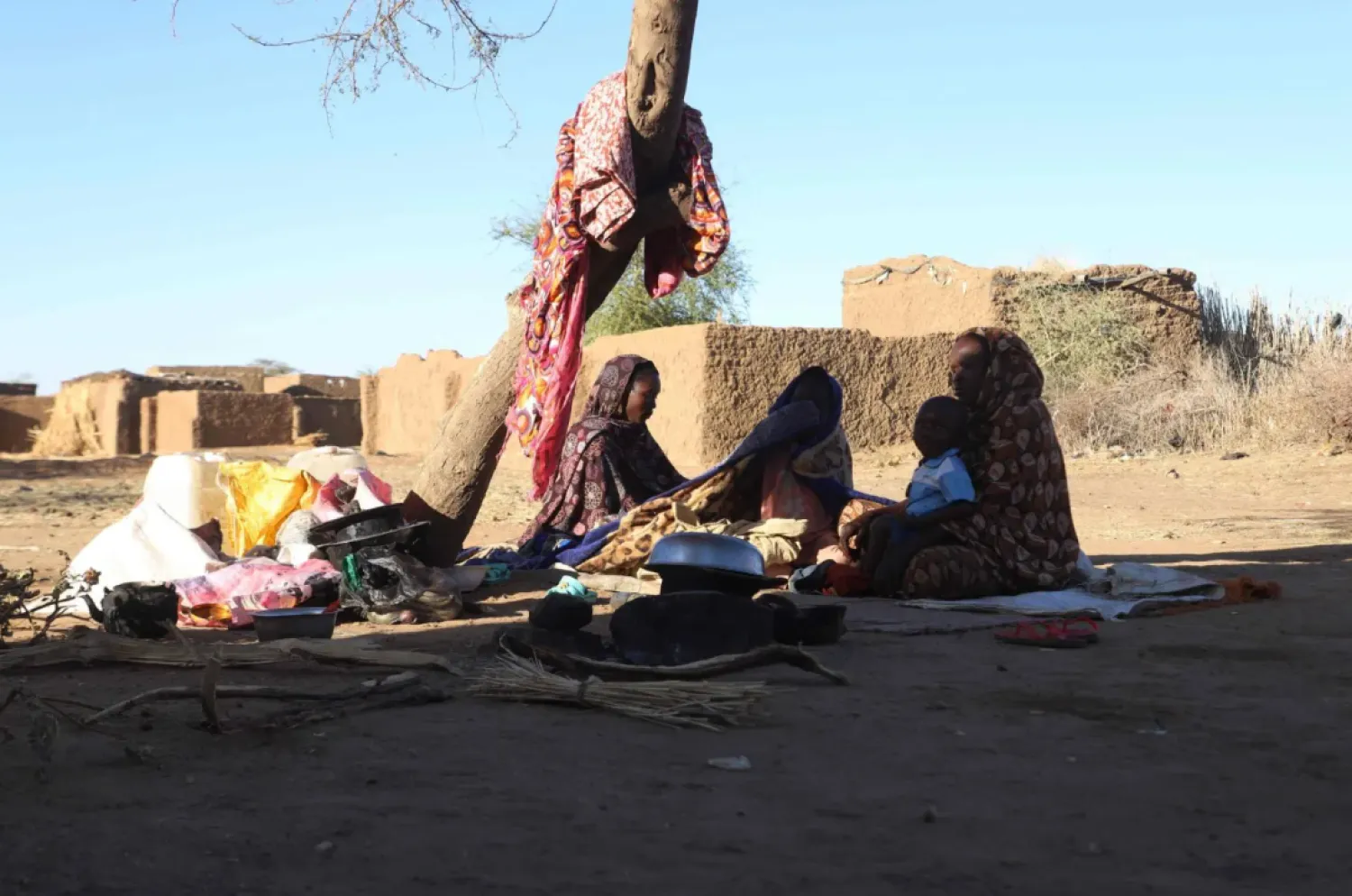
Mourners grieve for six-year-old Palestinian girl Menna Abu Labda, who was killed following Israeli bombardment, outside Nasser Medical Complex in Khan Younis in the southern Gaza Strip on May 25, 2026. (AFP)
TT

Israeli Fire Kills Six-Year-Old Girl and a Woman in Gaza, Medics Say

Mourners grieve for six-year-old Palestinian girl Menna Abu Labda, who was killed following Israeli bombardment, outside Nasser Medical Complex in Khan Younis in the southern Gaza Strip on May 25, 2026. (AFP)

An Israeli airstrike on a tent in the southern Gaza Strip on Monday killed two people including a six-year-old girl and wounded 17 other people, including children, Palestinian health officials said.

Medics said the Israeli airstrike on a tent encampment of displaced families in the Mawasi area of Khan Younis, in the south of the ‌enclave, had ‌killed six-year-old Mennatallah Abu Libda and ‌a ⁠31-year-old woman, Hanan ⁠Mahmoud.

The attack was carried out by two helicopters, witnesses said.

The Israeli military told Reuters it had struck fighters in the area but provided no further information.

An October ceasefire, brokered by US President Donald Trump, ⁠has failed to halt Israeli ‌attacks in Gaza, ‌with Israel and Hamas deadlocked in indirect talks over ‌implementing the second phase of the deal, ‌which includes the group's disarmament and Israeli army withdrawals.

The ceasefire left Israel in control of more than half of Gaza, with Hamas ‌controlling a sliver of territory along the coast.

Some 900 Palestinians have been ⁠killed ⁠in Israeli strikes since the truce came into effect, according to figures from Gaza health officials that do not distinguish between combatants and civilians.

Four Israeli soldiers have been killed by fighters during the same period, the country's military has said.

Hamas does not disclose figures for casualties among its fighters. Israel says its post-ceasefire strikes are aimed at preventing attacks or stopping people from approaching its armistice line with Hamas.


Lebanon President Says Israeli Withdrawal 'Non-negotiable'

FILED - 16 February 2026, Lebanon, Beirut: Lebanese President Joseph Aoun speaks during a press conference. Photo: Markus Lenhardt/dpa
TT

Lebanon President Says Israeli Withdrawal 'Non-negotiable'

FILED - 16 February 2026, Lebanon, Beirut: Lebanese President Joseph Aoun speaks during a press conference. Photo: Markus Lenhardt/dpa

Lebanese President Joseph Aoun on Monday said Israel's withdrawal from the country's south was a "non-negotiable" demand that authorities would pursue through negotiations, days ahead of a new round of talks in Washington.

In a statement commemorating Israel's previous withdrawal from south Lebanon in 2000 after some two decades of occupation, Aoun said that "this year, the anniversary of the liberation comes as Lebanon is weighed down by a painful reality."

"Israeli attacks have not stopped and our dear southern villages are still suffering under a renewed occupation," he said.

Israeli troops who invaded Lebanon during the latest war with Hezbollah began on March 2 are operating inside a self-declared "yellow line" running around 10 kilometers (six miles) deep inside Lebanese territory.

Israel's military has also been conducting heavy strikes well beyond that area despite a ceasefire supposed to be in force since April 17.

"Lebanon will not accept this reality," Aoun said.

"The path to a full Israeli withdrawal will remain an uncompromised, constant national demand that the Lebanese state works to achieve through the option of negotiations," he added.

Lebanon and Israel began landmark US-brokered talks last month and are preparing for a fourth round in early June, preceded by a meeting between military delegations at the Pentagon on May 29.

Hezbollah chief Naim Qassem on Sunday reiterated his opposition to the direct talks with Israel and his group's refusal to disarm, as it keeps up attacks on Israeli targets in south Lebanon and across the border.

"If this government is incapable of guaranteeing sovereignty, it should go," Qassem said, adding: "Where is the sovereignty if America runs the cogs of the Lebanese state?"

Aoun said that negotiations were "neither a concession nor a surrender".

"The liberation of the south is a duty borne by the state with the support of its people," the president added.

Lebanese authorities have committed to disarming Hezbollah and they prohibited its military activities after it drew Lebanon into the Middle East war with rocket fire at Israel, in retaliation for strikes that killed Iran's supreme leader.

On Sunday, US Secretary of State Marco Rubio condemned what he called Hezbollah's "reckless call to overthrow Lebanon's democratically elected government", accusing it of "actively trying to drag Lebanon back into chaos and destruction."

Qassem had said that "the people have the right to go down onto the streets and to bring down the government" in response to Israeli attacks and US sanctions on the Hezbollah-linked Al-Qard Al-Hassan financial institution, which Washington wants Beirut to shut down.


Sources to Asharq Al-Awsat: New Syrian Parliament to Convene on June 8

People walk past the parliament building in Damascus on October 1, 2025. (AFP)
TT

Sources to Asharq Al-Awsat: New Syrian Parliament to Convene on June 8

People walk past the parliament building in Damascus on October 1, 2025. (AFP)

Syria’s new parliament will hold its first session on the preliminary date of June 8 after the approval of President Ahmed al-Sharaa's final share of seats in the legislature, sources told Asharq Al-Awsat.

The president boasts 70 seats in the 210-member parliament.

The sources said the final list of the share is being finalized with some amendments expected if some of the lawmakers, who won in recent elections, are unable to assume their duties.

The list includes figures from across Syrian segments. Efforts were made to “fill gaps” that were a result of the elections to raise the level of representation of major cities that have high populations.

Efforts were also sought to increase the number of females in parliament.

The statements mean that the president’s share was subject to negotiations with the Kurdish Syrian Democratic Forces (SDF). They revealed that the government agreed to “appeasing” the Kurdish forces by raising the level of parliamentary representation of the eastern region.

They spoke of the possibility of raising to more than ten representatives of eastern regions that used to be held by the SDF. Representation could also be increased in Manbij east of Aleppo through a presidential appointment. The same could apply for the two Ghouta regions in the Damascus countryside and for Druze and Christian segments.

Asharq Al-Awsat also learned that some members of the parliament may propose changing the official name of the legislature, known as the “People’s Assembly” that is associated with the ousted Assad regime, to “Syrian parliament”.

Such a change requires the approval of the majority of MPs, which is already available, said the sources.