


The Making of Roberto Firmino, By His Earliest Mentors in Brazil

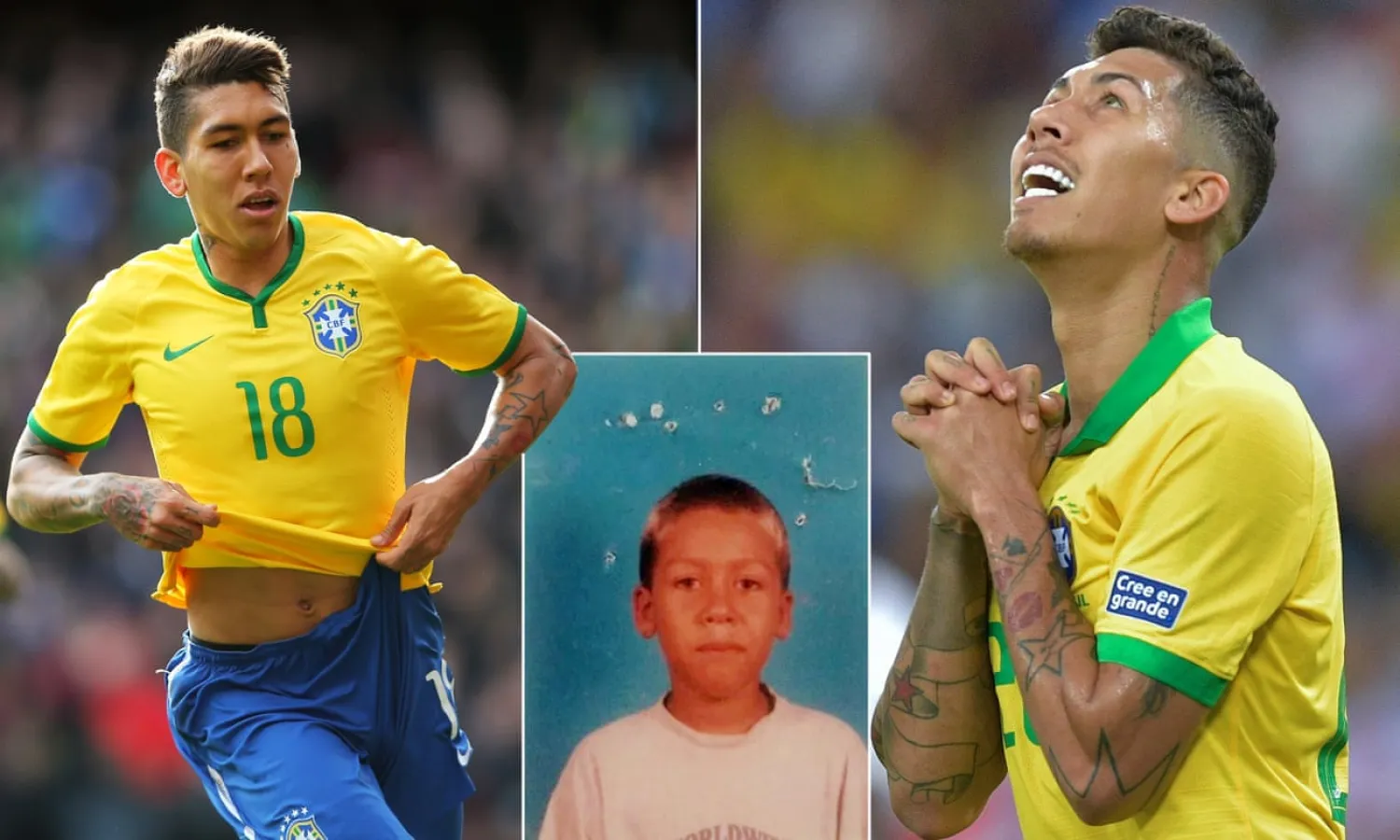
 Roberto Firmino playing for Brazil in 2015 (left), 2019 (right) and as a schoolboy.
Roberto Firmino playing for Brazil in 2015 (left), 2019 (right) and as a schoolboy.
TT

The Making of Roberto Firmino, By His Earliest Mentors in Brazil

 Roberto Firmino playing for Brazil in 2015 (left), 2019 (right) and as a schoolboy.
Roberto Firmino playing for Brazil in 2015 (left), 2019 (right) and as a schoolboy.

On a mundane Monday in 2001, Adriana Leite was sitting in her classroom in Maceió, a city on Brazil’s northeast coast. As usual, there was a timid but pleasant boy called Roberto at the desk nearest to hers. She asked him how his weekend had been. When he said that the electricity in his home had been off all weekend, she was worried and asked the 10-year-old what had happened to his family’s food.

Smiling, as if it was normal, he said there was nothing in the fridge, so nothing could go off. “When he told me that he had nothing in his fridge at home, it made me very sad,” Leite recalls. “He was so young, always so shy and his answer surprised me. What did he mean there was nothing in the fridge? I always remembered Roberto because of that – that skinny little lad who sat next to my desk and talked about football.”

Leite, who is still a teacher, had no idea she would be telling this story nearly 20 years later. Her routine that year was to talk to that shy boy about football and his studies. She always asked him to focus on his education, but sometimes he would disobey her, bunking off to play football on the little dirt pitches dotted around the neighbourhood of Trapiche.

That truancy, though ill-advised, paid off. At 13, Firmino joined the youth team of one of the two local clubs, CRB, who currently play in Brazil’s second tier. He initially wore the No 5 shirt, which in Brazil is reserved for the most defensive midfielder. When required, he even played as a defender.

Firmino stood out immediately for the way he struck the ball, but he was very quiet and rarely opened up to his colleagues. “Firmino was a very humble boy but very talented,” says his former coach, Guilherme Farias. “As soon as I saw him play, I made him sign a contract because I knew we had an ace on our hands. He was very dedicated. He listened to all the instructions. Everyone liked him. His family had some financial difficulties at the time and we pulled together, helping him to train and travel with the team.”

The young Firmino travelled the northeast of Brazil playing in interstate championships and went to São Paulo for an important national tournament. There is one story from their travels together that Farias likes to recount, because, for him, it shows the innocence of the boy. “We were all playing football at the hotel, playing keepie-uppie, and the ball dropped to the feet of Firmino, who made a mistake. He broke a window, but he said they would buy a new window and put it in. You have to be like that. If you make a mistake, correct it. Firmino bought a window, we installed it and off we went.”

Firmino was given a big break in 2008, when another CRB youth coach, Toninho Almeida, rang his friend – the Atlético Mineiro player Bilú – and told him he needed to see the youngster play. Toninho sent a DVD of Firmino in action and the clips caught Bilú’s eye. Through his contacts, Bilú arranged a trial at São Paulo, the reigning league champions at the time.

Firmino didn’t make it at São Paulo, but he struck up a friendship with Bilú, who managed to organise a trial at another of his former clubs, Figueirense. This time Firmino’s talent was recognised. “He was very poorly assessed by São Paulo,” says Bilú. “He had too little time training with the ball. He didn’t pass the trials but, fair enough, I took him to Figueirense. I had already played there and knew people, so I managed to get him another chance. It was there that he really blossomed. He was already very talented, but the experiences in Série B helped him immensely.”

Bilú was with Firmino when he signed his first professional contract at Figueirense; they played together when Bilú returned to the club in 2010; and they remain friends to this day. “I’m the godfather to his daughters, I was the best man at his wedding and we speak practically every week. He carries on being very quiet, but he loosens up with his friends. He is a very nice guy, who has evolved a lot. He played as a defensive midfielder or defender, then in central midfield with me and today he’s a striker. He’s really intelligent. I think he’s the most interesting player to watch for Liverpool,” says Bilú, who has retired from playing and now works as a coach.

The move south to Figueirense worked out well for Firmino. The club are based in Florianópolis in the southeast of the country, an area more popular with scouts and agents then the remote northeast. After helping Figueirense earn promotion to the top flight, Firmino moved to Hoffenheim to make his name in Europe. His star has only risen since.

He lifted the first silverware of his career this year, becoming a champion of Europe with Liverpool and a champion of South America with Brazil. He is the top scoring Brazilian in the history of the Premier League and has 41 caps for the national team. For his school teacher Leite, though, it took a long time for the penny to drop. For a long time she did not realise that the man on the TV with the yellow and green shirt on his back and the broad, white grin on his face was the same Roberto who studied at the Maria Rita Lyra de Almeida school almost two decades ago. Their paths had crossed in the interim – they met at Maceió airport and he posed for photos with her kids – but Leite had no idea that he was the boy she had taught.

But last year, just before the World Cup in Russia, she received a call from the headteacher and was asked if Roberto Firmino, the footballer, had been her student. “We did some research and discovered that he was my Roberto,” she says, “My kids didn’t believe he was my student – a lot of people didn’t. I started to remember the anecdotes and it made me very happy, because he managed to get out of a very difficult reality, a dangerous one, to conquer the world through sport – as he wished.”

After that discovery, she wanted the opportunity to meet him again. A friend of Leite’s eldest son saw that Firmino was having a get-together in Maceió, so they called round. “We got there out of the blue and obviously nobody would let us in the house just to talk to Roberto,” she recalls. “But my youngest son really wanted to meet him, so [Firmino’s] cousin picked up my son and took him inside the house. He saw Roberto and wanted to cry. Roberto turned around and started to chat and joke around. After that, Roberto came out of the house, received us and took photos. He made our day.”

For Guilherme Farias, the man who first took Firmino to CRB, the desire to see his former player remains unfulfilled. Farias has worked in football for more than 30 years and feels privileged to have coached some of the most highly regarded players from the state of Alagoas – including former Real Madrid centre-back Pepe and Real Sociedad striker Willian José. But one regret remains: that he has never seen any of them again. “I’m delighted by the success of Firmino because he came through here,” says Farias. “When he does well, I thank God. He very much deserves it. I’d just like to meet him and talk a little, because things are difficult here.”

The Guardian Sport


Hospital: Vonn Had Surgery on Broken Leg from Olympics Crash

This handout video grab from IOC/OBS shows US Lindsey Vonn crashing during the women's downhill event at the Milano Cortina 2026 Winter Olympic Games on February 8, 2026. (Photo by Handout / various sources / AFP)
TT

Hospital: Vonn Had Surgery on Broken Leg from Olympics Crash

This handout video grab from IOC/OBS shows US Lindsey Vonn crashing during the women's downhill event at the Milano Cortina 2026 Winter Olympic Games on February 8, 2026. (Photo by Handout / various sources / AFP)

Lindsey Vonn had surgery on a fracture of her left leg following the American's heavy fall in the Winter Olympics downhill, the hospital said in a statement given to Italian media on Sunday.

"In the afternoon, (Vonn) underwent orthopedic surgery to stabilize a fracture of the left leg," the Ca' Foncello hospital in Treviso said.

Vonn, 41, was flown to Treviso after she was strapped into a medical stretcher and winched off the sunlit Olimpia delle Tofane piste in Cortina d'Ampezzo.

Vonn, whose battle to reach the start line despite the serious injury to her left knee dominated the opening days of the Milano Cortina Olympics, saw her unlikely quest halted in screaming agony on the snow.

Wearing bib number 13 and with a brace on the left knee she ⁠injured in a crash at Crans Montana on January 30, Vonn looked pumped up at the start gate.

She tapped her ski poles before setting off in typically aggressive fashion down one of her favorite pistes on a mountain that has rewarded her in the past.

The 2010 gold medalist, the second most successful female World Cup skier of all time with 84 wins, appeared to clip the fourth gate with her shoulder, losing control and being launched into the air.

She then barreled off the course at high speed before coming to rest in a crumpled heap.

Vonn could be heard screaming on television coverage as fans and teammates gasped in horror before a shocked hush fell on the packed finish area.

She was quickly surrounded by several medics and officials before a yellow Falco 2 ⁠Alpine rescue helicopter arrived and winched her away on an orange stretcher.


Meloni Condemns 'Enemies of Italy' after Clashes in Olympics Host City Milan

Demonstrators hold smoke flares during a protest against the environmental, economic and social impact of the Milano-Cortina 2026 Winter Olympics in Milan, Italy, February 7, 2026. REUTERS/Kevin Coombs
TT

Meloni Condemns 'Enemies of Italy' after Clashes in Olympics Host City Milan

Demonstrators hold smoke flares during a protest against the environmental, economic and social impact of the Milano-Cortina 2026 Winter Olympics in Milan, Italy, February 7, 2026. REUTERS/Kevin Coombs

Italian Prime Minister Giorgia Meloni has condemned anti-Olympics protesters as "enemies of Italy" after violence on the fringes of a demonstration in Milan on Saturday night and sabotage attacks on the national rail network.

The incidents happened on the first full day of competition in the Winter Games that Milan, Italy's financial capital, is hosting with the Alpine town of Cortina d'Ampezzo.

Meloni praised the thousands of Italians who she said were working to make the Games run smoothly and present a positive face of Italy.

"Then ⁠there are those who are enemies of Italy and Italians, demonstrating 'against the Olympics' and ensuring that these images are broadcast on television screens around the world. After others cut the railway cables to prevent trains from departing," she wrote on Instagram on Sunday.

A group of around 100 protesters ⁠threw firecrackers, smoke bombs and bottles at police after breaking away from the main body of a demonstration in Milan.

An estimated 10,000 people had taken to the city's streets in a protest over housing costs and environmental concerns linked to the Games.

Police used water cannon to restore order and detained six people.

Also on Saturday, authorities said saboteurs had damaged rail infrastructure near the northern Italian city of Bologna, disrupting train journeys.

Police reported three separate ⁠incidents at different locations, which caused delays of up to 2-1/2 hours for high-speed, Intercity and regional services.

No one has claimed responsibility for the damage.

"Once again, solidarity with the police, the city of Milan, and all those who will see their work undermined by these gangs of criminals," added Meloni, who heads a right-wing coalition.

The Italian police have been given new arrest powers after violence last weekend at a protest by the hard-left in the city of Turin, in which more than 100 police officers were injured.


Liverpool New Signing Jacquet Suffers 'Serious' Injury

Soccer Football - Ligue 1 - RC Lens v Stade Rennes - Stade Bollaert-Delelis, Lens, France - February 7, 2026  Stade Rennes' Jeremy Jacquet in action REUTERS/Benoit Tessier
Soccer Football - Ligue 1 - RC Lens v Stade Rennes - Stade Bollaert-Delelis, Lens, France - February 7, 2026 Stade Rennes' Jeremy Jacquet in action REUTERS/Benoit Tessier
TT

Liverpool New Signing Jacquet Suffers 'Serious' Injury

Soccer Football - Ligue 1 - RC Lens v Stade Rennes - Stade Bollaert-Delelis, Lens, France - February 7, 2026  Stade Rennes' Jeremy Jacquet in action REUTERS/Benoit Tessier
Soccer Football - Ligue 1 - RC Lens v Stade Rennes - Stade Bollaert-Delelis, Lens, France - February 7, 2026 Stade Rennes' Jeremy Jacquet in action REUTERS/Benoit Tessier

Liverpool's new signing Jeremy Jacquet suffered a "serious" shoulder injury while playing for Rennes in their 3-1 Ligue 1 defeat at RC Lens on Saturday, casting doubt over the defender’s availability ahead of his summer move to Anfield.

Jacquet fell awkwardly in the second half of the ⁠French league match and appeared in agony as he left the pitch.

"For Jeremy, it's his shoulder, and for Abdelhamid (Ait Boudlal, another Rennes player injured in the ⁠same match) it's muscular," Rennes head coach Habib Beye told reporters after the match.

"We'll have time to see, but it's definitely quite serious for both of them."
Liverpool agreed a 60-million-pound ($80-million) deal for Jacquet on Monday, but the 20-year-old defender will stay with ⁠the French club until the end of the season.

Liverpool, provisionally sixth in the Premier League table, will face Manchester City on Sunday with four defenders - Giovanni Leoni, Joe Gomez, Jeremie Frimpong and Conor Bradley - sidelined due to injuries.
