


Dubai Received 12 Million Visitors in the First 9 Months of 2019

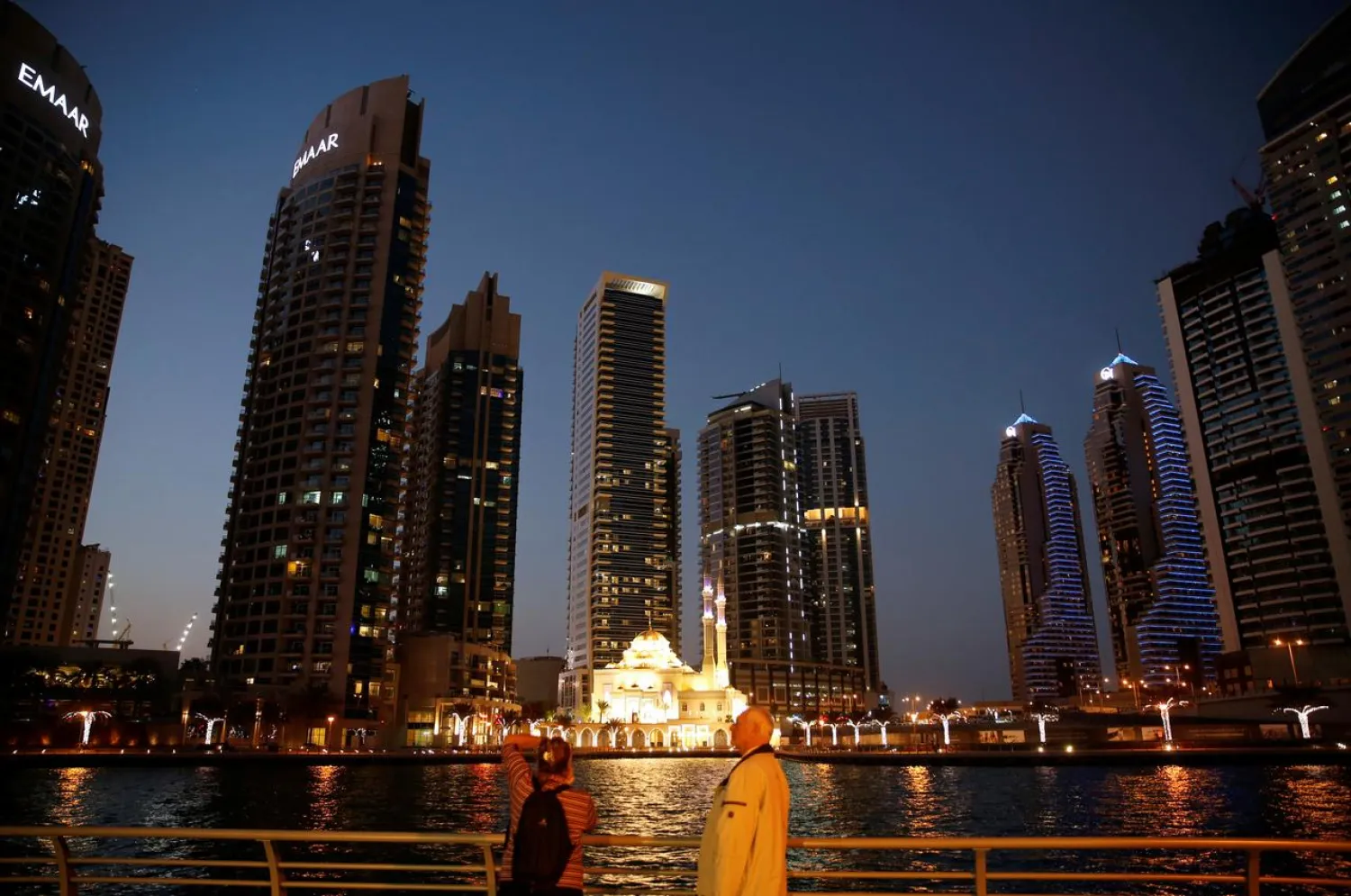
Tourist take photos of a mosque across the Dubai Marina, surrounded by high towers of hotels, banks and office buildings, in Dubai, UAE December 11, 2017. (Reuters)
TT

Dubai Received 12 Million Visitors in the First 9 Months of 2019

Tourist take photos of a mosque across the Dubai Marina, surrounded by high towers of hotels, banks and office buildings, in Dubai, UAE December 11, 2017. (Reuters)

Dubai witnessed a surge in arrivals which accelerated the city’s tourism momentum with 12.08 million international overnight visitors in the first nine months of 2019, according to the latest visitation figures released by Dubai’s Department of Tourism and Commerce Marketing.

In September alone, Dubai welcomed over 1.23 million visitors, an above market average increase of 7.3 percent over the same month in 2018.

Dubai ranked the fourth most visited city in the world for the fifth year in a row in Mastercard’s Global Destination Cities Index 2019.

Dubai Tourism’s multi-dimensional market-specific strategies, and customized campaigns continued to yield tangible results to attract more visitors namely from: India, Saudi Arabia, the United Kingdom and Oman.

Together with China, Dubai remains the world’s largest tourism volume driver, surpassing the five million threshold for the first nine months of 2019.

India retained its position as Dubai’s leading source market, with over 1.39 million visitors during the first nine months of 2019,

Of the GCC countries, Saudi Arabia solidified its position as the highest traffic volume generator, registering a two percent year-on-year growth for over 1.25 million visitors

Despite the devaluation of the pound against the dollar, and Brexit uncertainty, the UK remained Dubai’s third largest source market with 851,000 visitors.

Oman stayed the course as one of the key drivers within the top performing markets, delivering 778,000 visitors for a 28 percent increase year-on-year, making it the fourth highest traffic generator.

Dubai continues to attract large numbers of Chinese tourists, as Beijing takes the fifth spot with an impressive 14 percent increase in the first nine months of 2019.

The United States, which saw a one percent increase, and Russia, maintained their sixth and seventh positions with 481,000 and 433,000 visitors respectively.

Within the top 10 source markets, Germany and Pakistan also retained their eighth and ninth positions with 392,000 and 378,000 visitors respectively while Philippines, one of the fastest-growing feeder markets, staged an impressive comeback to the top 10 with a 29 percent increase delivering 352,000 visitors.



Bessent Says US, China Could Have Very Productive Relationship

US Secretary of the Treasury Scott Bessent, left, shakes hands with Chinese Vice Premier He Lifeng, right, during a bilateral meeting between the United States and China, in Geneva, Switzerland, on Saturday, May 10, 2025. (KEYSTONE/EDA/Martial Trezzini) /Handout via Reuters
TT

Bessent Says US, China Could Have Very Productive Relationship

US Secretary of the Treasury Scott Bessent, left, shakes hands with Chinese Vice Premier He Lifeng, right, during a bilateral meeting between the United States and China, in Geneva, Switzerland, on Saturday, May 10, 2025. (KEYSTONE/EDA/Martial Trezzini) /Handout via Reuters

US Treasury Secretary Scott Bessent said on Tuesday that the US relationship with China could be very productive and welcomed Beijing as a rival.

"The US-China relationship now is in a very comfortable place. We are going to be rivals, but we want the rivalry to be fair," Bessent said during an appearance at the ‌BTG Pactual ‌CEO Conference, held in Sao Paolo, Brazil. "We ‌do ⁠not want ‌to decouple from China, but we do need to de-risk."

Bessent is preparing to meet with Chinese Vice Premier He Lifeng in coming weeks ahead of a planned visit to China by US President Donald Trump in April.

The Treasury has not given details about the timing or venue for Bessent's meeting with He.

Bessent told the conference ⁠that the US was working on "retaking sovereignty" from China in strategic industries including ‌critical minerals, semiconductors and medicines.

"We're always ‍going to be competitors," he ‍said. "And I'm of the view that competition makes you better, ‍keeps you from stagnating."

In the long run, he said China would have to rebalance its economy, adding, "The world cannot have a situation where China persistently runs a $1 trillion trade surplus. That's just not possible."

Bessent and US Trade Representative Jamieson Greer spoke with He by phone in December, and both sides agreed to promote the ⁠stable development of bilateral trade and economic ties, China's official Xinhua news agency reported at the time.

Bessent last met with He in Malaysia in October, when both sides discussed a framework agreement under which Beijing agreed to defer export controls on rare earth supplies and Washington dropped a 100% US tariff on Chinese goods.

The US Treasury Secretary has said in recent weeks that China is on track to meet its commitments under a US-China trade agreement, including the purchase of 12 million metric tons ‌of US soybeans, by the end of February.


AlUla Conference for Emerging Market Economies Highlights Policies to Strengthen Resilience, Support Growth

The second AlUla Conference for Emerging Market Economies was held in AlUla on February 8–9 - SPA
TT

AlUla Conference for Emerging Market Economies Highlights Policies to Strengthen Resilience, Support Growth

The second AlUla Conference for Emerging Market Economies was held in AlUla on February 8–9 - SPA

At the conclusion of the second AlUla Conference for Emerging Market Economies, held in AlUla on February 8–9 and co-organized by the Saudi Ministry of Finance and the International Monetary Fund, Minister of Finance Mohammed Aljadaan and Managing Director of the International Monetary Fund Kristalina Georgieva issued a joint statement.

The statement expressed appreciation to emerging-market policymakers, leading global academics, and heads of regional and international financial institutions for convening once again in AlUla to discuss the key challenges facing emerging-market economies and the policies needed to strengthen resilience and support growth, SPA reported.

It noted that the second conference reaffirmed the value of a dedicated global forum focused on the shared challenges, opportunities, and aspirations of emerging market economies.

Over the two days, discussions centered on how emerging markets can navigate a global environment characterized by persistent uncertainty, geopolitical shifts, evolving trade patterns, and rapid technological change.

These developments, the statement said, underscore the urgency of strengthening policy frameworks and institutions to bolster resilience and seize opportunities ahead.

Several key messages emerged. First, sound macroeconomic and financial policies—underpinned by strong institutions and effective governance—remain the cornerstone of resilience in an increasingly shock-prone world. Experiences across many emerging markets demonstrate that credible policy frameworks and institutional upgrades have helped deliver better inflation outcomes, maintain financial stability, and preserve market access, even amid heightened uncertainty.

Second, having achieved greater stability, emerging markets now face the challenge of advancing to a new phase of reforms that deliver higher, more sustainable, and more job-rich growth. Unlocking private-sector potential will be central to this effort, including by deepening financial markets, reducing barriers to entrepreneurship and investment, and harnessing artificial intelligence through investments in digital infrastructure and skills development to help young people thrive in a changing global labor market.

Third, amid shifting trade and investment patterns, deeper intra-regional and inter-regional integration presents significant opportunities. Strengthening trade and regional cooperation remains critical as emerging markets adapt to the evolving global economic landscape.

According to SPA, the statement concluded by welcoming the commitment shown by emerging market economies to work together, learn from one another, and act decisively to address global challenges, and by expressing anticipation of continuing these discussions and building on the momentum at future editions of the AlUla Conference for Emerging Market Economies.


Saudi EXIM Bank Signs Trilateral MoU with Poland’s BGK and KUKE

The MoU enhances collaboration among the three parties in export support, financing, and insurance - SPA
TT

Saudi EXIM Bank Signs Trilateral MoU with Poland’s BGK and KUKE

The MoU enhances collaboration among the three parties in export support, financing, and insurance - SPA

Saudi Export-Import Bank (Saudi EXIM Bank) has signed a memorandum of understanding with two Polish financial institutions, Bank Gospodarstwa Krajowego (BGK) and Polish export credit agency (KUKE), strengthening cooperation in export support, financing, and insurance, and expanding trade and investment between Saudi Arabia and the Republic of Poland.

According to a press release issued by the Saudi EXIM Bank today, the agreement was signed by Saudi EXIM Bank Deputy CEO Dr. Naif bin Abdulrahman Al-Shammari, Member of the Board of BGK Mateusz Szczurek and CEO and President of the Board of KUKE Janusz Władyczak during the Saudi-Polish Investment Forum, SPA reported.

The MoU enhances collaboration among the three parties in export support, financing, and insurance, including export-related co-financing, guarantees, insurance, and reinsurance. It also promotes the exchange of information and expertise relating to export credit policies and practices, in addition to organizing meetings, workshops, training programs, and capacity-building initiatives.

The release added that the agreement enables Saudi and Polish companies to explore joint business and project opportunities of mutual interest, while facilitating access to non-oil export markets for both countries through cooperation among export finance and guarantee institutions.

On this occasion, Al-Shammari stated: “This memorandum comes as an extension of Saudi EXIM’s efforts to build high-quality partnerships with global export finance and credit insurance institutions, and to establish a cooperation framework that enables exporters and buyers in Saudi Arabia and Poland to access new markets. Through this cooperation, we look forward to enhancing the flow of mutual trade and investment and opening broader horizons for companies to benefit from the opportunities available in both countries.”

The signing of this MoU aligns with Saudi EXIM Bank's strategy to build effective partnerships with export finance and credit guarantee institutions worldwide, supporting the growth and competitiveness of Saudi non-oil exports in regional and global markets, in line with the objectives of Vision 2030.