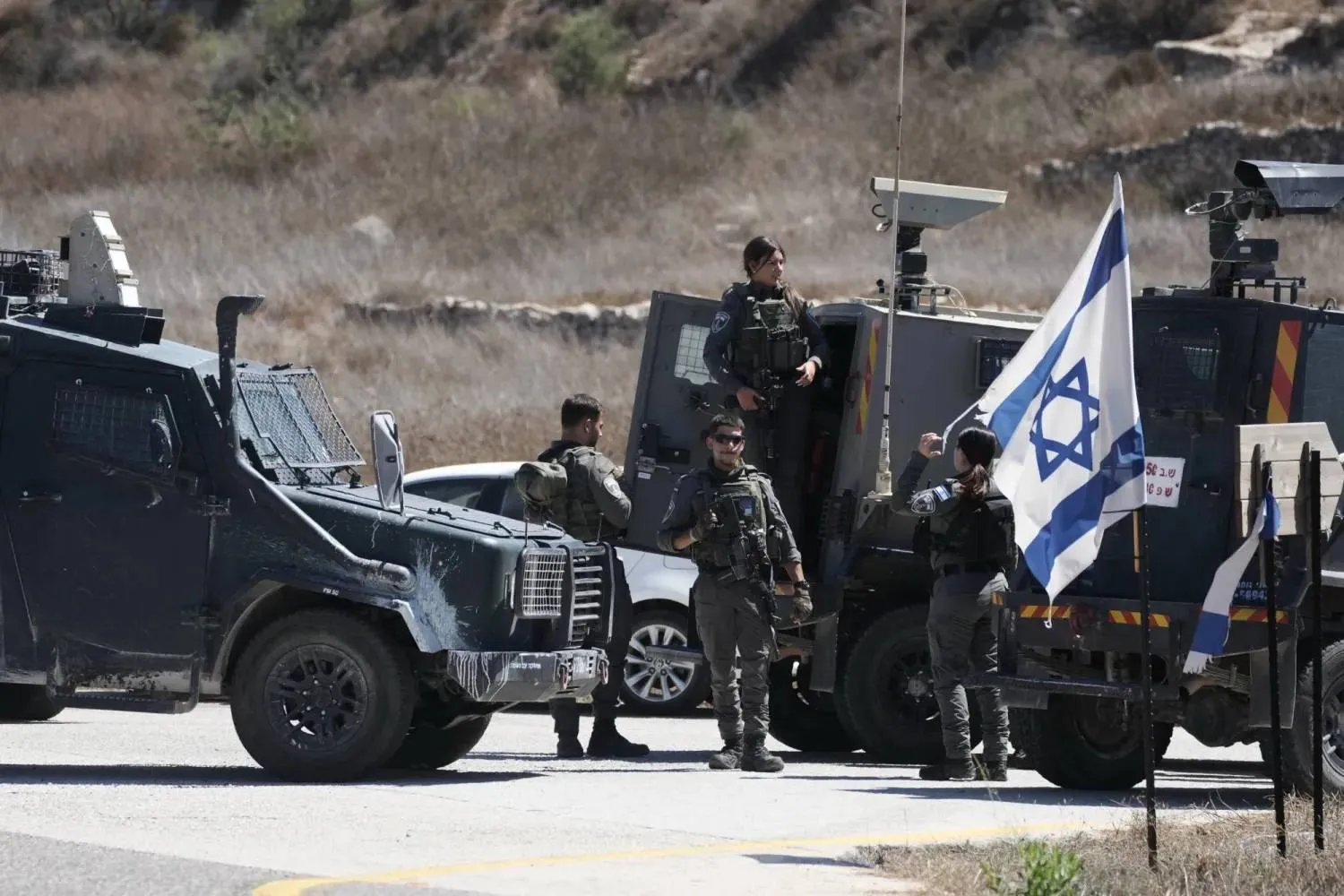
Israeli military on Sunday have ramped up their forces in the West Bank and elevated their operational readiness to the highest alert level across all commands ahead of Yom Kippur, the Jewish Day of Atonement that begins on Sunday evening and ends Monday.
Israeli authorities set up military checkpoints at the main entrances of two villages in Jerusalem, and raided a village east of the governorate.
The official Palestinian news agency Wafa said a checkpoint was set up at the main entrance of the village of Battir, west of Jerusalem and another at the entrance of Wadi Fukin. It said the Israeli forces continued measures to isolate the area by closing its access routes and digging a trench that prevents the movement of Palestinians and vehicles.
Israeli media outlets quoted Israeli military sources as saying that the army has decided to ramp up its forces on the fronts with Lebanon, the Gaza Strip, the West Bank and Syria while an Israeli official said the army has maintained continuous readiness to pivot immediately from regional ceasefires to renewed combat, including against Iran.
On Sunday, a Palestinian was killed after Israeli forces opened fire at a vehicle near Haddad Tourist Village, east of Jenin city.
Local sources told WAFA that Israeli forces opened live fire at the vehicle, killing the young man and injuring another person. The forces withheld the victim's body.
The sources added that Israeli forces prevented Palestine Red Crescent Society crews from approaching the site to provide medical assistance and evacuate the casualties.
Israeli settlers set a vehicle on fire, assaulted residents, and attempted to kidnap a child during a raid in the Safa area of the town of Beit Ummar, north of Hebron.
Israelis Raid Jerusalem
After Israeli Prime Minister Benjamin Netanyahu, accompanied by ministers and settlers under the protection of Israeli forces, raided the Western Wall Plaza in Jerusalem's Old City on Saturday, National Security Minister Itamar Ben-Gvir stormed on Sunday the Al-Aqsa Mosque compound with a group of settlers.
Ben-Gvir was and heavily escorted by Israeli occupation police, and performed Talmudic rituals in the eastern area of Al-Aqsa Mosque, the Jerusalem Governorate said.
The Palestinian Ministry of Endowments (Awqaf) and Religious Affairs expressed its strong denunciation of this move, stressing that these repeated incursions and provocative actions constitute flagrant encroachment and an attempt to enforce a new reality and alter the historic and legal status quo at the compound.
These unabated, methodical violations stoke bouts of rage among Muslims around the globe and constitute a repudiation of international laws and charters that call for respecting worshippers and protecting holy places, the ministry contended.
It called on the international community, human rights organizations, and Arab and Islamic nations to undertake their responsibilities and intervene immediately to halt these abuses and the persistent encroachments on occupied Jerusalem and Islamic and Christian holy sites.
With an overall area of 144 dunams, Al-Aqsa Mosque is exclusively dedicated to Muslim worship, the ministry underscored, reiterating that any attempt to divide the mosque or share its space is a non-starter.
Meanwhile, the ministry lambasted the closure of the Ibrahimi Mosque to Muslim worshippers under the pretext of Jewish holidays and the forcing of its custodians and staff to evacuate the site from 2 pm Sunday until 10 pm Monday.
What is happening at the Ibrahimi Mosque is extremely dangerous, the ministry warned, noting that it flagrantly provokes Muslims' sentiments and amounts to an assault on freedom of worship and on the religious and historic character of the mosque, amid continuous Israeli measures against worshippers and mosque staff.
The ministry noted that the occupation forces have continued to prevent the call to prayer from being made at the mosque for the 90th consecutive day, citing flimsy alibis and kept throttling Muslims' freedom of access.
Israeli Killed
Meanwhile, violence flared in the occupied West Bank on Sunday when a suspected Palestinian shot dead an Israeli man, police said.
The suspect opened fire from his vehicle at Israelis gathered at a spring near the settlement of Neve Tzuf, near Ramallah, according to the Israeli military and police.
The suspect was located a few hours later at a hospital in Ramallah and arrested, police said.
Palestine’s official WAFA News Agency reported that Israeli forces raided H-Clinic Specialized Hospital in Ramallah and detained an injured Palestinian receiving treatment there.
Israeli Prime Minister Benjamin Netanyahu earlier said Israeli forces were pursuing the attacker.
“Our forces are pursuing the terrorist who carried out the deadly attack,” Netanyahu said, according to AFP.
An Israeli military official said Sunday’s shooting of a settler in the heart of the West Bank is a proof that alert measures must be taken urgently.
However, the official refrained from explaining how the Israeli man was killed amid tight security.
“Our enemies benefit from Jewish festivals to attack us. Yom Kippur, when we fast for 14 hours and most of us are immersed in prayer, is their favorite opportunity to carry out attacks, as happened in the October 1973 War and the October 2023 War,” the official said.
Israeli President Pardons Soldier Who Killed Palestinian Injured
On Saturday, Israel’s President granted a pardon to a former soldier who gunned down a Palestinian in 2016 after he had already been incapacitated by troops in the West Bank city of Hebron.
Elor Azaria had been freed from prison in May 2018 after serving nine months behind bars, half his original sentence, for the manslaughter of Abdul Fatah Al-Sharif.
Israeli President Isaac Herzog said he “decided to grant the request of Elor Azaria to erase the remaining period of his criminal record and continue with his life.”